Tooth Pulp: An Evidence-Based Guide for Patients

Tooth pulp helps a tooth grow and stay nourished, especially during development. Deep decay, cracks, trauma, and repeated dental procedures can damage the pulp.
Key Takeaways
- Tooth pulp helps a tooth grow and stay nourished, especially during development.
- Deep decay, cracks, trauma, and repeated dental procedures can damage the pulp.
- Short sensitivity may improve, but lingering pain, swelling, or pain on biting can signal a more serious problem.
- Dentists diagnose pulp problems with an exam, dental history, and imaging such as X-rays.
- Treatment may include a filling, crown, root canal treatment, or tooth removal, depending on the extent of damage.
- Early dental care can often prevent complications and help preserve the natural tooth.
Tooth pulp is the living soft tissue inside each tooth. It contains nerves, blood vessels, and connective tissue, and when it becomes irritated, inflamed, or infected, symptoms can range from brief sensitivity to severe pain that needs dental treatment.
What tooth pulp is and why it matters
Tooth pulp is the soft tissue in the center of a tooth. It contains nerves, blood vessels, and connective tissue that support tooth development and help keep the inner part of the tooth alive. In a fully formed adult tooth, the pulp is less essential for daily function than the outer tooth structure, but it still plays an important role in sensing temperature, pressure, and injury.
The pulp sits beneath two protective layers: enamel on the crown and dentin underneath. When these layers are healthy, they shield the pulp from bacteria, temperature changes, and physical damage. If that protection is weakened by decay, a crack, wear, or trauma, the pulp may become irritated or infected.
Patients often hear the pulp described as the “nerve” of the tooth, but this is only part of the picture. The pulp includes nerve tissue, but it also contains circulation and cells that help the tooth respond to injury. Understanding this can make symptoms such as sensitivity or throbbing pain easier to interpret.
Many pulp problems are treatable, especially when assessed early. Prompt dental care can reduce pain, prevent spread of infection, and in many cases help preserve the natural tooth.
How the tooth pulp works inside the tooth
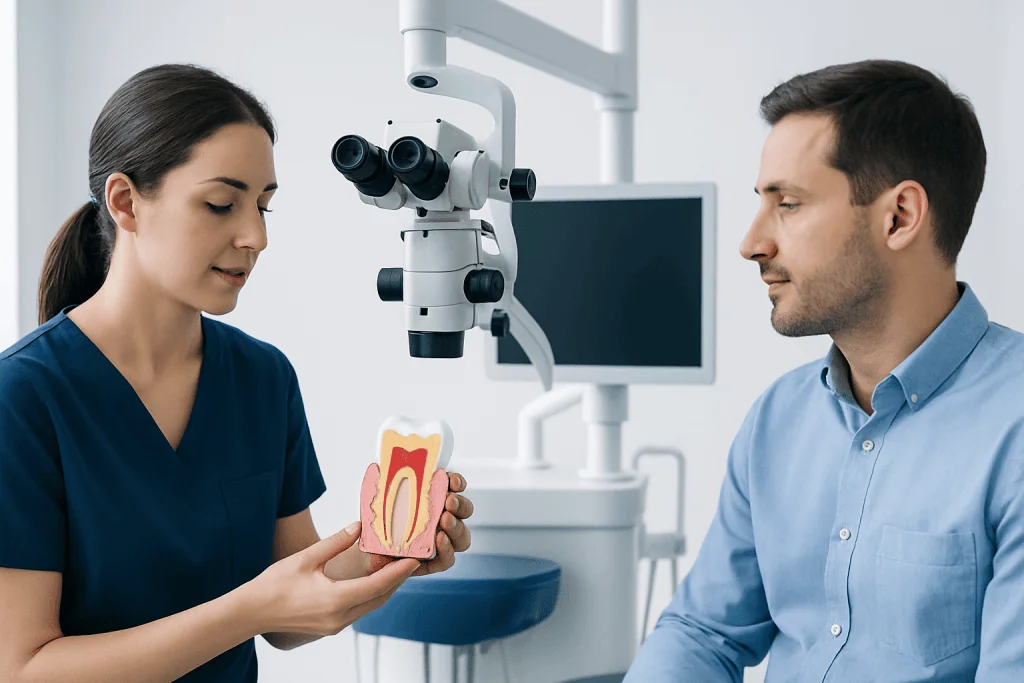
The pulp occupies a central space called the pulp chamber in the crown and extends down through narrow canals in the roots. This internal anatomy is important because inflammation in such a small enclosed space can quickly raise pressure and cause pain. That is one reason tooth pain can feel intense even when the affected area seems small.
In children and teenagers, the pulp helps teeth complete their development by supplying nutrients and supporting root formation. In adults, its protective role continues through sensory function. For example, sensitivity to cold or pain during chewing can alert a person that decay, a leak around a filling, or a fracture may be present.
The pulp also participates in repair. Specialized cells can produce dentin in response to irritation, creating a limited protective barrier. However, this natural defense has limits. If bacteria move too deeply into the tooth, or if injury is severe, the pulp may not be able to recover on its own.
Because the pulp is enclosed by hard tissue, it does not have much room to swell. Mild irritation may settle, but persistent inflammation can cut off blood flow and lead to irreversible damage. This is why ongoing symptoms deserve professional evaluation rather than watchful waiting alone.
Common signs of an inflamed or infected tooth pulp

Symptoms depend on whether the pulp is mildly irritated, severely inflamed, or infected. A person may first notice sensitivity to cold drinks, sweets, or brushing. Early symptoms may be brief and stop once the trigger is removed, but more advanced irritation often causes pain that lingers.
As the pulp becomes more inflamed, pain may be spontaneous, throbbing, or worse at night. Some people feel pain when biting, while others have trouble identifying which tooth hurts because the discomfort can radiate. Heat sensitivity can also be a warning sign, especially if cooling the tooth gives temporary relief.
If the pulp tissue dies or becomes infected, symptoms may change. Pain can lessen for a time, then return with swelling, tenderness, bad taste, or a small gum pimple that drains near the tooth. These signs may point to a deeper infection around the root.
- Brief sensitivity to cold, sweet, or touch
- Lingering pain after hot or cold exposure
- Throbbing or spontaneous toothache
- Pain when chewing or biting
- Swelling of the gum or face
- Darkening of the tooth after trauma
Not every pulp problem causes obvious pain. In some cases, damage is found during a routine dental exam or X-ray. This is one reason regular dental visits remain important even when symptoms seem minor.
What can damage the tooth pulp
The most common cause of pulp injury is deep tooth decay. Bacteria can move through enamel and dentin until they reach the pulp, where they trigger inflammation known as pulpitis. Depending on the degree of injury, pulpitis may be reversible or irreversible.
Cracks, fractures, and dental trauma are also important causes. A fall, sports injury, or biting on a hard object can expose or irritate the pulp directly. Even if a tooth looks intact after trauma, the blood supply to the pulp may have been affected, so delayed symptoms are possible.
Repeated dental procedures on the same tooth can sometimes contribute to pulp stress. Large fillings, extensive drilling, or a leaking restoration may irritate the pulp over time. Severe tooth wear from grinding, acid erosion, or gum recession can also expose dentin and increase sensitivity, sometimes progressing toward deeper pulp involvement.
Less commonly, advanced gum disease may affect tissues around the root and complicate pulp health. Conditions involving tooth cracks or deep infection may overlap with tooth decay and other dental problems, which is why a professional diagnosis is important before treatment is chosen.
How dentists diagnose tooth pulp problems
Diagnosis begins with a clear history of symptoms. A dentist may ask when the pain started, what triggers it, how long it lasts, and whether it wakes the patient at night. This pattern helps distinguish short-lived irritation from a more serious pulp problem.
The clinical exam usually includes checking for decay, cracks, loose restorations, gum changes, and tenderness to pressure or tapping. Dentists may also perform tests using cold, heat, or a gentle electrical stimulus to see how the tooth responds. These findings are interpreted together rather than used in isolation.
Dental X-rays are often needed to look for deep decay, changes around the root tip, prior dental work, or hidden fractures. Sometimes additional imaging is useful if the anatomy is complex or if the source of pain is uncertain. Imaging helps guide whether a tooth can be restored or may need more advanced care.
A painful tooth does not always mean the pulp is the only issue. Sinus problems, gum disease, bite-related pain, or referred pain from nearby teeth can mimic pulp symptoms. Careful evaluation helps avoid unnecessary treatment and supports a more accurate plan.
Treatment options for tooth pulp conditions
Treatment depends on whether the pulp can recover. If the irritation is mild and reversible, removing decay and sealing the tooth with a filling may be enough. In some cases, a protective material is placed near the pulp to support healing, followed by a restoration that reduces further irritation.
When damage is more extensive, the tooth may need stronger structural support with a crown after the decay or fracture is treated. For a deeply infected or irreversibly inflamed pulp, the standard tooth-saving approach is root canal treatment. This procedure removes diseased pulp tissue, cleans the root canals, and seals the inside of the tooth.
If the tooth is too damaged to restore, extraction may be the safest option. After removal, replacement may be discussed to restore chewing and alignment. Depending on the situation, options can include dental implant treatment or other restorative approaches. If a tooth is badly broken, a dentist may also consider dental crowns when enough healthy structure remains.
Pain relief measures and infection management may be recommended as part of care, but medicines alone do not remove infected pulp tissue. The most appropriate treatment should be chosen after a dentist evaluates the tooth, the surrounding tissues, and the patient’s overall oral health goals.
Protecting the pulp: prevention and daily self-care
Good daily oral hygiene is one of the best ways to protect tooth pulp. Brushing twice a day with fluoride toothpaste and cleaning between the teeth helps reduce plaque and lowers the risk of decay reaching deeper layers of the tooth. Regular dental checkups can identify small cavities or leaking fillings before they affect the pulp.
Diet also matters. Frequent sugary snacks and acidic drinks can weaken enamel and feed the bacteria that cause decay. Choosing water more often, limiting constant snacking, and discussing fluoride use with a dental professional may help strengthen the teeth and reduce the chance of deeper damage.
Protecting teeth from injury is equally important. A mouthguard during contact sports can reduce trauma, and a night guard may be helpful for people who grind their teeth. Avoiding habits such as chewing ice, opening packages with the teeth, or biting very hard objects can lower the risk of cracks that expose the pulp.
People with repeated dental sensitivity should not assume it is harmless. Small issues may be easier to treat early. In some cases, persistent pain may be linked with broader gum disease or structural problems that need a different approach from routine sensitivity care.
When to seek medical care
Dental care is advisable if tooth sensitivity becomes frequent, pain lingers after hot or cold exposure, or chewing causes discomfort. These symptoms may indicate inflammation inside the tooth rather than simple surface sensitivity. Early assessment can improve the chances of preserving the tooth and reducing the need for more extensive treatment.
Urgent evaluation is recommended if there is facial swelling, fever, a bad taste or drainage in the mouth, significant difficulty opening the mouth, or pain that is severe and keeps returning. These signs can suggest infection that should not be ignored. Immediate attention is especially important after a dental injury, even when the tooth does not appear badly damaged.
Children, older adults, and people with complex medical conditions may need prompt review because symptoms can be harder to describe or complications may develop more quickly. A qualified dentist or doctor can decide whether the problem is limited to the tooth or needs broader evaluation.
For patients seeking coordinated dental care, Acibadem International’s multidisciplinary specialists and JCI-accredited hospitals diagnose and treat dental conditions for international patients. The right treatment plan may involve conservative restoration, endodontic care alternatives only where appropriate, or referral for related problems such as advanced decay.
Frequently asked questions
Is tooth pulp the same as the tooth nerve?
Not exactly. Tooth pulp includes nerve tissue, but it also contains blood vessels, connective tissue, and cells that support the inner tooth. Calling it the tooth nerve is common, but it does not describe the whole structure.
Can inflamed tooth pulp heal on its own?
Mild, reversible irritation may improve if the cause is treated early, such as removing decay or replacing a leaking filling. Once inflammation becomes severe or the pulp is infected, it usually does not heal on its own. A dental exam is needed to tell the difference.
How do patients know if they need a root canal?
A root canal may be needed when the pulp is irreversibly inflamed or infected. Symptoms can include lingering sensitivity, spontaneous pain, swelling, or pain when biting, but a dentist confirms the need through tests and imaging. Not every toothache requires a root canal.
Can a tooth pulp problem cause pain without a cavity?
Yes. Cracks, trauma, tooth grinding, leaking restorations, and repeated dental procedures can all irritate the pulp even when a visible cavity is not present. That is why tooth pain should be assessed based on symptoms and examination, not appearance alone.
What happens if an infected tooth pulp is left untreated?
The infection may spread beyond the tooth into the tissues around the root. This can lead to worsening pain, swelling, and damage to surrounding bone. Prompt treatment helps limit complications and may improve the chance of saving the tooth.
Does removing the pulp mean the tooth is dead?
After root canal treatment, the tooth no longer has living pulp tissue inside it. However, the tooth can often remain functional in the mouth for many years if it is properly restored and cared for. It still receives support from the surrounding gums and bone.
This article is for general information only and is not a substitute for professional medical advice. Please consult a qualified doctor about your individual situation.
Explore treatments in Turkey — costs, top hospitals & a free quote
JCI-accredited · board-certified surgeons · reply within 24h
Add us as a Preferred Source to see more of our trusted health content across Google Search, AI Overviews and Discover.

More from the Health Library

Injection Site Reaction: What Patients Need to Know

Liver Failure Face: What Patients Need to Know

Saccharomyces Boulardii Probiotics — Explained by Medical Evidence, Not Myths

Explosive diarrhea: Symptoms, Causes, and Treatment — Complete Patient Guide

Lip Bite: A Complete Medical Overview