

Carpet Iron Burn: What Patients Need to Know

A carpet iron burn can look small on the surface but still be deeper than expected. Cooling the area with running water for about 20 minutes is the most important early step.
Key Takeaways
- A carpet iron burn can look small on the surface but still be deeper than expected.
- Cooling the area with running water for about 20 minutes is the most important early step.
- Do not apply ice, butter, toothpaste, or harsh antiseptics to a fresh burn.
- Blisters, worsening pain, signs of infection, or burns on the face, hands, feet, genitals, or large areas need medical review.
- Some burns heal with home care, while deeper burns may need dressings, specialist follow-up, or [[TREATMENT:burn-treatment|burn treatment]].
A carpet iron burn is a thermal burn caused by contact with a hot iron, often while ironing on the floor or near carpeting. Fast first aid, careful wound care, and medical assessment when needed can reduce pain, lower infection risk, and support better healing.
Overview: what a carpet iron burn means
A carpet iron burn is a heat injury that happens when skin touches a hot clothing iron, often during home ironing or when an iron is set down on carpet or a low surface. The burn may affect only the top layer of skin, but because irons reach high temperatures, some injuries can extend deeper into the skin than they first appear.
Patients often notice sudden sharp pain, redness, and a mark shaped like part of the iron plate. In some cases, blisters form within hours. A deeper injury may look pale, waxy, dark, or leathery rather than bright red, and sensation can be reduced if nerve endings are affected.
Although many minor burns improve with basic first aid and simple dressings, it is important not to underestimate them. Burns on sensitive areas, larger burns, or burns with delayed healing may require professional assessment to reduce the risk of infection, scarring, or restricted movement.
How a carpet iron burn affects the skin
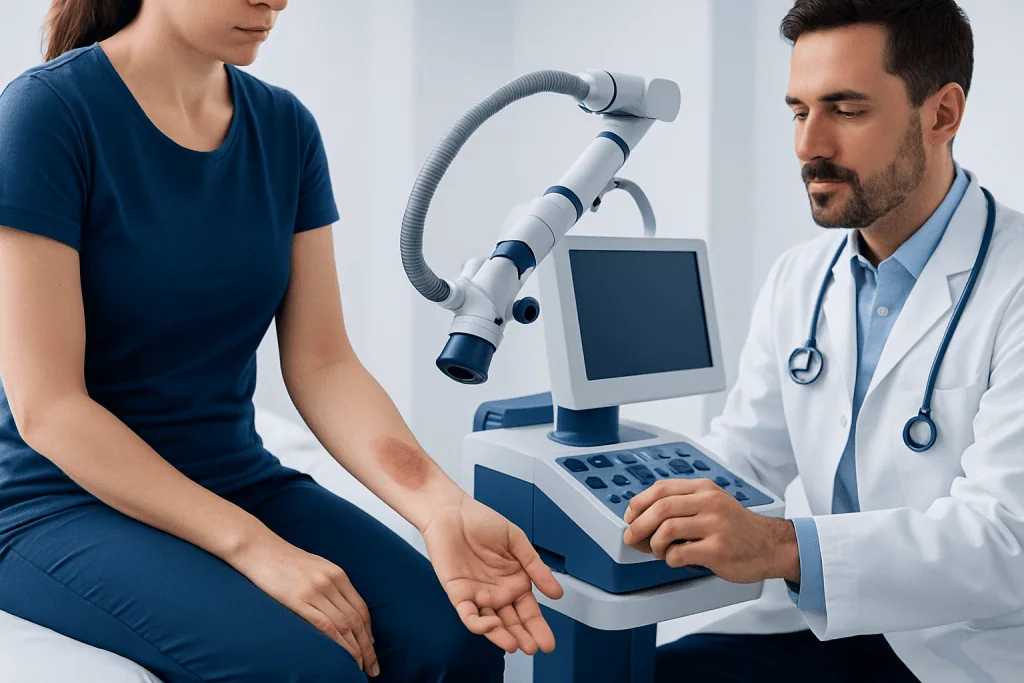
Heat from an iron can injure skin cells very quickly. The depth of damage depends on how hot the iron was, how long it touched the skin, whether clothing was between the iron and the skin, and which body area was affected. Thin skin, such as on the face or the tops of the hands, may be injured more easily.
Superficial burns usually cause redness, tenderness, and mild swelling without blisters. Partial-thickness burns commonly cause more intense pain, blistering, and a moist pink or red surface. Full-thickness burns are less common but more serious; the skin may appear white, brown, or charred and can feel numb.
Because the shape of an iron can create a focused area of heat, a carpet iron burn may leave a sharply outlined wound. If a healing burn later becomes raised, itchy, firm, or discolored, the person may be developing a scar. In some patients, especially after deeper burns, doctors may discuss scar prevention and, if needed, reconstructive plastic surgery options.
Common symptoms and warning signs

Symptoms usually start immediately after contact. The most common features are pain, redness, warmth, swelling, and tenderness. Blisters may appear right away or over the next several hours, especially in partial-thickness burns.
Some patients also notice peeling skin, fluid leakage, or a dry surface that cracks during healing. As the burn starts to recover, itching is common. Mild discomfort often improves gradually over several days, while deeper burns may remain painful or stiff for longer.
Warning signs that deserve closer attention include severe or increasing pain, reduced sensation, spreading redness, pus, fever, bad odor, or darkening skin. A burn that crosses a joint can become difficult to move comfortably, and burns on the hand may interfere with daily tasks.
- Redness and soreness
- Blisters or broken skin
- Swelling and warmth
- White, brown, or numb areas in deeper burns
- Signs of infection such as pus or worsening redness
First aid and safe home care
The best immediate step is to cool the burn under cool or lukewarm running water for about 20 minutes as soon as possible. This helps limit ongoing heat damage and may reduce pain. Jewelry, watches, or tight clothing near the area should be removed early if possible, before swelling increases.
After cooling, the burn can be gently cleaned with mild soap and water. It should then be covered with a clean, non-stick dressing or sterile gauze. Blisters should not be intentionally popped, as intact skin helps protect the wound. If a blister opens on its own, the area should be kept clean and protected.
Ice should not be applied directly, because it can worsen tissue injury. Home remedies such as butter, oils, toothpaste, or powders are also best avoided, as they may trap heat or contaminate the wound. If discomfort is significant, a doctor or pharmacist can advise on suitable over-the-counter pain relief. If the wound is larger, deeper, or slow to improve, patients may need formal wound care and follow-up.
What causes complications and who is at higher risk
The main cause of a carpet iron burn is accidental contact with a heated iron during household activities. This can happen when someone is ironing on the floor, handling an iron in a cramped space, or reaching across the appliance. Children are at special risk if they can pull a cord, touch a hot iron, or enter the area while ironing is in progress.
Complications become more likely when treatment is delayed, when the burn is deeper, or when the wound is not kept clean. Infection risk rises if blisters are opened, dressings are not changed appropriately, or the patient has a condition that slows healing.
People with diabetes, poor circulation, reduced sensation, immune system disorders, or advanced age may heal more slowly and may not feel the true extent of injury right away. In these situations, clinicians may be especially careful to look for deeper tissue damage or problems such as diabetes-related delayed healing.
How doctors diagnose and assess a burn
Diagnosis is usually made through a physical examination and a clear description of how the injury occurred. The doctor assesses the burn’s depth, size, location, pain level, and whether blisters or dead tissue are present. They also check for signs of infection and ask about medical conditions that can affect healing.
For a small, uncomplicated burn, no special testing is usually needed. The most important decision is whether the injury is superficial and likely to heal with simple care, or whether it is deeper and may need specialist review. Burns involving the face, hands, feet, genitals, major joints, or a larger body surface area are more likely to need closer monitoring.
If healing is delayed, or if the doctor is concerned about significant tissue damage, treatment may be escalated. Some patients benefit from referral for specialized burn treatment, especially when deeper burns, infection, functional limitation, or problematic scarring are concerns.
Treatment options and recovery
Treatment depends on how deep the burn is and how well it heals over time. Minor superficial burns often improve with cooling, protective dressings, and pain control. Partial-thickness burns may need more structured dressing changes and follow-up to ensure the wound stays clean and moist enough to heal.
If infection develops, a clinician may clean the wound, remove nonviable tissue if needed, and prescribe appropriate treatment. Deeper burns can sometimes require advanced dressings, splinting if a joint is involved, scar management, or surgical care. When function or appearance may be affected, doctors may involve specialists in burns, dermatology, surgery, or rehabilitation.
Recovery time varies. A mild superficial burn may settle within days, while deeper injuries can take weeks and may leave temporary color change or lasting scar tissue. Once the skin has closed, sun protection is important because newly healed skin is more prone to darkening and irritation.
Prevention and when to seek medical care
Prevention focuses on safe ironing habits. The iron should be placed on a stable heat-resistant surface, never left unattended while switched on, and kept out of reach of children. Cords should be positioned so they cannot be pulled accidentally, and the appliance should be unplugged and allowed to cool fully after use.
Medical care should be sought promptly if the burn is large, very painful, deep-looking, blistered over an important area, or caused reduced sensation. The same applies if the burn is on the face, hands, feet, genitals, or over a joint, or if there are signs of infection such as increasing redness, swelling, pus, or fever. Patients with diabetes, poor circulation, or weakened immunity should have a lower threshold for getting checked.
If a burn is not healing as expected, is leaving a tight scar, or is affecting movement, specialist review can be helpful. Acibadem International’s multidisciplinary specialists in JCI-accredited hospitals diagnose and treat burn-related injuries for international patients when advanced assessment, wound care, or reconstructive follow-up is needed.
Frequently asked questions
How serious can a carpet iron burn be?
A carpet iron burn can range from a mild superficial injury to a deeper burn that damages multiple skin layers. Even a small contact area can be more serious than it looks because irons become very hot. Depth, location, and healing progress are more important than size alone.
What should be done immediately after an iron burn?
The burned area should be cooled under cool or lukewarm running water for about 20 minutes as soon as possible. Rings, watches, or tight items near the area should be removed early if swelling has not yet developed. The burn should then be covered with a clean, non-stick dressing.
Should blisters from a carpet iron burn be popped?
No, blisters are generally best left intact. They help protect the underlying tissue and may lower the risk of infection. If a blister breaks on its own, the area should be cleaned gently and covered.
Can a carpet iron burn be treated at home?
Small, superficial burns without concerning symptoms can often be managed at home with cooling, gentle cleansing, and protective dressings. However, deeper burns, larger burns, or burns on sensitive areas should be assessed by a doctor. Home remedies like butter, toothpaste, or direct ice should be avoided.
How long does a carpet iron burn take to heal?
Healing time depends on burn depth. Mild burns may improve within several days, while partial-thickness burns can take a few weeks. Deeper burns may heal more slowly and can leave scars or changes in skin color.
When should a doctor check an iron burn?
A doctor should assess the burn if it is deep, very painful, blistering heavily, infected, or located on the face, hands, feet, genitals, or a joint. Medical review is also important if healing is delayed or the patient has diabetes, poor circulation, or a weakened immune system. Early assessment can help prevent complications.
This article is for general information only and is not a substitute for professional medical advice. Please consult a qualified doctor about your individual situation.
Explore treatments in Turkey — costs, top hospitals & a free quote
JCI-accredited · board-certified surgeons · reply within 24h
Add us as a Preferred Source to see more of our trusted health content across Google Search, AI Overviews and Discover.

More from the Health Library

Cardiac Muscle Tissue: What Patients Need to Know

Ejaculation — Explained by Medical Evidence, Not Myths

Butchugging: What Patients Need to Know

Occluded: Symptoms, Causes, and Treatment — Complete Patient Guide

Double Pneumonia: What Patients Need to Know

Farting a Lot — Explained by Medical Evidence, Not Myths
Aesthetic Plastic & Reconstructive Surgery Specialists at Acibadem

Dr. Şenol Durukan
Aesthetic Plastic & Reconstructive Surgery
Dr. Serkan Tokgönül
Aesthetic Plastic & Reconstructive Surgery
Prof. Dr. Şükrü Yazar
Aesthetic Plastic & Reconstructive Surgery
Dr. Turgut Furkan Kuybulu
Aesthetic Plastic & Reconstructive Surgery