Elliptical vs Treadmill: Key Differences and How Doctors Tell Them Apart
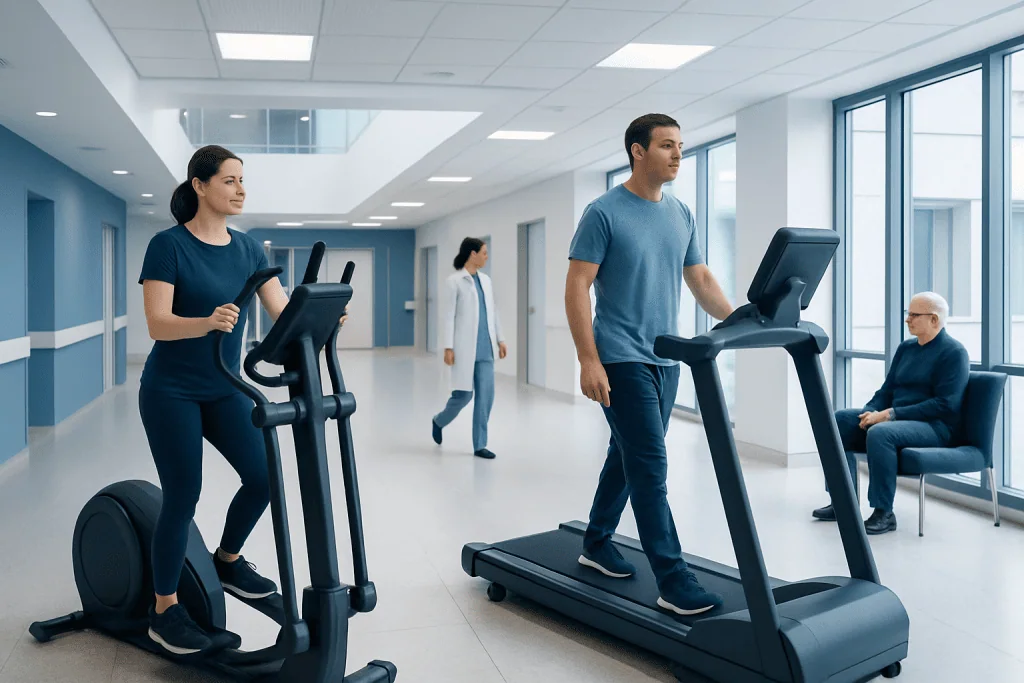
Ellipticals usually place less impact on knees, hips, and ankles than treadmills. Treadmills are often better for training that closely matches walking, jogging, or running.
Key Takeaways
- Ellipticals usually place less impact on knees, hips, and ankles than treadmills.
- Treadmills are often better for training that closely matches walking, jogging, or running.
- Doctors tell them apart by looking at symptoms, joint stress, gait, balance, and exercise goals.
- The best option depends on the person’s age, injuries, heart health, and overall conditioning.
- New or worsening chest pain, severe shortness of breath, dizziness, or joint swelling should be assessed by a doctor.
Elliptical vs treadmill is not about one machine being universally better. In most cases, the elliptical is gentler on joints, while the treadmill more closely reproduces everyday walking and running, so doctors help people choose based on pain, fitness goals, balance, and medical history.
Elliptical vs treadmill at a glance
For most people, the answer to elliptical vs treadmill is simple: an elliptical is usually easier on the joints, while a treadmill is usually better for walking and running fitness. Neither machine is automatically best for everyone. The safer and more effective choice depends on symptoms such as knee pain, back discomfort, balance concerns, excess fatigue, or shortness of breath, as well as personal goals like weight management, endurance, or rehabilitation.
Doctors often start with a practical comparison rather than a one-size-fits-all recommendation. They look at how the body moves on each machine, which tissues are under stress, and whether exercise is meant for general health, return to activity after injury, or structured cardiovascular training.
Here is a side-by-side overview:
- Impact on joints: Elliptical is usually lower impact; treadmill has more repeated loading with each step.
- Movement pattern: Elliptical uses a guided gliding motion; treadmill mimics natural walking or running more closely.
- Balance demand: Treadmill may require more balance and coordination, especially at higher speeds; elliptical can feel more stable for some users.
- Muscle use: Both train the legs; ellipticals may involve the upper body when moving handles are used.
- Bone loading: Treadmill walking or running generally provides more weight-bearing stimulus.
- Common reasons to choose: Elliptical for joint sensitivity or cross-training; treadmill for gait training, brisk walking, or run-specific conditioning.
These differences matter most when symptoms are present. A machine that feels manageable for a healthy adult may aggravate pain or instability in someone with arthritis, recent injury, or heart and lung disease.
How a clinician tells them apart
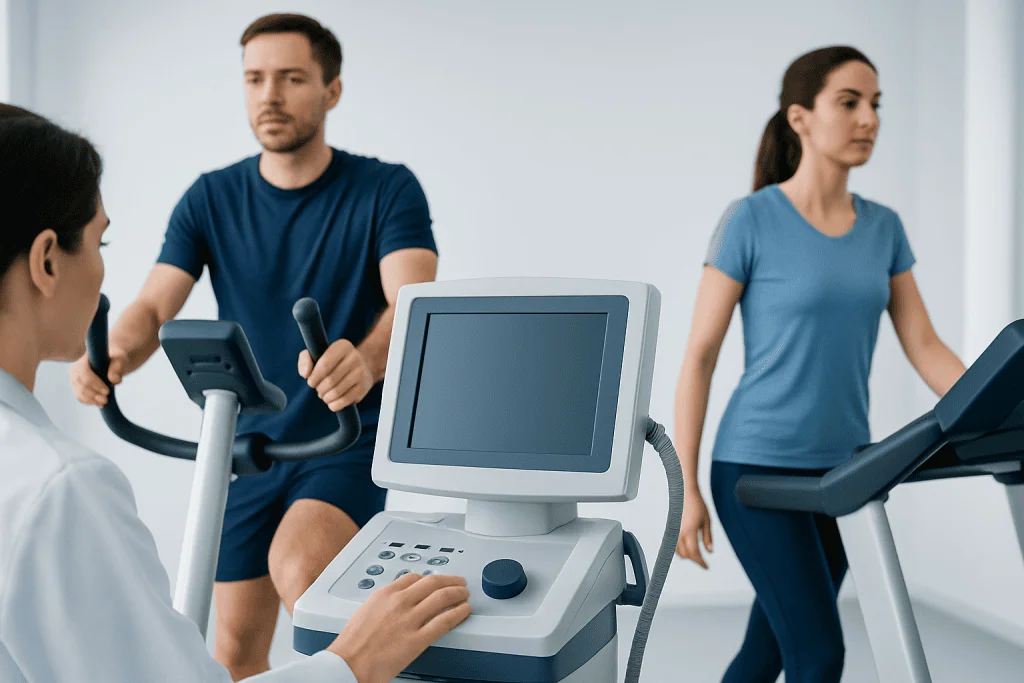
Clinicians do not just compare calorie burn or popularity. They ask what happens during and after exercise. For example, pain at the front of the knee after treadmill use may suggest a problem with impact tolerance, while hip tightness or awkward foot positioning on an elliptical may point to technique, stride mechanics, or mobility limits.
A doctor or physiotherapist typically considers four main questions. First, what is the symptom: pain, breathlessness, fatigue, imbalance, or fear of falling? Second, where is it felt: knee, hip, back, foot, chest, or the whole body? Third, when does it appear: immediately, only with speed or incline, or later the same day? Fourth, what is the goal: rehabilitation, weight control, general heart health, or race training?
They may also watch the person move. Gait on a treadmill can reveal limping, overstriding, foot drop, or asymmetry. On an elliptical, clinicians look for trunk leaning, knee collapse inward, reduced hip extension, or overuse of the handles. In some cases, formal assessment may include strength testing, flexibility evaluation, heart rate response, or imaging if there is concern for conditions such as knee pain or persistent spinal symptoms.
This clinical approach matters because the “better” machine can change over time. Someone recovering from a flare of joint pain may begin with low-impact training, then later transition to treadmill walking as symptoms improve and functional goals become more specific.
What the elliptical is usually better for
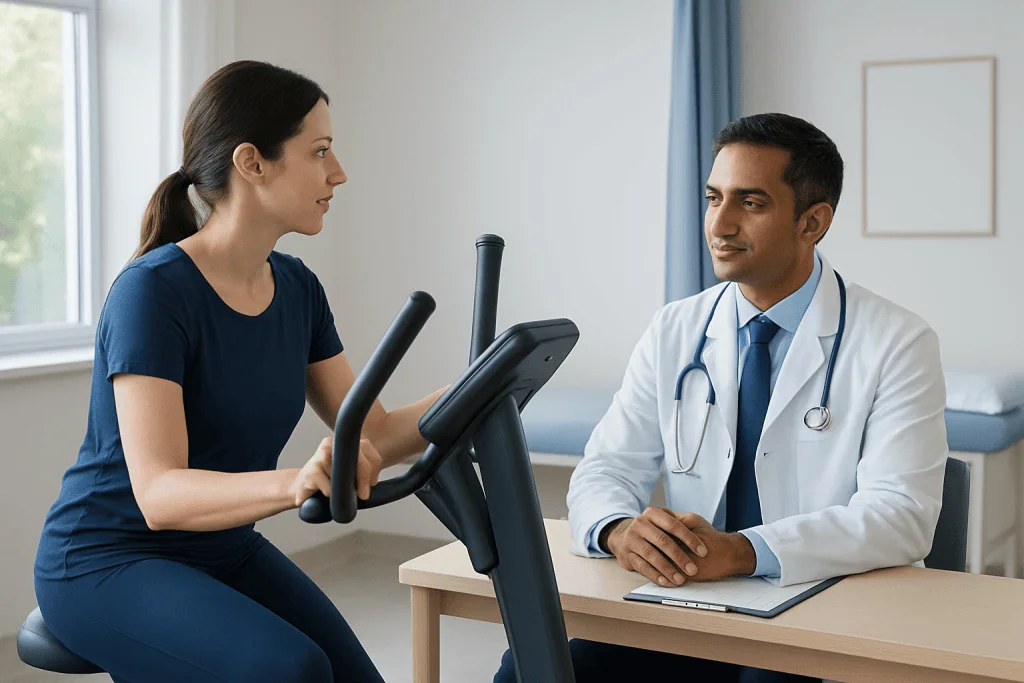
The elliptical is often a good option for people who want cardiovascular exercise with less repeated impact through the knees, hips, and ankles. Because the feet usually stay in contact with the pedals, the gliding motion can reduce the jarring sensation that some people feel with brisk walking or jogging. This can be especially helpful for people with mild joint sensitivity, those returning to exercise after a layoff, or individuals with a higher body weight who find impact uncomfortable.
Doctors may favor the elliptical when symptoms are triggered by pounding rather than by motion itself. For example, a person with early wear-and-tear changes, exercise-related soreness, or recovery after some orthopedic problems may tolerate elliptical training better than treadmill work. In rehabilitation settings, structured physical therapy and rehabilitation may also include low-impact machines to rebuild endurance while limiting aggravation.
That said, lower impact does not mean risk-free. The elliptical can still stress the knees or hips if the stride is too long, resistance is too high, posture is poor, or the user compensates for weakness on one side. Some people also find the fixed pattern awkward, especially if they have stiffness, balance problems, or difficulty coordinating arm and leg movement.
In general, the elliptical may be preferable for:
- People with mild joint discomfort during walking or running
- Those easing back into exercise after inactivity
- Cross-training to reduce repetitive impact
- Some patients with obesity or deconditioning who need a gentler start
- Users who want combined upper- and lower-body aerobic work
What the treadmill is usually better for
The treadmill is often the more appropriate choice when the goal is to improve real-world walking, brisk walking, jogging, or running capacity. Its movement pattern is familiar and functional, which can make it useful for gait training, endurance work, and preparation for outdoor activity. For many people, treadmill walking also feels more intuitive than the guided path of an elliptical.
Clinicians may prefer the treadmill when they want to assess how a person actually walks. Changes in step length, arm swing, foot placement, and posture are easier to observe. Treadmills can also be part of supervised cardiac evaluation or exercise programs, including cardiac rehabilitation for selected patients under medical guidance.
Another consideration is bone and tissue loading. Weight-bearing exercise has benefits for musculoskeletal health, and treadmill walking generally loads the skeleton more than an elliptical does. However, more loading is not always better if it causes pain, swelling, or overuse. People with arthritis, shin pain, plantar heel pain, or active flare-ups of low back pain may need pace, incline, or duration adjusted carefully.
The treadmill is often a better fit for:
- Walking-specific or running-specific fitness goals
- People training for daily function or outdoor exercise
- Clinicians assessing gait mechanics
- Those who tolerate impact well and want progressive speed or incline work
- Structured programs for endurance improvement when medically appropriate
How doctors choose the right option for different symptoms
When symptoms are the main concern, doctors match the machine to the body system involved. For joint pain, they consider whether symptoms are caused more by impact, range of motion, muscle weakness, or poor mechanics. For heart or lung symptoms, they look at exercise tolerance, recovery time, oxygen needs, and safety. For neurologic or balance issues, they focus on fall risk and coordination.
For example, someone with <a href="https://acibademinternational.com/diseases/knee-osteoarthritis/”>knee osteoarthritis may do better with an elliptical if treadmill walking causes repeated painful loading. A person with poor balance may actually feel safer on one machine than the other depending on posture, hand support, and confidence. Someone with limited ankle mobility may prefer the treadmill’s more natural step, while another person with foot pain may tolerate the elliptical better because there is less heel strike.
In some situations, further testing is needed. Persistent exercise-related chest discomfort, unusual breathlessness, fainting, or marked palpitations should not be solved by simply changing machines. A doctor may recommend heart evaluation, lung testing, or supervised exercise assessment. If symptoms suggest a musculoskeletal problem, care may include orthopedic rehabilitation or targeted treatment after diagnosis.
The decision also changes with progress. Early recovery may favor shorter, easier sessions on an elliptical, while later rehabilitation may include treadmill work to restore normal walking speed, endurance, and confidence. What matters most is symptom response over time, not the label of one machine being “best.”
What to do if choosing for fitness, pain, or recovery
For general fitness, the best machine is usually the one a person can use regularly with good form and no concerning symptoms. Consistency matters more than chasing a perfect device. Starting at a manageable intensity and gradually increasing duration is often safer than doing long or intense sessions too soon.
If the main issue is joint discomfort, it helps to compare both machines under similar conditions: easy pace, short duration, and attention to symptoms during and the day after exercise. Pain that stays mild and settles quickly may be manageable, but pain that sharpens, causes limping, or leads to swelling suggests the program needs to be adjusted. Shoes, posture, resistance, speed, and stride length all influence comfort.
For recovery after injury or illness, exercise choice should reflect a clinician’s advice. Some people benefit from supervised progression rather than unsupervised trial and error. This is especially true after surgery, prolonged inactivity, heart disease, or recurring problems such as arthritis. In selected cases, clinicians may combine aerobic exercise with strength work, mobility exercises, and balance training rather than relying on one machine alone.
Practical self-care tips include:
- Warm up for several minutes before increasing effort
- Stop if there is sudden pain, dizziness, chest discomfort, or unusual shortness of breath
- Keep posture upright and avoid gripping handles too tightly
- Progress time or intensity gradually, not both at once
- Alternate activities if one machine repeatedly provokes symptoms
When to seek medical care
Most people can compare an elliptical and treadmill safely if they begin gently and listen to their bodies. However, exercise symptoms should not be ignored when they are severe, persistent, or unexplained. A medical assessment is especially important if discomfort limits daily activities or prevents a return to normal movement.
A person should seek medical care promptly if exercise causes chest pain, pressure, fainting, severe shortness of breath, blue lips, or a racing or irregular heartbeat that does not settle. Urgent evaluation is also important for sudden calf swelling, major joint swelling, inability to bear weight, or weakness and numbness that appear during activity.
Non-urgent but important reasons to arrange a visit include knee, hip, foot, or back pain that lasts more than a few days after exercise; repeated limping; worsening balance; or symptoms that continue despite reducing intensity. A clinician can help identify whether the issue is technique, conditioning, arthritis, overuse, or a more specific medical problem.
Near the end of the care pathway, some people benefit from specialist input. Acibadem International’s multidisciplinary specialists and JCI-accredited hospitals diagnose and treat musculoskeletal, cardiac, and rehabilitation-related concerns for international patients when further evaluation is needed.
Frequently asked questions
Is an elliptical better than a treadmill for bad knees?
Often, yes. An elliptical usually creates less impact on the knees because the feet stay on the pedals, but it can still cause discomfort if resistance, stride pattern, or posture are not right. A doctor or physiotherapist can help if knee pain continues.
Does a treadmill burn more calories than an elliptical?
It can, but the answer depends on intensity, body size, fitness level, and how long the exercise lasts. A hard elliptical workout may be more demanding than an easy treadmill walk. In practice, the best option is the one a person can perform regularly and safely.
Which is better for weight loss, elliptical or treadmill?
Either can support weight loss when paired with regular activity and a sustainable eating pattern. Treadmills may suit people who enjoy walking or running, while ellipticals may help those who need lower-impact exercise. Long-term adherence matters more than the machine itself.
Can an elliptical help with back pain?
Sometimes, especially if impact from walking or running worsens symptoms. However, some people feel more back discomfort on an elliptical because of posture, trunk position, or the machine’s fixed motion. Persistent or radiating back pain should be evaluated by a clinician.
Is a treadmill better for heart health?
Both machines can improve cardiovascular fitness when used at an appropriate intensity. The treadmill may feel more natural for structured walking programs, but the elliptical can be equally useful if it allows longer or more comfortable exercise. People with heart disease should follow medical advice about safe exertion levels.
How do doctors decide which machine is safer after an injury?
They look at the injured area, current pain, range of motion, strength, balance, and the stage of recovery. They also consider which movements trigger symptoms and whether the person needs low-impact exercise or a more functional walking pattern. The recommendation may change as healing progresses.
References
- American College of Sports Medicine
- Centers for Disease Control and Prevention
- National Institute of Arthritis and Musculoskeletal and Skin Diseases
- National Heart, Lung, and Blood Institute
- World Health Organization
This article is for general information only and is not a substitute for professional medical advice. Please consult a qualified doctor about your individual situation.
Joint and spine care in Turkey — expert assessment & treatment
JCI-accredited · board-certified surgeons · reply within 24h
Add us as a Preferred Source to see more of our trusted health content across Google Search, AI Overviews and Discover.
Check your numbers in seconds
BMI, calories, due date, blood pressure and 30+ more clinical calculators — free, instant, doctor-reviewed ranges.

More from the Health Library


Related Specialists

Dr. Rüçhan Mutlu
Emergency Service
Yağız Meteoğlu
Physical Medicine & Rehabilitation
Prof. Dr. Aykut Soyder
General Surgery
Assoc. Prof. Dr. Abdülhak Hamit Karayağız
General Surgery