Understanding Ingrown Fingernail Treatment: A Complete Patient Guide

An ingrown fingernail happens when the nail edge presses into or grows into nearby skin. Early care may include warm water soaks, gentle protection of the nail fold, and avoiding further nail trauma.
Key Takeaways
- An ingrown fingernail happens when the nail edge presses into or grows into nearby skin.
- Early care may include warm water soaks, gentle protection of the nail fold, and avoiding further nail trauma.
- Redness, swelling, drainage, or increasing tenderness can suggest infection and should be assessed by a clinician.
- People with diabetes, poor circulation, or weakened immunity should seek medical advice promptly.
- Persistent or recurrent cases may need partial nail treatment or treatment of an underlying nail or skin condition.
Ingrown fingernail treatment usually begins with simple measures such as soaking the finger, reducing pressure on the nail, and keeping the area clean. If pain worsens, pus develops, or the problem keeps returning, a doctor may recommend medication or a minor procedure to relieve the nail edge and treat infection.
Overview: what ingrown fingernail treatment involves
Ingrown fingernail treatment depends on how irritated the finger is and whether infection is present. Mild cases often improve with warm soaks, protecting the skin beside the nail, and avoiding habits that keep the nail edge digging in. When swelling, drainage, marked pain, or spreading redness occurs, medical assessment is important because treatment may need to address both the nail pressure and a skin infection.
An ingrown fingernail is less common than an ingrown toenail, but it can be very uncomfortable because hands are used constantly. The nail edge may press into the side of the finger after trimming the nail too short, picking at the corners, or repeated minor injury. In some people, skin around the nail becomes inflamed first, then the swollen tissue traps the nail edge and makes the problem worse.
This condition also overlaps with paronychia, an infection or inflammation of the skin around the nail. That is why careful evaluation matters: the problem may be caused mainly by nail shape and pressure, mainly by infection, or by a combination of both. Identifying the cause helps guide the most effective treatment and lowers the chance of recurrence.
Signs and symptoms to notice
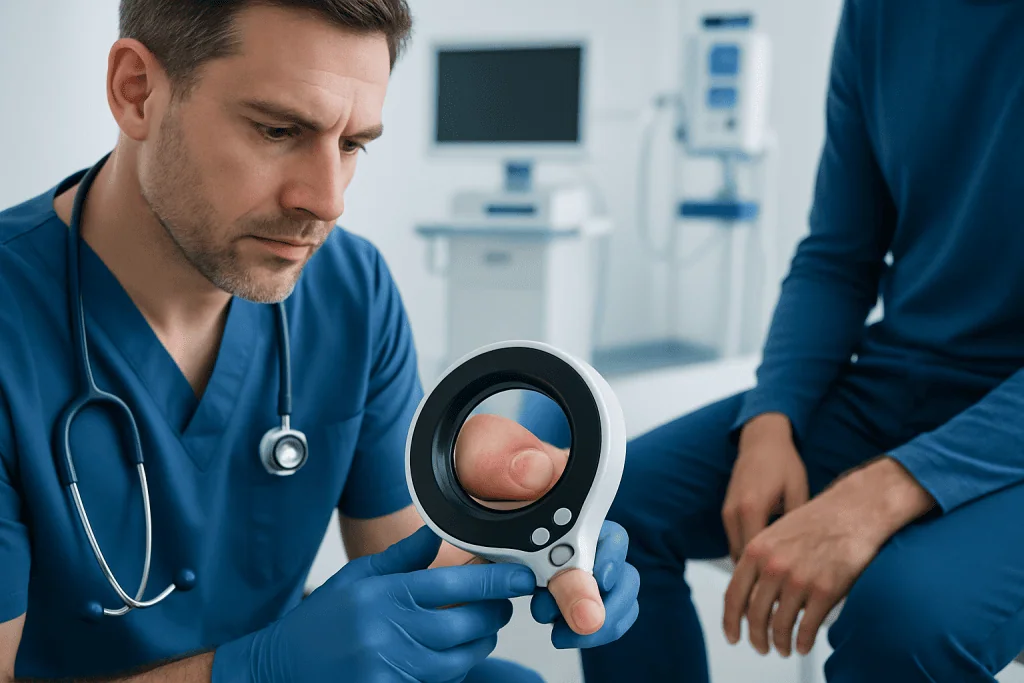
The earliest symptoms are usually tenderness along one side of the fingernail and mild redness where the nail meets the skin. The area may feel sore when typing, gripping objects, washing dishes, or putting pressure on the fingertip. Some people notice that the skin beside the nail looks puffy or begins to fold over the nail edge.
If irritation continues, the finger may become more swollen, warm, and painful. A small amount of clear fluid, yellow drainage, or pus can appear. The skin may also bleed easily, especially if it has become overgrown or if the person has tried to dig out the nail corner at home.
Symptoms that can suggest a more significant infection include throbbing pain, increasing redness, worsening swelling, and difficulty using the finger normally. In some cases, there may be a pocket of pus or a soft, raised area near the nail fold. Fever is less common, but if it occurs along with a worsening finger infection, prompt medical care is advisable.
- Pain along the side of the nail
- Redness and swelling around the nail fold
- Tenderness when the finger is touched
- Drainage, pus, or crusting
- Skin growing over the nail edge
Common causes and risk factors

One of the most common causes of an ingrown fingernail is trimming the nail with rounded or very deep corners. This can leave a sharp edge that grows into nearby skin as the nail advances. Biting the nails, picking at hangnails, and pulling on the cuticle can also injure the nail fold and create inflammation that traps the nail edge.
Repeated exposure to water, detergents, cleaning agents, or workplace irritants may soften and inflame the skin around the nails. This is one reason ingrown nails and infections can occur more often in people whose hands are frequently wet. Trauma, such as a jammed finger, manicure injury, or repetitive pressure, can also change the nail’s growth pattern.
Some people are more prone to recurrent problems because of naturally curved nails, eczema, psoriasis, or chronic inflammation around the nail. Fungal infection can thicken or distort the nail plate, making it more likely to press into the skin. In these situations, a doctor may also look for related problems such as paronychia or other nail disorders that require separate treatment.
How doctors diagnose the problem
Diagnosis is usually made through a physical examination. A doctor will look at the shape of the nail, the surrounding skin, and the extent of redness, swelling, drainage, or overgrown tissue. They may ask when symptoms started, whether the finger has been injured, and if home treatment or prior infections have occurred.
In many cases, tests are not necessary. However, if drainage is present, the clinician may assess whether there is an abscess that needs to be drained. If the problem is severe, recurrent, or unusual in appearance, they may also consider whether an underlying skin condition, fungal infection, or chronic inflammatory process is contributing.
People with diabetes, circulation problems, or immune suppression may need more careful evaluation because even a small nail infection can become harder to control. If there is concern for deep infection, spread beyond the nail fold, or another hand condition, the doctor may recommend further assessment and a more structured treatment plan.
Treatment options: from home care to minor procedures
For a mild ingrown fingernail without significant infection, conservative care is often enough. This may include soaking the finger in warm water several times a day, gently drying it afterward, and keeping the area clean. The goal is to reduce inflammation, soften the skin, and lessen pressure from the nail edge. It is generally best to avoid cutting into the nail corner, using sharp tools under the nail, or picking at the skin, as these steps can worsen irritation and introduce bacteria.
If the surrounding skin is very inflamed or infected, a doctor may recommend medication. Depending on the findings, treatment might include topical therapy, drainage of a small collection of pus, or antibiotics when bacterial infection is clearly present. When a true nail-fold infection is part of the problem, care may overlap with paronychia treatment to reduce inflammation and control infection safely.
Persistent, painful, or recurrent cases may require a minor procedure to lift, trim, or partially remove the offending section of nail. This is usually done under local anesthesia in a clinic setting. If an abnormal nail shape keeps causing recurrence, the clinician may discuss more definitive nail procedures. In some situations, broader hand evaluation may be useful, especially if trauma or another structural issue is suspected and hand surgery expertise is needed.
If the nail is distorted by chronic disease, treatment may also focus on the underlying cause. For example, addressing eczema, fungal infection, or another skin disorder can help prevent future episodes. In selected cases where the nail unit appears abnormal or a growth is suspected, doctors may consider input similar to nail surgery care, though this is not needed for most straightforward ingrown fingernails.
Self-care and prevention at home
Prevention begins with gentle nail care. Fingernails are best trimmed straight across or with only slight rounding at the tip, without cutting deeply into the corners. Keeping nails at a practical length can reduce trauma while still leaving enough free edge so the surrounding skin does not overlap the nail easily.
Protecting the hands from repeated moisture and irritants also helps. Wearing gloves for wet work or chemical exposure may reduce swelling and skin breakdown around the nail folds. Moisturizing the hands and cuticles can support the skin barrier, especially in people whose skin becomes dry, cracked, or inflamed.
It is also helpful to avoid biting nails, tearing hangnails, or aggressively pushing back cuticles. Small injuries around the nail can become entry points for infection. If someone is prone to recurrent nail inflammation, prompt attention to early tenderness or redness may stop a mild problem from becoming more severe.
- Trim nails carefully and avoid digging out the corners
- Keep the finger clean and dry after soaking or washing
- Use protective gloves for wet work or irritant exposure
- Do not squeeze or puncture a swollen nail fold at home
- Seek advice if the same nail keeps becoming ingrown
When to seek medical care
Medical care is recommended if home treatment does not bring improvement within a short time, or if symptoms are getting worse rather than better. Increasing pain, visible pus, spreading redness, a bad odor, or skin that is growing over the nail edge are common reasons to arrange an evaluation. Prompt treatment can relieve discomfort and lower the risk of the infection extending deeper into the finger.
People with diabetes, peripheral vascular disease, nerve damage, or weakened immunity should not wait long to have a painful or infected fingernail assessed. These conditions can make healing slower and complications more likely. A clinician can decide whether drainage, antibiotics, or a nail procedure is necessary and can look for signs of a more serious hand infection.
If the problem keeps coming back, it is worth investigating why. Recurrent inflammation may reflect chronic irritation, a skin disease, nail deformity, or a persistent infection such as nail fungus. Near the end of the care pathway, some patients may also seek assessment at centers experienced in multidisciplinary hand, skin, and infection care. Acibadem International’s multidisciplinary specialists in JCI-accredited hospitals diagnose and treat nail and hand conditions for international patients.
Frequently asked questions
Can an ingrown fingernail heal on its own?
A mild ingrown fingernail can improve with simple care such as warm soaks, keeping the area clean, and avoiding pressure on the nail edge. If pain, swelling, or drainage continues, it is less likely to settle fully without medical treatment.
Should a person cut out the corner of an ingrown fingernail at home?
It is generally not recommended to dig into the nail corner at home. This can push the nail deeper, injure the skin, and increase the chance of infection.
What is the difference between an ingrown fingernail and paronychia?
An ingrown fingernail refers to the nail edge pressing into nearby skin. Paronychia is inflammation or infection of the skin around the nail, and it may happen because of an ingrown nail or other irritation such as picking, biting, or wet work.
When are antibiotics needed for an ingrown fingernail?
Antibiotics may be considered when there is clear bacterial infection, especially if redness, swelling, warmth, or pus is present. They are not necessary for every mild case, so a doctor should decide based on the examination.
Why does the same fingernail keep becoming ingrown?
Recurrence can happen because of the way the nail is trimmed, the natural curve of the nail, repeated trauma, or ongoing skin inflammation. Sometimes an underlying condition such as eczema, psoriasis, or fungal nail changes also contributes.
Is a minor procedure painful?
If a procedure is needed, it is usually done with local anesthesia to numb the finger first. Most people feel pressure rather than sharp pain during the procedure, and discomfort afterward is usually manageable with routine aftercare.
References
- American Academy of Dermatology
- American Academy of Family Physicians
- MedlinePlus
- National Health Service
- Mayo Clinic
This article is for general information only and is not a substitute for professional medical advice. Please consult a qualified doctor about your individual situation.
Explore treatments in Turkey — costs, top hospitals & a free quote
JCI-accredited · board-certified surgeons · reply within 24h
Add us as a Preferred Source to see more of our trusted health content across Google Search, AI Overviews and Discover.