Spinal Cord Function — Explained by Medical Evidence, Not Myths

The spinal cord is the main communication pathway between the brain and body. It helps control movement, sensation, reflexes, and some automatic body functions.
Key Takeaways
- The spinal cord is the main communication pathway between the brain and body.
- It helps control movement, sensation, reflexes, and some automatic body functions.
- Symptoms depend on which level of the spinal cord is affected and whether damage is partial or complete.
- Spinal cord problems can result from injury, compression, infection, inflammation, tumors, or reduced blood supply.
- Early medical evaluation is important for new weakness, numbness, walking problems, or loss of bladder or bowel control.
Spinal cord function is to transmit signals between the brain and the rest of the body while also managing reflexes that help the body respond quickly and automatically. Understanding how it works can make symptoms, injuries, and treatment options easier to recognize without relying on myths or oversimplified explanations.
Overview: what spinal cord function really means
Spinal cord function is the set of jobs performed by the spinal cord, a long bundle of nerve tissue that connects the brain to most of the body. Its core role is to carry electrical messages up and down the back so the brain can receive information from the skin, muscles, and organs, and send instructions back for movement and body control. It also helps organize reflexes, which are rapid responses that do not always require conscious thought.
In practical terms, this means the spinal cord helps a person feel touch, pain, temperature, and body position; move the arms, legs, and trunk; and support automatic functions such as parts of bladder, bowel, sexual, and blood pressure control. Because so many systems depend on it, even a small problem in the spinal cord can affect several body functions at once.
A common myth is that the spinal cord simply acts like a passive “cable.” Medical evidence shows it is more active than that. It does not think in the same way as the brain, but it processes incoming signals, helps coordinate patterns of movement, and triggers protective reflexes that are essential for daily life.
How the spinal cord is built and how signals travel
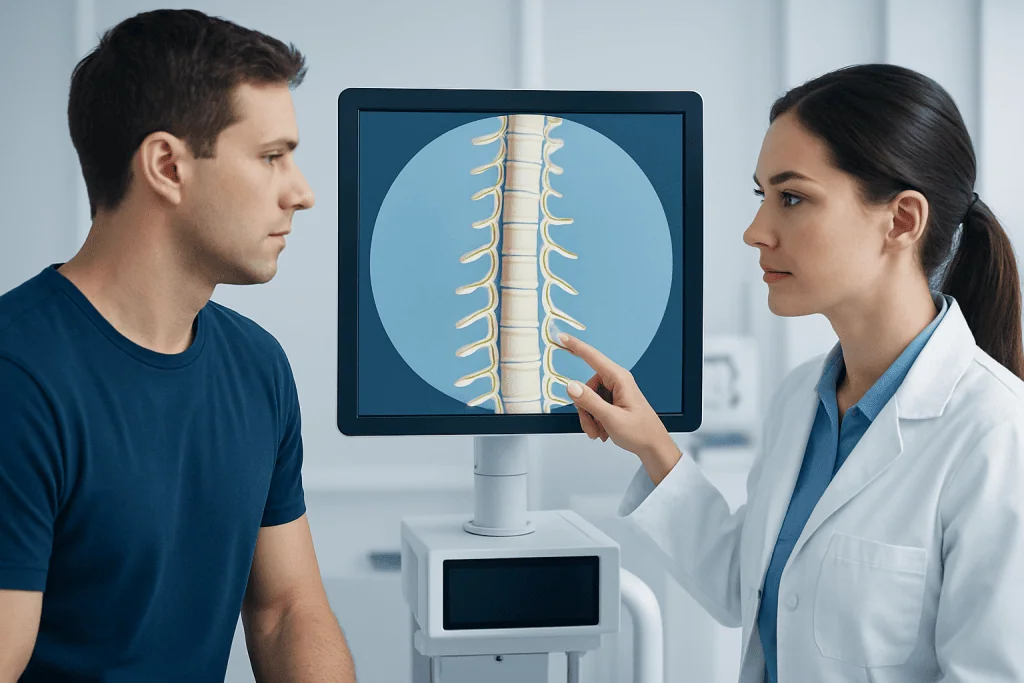
The spinal cord begins at the base of the brain and runs down through the spinal canal, which is formed by the vertebrae. It is protected by bone, fluid, and tissue layers called meninges. Pairs of spinal nerves branch off at different levels and carry messages to specific regions of the body.
Its inner structure helps explain its function. White matter contains long nerve pathways that carry signals upward to the brain and downward to the body. Gray matter contains nerve cell bodies and local circuits that help process information and produce reflexes. These pathways are organized, so a problem in one area can affect one type of function more than another.
Different levels of the spinal cord serve different body regions. The cervical cord relates to the neck, arms, diaphragm, and parts of hand function. The thoracic cord is linked to the chest and upper trunk. The lumbar and sacral regions are involved in leg movement, sensation, and bladder and bowel function. This is why the location of a spinal cord problem matters as much as the cause.
When someone hears terms such as “compression,” “lesion,” or “injury,” these describe disruptions to normal signal flow. A compressed or inflamed cord may still transmit some signals, while severe damage may interrupt them more completely. Conditions affecting the cord can overlap with disorders such as spinal cord injury or nerve root compression from a herniated disc.
What the spinal cord controls in everyday life
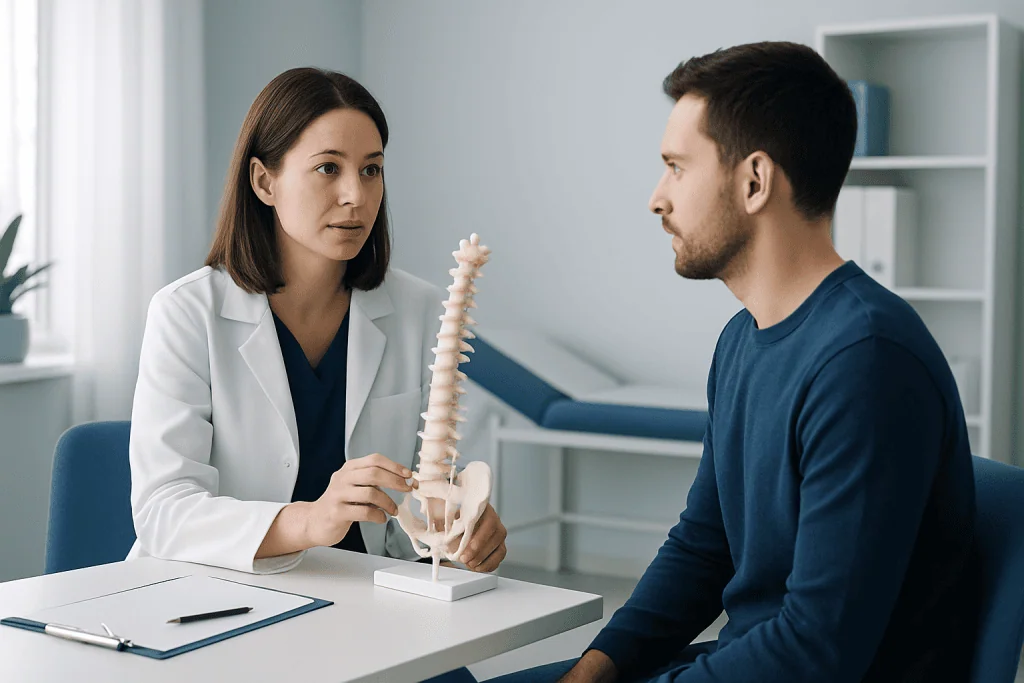
Spinal cord function can be understood by looking at four broad tasks: carrying sensation to the brain, sending movement commands to muscles, coordinating reflexes, and supporting autonomic functions. These tasks happen continuously, often without a person noticing them.
Sensory pathways help the brain detect touch, pain, pressure, vibration, temperature, and limb position. Motor pathways carry instructions from the brain to muscles for walking, balance, posture, breathing support, and fine hand actions. If these pathways are disturbed, a person may notice weakness, stiffness, clumsiness, numbness, or unusual sensations.
Reflexes are another important part of spinal cord function. Examples include pulling a hand away from a hot surface or the knee-jerk response during a physical exam. These are not random movements; they are organized circuits that allow rapid reactions before the brain fully processes the event.
The spinal cord also contributes to automatic body functions through the autonomic nervous system. It helps regulate parts of sweating, blood vessel tone, sexual response, and bladder and bowel control. This is why some spinal cord disorders cause symptoms that seem unrelated at first, such as urinary urgency, constipation, dizziness, or changes in sexual function.
Signs that spinal cord function may be affected
Symptoms of a spinal cord problem vary by cause, severity, and spinal level, but they often follow recognizable patterns. People may develop neck or back pain, arm or leg weakness, numbness, tingling, difficulty with balance, or changes in walking. Some notice increasing stiffness or muscle spasms rather than simple loss of strength.
Because the spinal cord serves both sides of the body, symptoms may affect both arms, both legs, or one side more than the other depending on the area involved. A lesion in the neck may affect both the arms and legs, while a lower lesion may mainly affect the legs. Some people also develop a band-like sensation around the chest or abdomen.
Bladder and bowel changes can be especially important clues. Trouble starting urination, leakage, retention, constipation, or loss of control may suggest that spinal cord pathways are involved. Sexual dysfunction can also occur. These symptoms should not be ignored, particularly if they are new or worsening.
- Weakness in the arms or legs
- Numbness, tingling, or reduced sensation
- Problems with coordination, balance, or walking
- Muscle stiffness, spasms, or exaggerated reflexes
- Loss of bladder or bowel control
- Severe back or neck pain with neurologic symptoms
Why spinal cord function can become impaired
Spinal cord dysfunction has many possible causes. Trauma is one of the best known, including falls, vehicle accidents, sports injuries, or violence. In these situations, the cord may be bruised, compressed, or directly damaged. However, not all spinal cord problems are caused by sudden injury.
Gradual compression is also common. Degenerative changes in the spine, thickened ligaments, bone spurs, or a disc pressing into the spinal canal can narrow the space around the cord. Doctors may describe this as cervical or thoracic myelopathy when the cord itself is affected. Tumors, bleeding, abscesses, and fractures can also compress the cord.
Other causes include inflammation, autoimmune disease, infection, and reduced blood flow. Conditions such as transverse myelitis, multiple sclerosis, and spinal cord infarction may injure the cord without a major structural problem in the bones. Rarely, congenital abnormalities can change how the spinal cord develops or is positioned.
Risk factors depend on the cause but may include older age, osteoporosis, contact sports, prior spine disease, cancer history, infections, autoimmune disease, and vascular risk factors. In some cases, specialized evaluation with neurology assessment and MRI imaging helps clarify whether symptoms come from the spinal cord, brain, peripheral nerves, or muscles.
How doctors evaluate spinal cord problems
Diagnosis begins with a careful history and neurologic examination. A doctor asks when symptoms started, whether they came on suddenly or gradually, and which body areas are affected. The examination checks strength, sensation, reflexes, muscle tone, coordination, and walking pattern. Findings often help localize the problem to a specific spinal level.
Imaging is central to diagnosis. MRI is usually the most useful test because it shows the spinal cord, discs, soft tissues, and many causes of compression or inflammation. CT scans can be helpful for bone detail, especially after trauma. In urgent cases, rapid imaging is important to identify problems that require immediate treatment.
Additional tests may include blood work, lumbar puncture in selected inflammatory or infectious cases, and nerve studies when symptoms could also come from peripheral nerves. If a mass is suspected, biopsy or further imaging may be needed. The goal is not only to confirm that spinal cord function is impaired, but also to identify the exact reason.
Because spinal cord disorders can overlap with brain and nerve conditions, some patients benefit from a multidisciplinary review. Depending on the findings, this may involve rehabilitation medicine, orthopedics, neurosurgery, or neurosurgical care when structural compression or instability is present.
Treatment and recovery: restoring function where possible
Treatment depends on the cause, how quickly symptoms developed, and whether the spinal cord is being compressed. Emergencies focus on preventing further damage. This may involve immobilization after trauma, urgent surgery for compression, or treatment of infection, bleeding, or severe inflammation. In non-emergency situations, treatment is tailored to the underlying diagnosis and the person’s overall health.
Medicines may be used to reduce inflammation, control pain, relax muscle spasms, or treat infection or autoimmune disease. Surgery may be recommended when the spinal cord is compressed by a disc, tumor, fracture, or spinal canal narrowing. The purpose of surgery is usually to relieve pressure, stabilize the spine, or remove a cause of compression, not simply to address pain.
Rehabilitation is a major part of care. Physical therapy, occupational therapy, mobility training, bladder and bowel support, and spasticity management can help people regain function, prevent complications, and adapt safely to changes. Even when full recovery is not possible, rehabilitation often improves independence and quality of life.
Recovery is variable. Some people improve significantly after the cause is treated, while others have lasting symptoms depending on the extent of damage and how quickly treatment began. Near the end of the care pathway, a center such as Acibadem International may coordinate multidisciplinary evaluation for international patients in JCI-accredited hospitals, particularly when diagnosis, spine intervention, and rehabilitation need to be planned together.
Prevention, self-care, and when to seek medical care
Not every spinal cord disorder can be prevented, but some risks can be reduced. Wearing seat belts, using appropriate sports protection, preventing falls, treating osteoporosis, and maintaining spine health may lower the risk of traumatic or degenerative injury. People with known spine disease should seek follow-up if symptoms change, especially if walking or hand function worsens.
Self-care is supportive but should not replace evaluation for neurologic symptoms. Good posture, safe lifting technique, regular physical activity, and management of chronic conditions such as diabetes or high blood pressure may help overall nerve and vascular health. If a doctor recommends therapy or rehabilitation, following the plan consistently can support function and safety.
Medical care should be sought promptly for new or progressive weakness, numbness in both legs or arms, trouble walking, severe neck or back pain with neurologic symptoms, or any loss of bladder or bowel control. Emergency care is especially important after trauma, sudden paralysis, rapidly spreading numbness, or sudden inability to urinate. Early assessment can make a meaningful difference when spinal cord function is threatened.
Frequently asked questions
What is the main function of the spinal cord?
The spinal cord carries messages between the brain and the rest of the body. It also helps control reflexes and supports some automatic functions such as parts of bladder, bowel, and sexual function.
Can the spinal cord work without the brain?
The spinal cord can produce certain reflexes without conscious input from the brain. However, normal movement, sensation, and coordinated body control depend on ongoing communication between the spinal cord and the brain.
What symptoms suggest a spinal cord problem rather than a simple back problem?
Warning signs include weakness, numbness, balance trouble, abnormal reflexes, stiffness, and changes in bladder or bowel control. Back or neck pain alone is common, but pain with neurologic changes needs medical attention.
Does damage to the spinal cord always cause paralysis?
No. Spinal cord damage can be mild, partial, or severe, and symptoms vary with the location and extent of injury. Some people have numbness, clumsiness, or bladder symptoms without complete paralysis.
How do doctors test spinal cord function?
Doctors begin with a neurologic examination to assess strength, sensation, reflexes, coordination, and walking. Imaging, especially MRI, is often used to see whether the spinal cord is compressed, inflamed, injured, or otherwise affected.
Can spinal cord function recover after injury or compression?
Recovery is possible in some cases, especially when the cause is treated early and damage is limited. The degree of improvement depends on the underlying condition, how long the cord was affected, and the response to rehabilitation.
References
- World Health Organization
- National Institute of Neurological Disorders and Stroke
- National Institute of Arthritis and Musculoskeletal and Skin Diseases
- American Association of Neurological Surgeons
- Merck Manual Consumer Version
This article is for general information only and is not a substitute for professional medical advice. Please consult a qualified doctor about your individual situation.
Joint and spine care in Turkey — expert assessment & treatment
JCI-accredited · board-certified surgeons · reply within 24h
Add us as a Preferred Source to see more of our trusted health content across Google Search, AI Overviews and Discover.
Check your numbers in seconds
BMI, calories, due date, blood pressure and 30+ more clinical calculators — free, instant, doctor-reviewed ranges.

More from the Health Library

Autonomic Dysreflexia: An Evidence-Based Guide for Patients

Prickley Pear: A Complete Medical Overview

Phymatous Rosacea: What Patients Need to Know

Coarse Hair: A Complete Medical Overview

Carrot: What Patients Need to Know

Flaxseed — Explained by Medical Evidence, Not Myths
Orthopedic Surgery & Traumatology Specialists at Acibadem

Assoc. Prof. Dr. Ali Şahin
Orthopedic Surgery & Traumatology
Dr. Alp Er Tunga Bölükbaşı
Orthopedic Surgery & Traumatology
Dr. Alper Gölpınar
Orthopedic Surgery & Traumatology
Prof. Dr. Alper Kaya
Orthopedic Surgery & Traumatology