Digital Thermometer — Explained by Medical Evidence, Not Myths

A digital thermometer is generally accurate and easy to use when the instructions are followed carefully. Rectal temperatures are usually the most accurate for infants, while oral, underarm, ear, and forehead methods have different strengths and limits.
Key Takeaways
- A digital thermometer is generally accurate and easy to use when the instructions are followed carefully.
- Rectal temperatures are usually the most accurate for infants, while oral, underarm, ear, and forehead methods have different strengths and limits.
- A fever is not defined by one number alone; age, symptoms, and the measurement site all matter.
- Cleaning the thermometer properly and using the same method consistently can improve reliability.
- Medical advice is important for very young infants, persistent fever, breathing problems, confusion, dehydration, or severe pain.
A digital thermometer is a simple, evidence-based tool for measuring body temperature at home. Its accuracy depends less on the device alone and more on correct placement, timing, cleaning, and interpretation of the reading.
What a Digital Thermometer Is and Why It Matters
A digital thermometer is an electronic device that measures body temperature and displays the result on a screen. It is widely used at home, in clinics, and in hospitals because it is fast, easy to read, and does not contain mercury. For most people, it is the preferred option for checking whether someone may have a fever.
Medical evidence supports the use of digital thermometers, but accuracy depends on how the thermometer is used. The body site matters. An oral reading, an underarm reading, and a rectal reading can differ even when taken close together. For that reason, the most helpful question is often not simply “What number is normal?” but “How was the temperature measured, and in whom?”
Body temperature also changes naturally during the day. It may be lower in the morning and slightly higher later in the afternoon or evening. Exercise, warm drinks, extra clothing, and room temperature can also influence the reading. A digital thermometer gives the most useful information when it is used consistently and interpreted in context.
Types of Digital Thermometers and How They Differ
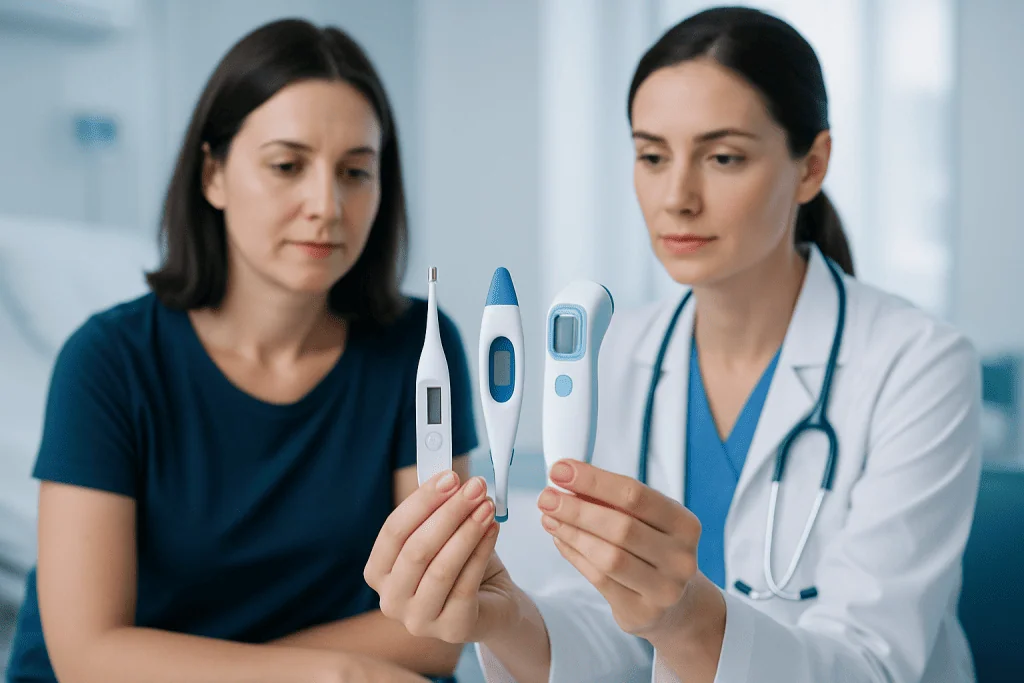
Several kinds of digital thermometers are available. Standard digital stick thermometers can be used orally, rectally, or under the arm, depending on the product instructions. Tympanic thermometers measure heat from the eardrum, and temporal artery thermometers measure heat from the forehead. Each method has advantages, but none is perfect in every situation.
Rectal measurement is generally considered the most accurate way to assess core body temperature in infants and very young children. Oral thermometers can be reliable for older children and adults who can keep the mouth closed properly during measurement. Underarm readings are convenient and noninvasive, but they are usually less precise and may miss a mild fever.
Ear thermometers can work well when positioned correctly, but earwax, a small ear canal, or poor technique may affect the result. Forehead thermometers are easy to use and comfortable, especially for sleeping children, but readings can be influenced by sweat, room conditions, or incorrect scanning technique. If a reading does not match how a person looks or feels, it is reasonable to repeat the temperature using the same thermometer or confirm it with a more reliable method.
- Rectal: usually most accurate for infants
- Oral: practical and reliable for many older children and adults
- Underarm: easy, but less accurate
- Ear: quick, technique-sensitive
- Forehead: convenient, but may vary with environment and skin conditions
How to Use a Digital Thermometer Correctly

Correct use makes a large difference. Before measuring, hands should be clean, and the thermometer should be clean and intact. The instructions that come with the device should always be followed because timing and placement vary by model. A damaged battery or low-power indicator can also affect performance, so the display should be checked before use.
For an oral reading, the thermometer tip is usually placed under the tongue toward the back of the mouth, and the lips stay closed until the device signals that the reading is complete. Hot or cold drinks, smoking, and exercise should be avoided for a short period beforehand because they can temporarily change the mouth temperature. For underarm use, the tip should rest in the center of a dry armpit with the arm held close to the body.
Rectal measurement should be done carefully and only with a thermometer designed for that purpose. A small amount of lubricant may be used if recommended, and the thermometer should never be forced. In infants and young children, gentle positioning is important to avoid injury. If using an ear or forehead thermometer, careful alignment is essential, since small errors in position can change the result.
It also helps to use the same method each time when tracking illness at home. Comparing a forehead reading one day with a rectal reading the next can be confusing. Consistency makes it easier to notice a true rise or fall in temperature over time.
Understanding the Reading: What Counts as a Fever?
There is no single temperature that applies equally to every person, every age group, and every measurement site. In general, normal body temperature often falls within a range rather than at one fixed number. A result should be interpreted along with symptoms such as fatigue, chills, cough, pain, poor feeding, or changes in alertness.
Rectal temperatures are typically a little higher than oral temperatures, and underarm temperatures are often a little lower. That means a number that seems reassuring by one method might be more concerning by another. For example, a baby with poor feeding and unusual sleepiness needs attention even if the temperature is only slightly elevated.
A fever is not an illness by itself. It is a sign that the body may be responding to an infection, inflammation, heat exposure, or another medical problem. Common causes include colds, flu-like viral illnesses, throat infections, ear infections, urinary infections, and stomach infections. In some cases, fever may be related to pneumonia or other conditions that need medical evaluation.
When the reading seems inconsistent with the person’s condition, it is reasonable to repeat the measurement after a short wait, making sure the device is used correctly. If repeated readings remain unusual or symptoms are significant, a qualified clinician can help determine whether further testing is needed.
Common Mistakes, Myths, and Accuracy Questions
One common myth is that every digital thermometer is equally accurate in every setting. In reality, the technology may be sound, but the method of use strongly affects the result. A thermometer placed in the wrong position, used too soon after a hot drink, or applied to sweaty skin may produce a misleading number.
Another myth is that a fever always means a serious infection. Many fevers are caused by self-limited viral illnesses and improve with rest, fluids, and monitoring. The more important question is how the person feels and whether there are warning signs such as breathing difficulty, confusion, seizure, severe headache, dehydration, or worsening symptoms.
People also sometimes assume that a normal reading completely rules out illness. That is not always true. Temperature can fluctuate, and some infections may not cause a fever at every stage. If someone has a persistent cough, chest discomfort, or shortness of breath, a doctor may consider further evaluation, which can include a chest X-ray when appropriate.
Another practical issue is calibration and maintenance. Home digital thermometers usually do not need frequent calibration by the user, but they should be replaced if cracked, malfunctioning, or giving inconsistent readings compared with a trusted device. Following the manufacturer’s care instructions helps preserve accuracy over time.
Cleaning, Storage, and Safe Home Use
Cleaning the thermometer after each use helps prevent the spread of germs and supports reliable readings. Many standard digital thermometers can be wiped with soap and cool or lukewarm water, or cleaned with alcohol according to product instructions. They should not usually be submerged unless the manufacturer states that the device is waterproof.
It is best to store the thermometer in a clean, dry case and keep it away from extreme heat or direct sunlight. Batteries should be replaced when needed, and the device should be checked from time to time for cracks, discoloration, or display problems. A separate thermometer is often recommended for rectal use, especially in households with infants.
For families, labeling thermometers by use can reduce confusion. Good home temperature tracking may also include noting the time, the method used, and any symptoms. This information can be very helpful if a doctor is consulted, especially when deciding whether symptoms suggest a common viral illness, dehydration, or something more serious such as bronchitis or another respiratory condition.
When to Seek Medical Care
Medical care should be sought promptly for any infant younger than 3 months with a fever, because even a modest temperature rise can be significant at that age. Urgent advice is also important if a child or adult has trouble breathing, severe lethargy, confusion, a seizure, stiff neck, signs of dehydration, or a rash that is spreading or looks unusual.
It is also sensible to contact a doctor if fever lasts longer than expected, repeatedly returns, or is accompanied by chest pain, severe ear pain, persistent vomiting, worsening cough, or difficulty drinking fluids. In some cases, evaluation may include laboratory tests or imaging, depending on symptoms and examination findings. If doctors suspect a deeper infection or persistent lung symptoms, they may recommend assessment and, when needed, treatment such as antibiotic treatment for a confirmed bacterial cause.
For people with chronic illnesses, weakened immune systems, recent surgery, or cancer treatment, fever may deserve earlier medical review. Clinical context matters as much as the thermometer reading itself. Near the end of the care pathway, if specialist evaluation is needed, Acibadem International’s multidisciplinary specialists and JCI-accredited hospitals diagnose and treat conditions related to fever and infection for international patients.
Practical Self-Care and When Temperature Monitoring Helps Most
At home, temperature monitoring is most useful when it guides sensible care rather than repeated checking out of anxiety. If someone has a mild illness and is otherwise drinking fluids, resting, and staying alert, checking the temperature a few times a day is often enough. More frequent checks may be helpful if symptoms are changing or if a doctor has recommended closer observation.
Comfort-focused care can include rest, fluids, light clothing, and using fever-reducing medicine only as advised by a healthcare professional. The goal is not always to normalize the number immediately, but to support comfort and monitor for changes. A temperature log can help identify patterns and make it easier to explain the course of illness during a medical visit.
Parents and caregivers should remember that a child’s behavior and hydration are important clues. A playful child with a short-lived fever is often less concerning than a child with only a mild temperature increase but poor responsiveness or labored breathing. If symptoms point to an infection that needs further treatment, a doctor may recommend options ranging from supportive care to targeted therapies and, in selected cases, pediatric care or specialist review.
Frequently asked questions
Is a digital thermometer accurate?
Yes, a digital thermometer is usually accurate when it is used exactly as directed. The body site, recent eating or drinking, and proper positioning all affect the result.
Which type of digital thermometer is best for babies?
For young infants, rectal temperature measurement is generally considered the most accurate. Parents should follow the device instructions carefully and contact a doctor promptly for fever in babies under 3 months.
What temperature is considered a fever?
A fever depends on the person’s age and where the temperature is taken. Rectal, oral, underarm, ear, and forehead readings are not directly interchangeable, so the number should be interpreted in context.
Why do two thermometer readings sometimes differ?
Different body sites naturally give different temperature ranges. Readings can also vary because of technique, sweat on the skin, earwax, recent hot or cold drinks, or movement during measurement.
How often should temperature be checked during illness?
In many mild illnesses, checking a few times a day is enough unless symptoms are changing. More important than frequent measuring is watching for hydration, breathing difficulty, unusual sleepiness, or worsening pain.
How should a digital thermometer be cleaned?
Most digital thermometers should be cleaned after each use according to the manufacturer’s instructions. Soap and water or alcohol-based cleaning may be appropriate, but the device should not be submerged unless it is specifically designed to be waterproof.
This article is for general information only and is not a substitute for professional medical advice. Please consult a qualified doctor about your individual situation.
Explore treatments in Turkey — costs, top hospitals & a free quote
JCI-accredited · board-certified surgeons · reply within 24h
Add us as a Preferred Source to see more of our trusted health content across Google Search, AI Overviews and Discover.

More from the Health Library

Liver Failure Face: What Patients Need to Know

Brain Atrophy: An Evidence-Based Guide for Patients

Ovarian Cyst Rupture: An Evidence-Based Guide for Patients

Bipolar 2: What Patients Need to Know

Nose Pores — Explained by Medical Evidence, Not Myths