Third Degree Heart Block — Explained by Medical Evidence, Not Myths

Third degree heart block means the electrical connection between the atria and ventricles is fully interrupted. Common symptoms include fainting, dizziness, shortness of breath, chest discomfort, and unusual fatigue, but some people may have milder symptoms.
Key Takeaways
- Third degree heart block means the electrical connection between the atria and ventricles is fully interrupted.
- Common symptoms include fainting, dizziness, shortness of breath, chest discomfort, and unusual fatigue, but some people may have milder symptoms.
- Causes include age-related conduction system disease, heart attack, heart surgery, certain medicines, infections, and electrolyte problems.
- Diagnosis is usually made with an ECG and may be supported by blood tests, heart monitoring, and imaging.
- Treatment often includes urgent monitoring and, in many cases, a pacemaker.
Third degree heart block, also called complete heart block, happens when electrical signals from the heart’s upper chambers do not reach the lower chambers. This can cause a very slow heartbeat, dizziness, fainting, and fatigue, and it often requires prompt medical evaluation and treatment.
Overview: what third degree heart block means
Third degree heart block is a serious disturbance of the heart’s electrical system. In this condition, the electrical impulses generated in the atria, the heart’s upper chambers, do not pass through to the ventricles, the lower chambers. As a result, the atria and ventricles beat independently, and the ventricles usually rely on a much slower backup rhythm.
This is why third degree heart block is also called complete heart block. It does not mean that blood flow is physically blocked in the heart. Instead, the problem lies in the wiring that coordinates the heartbeat. Because the lower chambers may beat too slowly to meet the body’s needs, symptoms can range from tiredness and lightheadedness to fainting or severe weakness.
Third degree heart block is different from milder forms of atrioventricular block, in which some electrical signals still get through. In complete heart block, no atrial signals reach the ventricles. This often makes it more urgent to diagnose and treat than first-degree or many cases of second-degree block.
Medical care focuses on finding the cause, protecting the patient if the heart rate is too slow, and restoring a reliable rhythm. In many people, this ultimately means a permanent pacemaker. Related rhythm problems may be evaluated alongside arrhythmia and other conduction disorders.
Symptoms and how it may feel
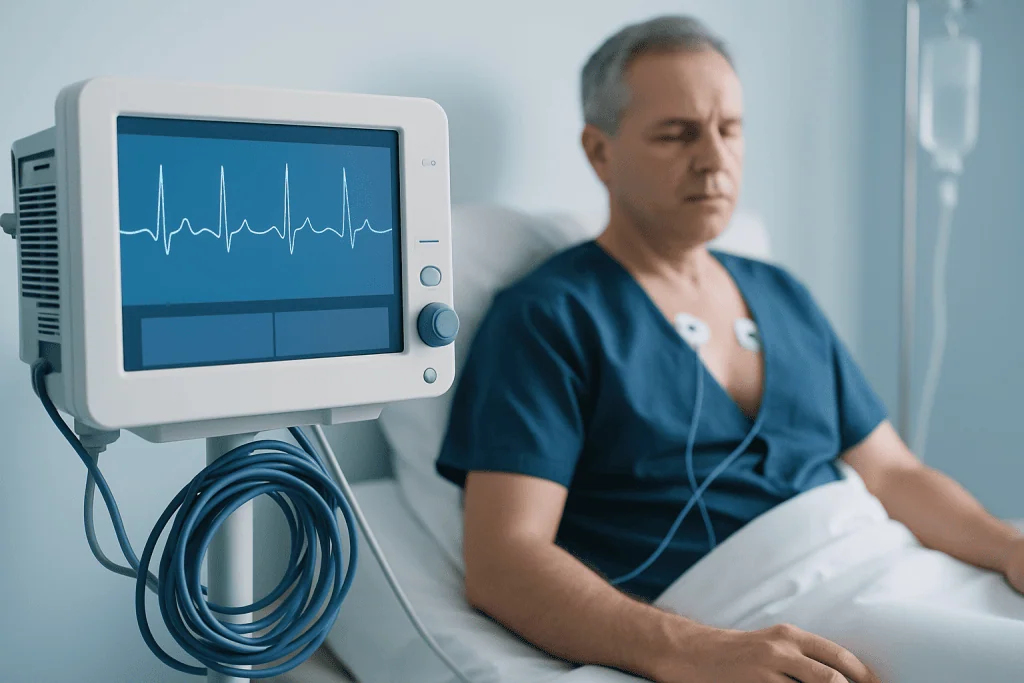
Symptoms of third degree heart block depend on how slow the ventricles are beating and whether the body is getting enough blood flow. Some people feel suddenly unwell, while others notice more gradual changes such as tiredness or reduced exercise tolerance. Older adults may attribute the symptoms to aging, which can delay diagnosis.
Possible symptoms include:
- Dizziness or lightheadedness
- Fainting or near-fainting
- Marked fatigue or weakness
- Shortness of breath, especially with activity
- Chest discomfort
- Palpitations or an unusually slow pulse
- Confusion or reduced concentration
In some cases, symptoms can come and go if the slow rhythm is intermittent or if the backup rhythm is only temporarily adequate. In others, complete heart block develops suddenly and causes collapse. This is one reason why fainting should not be ignored, especially in someone with known heart disease or a history of conduction problems.
Not every person has obvious warning signs. A third degree block may sometimes be found during an ECG done for another reason. Even then, it still needs careful assessment because the risk depends on the heart rate, the location of the block, the underlying cause, and the person’s overall health.
Causes and risk factors

Third degree heart block can develop when the heart’s conduction tissue is damaged, inflamed, deprived of blood supply, or affected by medicines or metabolic problems. In older adults, age-related fibrosis of the conduction system is a common reason. In younger people, the cause may be more varied and can include congenital or acquired conditions.
Important causes and risk factors include:
- Coronary artery disease and heart attack
- Degenerative changes in the conduction system with aging
- Previous heart surgery or catheter-based procedures
- Inflammation of the heart muscle or conduction tissue, including myocarditis
- Certain medicines, such as some beta blockers, calcium channel blockers, digoxin, and antiarrhythmic drugs
- Electrolyte abnormalities, especially high potassium
- Infiltrative or structural heart disease
- Congenital complete heart block
- Infections such as Lyme disease in relevant settings
A complete block can also occur during or after an acute cardiac event. For example, a heart attack affecting blood supply to the conduction system may disrupt signal transmission. In that setting, clinicians evaluate the rhythm problem together with the underlying heart condition, including coronary artery disease when relevant.
Not all cases are permanent. If the cause is a reversible medication effect, electrolyte imbalance, or temporary inflammation, the block may improve when the trigger is treated. However, it is important not to assume it will resolve without medical supervision, because a dangerously slow heart rhythm may still need urgent support.
How doctors diagnose complete heart block
The main test for diagnosing third degree heart block is an electrocardiogram, or ECG. On the ECG, the atria and ventricles show independent electrical activity, confirming that signals are not being conducted from the upper chambers to the lower chambers. Doctors also look at the heart rate, the width of the QRS complexes, and whether the rhythm suggests a higher or lower level of block.
Because complete heart block may reflect an underlying medical problem, diagnosis usually goes beyond a single tracing. Monitoring in the emergency department or hospital can show whether the rhythm is stable, whether pauses occur, and whether symptoms match the electrical findings. Blood tests may check for heart injury, infection, thyroid problems, or electrolyte disturbances.
Additional testing may include echocardiography to assess heart structure and function, longer rhythm monitoring if the block is intermittent, and evaluation for ischemia or inflammation when suspected. If the cause is unclear, cardiology specialists may investigate for less common conditions affecting the conduction system.
Diagnosis also helps guide treatment planning. In patients who may need pacing, specialists assess whether a temporary measure is needed first and whether a permanent device is likely to be the safest long-term solution. Evaluation may involve cardiology care and, when needed, advanced imaging or electrophysiology input.
Treatment options and what care may involve
Treatment depends on how stable the person is, how slow the ventricular rhythm is, and whether the cause can be reversed. If complete heart block is causing low blood pressure, fainting, chest pain, or signs of poor circulation, urgent hospital care is needed. Doctors first stabilize the rhythm and support the patient while evaluating the cause.
Short-term treatment may include stopping medicines that slow conduction, correcting electrolyte abnormalities, and using temporary pacing if the heart rate is too slow or unreliable. Temporary pacing may be external or internal depending on the situation. These measures are used to reduce the immediate risk while doctors decide on the next steps.
Many people with third degree heart block need a permanent pacemaker. A pacemaker sends electrical impulses to keep the heart beating at a safe rate and in an organized pattern. For patients with persistent complete block not caused by a reversible condition, pacemaker treatment is often the standard long-term approach.
If complete heart block occurs because of another heart problem, treating that cause is also important. This may include treatment for a heart attack, structural disease, infection, or medication toxicity. In selected cases, care may overlap with angiography or other cardiac procedures when reduced blood flow to the heart is suspected.
Living with third degree heart block: recovery, prevention, and self-care
There is no reliable home treatment for complete heart block, but there are important ways patients can support recovery and reduce complications once the condition has been assessed. The first priority is following medical advice closely, including monitoring, medication review, and pacemaker follow-up if a device has been implanted.
Self-care generally includes keeping a current list of medicines, asking whether any drug could affect heart rhythm, and attending all scheduled cardiology visits. People with a pacemaker are usually given detailed instructions about activity, wound care after implantation, and routine device checks. Most can return to many normal activities after recovery, with guidance tailored to their health status.
General heart-healthy habits remain helpful even though they do not directly correct the electrical block. These include avoiding smoking, managing blood pressure and cholesterol, staying physically active as advised, maintaining a balanced diet, and seeking treatment for conditions such as diabetes or sleep apnea. For people with underlying heart disease, these steps support overall cardiovascular health.
Prevention is not always possible because some cases result from aging or unavoidable heart disease. Still, careful medication use, prompt treatment of infections or electrolyte problems, and regular follow-up for known heart conditions may help lower the chance of complications. If symptoms such as unexplained fainting or repeated dizziness occur, early medical review is the safest approach.
When to seek medical care
Immediate medical care is important if a person has fainting, severe dizziness, chest pain, shortness of breath, confusion, or a very slow heartbeat. These symptoms can signal that the heart is not pumping enough blood to the brain and other organs. Complete heart block can sometimes become an emergency, so urgent evaluation should not be delayed.
A non-emergency medical appointment is still appropriate for milder symptoms such as unusual tiredness, exercise intolerance, intermittent lightheadedness, or a pulse that seems slower than normal. These signs do not always mean third degree heart block, but they deserve assessment, especially in older adults or in anyone with heart disease, recent medication changes, or previous rhythm problems.
People who already have a pacemaker should contact their care team if they develop fainting, worsening dizziness, breathlessness, palpitations, or signs of infection around the device site. Device checks can often identify whether symptoms are related to pacing, battery status, or another heart problem.
For international patients needing coordinated evaluation, Acibadem International’s multidisciplinary specialists and JCI-accredited hospitals diagnose and treat heart rhythm disorders using established evidence-based methods. Depending on the person’s needs, care may include electrophysiology study and follow-up with cardiac rhythm specialists.
Frequently asked questions
Is third degree heart block the same as a heart attack?
No. Third degree heart block is a problem with the heart’s electrical signaling, not a blocked artery by itself. However, a heart attack can sometimes cause complete heart block, so doctors assess for both possibilities when symptoms suggest an emergency.
Can third degree heart block go away on its own?
Sometimes it can improve if it is caused by a reversible factor such as a medicine effect, an electrolyte imbalance, or temporary inflammation. Even then, it should not be watched at home without medical supervision because the slow rhythm can still be dangerous.
Does everyone with complete heart block need a pacemaker?
Not everyone, but many people do. If the block is persistent or causing symptoms, a permanent pacemaker is often the safest long-term treatment. The decision depends on the cause, the heart rate, symptoms, and whether the problem is expected to reverse.
What is the difference between third degree heart block and first-degree heart block?
In first-degree heart block, electrical signals are delayed but still reach the ventricles. In third degree heart block, no atrial signals get through at all, so the upper and lower chambers beat independently. This makes third degree block much more serious.
Can third degree heart block cause fainting?
Yes. If the ventricles beat too slowly, the brain may not receive enough blood flow, leading to dizziness or fainting. Fainting should always be medically assessed, especially if it occurs with a slow pulse, chest symptoms, or breathlessness.
Is exercise safe with third degree heart block?
Exercise may be unsafe before the condition is evaluated because activity can increase the body’s need for blood flow while the heart rate remains too slow. After treatment, including pacemaker placement when needed, many people can return to activity with advice from their doctor.
References
- American Heart Association
- National Heart, Lung, and Blood Institute
- European Society of Cardiology
- Merck Manual Professional Edition
This article is for general information only and is not a substitute for professional medical advice. Please consult a qualified doctor about your individual situation.
Explore treatments in Turkey — costs, top hospitals & a free quote
JCI-accredited · board-certified surgeons · reply within 24h
Add us as a Preferred Source to see more of our trusted health content across Google Search, AI Overviews and Discover.
Check your numbers in seconds
BMI, calories, due date, blood pressure and 30+ more clinical calculators — free, instant, doctor-reviewed ranges.

More from the Health Library

Homozygous: What Patients Need to Know

Bursa — Explained by Medical Evidence, Not Myths

Sildenafil: A Complete Medical Overview

Bean Sprouts: What Patients Need to Know

Arugula Benefits: An Evidence-Based Guide for Patients