Scalp Psoriasis Shampoo: A Complete Medical Overview

Scalp psoriasis shampoo is designed to soften scale, reduce inflammation, and improve comfort. Different shampoos use different active ingredients, such as coal tar, salicylic acid, or antifungal agents.
Key Takeaways
- Scalp psoriasis shampoo is designed to soften scale, reduce inflammation, and improve comfort.
- Different shampoos use different active ingredients, such as coal tar, salicylic acid, or antifungal agents.
- Shampoo alone may be enough for mild symptoms, but moderate or severe scalp psoriasis often needs prescription treatment.
- A correct diagnosis matters because dandruff, eczema, and fungal scalp conditions can look similar.
- Gentle scalp care and regular use are important to get the best results from treatment.
Scalp psoriasis shampoo can help reduce scale, itching, and irritation on the scalp, but it is usually one part of treatment rather than a complete cure on its own. The best shampoo depends on symptom severity, the type of scale present, and whether a doctor also recommends prescription scalp treatments.
Overview: what scalp psoriasis shampoo can and cannot do
Scalp psoriasis shampoo is a medicated cleanser used to help manage psoriasis affecting the scalp. In many people, it can reduce visible scale, ease itching, and make the scalp feel more comfortable. However, it does not usually cure the condition, because psoriasis is a long-term inflammatory skin disease that tends to flare and settle over time.
The scalp is a particularly challenging area to treat because hair can make it harder for medication to reach the skin. A shampoo is useful because it can spread across the scalp more easily than some creams or ointments. Even so, shampoos are often most effective when they are combined with other approaches, such as prescription topical medicines, careful scale removal, and trigger management.
Symptoms can range from a few small scaly patches to thick plaques covering much of the scalp. In some cases, scalp psoriasis extends to the forehead, behind the ears, or the back of the neck. This pattern can help distinguish it from routine dandruff, though a clinical assessment may still be needed.
Because several scalp conditions can look alike, choosing a shampoo without understanding the cause may lead to disappointing results. A dermatologist or qualified doctor can confirm whether symptoms are due to psoriasis or another condition and guide treatment accordingly.
How scalp psoriasis looks and feels

Scalp psoriasis often causes sharply defined patches of thickened skin covered by silvery-white or yellowish scale. The scalp may feel dry, tight, sore, or itchy. Some people notice constant flaking onto clothing, while others mainly experience discomfort when brushing or washing their hair.
Itching can be mild or intense. Scratching may temporarily relieve discomfort, but it can also worsen irritation, cause small breaks in the skin, and increase the risk of infection. Inflammation can sometimes contribute to temporary hair shedding, especially when plaques are thick or scratching is frequent. Hair usually grows back after the inflammation is controlled.
Scalp psoriasis can be confused with seborrheic dermatitis, a common cause of dandruff. Seborrheic dermatitis often produces greasy yellowish flakes and less sharply bordered redness, while psoriasis more often forms thicker plaques with a silvery scale. Some people have features of both conditions at the same time.
Psoriasis elsewhere on the body, such as the elbows, knees, or nails, may support the diagnosis. Nail pitting, nail thickening, or joint pain can suggest more widespread psoriatic disease, which is important to mention during a medical visit.
What ingredients in scalp psoriasis shampoo are used for
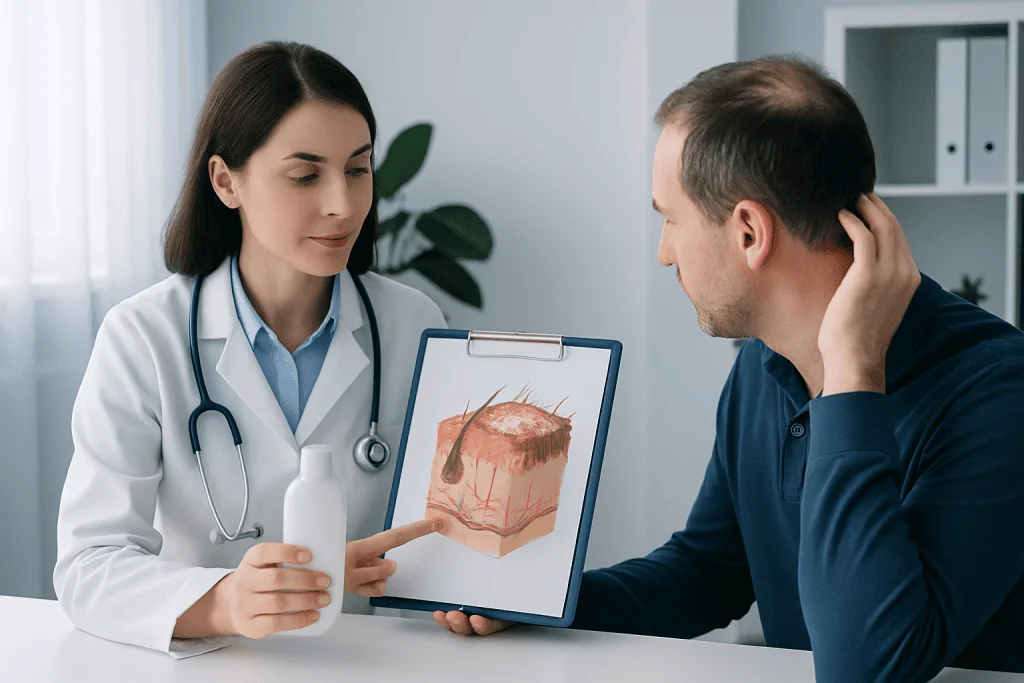
There is no single best scalp psoriasis shampoo for everyone. The right choice depends on whether the main problem is thick scale, inflammation, itching, or an overlapping condition such as dandruff. Different active ingredients work in different ways, and some products combine more than one approach.
Coal tar shampoos have long been used to slow excess skin cell buildup and reduce scaling, itching, and inflammation. Salicylic acid shampoos help loosen and remove thick scale so other medicines can reach the scalp more effectively. Some people use one type to lift scale and another type to calm inflammation, depending on medical advice.
If there is uncertainty between psoriasis and seborrheic dermatitis, a doctor may recommend an antifungal shampoo ingredient such as ketoconazole or selenium sulfide. These do not treat psoriasis itself, but they can help when dandruff-related inflammation is contributing to symptoms. Fragrance-free, gentle shampoos may also be useful between medicated washes to limit irritation.
Prescription scalp products may include corticosteroid solutions, foams, gels, or other anti-inflammatory medicines. These are often needed when shampoo alone is not enough. In selected cases, doctors may discuss broader dermatology treatment options for difficult or extensive disease.
- Coal tar: helps reduce scaling and itching.
- Salicylic acid: softens and lifts thick scale.
- Antifungal ingredients: useful if dandruff overlaps with psoriasis.
- Prescription anti-inflammatory treatments: often used for persistent or severe symptoms.
How to use scalp psoriasis shampoo effectively
Technique matters. A medicated shampoo usually works best when it is applied directly to the scalp rather than only the hair. Parting the hair in sections can help the product reach affected areas. In many cases, the shampoo should be left on for several minutes before rinsing, but the label instructions or a doctor’s advice should always be followed.
People with heavy scale may be advised to first soften plaques with a scale-loosening product or oil, then wash with a medicated shampoo. This can improve contact between the medicine and the skin. Vigorous scrubbing is not helpful and may worsen irritation. Gentle massage with the fingertips is usually better than scratching with nails.
Frequency varies by product and by the condition of the scalp. Some shampoos are used several times a week during a flare and less often once symptoms improve. Others are alternated with mild, non-medicated shampoos. If a product causes burning, excessive dryness, or worsening redness, it should be reviewed by a healthcare professional.
Shampoo can be only one step in care. Many patients do best when the wash routine is paired with prescription scalp medicines applied after bathing. If symptoms are recurring or difficult to control, a specialist may discuss medical treatment for skin conditions tailored to the scalp.
Diagnosis and when shampoo is not enough
Doctors usually diagnose scalp psoriasis by examining the scalp and asking about symptoms, family history, and psoriasis elsewhere on the body. In most cases, no extensive testing is needed. The doctor may also look at the nails and joints, because psoriasis can be associated with nail changes and inflammatory arthritis.
A correct diagnosis is important because an itchy, flaky scalp can have many causes. These include seborrheic dermatitis, eczema, fungal infection, contact dermatitis from hair products, and less commonly autoimmune or scarring scalp conditions. If the diagnosis is unclear, a dermatologist may recommend closer examination or occasional further testing.
Shampoo may not be enough if plaques are thick, widespread, painful, or repeatedly return after treatment. It may also be insufficient if symptoms interfere with sleep, daily comfort, or confidence, or if psoriasis affects other body areas. In these situations, stronger topical treatments, light-based therapies, or systemic medicines may be considered.
For patients with more extensive or treatment-resistant disease, doctors may discuss options used in broader psoriasis treatment. The goal is not only to improve appearance, but also to reduce inflammation and improve quality of life safely over the long term.
Treatment options beyond shampoo
When scalp psoriasis is mild, medicated shampoo and gentle scalp care may be enough to control symptoms. For moderate disease, prescription topical medicines are often added. These may include corticosteroids, vitamin D analogs, or combination scalp preparations. Foams, lotions, gels, and solutions can be easier to use on the scalp than thick ointments.
Scale reduction is often an early treatment step because thick plaques can block medication from reaching inflamed skin. Once scale is softened or removed, anti-inflammatory medicines usually work better. Treatment plans are often adjusted over time, with more intensive treatment during flares and maintenance care after improvement.
If scalp psoriasis is severe or part of more widespread psoriasis, doctors may consider phototherapy or systemic treatment. These treatments aim to control inflammation throughout the body rather than only at the scalp surface. The choice depends on severity, previous treatment response, other health conditions, and patient preference.
Near the end of the care pathway, specialist support can be helpful for persistent symptoms or uncertain diagnosis. Acibadem International’s multidisciplinary specialists and JCI-accredited hospitals diagnose and treat psoriasis for international patients, including cases that may need coordinated dermatology care.
Self-care, prevention of flares, and when to seek medical care
Scalp psoriasis cannot always be prevented, but gentle habits can reduce irritation and may help limit flares. It is usually best to avoid picking at scales, harsh scratching, very hot water, and heavily fragranced hair products if they trigger discomfort. Regular moisturizing and consistent treatment use often improve control more than changing products too often.
Stress, illness, smoking, alcohol, some medications, and skin injury may contribute to flares in some people. Keeping a simple symptom diary can help identify personal triggers. For those who color or chemically treat their hair, patch testing and timing treatments during calmer periods may reduce irritation, though advice should be individualized.
Medical care is advisable if the scalp is very painful, symptoms are spreading, over-the-counter shampoo is not helping, or there is bleeding, crusting, drainage, or signs of infection. A person should also seek assessment if they have joint pain, swollen fingers, nail changes, or psoriasis on other body parts.
Children, pregnant individuals, and people with sensitive skin or significant hair loss should consult a qualified doctor before starting or combining medicated scalp products. Early evaluation can help confirm the diagnosis and prevent unnecessary discomfort from ineffective treatments.
Frequently asked questions
What is the best scalp psoriasis shampoo?
There is no single best scalp psoriasis shampoo for everyone. The most suitable product depends on whether thick scale, itching, inflammation, or overlap with dandruff is the main issue. A doctor may recommend coal tar, salicylic acid, or another option based on the scalp findings.
Can scalp psoriasis shampoo cure scalp psoriasis?
No, shampoo does not usually cure scalp psoriasis. It helps manage symptoms such as scale and itching, but psoriasis is typically a long-term inflammatory condition that can flare again. Many people need ongoing scalp care and sometimes prescription treatment.
How often should scalp psoriasis shampoo be used?
Use depends on the specific product and symptom severity. Some medicated shampoos are used several times a week during a flare and then less often for maintenance. It is safest to follow the product label and a clinician’s advice, especially if combining more than one treatment.
Is scalp psoriasis the same as dandruff?
No, although they can look similar. Dandruff usually causes finer or greasier flakes, while scalp psoriasis often produces thicker, well-defined plaques with heavier scale. Some people have both conditions at the same time, which can make diagnosis less straightforward.
Can scalp psoriasis cause hair loss?
It can lead to temporary hair shedding, mainly because of inflammation, scratching, or thick plaque buildup. In most cases, hair regrows once the scalp is treated and irritation settles. Sudden or significant hair loss should be assessed by a doctor.
When should someone see a doctor for scalp psoriasis?
Medical review is important if symptoms are severe, painful, widespread, or not improving with non-prescription shampoo. Care is also recommended if there is bleeding, crusting, possible infection, nail changes, or joint pain. A professional diagnosis helps ensure the right treatment is used.
References
- American Academy of Dermatology
- National Psoriasis Foundation
- National Institute of Arthritis and Musculoskeletal and Skin Diseases
- Mayo Clinic
- British Association of Dermatologists
This article is for general information only and is not a substitute for professional medical advice. Please consult a qualified doctor about your individual situation.
Hair transplant in Turkey — costs, graft counts & a free assessment
JCI-accredited · board-certified surgeons · reply within 24h
Add us as a Preferred Source to see more of our trusted health content across Google Search, AI Overviews and Discover.

More from the Health Library

Vad Ventricular — Explained by Medical Evidence, Not Myths

Moleskin: An Evidence-Based Guide for Patients

Advantages of Star Fruit: What Patients Need to Know

Monophobia: A Complete Medical Overview

Male Body Types — Explained by Medical Evidence, Not Myths