Cervix in Early Pregnancy Pictures: What Is Normal, What Is Not, and When to Seek Care

A normal cervix in early pregnancy may look softer, slightly swollen, bluish, and more mucus-covered. Pictures can be misleading because lighting, angle, and natural body differences affect appearance.
Key Takeaways
- A normal cervix in early pregnancy may look softer, slightly swollen, bluish, and more mucus-covered.
- Pictures can be misleading because lighting, angle, and natural body differences affect appearance.
- Bleeding, severe pain, foul-smelling discharge, fever, or fluid leakage need prompt medical assessment.
- Doctors assess the cervix using symptoms, pelvic exam, ultrasound, and sometimes lab tests.
- People should avoid repeated self-checks or inserting devices, especially if they have bleeding or pain.
Cervix in early pregnancy pictures may show normal changes such as a softer, higher cervix, a bluish color, and thicker mucus, but images alone cannot confirm whether everything is healthy. The safest way to understand cervical changes in pregnancy is to combine symptoms, medical history, and a clinical exam by a qualified professional.
Overview: What Cervix Images Can and Cannot Show
People searching for cervix in early pregnancy pictures are usually trying to understand whether what they see is normal. In early pregnancy, the cervix commonly changes in color, position, texture, and mucus production. These changes can be completely normal, but a picture by itself cannot reliably confirm a healthy pregnancy or identify a complication.
The cervix is the lower part of the uterus that opens into the vagina. During early pregnancy, hormonal changes increase blood flow and stimulate cervical glands. As a result, the cervix may appear more bluish or purple than usual, feel softer, and produce thicker discharge that helps form a protective mucus plug.
It is also important to remember that the cervix is not always easy to photograph clearly. Natural variation between individuals is wide, and the appearance can change with the time of day, body position, light, and whether the person has given birth before. Because of these limits, online images should be used only for general education, not for self-diagnosis.
What Is Usually Normal in Early Pregnancy
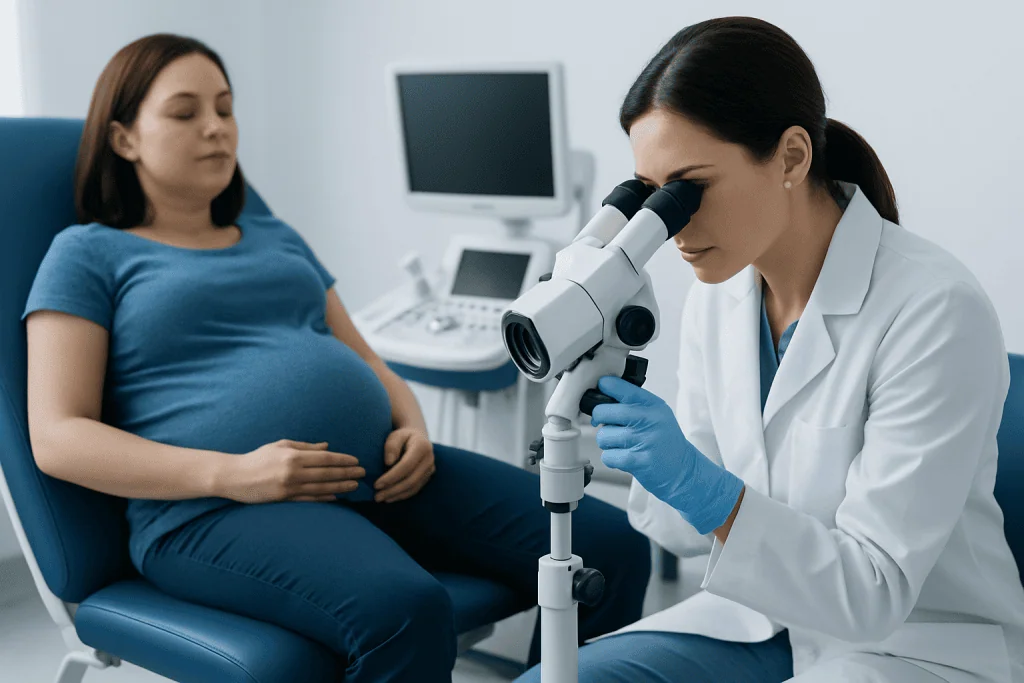
In many healthy pregnancies, the cervix gradually becomes softer and may sit higher in the vagina over time. It can also look fuller or slightly puffy because pregnancy hormones increase circulation. A bluish or violet tint is another well-known normal change related to increased blood flow.
Discharge also often changes early in pregnancy. Many people notice more vaginal secretions that are thin, milky, or white. This is usually called leukorrhea and is commonly normal if it does not have a strong odor and is not associated with itching, burning, or pelvic pain.
Some people notice a small amount of light spotting after intercourse or after a pelvic exam because the cervix is more sensitive during pregnancy. This can happen without indicating a serious problem. However, any bleeding in pregnancy should still be discussed with a clinician, especially if it becomes heavier, repeats, or occurs with cramping.
- Common normal features include a softer cervix
- A higher cervical position may develop as pregnancy progresses
- Color may appear bluish or purple rather than pink
- Mucus may look thicker, creamier, or more abundant
What Is Not Normal or May Need Medical Attention

Some changes are less reassuring and should not be judged from pictures alone. Bright red bleeding, passing clots or tissue, severe cramping, one-sided pelvic pain, dizziness, fainting, fever, or a sudden gush of watery fluid all need prompt medical advice. These symptoms may relate to miscarriage, infection, or less commonly an ectopic pregnancy, which needs urgent care.
Abnormal discharge can also be a concern. Green, gray, or yellow discharge, a foul smell, or discharge associated with itching, burning, or pain may suggest infection rather than a normal pregnancy-related change. Infections should be assessed and treated appropriately during pregnancy to reduce risks to both the pregnant person and the pregnancy.
Cervical appearance may also be affected by non-pregnancy conditions such as cervicitis, polyps, or precancerous cervical changes. A photo cannot distinguish these from normal variation. If there is persistent bleeding after sex, unusual discharge, ongoing pelvic discomfort, or concern about the cervix, a gynecologic assessment is the safest next step.
When early pregnancy symptoms are concerning, doctors may also need to rule out problems such as ectopic pregnancy or miscarriage. These conditions are diagnosed through symptoms, examination, blood tests, and imaging rather than through cervical pictures.
Why Self-Exams and Online Photos Have Limits
Although some people try to check the cervix at home, self-exams are not always easy to interpret. The cervix can be difficult to reach, and its position naturally changes throughout the day and from person to person. During pregnancy, repeated checking may also irritate the cervix and cause spotting, which can increase anxiety.
Photos found online often reflect only one moment, one body type, or one camera angle. They are not standardized medical images. Even in a clinical setting, specialists do not diagnose pregnancy health by appearance alone; they consider symptoms, exam findings, gestational age, and ultrasound results together.
For these reasons, self-checking should be approached cautiously. People who are pregnant or think they might be pregnant should avoid inserting devices or attempting frequent examinations, especially if they have bleeding, pain, a history of pregnancy complications, or concerns about infection.
How Doctors Evaluate Cervical Changes in Early Pregnancy
When a patient reports bleeding, pain, unusual discharge, or worries about cervical appearance, the doctor usually begins with a detailed history. Questions may cover the last menstrual period, pregnancy test results, pain pattern, amount of bleeding, discharge characteristics, prior pregnancies, cervical procedures, and any history of infection.
A pelvic examination may be used to look at the cervix directly and assess whether it appears closed or open, irritated, inflamed, or actively bleeding. Depending on the symptoms, the clinician may also collect samples to test for infection. However, the exam is only one part of the evaluation.
Ultrasound is often the most useful next step in early pregnancy concerns because it helps confirm the location and development of the pregnancy. In some cases, blood tests such as serial hCG levels are also used. If there is concern about infection or structural changes in the cervix, further gynecologic assessment may be needed, and some patients may benefit from colposcopy or follow-up gynecology evaluation.
Care, Monitoring, and Treatment Options
Treatment depends on the cause of the symptoms, not on a picture alone. If cervical changes are simply normal effects of early pregnancy, no treatment is needed beyond routine prenatal care. Many patients are reassured after an exam and ultrasound confirm that the pregnancy is progressing normally.
If bleeding is related to cervical irritation, a clinician may advise temporary pelvic rest or close observation. If the cause is infection, treatment may involve pregnancy-safe medications. When doctors identify a cervical polyp, inflammation, or other gynecologic issue, they will decide whether monitoring or treatment is most appropriate during pregnancy.
Pregnancy loss, threatened miscarriage, or ectopic pregnancy require a different approach and need individualized care. Depending on the situation, this may involve urgent observation, medication, or a procedure. Imaging is central to these decisions, and some patients may need ultrasound assessment along with specialist obstetric or gynecologic care.
Near the end of the care pathway, it may be helpful to know that Acibadem International’s multidisciplinary specialists and JCI-accredited hospitals diagnose and treat early pregnancy and cervical concerns for international patients when further evaluation is needed.
Prevention, Self-Care, and Safe Habits During Early Pregnancy
Not all cervical changes can be prevented because many are normal responses to pregnancy hormones. Still, some habits can support reproductive health. Routine prenatal visits, attention to new symptoms, and prompt assessment of bleeding or unusual discharge can help detect problems early.
Good self-care includes avoiding smoking, limiting exposure to infections, following safer sex practices when advised, and not using douches or unapproved vaginal products. These steps help reduce irritation and lower the risk of infection. People with a history of cervical procedures, recurrent pregnancy loss, or preterm birth should discuss this early with their obstetric clinician.
It is also wise to be cautious with online information. Educational photos may help someone understand general anatomy, but they should not replace prenatal care. If there is any doubt, a professional exam is far more reliable than comparing one’s cervix to internet images.
When to Seek Medical Care
Medical advice should be sought promptly for heavy bleeding, severe cramps, one-sided abdominal pain, shoulder pain, fainting, fever, chills, foul-smelling discharge, or fluid leakage. These symptoms may point to complications that need urgent assessment. Even if symptoms turn out to be minor, it is safer to be checked.
People should also contact a doctor if they notice repeated spotting after sex, persistent pelvic pressure, painful urination, new vaginal itching or burning, or discharge that changes color or smell. Those who have had an abnormal cervical screening result, prior cervical treatment, or a history of pregnancy complications may need closer follow-up.
Emergency care is especially important if a person has a positive pregnancy test and develops pain or bleeding before an intrauterine pregnancy has been confirmed on ultrasound. Early evaluation can help distinguish normal pregnancy changes from conditions that need prompt treatment.
Frequently asked questions
Can cervix in early pregnancy pictures confirm that a pregnancy is healthy?
No. Pictures may show normal changes such as a bluish color or more mucus, but they cannot confirm whether the pregnancy is developing normally. Doctors use symptoms, examination, ultrasound, and sometimes blood tests to assess early pregnancy.
What does a normal cervix look like in early pregnancy?
A normal cervix in early pregnancy may appear softer, more moist, slightly swollen, and more bluish or purple than before pregnancy. There may also be more white or milky discharge. These findings vary widely, so there is no single "perfect" appearance.
Is spotting from the cervix common in early pregnancy?
Light spotting can happen because the cervix becomes more sensitive and has a richer blood supply during pregnancy. It may occur after intercourse or a pelvic exam. However, any bleeding in pregnancy should be discussed with a clinician, especially if it is heavy, painful, or recurring.
Should someone check their own cervix during pregnancy?
Routine self-checking is usually not recommended. It can be difficult to interpret what is felt or seen, and repeated checking may irritate the cervix and cause spotting. If there is concern, a medical examination is safer and more informative.
What discharge is normal in early pregnancy?
Many pregnant people notice a thin, white, or milky discharge without a strong odor. This is often a normal effect of hormones. Discharge that is green, yellow, gray, foul-smelling, or associated with itching, burning, or pain should be evaluated.
When is cervical bleeding in early pregnancy an emergency?
Urgent care is needed if bleeding is heavy, accompanied by severe cramping, one-sided pain, dizziness, fainting, shoulder pain, fever, or passage of clots or tissue. These symptoms can be linked to serious causes that need prompt medical attention. It is especially important to seek care if the pregnancy location has not yet been confirmed.
References
- American College of Obstetricians and Gynecologists
- National Health Service
- Mayo Clinic
- Merck Manual Consumer Version
- Centers for Disease Control and Prevention
This article is for general information only and is not a substitute for professional medical advice. Please consult a qualified doctor about your individual situation.
Explore treatments in Turkey — costs, top hospitals & a free quote
JCI-accredited · board-certified surgeons · reply within 24h
Add us as a Preferred Source to see more of our trusted health content across Google Search, AI Overviews and Discover.