Crown of Head: An Evidence-Based Guide for Patients

The crown of head can be affected by scalp conditions, muscle tension, headaches, nerve irritation, and hair loss disorders. Common symptoms include tenderness, burning, itching, pressure, numbness, and thinning hair at the top of the scalp.
Key Takeaways
- The crown of head can be affected by scalp conditions, muscle tension, headaches, nerve irritation, and hair loss disorders.
- Common symptoms include tenderness, burning, itching, pressure, numbness, and thinning hair at the top of the scalp.
- Diagnosis usually depends on a careful history, scalp examination, and sometimes blood tests, imaging, or a skin biopsy.
- Treatment depends on the cause and may include scalp care, medication, headache treatment, or targeted hair loss therapies.
- Medical review is important if symptoms are severe, recurrent, associated with weakness or vision changes, or if hair loss appears suddenly.
The crown of head is the top-back area of the scalp, and symptoms there can include pain, tenderness, itching, numbness, or hair thinning. In many cases the cause is minor, but persistent symptoms, sudden hair loss, severe headache, or neurological signs should be assessed by a doctor.
Overview: what the crown of head symptoms may mean
The crown of head refers to the upper back portion of the scalp, near the top of the skull. People often use this term when they notice pain, pressure, itching, tenderness, numbness, or hair thinning in that specific area. Because many different tissues meet there, including skin, hair follicles, nerves, blood vessels, and muscles, symptoms can come from several different causes.
In everyday practice, crown of head concerns are often related to scalp irritation, pattern hair loss, tension-type headaches, migraine, or local inflammation. Sometimes the issue is limited to the skin or hair. In other situations, pain felt at the crown is actually referred from the neck, jaw, or headache pathways.
Most crown symptoms are not emergencies, but they should not be ignored if they are persistent, worsening, or accompanied by other warning signs. A careful evaluation helps distinguish common and manageable problems from conditions that need more specific treatment.
Common symptoms in the crown area

Symptoms at the crown of head vary widely. Some people feel a dull pressure or tightness, while others notice sharp pain, burning, itching, tingling, or scalp tenderness when brushing the hair or lying down. Hair-related concerns may include thinning, increased shedding, a widening visible scalp area, or patchy bald spots.
The pattern of symptoms can offer useful clues. Itching and flaking may point toward dandruff, eczema, psoriasis, or irritation from hair products. Tenderness or burning can occur with scalp inflammation, sun exposure, muscle tension, or nerve irritation. Hair thinning centered on the crown is especially common in inherited pattern hair loss.
Symptoms that extend beyond the scalp deserve closer attention. Severe headache, nausea, light sensitivity, facial pain, neck stiffness, fever, weakness, numbness in an arm or leg, speech difficulty, or changes in vision suggest a broader medical problem and should be assessed promptly.
- Pain, pressure, or tightness at the top of the head
- Scalp tenderness to touch
- Itching, flaking, redness, or rash
- Burning, tingling, or numbness
- Hair thinning, shedding, or patchy loss
- Pimples, crusting, or sore spots on the scalp
Possible causes and risk factors
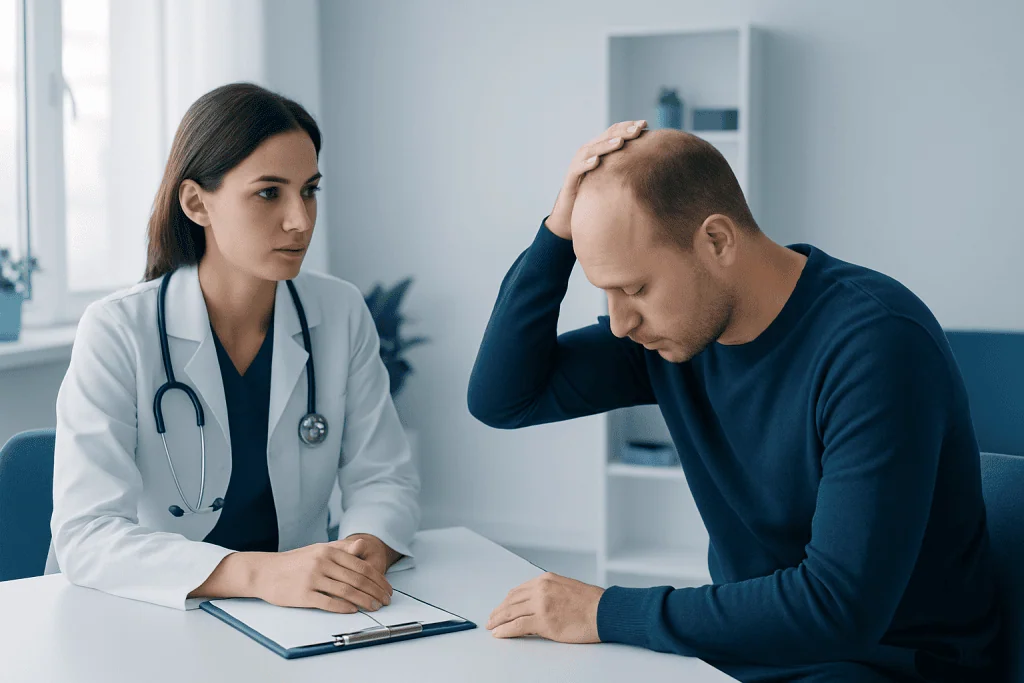
One of the most common crown concerns is hair thinning from androgenetic alopecia, also called pattern hair loss. In men, thinning often begins at the crown and temples. In women, the part line may widen and density may decrease at the top of the scalp. This process usually develops gradually and is influenced by genetics and hormones. Readers looking specifically for hair thinning conditions may come across hair loss as a broader diagnosis category.
Scalp disorders are another frequent cause. Seborrheic dermatitis can lead to flaking and itching, while psoriasis may cause thick, scaly plaques. Contact dermatitis may develop after hair dye, shampoo, styling products, or cosmetics. Folliculitis can cause tender bumps around hair follicles, and fungal infections of the scalp are more common in children but can also affect adults.
Pain in the crown area may come from headache disorders rather than the scalp itself. Tension-type headaches often feel like a band of pressure over the head, including the top. Migraine can cause pain on one or both sides and may include sensitivity to light, nausea, or scalp sensitivity. Neck strain and poor posture can also refer discomfort upward to the scalp.
Less commonly, nerve-related pain may be involved. Irritation of the occipital nerves can cause sharp, shooting, or burning discomfort that may travel toward the crown. Autoimmune conditions, nutritional deficiencies, thyroid disorders, severe stress, and some medications can contribute to hair shedding or altered scalp sensation. In rare cases, scalp tenderness can follow shingles or other infections.
How doctors diagnose crown of head problems
Diagnosis starts with a detailed history. A doctor usually asks when the symptom began, whether it is painful or itchy, how often it occurs, what makes it better or worse, and whether there are related symptoms such as headache, rash, stress, recent illness, new medications, or changes in hair care products. For hair loss, doctors also ask about family history, nutrition, recent childbirth, major weight change, and menstrual or hormonal history when relevant.
A physical examination often provides important answers. The scalp is checked for redness, scale, sores, thinning patterns, hair breakage, tenderness, and signs of infection or inflammation. The neck, shoulders, and neurological system may also be examined if pain appears to be referred or nerve-related.
Some patients need tests. Blood work may be used to look for iron deficiency, thyroid disease, vitamin deficiencies, or inflammation. If headache symptoms are atypical or associated with neurological signs, imaging may be considered. In selected cases, a dermatologist may perform dermoscopy or a small scalp biopsy to identify inflammatory or scarring causes of hair loss. When head pain is part of a broader neurological problem, a doctor may also evaluate for migraine or other headache disorders.
Treatment options depend on the cause
There is no single treatment for crown of head symptoms because treatment should match the underlying cause. For scalp irritation or dandruff, doctors may recommend medicated shampoos, fragrance-free products, and short-term anti-inflammatory treatment. Bacterial or fungal infections may require targeted prescription medicines. Folliculitis and inflamed scalp conditions improve best when self-treatment is avoided and the diagnosis is clear.
If the main issue is hair thinning, treatment may focus on preserving existing hair and supporting regrowth where possible. This can include medical therapies, management of hormonal or nutritional triggers, and specialist assessment. Depending on the person and the cause, options may include consultation for hair transplant treatment or other physician-guided hair restoration approaches.
For tension-related pain, treatment may include posture correction, stress reduction, gentle neck stretching, hydration, sleep improvement, and appropriate pain relief under medical advice. Migraine-related crown pain may need trigger management and prescription medication. Patients with recurrent headaches or unusual scalp sensations may benefit from a specialist evaluation, and in selected cases a team may recommend neurology assessment to clarify whether nerve or headache mechanisms are involved.
Persistent or unexplained scalp pain sometimes needs a multidisciplinary approach. Dermatologists, neurologists, and primary care doctors may all play a role. Near the end of a patient journey, if advanced evaluation or coordinated care is needed, Acibadem International’s multidisciplinary specialists and JCI-accredited hospitals diagnose and treat international patients with scalp, hair, and neurological conditions.
Prevention and self-care at home
Not every crown problem can be prevented, but gentle scalp care can reduce irritation and support scalp health. It usually helps to avoid harsh bleaching, tight hairstyles, frequent heat styling, and strongly fragranced products if the scalp is sensitive. Regular washing with a suitable shampoo can help manage oil, flaking, and buildup, though over-washing may worsen dryness in some people.
General health habits also matter. A balanced diet, good sleep, hydration, and stress management can support healthy hair growth and may reduce some headache triggers. People who spend long hours at a desk may benefit from improving posture and taking breaks to reduce neck and scalp tension. Sun protection is important too, especially where hair is thinning and the scalp is more exposed.
Self-checks can be useful, but repeated scratching, picking, or changing products too often can make symptoms worse. If there is visible thinning at the crown, taking well-lit monthly photos can help track changes more reliably than day-to-day observation. Any home approach should be stopped if it causes burning, rash, or worsening discomfort.
When to seek medical care
Medical advice is appropriate if crown of head symptoms last more than a few weeks, keep returning, or interfere with sleep, work, or daily comfort. A clinician should also assess sudden or rapid hair loss, patchy bald areas, pus-filled bumps, crusting, bleeding, or scalp pain that does not improve with simple measures. Symptoms in children should be evaluated early because infections and inflammatory conditions may spread or affect hair growth.
Urgent care is needed for severe headache, sudden weakness, fainting, confusion, slurred speech, new vision changes, fever with neck stiffness, or pain after a significant head injury. These are not typical signs of a simple scalp condition. Prompt assessment helps rule out serious neurological or systemic causes.
Patients who have persistent hair thinning, scalp inflammation, or unexplained pain may need specialist care. Depending on the findings, this could include referral for dermatology evaluation or other targeted investigations to identify the cause and guide treatment safely.
Frequently asked questions
Why does the crown of my head hurt when I touch it?
Tenderness at the crown can happen with scalp irritation, dandruff, inflamed hair follicles, sun exposure, muscle tension, or headache disorders. Sometimes the scalp feels sore even when the main cause is a tension-type headache or migraine. If the tenderness is persistent, severe, or associated with a rash or hair loss, a doctor should assess it.
Is crown of head hair loss always male pattern baldness?
No. Pattern hair loss is a common cause of thinning at the crown, but it is not the only one. Stress-related shedding, thyroid problems, nutritional deficiencies, autoimmune conditions, fungal infection, and inflammatory scalp diseases can also affect this area.
Can stress cause symptoms at the crown of head?
Yes, stress can contribute in more than one way. It may worsen tension headaches and muscle tightness, increase scalp sensitivity, and in some people trigger a temporary form of increased hair shedding. However, symptoms should not automatically be blamed on stress without considering other causes.
How is crown of head pain different from a regular headache?
Crown pain may come from the scalp itself, from nerves, or from a headache disorder. A scalp problem is more likely if there is itching, redness, bumps, or tenderness to touch. A headache disorder is more likely if the pain comes with nausea, light sensitivity, neck tension, or repeated headache episodes.
What doctor should a person see for crown of head symptoms?
That depends on the main symptom. A primary care doctor can often make the first assessment and decide whether referral is needed. Dermatologists are especially helpful for scalp and hair problems, while neurologists may be involved for recurrent headaches, numbness, or suspected nerve pain.
Can crown of head symptoms go away on their own?
Some can. Mild irritation from hair products, a short-lived headache, or temporary scalp sensitivity may improve with rest and gentle care. Symptoms that persist, keep returning, or worsen over time should be professionally evaluated rather than repeatedly self-treated.
This article is for general information only and is not a substitute for professional medical advice. Please consult a qualified doctor about your individual situation.
Hair transplant in Turkey — costs, graft counts & a free assessment
JCI-accredited · board-certified surgeons · reply within 24h
Add us as a Preferred Source to see more of our trusted health content across Google Search, AI Overviews and Discover.

More from the Health Library

HCG Quantitative: A Complete Medical Overview

Dog Allergy — Explained by Medical Evidence, Not Myths
Lightning Crotch — Explained by Medical Evidence, Not Myths

Early Stage HPV Warts Female: What Patients Need to Know

Cradle Cap: A Complete Medical Overview