Early Stage HPV Warts Female: What Patients Need to Know

Early HPV warts in women can be subtle, flat, tiny, or completely symptom-free. Visible genital warts are usually caused by low-risk HPV types, while other HPV types can affect cervical health without causing warts.
Key Takeaways
- Early HPV warts in women can be subtle, flat, tiny, or completely symptom-free.
- Visible genital warts are usually caused by low-risk HPV types, while other HPV types can affect cervical health without causing warts.
- Diagnosis often relies on a physical examination and, when appropriate, cervical screening or colposcopy.
- Treatment can remove visible warts, but it does not always eliminate HPV from the body immediately.
- HPV vaccination, safer sex practices, and routine screening are important parts of prevention and long-term care.
Early stage HPV warts in females may look like tiny, soft, flesh-colored bumps around the vulva, vagina, cervix, or anus, but they can also be too small to see at first. A medical evaluation can confirm whether symptoms are caused by HPV, rule out other skin conditions, and help decide whether monitoring or treatment is the best next step.
Overview: what early stage HPV warts in females can look like
Early stage HPV warts in females often begin as very small changes in the skin or mucous membranes of the genital area. They may appear as tiny flesh-colored, pink, or slightly whitish bumps on the vulva, around the vaginal opening, on the cervix, or near the anus. In some women, they remain flat and hard to notice, while in others they slowly develop a more clustered or cauliflower-like surface over time.
Human papillomavirus, or HPV, is a very common virus spread mainly through intimate skin-to-skin sexual contact. Not every HPV infection causes visible warts. In fact, many HPV infections clear on their own, and some types affect the cervix without producing any external symptoms. This is one reason regular gynecologic care and cervical screening remain important even when a woman feels well.
When people search for “early stage hpv warts female,” they are usually trying to understand whether a new bump, itching, or skin change could be an early genital wart. The answer is that it is possible, but many other conditions can look similar, including skin tags, irritation, molluscum contagiosum, or benign changes in the vulvar skin. A clinician can help distinguish these possibilities safely and accurately.
Common signs and symptoms
In the earliest stage, genital warts may be so small that they are only found during an examination. When symptoms do occur, they often include tiny soft bumps in the genital area, a roughened patch of skin, mild itching, or a sense of irritation. Some women notice one isolated lesion, while others see a small group of bumps that gradually becomes more obvious.
Warts can occur on the external genital area, inside the vagina, on the cervix, or around the anus. If they are located internally, a woman may not see them at all. Occasionally, genital warts may cause discomfort during sex, minor bleeding from friction, or a feeling of moisture or irritation, but many remain painless.
It is also important to know what early HPV warts usually do not cause. They do not typically produce fever, severe pelvic pain, or heavy discharge. Symptoms such as ulcers, painful sores, or rapidly worsening pain may point to a different condition and should be assessed promptly.
- Tiny flesh-colored or pink bumps
- Flat or slightly raised lesions
- Clusters with a rough surface
- Mild itching or burning
- No symptoms at all in some cases
Causes, transmission, and risk factors

Genital warts are caused by specific strains of HPV, most often low-risk types such as HPV 6 and 11. These types are different from the high-risk HPV types more closely linked with cervical precancer and cancer. A woman can have one type of HPV, multiple types, or an infection that causes no visible warts. This is why symptoms alone cannot show the full picture of HPV-related health.
HPV is usually transmitted through vaginal, anal, or oral sexual contact, or close skin-to-skin contact in the genital area. A person can pass HPV even without visible lesions. Because the virus can remain in the skin for some time before any wart appears, it is usually not possible to know exactly when exposure happened or from whom.
Several factors may increase the chance of developing visible warts after HPV exposure. These include a younger age at sexual debut, multiple sexual partners, inconsistent condom use, smoking, and a weakened immune system. Pregnancy can also sometimes make genital warts more noticeable because of hormonal and immune changes.
Women who are concerned about broader HPV-related conditions may also discuss screening for related problems such as cervical cancer risk, especially if they have abnormal screening results or persistent HPV infection. However, it is reassuring that the HPV types that cause visible genital warts are usually not the same types most strongly associated with cervical cancer.
How doctors diagnose early HPV warts
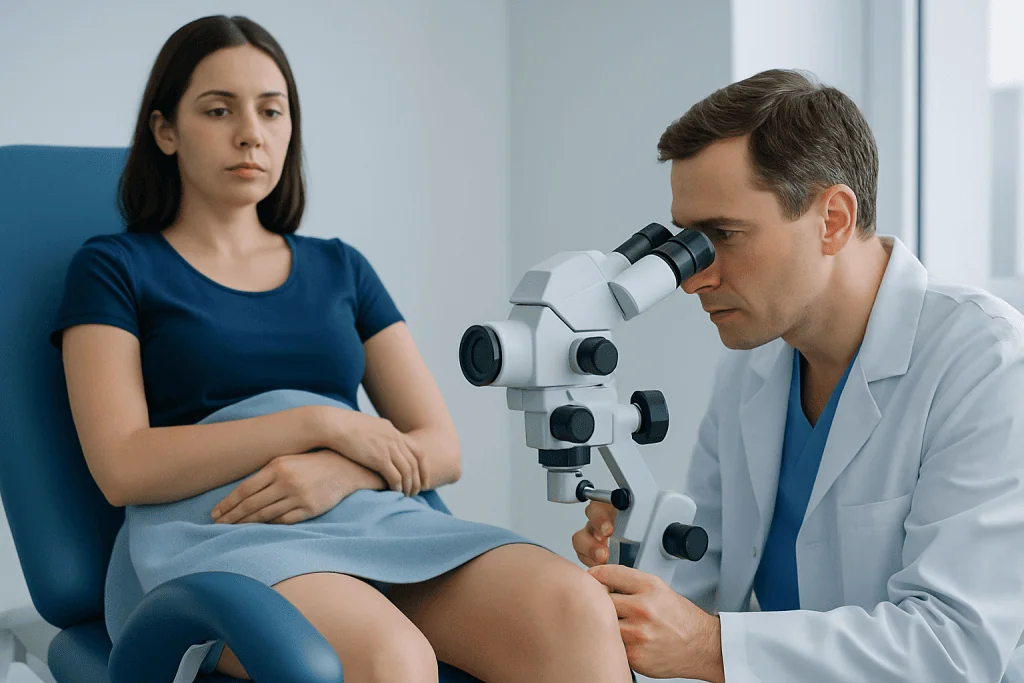
Diagnosis usually starts with a medical history and careful physical examination. A gynecologist, dermatologist, or sexual health clinician can often recognize typical genital warts based on appearance and location. If lesions are very small, internal, or uncertain in appearance, the doctor may use magnification or examine the cervix and vagina more closely.
Sometimes additional tests are recommended, depending on age, symptoms, and screening history. These may include a pelvic exam, Pap test, or HPV testing to assess cervical health. If the cervix looks abnormal or screening results are concerning, a doctor may suggest colposcopy to examine the cervix in greater detail and guide any further testing.
Biopsy is not needed for every patient, but it may be considered when a lesion has an unusual color, shape, texture, or pattern, does not respond to treatment, or the diagnosis is uncertain. This helps rule out other conditions that can resemble genital warts. In some cases, lesions in the vulvar area may overlap with other skin or gynecologic problems, so specialist review is helpful.
Because HPV-related changes can involve both the skin and the cervix, evaluation may include discussion of preventive screening and, where appropriate, Pap smear follow-up. This broader approach helps address the current skin lesions while also protecting long-term reproductive and cervical health.
Treatment options and what to expect
Treatment for early genital warts depends on the size, number, location, symptoms, and patient preference. Very small lesions may sometimes be monitored, especially if they are not causing discomfort. In other cases, treatment is recommended to remove visible warts, reduce symptoms, and limit spread to nearby skin, although treatment does not guarantee the virus itself has immediately cleared from the body.
Common options include prescription topical medicines applied by the patient or by a clinician, cryotherapy to freeze the wart, electrosurgery, cauterization, laser treatment, or minor surgical removal. Warts inside the vagina or on the cervix may need office-based procedures rather than self-applied creams. A doctor will choose the safest option based on the wart location and the patient’s overall health, including pregnancy status.
Some women with cervical abnormalities linked to HPV may require separate management from treatment of external warts. If significant precancerous changes are found on the cervix, procedures such as LEEP may be discussed, but this is not a standard treatment for ordinary external genital warts. The purpose of that procedure is to remove abnormal cervical tissue, not visible vulvar lesions.
Recurrence can happen, especially in the first months after treatment, because nearby skin may still carry HPV. This can be frustrating, but it does not mean treatment failed or that a serious disease is developing. Follow-up care allows the medical team to check healing, repeat treatment if needed, and monitor any cervical screening issues separately.
Prevention, self-care, and protecting long-term health
The most effective preventive step is HPV vaccination, which protects against several HPV types associated with genital warts and HPV-related cancers. Vaccination is most effective before exposure, but some adults may still benefit depending on age and medical advice. A doctor can explain whether vaccination is appropriate based on individual circumstances and local recommendations.
Barrier protection such as condoms can lower the risk of HPV transmission, though it cannot eliminate it completely because HPV can affect skin not fully covered by a condom. Limiting exposure through mutual monogamy, avoiding sexual contact when visible warts are present, and stopping smoking may also support overall genital and immune health. Routine cervical screening remains essential because HPV can affect the cervix without causing visible genital warts.
Self-care should focus on gentle skin protection rather than self-diagnosis or home removal methods. It is best to avoid picking, shaving over, burning, or using over-the-counter wart remedies meant for hands or feet on the genital area, as these can irritate delicate tissue. If lesions are uncomfortable, wearing breathable underwear and avoiding perfumed products may help reduce local irritation until a doctor visit.
For women who need coordinated evaluation of skin lesions and cervical health, multidisciplinary gynecology services can be useful. Near the end of care planning, it may be reassuring to know that Acibadem International’s multidisciplinary specialists in JCI-accredited hospitals diagnose and treat HPV-related genital conditions for international patients.
When to seek medical care
A woman should arrange a medical appointment if she notices new bumps, rough patches, itching, or unexplained skin changes in the genital or anal area. Early assessment is especially helpful if lesions are increasing in number, causing discomfort, or if there is uncertainty about whether the change is a wart or another condition. Prompt evaluation can also help avoid unnecessary anxiety and support the right treatment plan.
Medical care is also important if there is abnormal vaginal bleeding, pain during sex, persistent pelvic symptoms, or an overdue cervical screening test. Pregnant women with suspected genital warts should mention this to their obstetric or gynecologic clinician because wart management may need to be adapted during pregnancy. Women with weakened immune systems may also need closer follow-up because HPV-related lesions can be more persistent.
Urgent assessment is appropriate if there are painful ulcers, rapidly growing lesions, signs of infection such as increasing redness or discharge, or symptoms that seem unusual for ordinary genital warts. Although most genital warts are benign, a professional examination is the safest way to confirm the diagnosis and discuss treatment and screening options, including evaluation for related issues such as genital warts.
Frequently asked questions
What do early stage HPV warts look like in females?
They often look like tiny, soft, flesh-colored or pink bumps on the vulva, around the vaginal opening, or near the anus. Some are flat and difficult to see, while others appear in small clusters. In many women, early lesions cause little or no discomfort.
Can a woman have HPV without visible warts?
Yes. Many HPV infections do not cause visible warts, and some affect the cervix rather than the outer genital skin. This is why regular cervical screening is still important even when there are no external symptoms.
Do genital warts mean cervical cancer?
Not usually. Visible genital warts are commonly caused by low-risk HPV types, which are different from the high-risk types more strongly associated with cervical cancer. However, a woman can have more than one HPV type, so routine screening remains important.
Can early HPV warts go away on their own?
Sometimes they can. The immune system may suppress the virus over time, and some small lesions may regress without treatment. Even so, a doctor should confirm the diagnosis because other conditions can look similar.
How are early HPV warts treated in women?
Treatment may include prescription creams, freezing therapy, or office-based removal methods depending on the wart location and size. Internal lesions may need a clinician-applied treatment rather than self-care. A doctor will choose the safest option for the individual situation.
Is it safe to use over-the-counter wart removers on genital warts?
No, not without medical advice. Products designed for common warts on the hands or feet can damage the sensitive genital skin. It is safer to have any suspected genital wart assessed by a qualified clinician.
When should someone see a doctor about possible HPV warts?
A doctor visit is a good idea whenever new genital bumps, itching, irritation, or skin changes appear. Medical care is especially important if lesions are growing, painful, bleeding, or if cervical screening is overdue. Early evaluation helps confirm the cause and guide treatment and follow-up.
References
- World Health Organization
- Centers for Disease Control and Prevention
- American College of Obstetricians and Gynecologists
- National Cancer Institute
- American Academy of Dermatology
This article is for general information only and is not a substitute for professional medical advice. Please consult a qualified doctor about your individual situation.
Explore treatments in Turkey — costs, top hospitals & a free quote
JCI-accredited · board-certified surgeons · reply within 24h
Add us as a Preferred Source to see more of our trusted health content across Google Search, AI Overviews and Discover.