Scheuermann’s Osteochondrosis: Symptoms, Causes, and Treatment Options
Scheuermann's osteochondrosis affects the vertebrae during growth and is a recognized cause of structural kyphosis. Common signs include a rounded upper back, back pain, muscle fatigue, and tight hamstrings, especially in teenagers.
Key Takeaways
- Scheuermann's osteochondrosis affects the vertebrae during growth and is a recognized cause of structural kyphosis.
- Common signs include a rounded upper back, back pain, muscle fatigue, and tight hamstrings, especially in teenagers.
- Diagnosis is based on medical history, physical examination, and spine X-rays.
- Many people improve with posture support, exercises, and regular follow-up; bracing may help while the spine is still growing.
- Surgery is usually reserved for severe curves, persistent pain, or significant functional problems.
Scheuermann's osteochondrosis is a growth-related condition of the spine that can cause a more fixed, rounded upper back and back pain, most often during adolescence. Treatment depends on symptoms, curve severity, and growth stage, and may include monitoring, physical therapy, bracing, or surgery in selected cases.
Overview
Scheuermann’s osteochondrosis is a condition that affects the growing spine, most often in adolescence. It causes some of the vertebrae to develop a wedge shape rather than the usual rectangular shape, which can lead to a more pronounced forward curve of the upper back. This curve is called kyphosis, and when it is caused by this condition it is often referred to as Scheuermann kyphosis.
Unlike simple postural slouching, Scheuermann’s osteochondrosis is a structural change in the spine. That means the rounded back is not always fully correctable by standing up straight. Some young people have no pain and are diagnosed after a parent, teacher, or doctor notices a change in posture, while others develop aching, stiffness, or fatigue in the back.
The condition is not usually dangerous, but it can affect comfort, body image, activity levels, and, in more severe cases, spinal balance. Early assessment helps clarify whether the curve is flexible or structural and whether treatment is likely to be helpful during growth. In some patients, the picture overlaps with kyphosis, but Scheuermann’s osteochondrosis has distinctive growth-related changes seen on imaging.
Symptoms and How It May Affect Daily Life
The symptoms of Scheuermann’s osteochondrosis can vary widely. Some adolescents notice only a rounded upper back, while others experience pain between the shoulder blades, stiffness after sitting, or tiredness with prolonged standing. Symptoms often become more noticeable during growth spurts, when posture and muscle balance are changing quickly.
Back pain is often described as a dull ache rather than sharp pain. It may worsen after long periods of sitting in class, carrying a backpack, sports training, or spending time on screens in a bent posture. Many people also have tight hamstrings or reduced flexibility, which can add to discomfort and affect posture.
Common features may include:
- A visibly rounded upper back that does not fully straighten
- Back pain or aching, especially in the thoracic spine
- Muscle fatigue with sitting or standing for long periods
- Stiffness or reduced spinal flexibility
- Tight hamstrings
- Self-consciousness about posture or body shape
Severe cases are less common, but a larger curve can sometimes affect breathing comfort during exertion or make certain activities more difficult. Emotional wellbeing also matters; teenagers may feel embarrassed about their appearance or avoid sports and social activities. A supportive, balanced treatment plan can help address both physical symptoms and confidence.
Causes and Risk Factors
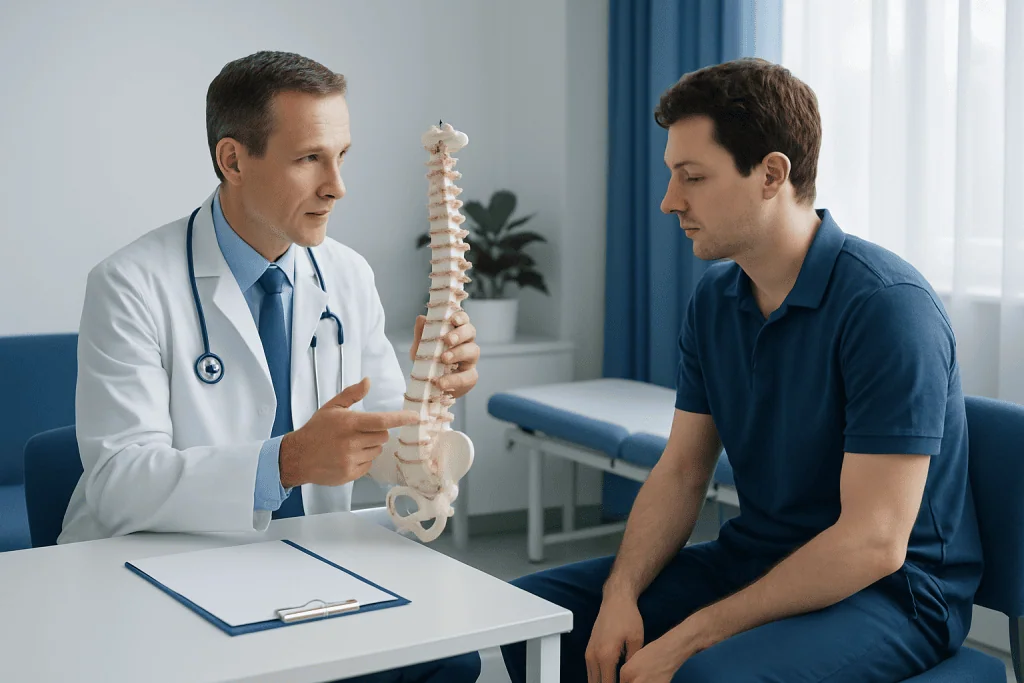
The exact cause of Scheuermann’s osteochondrosis is not fully understood. It appears to develop during the years of active growth, when the front part of several vertebrae grows differently from the back part. This leads to wedge-shaped vertebrae and a more fixed spinal curve. It is not caused simply by poor posture, although posture can influence how noticeable the curve appears.
There may be a genetic component, because the condition can run in families. Researchers have also looked at the roles of growth mechanics, spinal loading, and differences in connective tissues, but no single cause explains every case. It is best understood as a developmental spinal condition rather than an injury or an infection.
Factors linked with diagnosis or progression can include:
- Adolescence, especially during growth spurts
- Family history of spinal curvature disorders
- Male sex, although females can also be affected
- Rapid skeletal growth
- Associated muscle tightness or reduced flexibility
Scheuermann’s osteochondrosis is different from conditions such as scoliosis, which involves a side-to-side spinal curve, though both can sometimes coexist. A specialist evaluation helps determine exactly which type of spinal curvature is present and whether monitoring or treatment is needed.
How Doctors Diagnose It
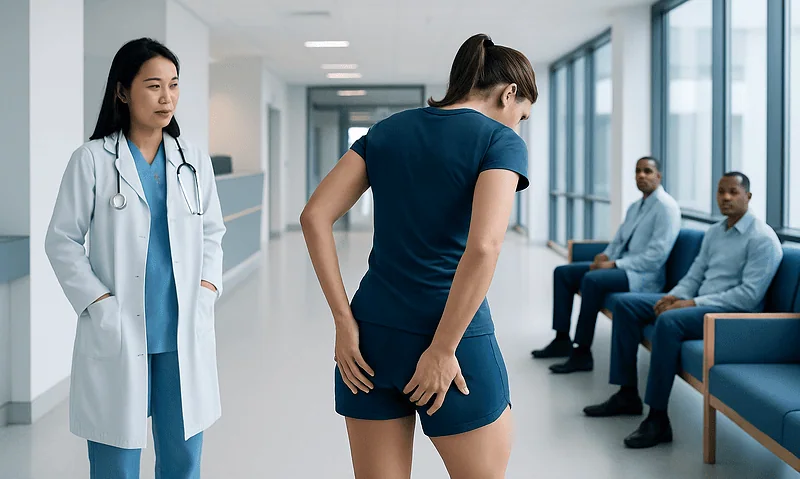
Diagnosis starts with a careful history and physical examination. The doctor asks about symptoms, growth stage, activity level, family history, and whether the back curve is changing. During the exam, they assess posture, shoulder and pelvic alignment, hamstring tightness, spinal flexibility, and whether the curve improves when the person stands tall or bends in certain ways.
X-rays are usually the key test for confirming Scheuermann’s osteochondrosis. They show the shape of the vertebrae, the degree of kyphosis, and whether several adjacent vertebrae are wedge-shaped. Imaging also helps rule out other causes of back pain or spinal deformity. If symptoms are unusual, severe, or accompanied by nerve-related complaints, additional imaging such as MRI may be recommended.
Doctors may also consider how much growth remains, because this affects treatment decisions. A child or teen who is still growing may benefit from closer follow-up or bracing if the curve is progressing. In contrast, an adult with a stable curve is more likely to be managed based on symptoms and function rather than growth-related correction.
Because posture-related round back can look similar at first glance, expert assessment is important. Structural kyphosis and simple postural kyphosis are not managed in exactly the same way. In complex cases, a spine team may coordinate evaluation with spine surgery specialists, rehabilitation experts, and imaging services to guide the next steps.
Treatment Options
Treatment for Scheuermann’s osteochondrosis is individualized. The main goals are to reduce pain, improve posture and function, monitor curve progression, and support healthy activity. Not everyone needs intensive treatment. Mild cases with limited symptoms may only require observation, education, and exercise guidance.
Physical therapy is often an important first step. A tailored program may focus on posture awareness, back extensor strengthening, flexibility work, hamstring stretching, and core conditioning. These measures do not change bone shape once it has developed, but they can improve comfort, mobility, and overall spinal support. Pain relief strategies may also include activity modification and clinician-guided use of appropriate medicines when needed.
For adolescents who are still growing and have a more significant or progressing curve, bracing may be recommended. A brace is typically used to guide growth and help limit further worsening rather than to cure the condition instantly. Success depends on curve pattern, timing, and consistent use under specialist supervision. Follow-up visits and repeat imaging are often needed to assess progress.
Surgery is considered only in selected situations, such as severe curvature, persistent pain that does not improve with non-surgical care, neurological symptoms, or substantial impact on function and quality of life. When an operation is needed, it may involve spinal fusion surgery to correct and stabilize the spine. Some patients also benefit from structured physical therapy and rehabilitation before and after treatment to restore movement and strength.
Prevention, Self-Care, and Living With the Condition
Because Scheuermann’s osteochondrosis develops during growth and is not caused simply by slouching, it cannot always be prevented. Still, healthy daily habits can reduce strain on the spine and help manage symptoms. Gentle movement, regular exercise, and attention to workstation or study posture can all support comfort.
At home, many people do well with a routine that includes stretching, strengthening, and pacing activities that worsen pain. Long periods of sitting may increase stiffness, so taking regular breaks can help. Supportive sleeping positions and backpack habits may also reduce day-to-day discomfort, even though they do not change the underlying structure of the vertebrae.
Helpful self-care measures may include:
- Following a physical therapy home exercise plan
- Staying active with low-impact exercise as tolerated
- Taking breaks from prolonged sitting or screen time
- Using proper lifting technique
- Maintaining open communication about pain, mood, and activity limits
Living with a visible spinal curve can be emotionally challenging, especially for adolescents. Reassurance, practical support, and realistic goals matter. If symptoms are affecting school, sport, sleep, or self-esteem, discussing these concerns with a doctor can be just as important as measuring the curve itself.
When to Seek Medical Care
A medical assessment is sensible if a child, teenager, or adult has a rounded upper back that seems fixed, new or persistent back pain, or a noticeable change in posture. Early evaluation helps distinguish Scheuermann’s osteochondrosis from postural issues and other spine conditions and can identify whether monitoring is needed during growth.
More urgent review is appropriate if there is severe or rapidly worsening pain, numbness, weakness, problems with balance, or changes in bowel or bladder control. Although these symptoms are not typical of Scheuermann’s osteochondrosis, they can suggest another spinal problem that needs prompt attention.
It is also worth seeking care if back symptoms are interfering with school, sports, sleep, or daily function, or if there are concerns about the emotional impact of the condition. Families often benefit from clear explanations about what the diagnosis means, what to watch for, and whether treatment is likely to help at the current stage of growth.
For international patients who need coordinated assessment, Acibadem International’s multidisciplinary specialists and JCI-accredited hospitals diagnose and treat spinal conditions with individualized planning. A spine evaluation may involve orthopedic, rehabilitation, and imaging teams to decide on the most suitable next step.
Frequently asked questions
What is the difference between Scheuermann's osteochondrosis and poor posture?
Poor posture is usually flexible and may improve when a person consciously stands up straight. Scheuermann's osteochondrosis is a structural spinal condition in which vertebrae become wedge-shaped during growth, so the rounded back is less easily corrected by posture alone.
At what age does Scheuermann's osteochondrosis usually appear?
It most often becomes noticeable in late childhood or adolescence, especially during growth spurts. Some people are diagnosed only after a visible change in posture or back pain leads to evaluation.
Can Scheuermann's osteochondrosis go away on its own?
The vertebral shape changes do not usually reverse on their own. However, many people can manage symptoms well, and the condition may stabilize once growth is complete, especially with appropriate monitoring and supportive treatment.
Is exercise safe with Scheuermann's osteochondrosis?
In many cases, yes. Exercise is often encouraged, especially programs that improve strength, flexibility, and posture, but the type and intensity should be guided by a qualified clinician if pain or a significant curve is present.
Will a brace cure Scheuermann's osteochondrosis?
A brace does not instantly cure the condition, and it does not erase all structural changes. In growing adolescents with certain curves, bracing may help limit progression and improve alignment when used as recommended by a specialist.
When is surgery considered for Scheuermann's osteochondrosis?
Surgery is generally reserved for selected patients with severe curvature, persistent pain despite non-surgical treatment, neurological concerns, or major functional limitation. The decision is individualized and based on symptoms, curve severity, growth status, and imaging findings.
References
- American Academy of Orthopaedic Surgeons
- Scoliosis Research Society
- National Institute of Arthritis and Musculoskeletal and Skin Diseases
- American Academy of Pediatrics
This article is for general information only and is not a substitute for professional medical advice. Please consult a qualified doctor about your individual situation.
Joint and spine care in Turkey — expert assessment & treatment
JCI-accredited · board-certified surgeons · reply within 24h
Add us as a Preferred Source to see more of our trusted health content across Google Search, AI Overviews and Discover.