Little Pimples on Hands: A Complete Medical Overview

Little pimples on hands can have several causes, including eczema, contact dermatitis, heat rash, fungal infection, or scabies. The appearance, location, itch level, and whether the bumps contain fluid can help doctors narrow the diagnosis.
Key Takeaways
- Little pimples on hands can have several causes, including eczema, contact dermatitis, heat rash, fungal infection, or scabies.
- The appearance, location, itch level, and whether the bumps contain fluid can help doctors narrow the diagnosis.
- Gentle hand care, avoiding irritants, and regular moisturizing are often important parts of treatment.
- Medical review is important if bumps are painful, infected, recurrent, or do not improve with basic skin care.
- Not every hand rash is contagious, but some infections and infestations can spread and need prompt treatment.
Little pimples on hands are usually small bumps, blisters, or rash-like spots caused by skin irritation, eczema, sweating, allergy, or sometimes infection. While many cases improve with gentle skin care and trigger avoidance, persistent, painful, or spreading bumps should be assessed by a doctor to confirm the cause and guide treatment.
Overview: what little pimples on hands usually mean
Little pimples on hands is a common way people describe tiny raised spots, itchy bumps, or very small blisters on the palms, fingers, or backs of the hands. In many cases, these bumps are not true acne pimples. Instead, they are often linked to skin inflammation, blocked sweat ducts, irritation from soaps or chemicals, allergy, or a skin infection.
The exact cause usually depends on how the bumps look and feel. Clear, deep-seated itchy blisters may suggest dyshidrotic eczema, while rough dry bumps can be related to irritant dermatitis. Red, tender or pus-filled spots may point more toward an infection. A doctor will also consider whether the rash is limited to the hands or part of a wider skin problem such as eczema.
Although many hand rashes are mild and manageable, recurring symptoms deserve attention because the hands are exposed to frequent washing, cleaning products, friction, and workplace irritants. Getting the right diagnosis matters, since treatments differ between eczema, allergy, fungal infection, and contagious conditions such as scabies.
How the bumps can look and feel
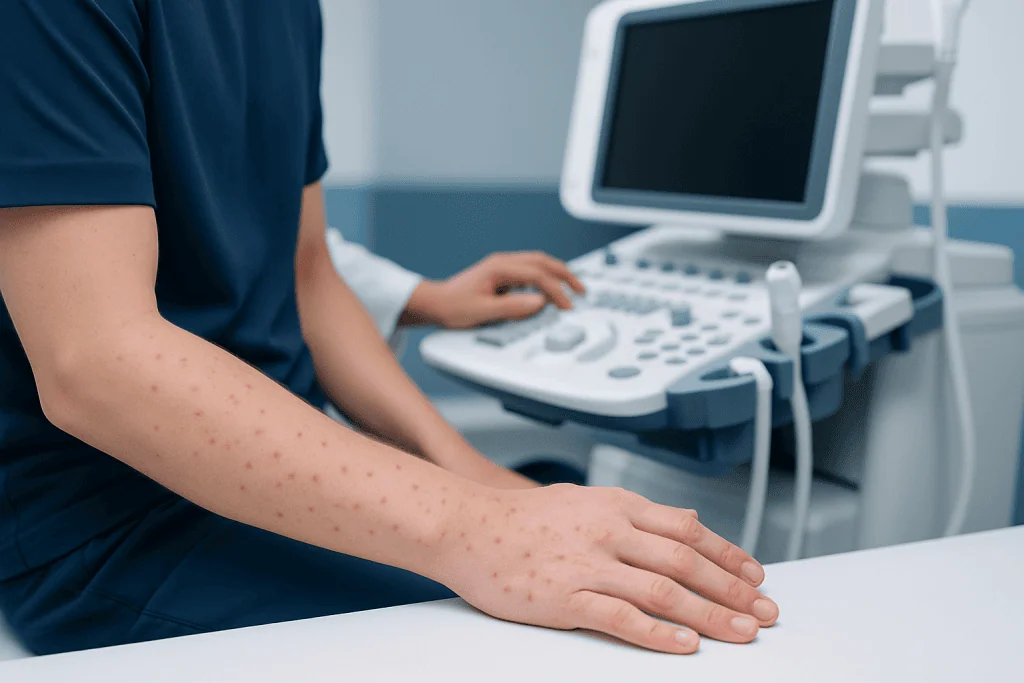
Small hand bumps can vary in color, size, and sensation. Some are skin-colored and dry, others are red and inflamed, and some look like tiny fluid-filled blisters. They may appear only on the sides of the fingers, across the palms, around the knuckles, or on the backs of the hands.
Symptoms often provide clues. Itching is common with eczema, allergy, heat rash, and scabies. Burning or stinging may happen when the skin barrier is damaged by detergents, frequent hand sanitizing, or chemical exposure. Pain, warmth, swelling, or pus can suggest a bacterial infection and should be assessed promptly.
Other associated features may include scaling, cracking, peeling, dryness, oozing, or thickened skin from repeated scratching. The pattern also matters. For example, symmetrical bumps on both hands may be more consistent with eczema or contact dermatitis, while a localized cluster can sometimes reflect an insect bite, friction reaction, or infection.
- Itchy tiny blisters: often seen in dyshidrotic eczema
- Dry rough bumps with redness: common in irritant or allergic dermatitis
- Pus-filled or crusted spots: may suggest bacterial infection
- Peeling with ring-like scale: can occur with fungal infection
- Severe night-time itching with finger-web involvement: can occur with scabies
Common causes and risk factors

One of the most common causes of little pimples on hands is hand eczema. This includes irritant contact dermatitis from repeated exposure to soap, sanitizer, detergents, or cleaning agents, and allergic contact dermatitis caused by substances such as fragrances, rubber, nickel, or preservatives. Dyshidrotic eczema is another common form that tends to cause intensely itchy tiny blisters on the palms and sides of the fingers.
Heat, sweating, and friction can also trigger small bumps, especially in hot weather or when gloves are worn for long periods. Some people develop blocked sweat-duct rashes or worsening of eczema under these conditions. Repeated wet work, occupations involving chemicals, and cold dry climates can all increase the risk of hand skin problems.
Infections are another possibility. Bacterial infections may cause tender red pustules or crusting, while fungal infections can create scaly or itchy patches and sometimes affect only one hand. Viral causes are less common but can include painful grouped blisters. Contagious conditions such as scabies may cause intense itching and small bumps, particularly between the fingers and at the wrists.
Less commonly, psoriasis, autoimmune skin conditions, insect bites, medication reactions, or childhood viral illnesses can affect the hands. Personal or family history of allergy, asthma, or eczema increases the chance of inflammatory causes. Because there are several possibilities, a recurring or unclear rash should not be self-diagnosed for too long.
How doctors diagnose the cause
Diagnosis starts with a careful history and skin examination. A doctor will ask when the bumps started, whether they itch or hurt, if they contain fluid, and whether they appear after handwashing, glove use, sweating, travel, new products, or contact with someone who has a rash. The distribution of the bumps and the condition of the surrounding skin are especially helpful clues.
In many cases, the diagnosis can be made clinically. However, additional tests may be useful when the rash is persistent, unusual, or not responding to treatment. A skin scraping or swab may be taken if fungal or bacterial infection is suspected. Patch testing can help identify allergic contact dermatitis when reactions keep returning.
Doctors also consider similar conditions that can look alike. For example, eczema, fungal infection, and psoriasis may all cause flaky inflamed patches on the hands. If needed, a dermatologist may perform dermoscopy or recommend further evaluation to rule out rarer causes. When symptoms are widespread or severe, a broader skin assessment can help guide whether dermatology evaluation and treatment is needed.
Treatment options for little pimples on hands
Treatment depends on the cause. For eczema or dermatitis, the foundation is reducing irritation and repairing the skin barrier. This usually means using fragrance-free cleansers, applying a thick moisturizer several times a day, and avoiding known triggers. Doctors may prescribe anti-inflammatory creams or ointments when symptoms are more active.
If allergy is suspected, identifying and avoiding the responsible product or material is essential. Protective measures such as cotton liners under gloves or switching to less irritating products may also help. When a fungal, bacterial, or parasitic cause is confirmed, treatment should target that specific condition rather than relying only on moisturizers or steroid creams.
For recurrent or severe inflammation, a specialist may discuss additional options including stronger topical therapies, light-based treatment, or other prescription medicines. Where there is a deeper skin concern or the diagnosis remains uncertain, referral for skin disease treatment can be appropriate. If there are signs of infection such as oozing, crusting, increasing redness, or pain, medical treatment may be needed promptly because inflamed skin can become secondarily infected.
Self-treatment has limits. For example, using an over-the-counter steroid for what is actually a fungal infection may worsen the rash or delay improvement. A clear diagnosis helps avoid this cycle and supports the most effective care plan.
Prevention and self-care at home
Daily skin protection is one of the best ways to reduce recurring hand bumps. Hands should be washed with lukewarm rather than hot water, then patted dry instead of rubbed harshly. A thick, fragrance-free cream or ointment should be applied after washing and before bed to support the skin barrier.
People who clean, cook, dye hair, work in healthcare, or handle chemicals may benefit from practical protective habits. Wearing suitable gloves for wet work, changing damp gloves promptly, and avoiding direct contact with strong detergents can help prevent irritation. If sweating under gloves seems to trigger bumps, short breaks and breathable glove options may reduce flare-ups.
It is best to avoid picking, popping, or scratching the bumps, since this can damage the skin and increase the risk of infection. Nails should be kept short, and new soaps, lotions, or sanitizers should be introduced cautiously if the skin is sensitive. If symptoms are linked to known skin conditions such as psoriasis or eczema, following the prescribed long-term skin care plan can lower the chance of recurrence.
When to seek medical care
Medical advice is recommended if little pimples on hands last more than a couple of weeks, keep coming back, interfere with sleep or daily activities, or do not improve with gentle skin care. A doctor should also assess bumps that are very painful, spreading, or associated with swelling, fever, or pus, as these may suggest infection.
Urgent evaluation is important if there are painful grouped blisters, rapidly worsening redness, significant hand swelling, or symptoms after a new medication or chemical exposure. People with diabetes, weakened immunity, or severe allergies should be especially cautious, because skin problems can progress more quickly or heal more slowly.
If specialist care is needed, Acibadem International’s multidisciplinary specialists and JCI-accredited hospitals diagnose and treat skin conditions for international patients, including access to specialist dermatology care when appropriate. Even when the cause seems minor, a professional assessment can bring relief faster by matching treatment to the underlying problem.
Frequently asked questions
Are little pimples on hands usually serious?
Most cases are not serious and are related to irritation, eczema, sweating, or mild allergy. However, persistent, painful, or infected-looking bumps should be checked by a doctor because treatment depends on the exact cause.
Can stress cause little pimples on hands?
Stress does not usually create hand bumps by itself, but it can trigger or worsen conditions such as eczema. Many people notice flares during periods of stress, sweating, or poor sleep.
Are these bumps contagious?
Many causes, such as eczema and contact dermatitis, are not contagious. Some causes, including fungal infection or scabies, can spread to others, which is why an accurate diagnosis matters.
Should the bumps be popped or squeezed?
No. Popping or scratching the bumps can injure the skin barrier, increase irritation, and raise the risk of infection. It is safer to protect the area, moisturize regularly, and seek advice if the bumps persist.
What is the difference between hand eczema and acne-like pimples?
True acne is uncommon on the palms and fingers because these areas do not have the same type of oil glands involved in acne. Small hand "pimples" are more often blisters, inflammatory bumps, or rash-related spots caused by eczema, irritation, or infection.
When should someone see a dermatologist?
A dermatologist should be considered if the rash keeps returning, the cause is unclear, over-the-counter measures do not help, or the skin becomes cracked, painful, or infected. Specialist care can also help identify allergies or less common skin conditions.
This article is for general information only and is not a substitute for professional medical advice. Please consult a qualified doctor about your individual situation.
Explore treatments in Turkey — costs, top hospitals & a free quote
JCI-accredited · board-certified surgeons · reply within 24h
Add us as a Preferred Source to see more of our trusted health content across Google Search, AI Overviews and Discover.

More from the Health Library

Lemon Ginger Tea: What Patients Need to Know

Bit by Bats: What Patients Need to Know

Emphysema: A Complete Medical Overview

Half Life of Xanax: What Patients Need to Know

Lubricated Condoms: What Patients Need to Know