Understanding Appendicitis Test: A Complete Patient Guide

An appendicitis test often involves several steps rather than one standalone test. Doctors use symptoms, an abdominal exam, lab tests, and imaging together to make the diagnosis.
Key Takeaways
- An appendicitis test often involves several steps rather than one standalone test.
- Doctors use symptoms, an abdominal exam, lab tests, and imaging together to make the diagnosis.
- Ultrasound, CT, or MRI may be used depending on age, pregnancy, and the clinical situation.
- Prompt evaluation matters because untreated appendicitis can lead to complications.
- Sudden worsening pain, fever, vomiting, or a rigid abdomen should be assessed urgently.
An appendicitis test is not usually a single test. Doctors typically combine a physical exam, blood and urine tests, and imaging to check for appendicitis and to exclude other causes of abdominal pain.
Overview: what an appendicitis test includes
An appendicitis test usually means a group of evaluations used to decide whether the appendix is inflamed. In most cases, a doctor will start with questions about symptoms and a physical exam, then add blood tests, urine testing, and imaging if needed. This step-by-step approach helps confirm appendicitis while also checking for other common causes of abdominal pain.
Appendicitis can begin with vague discomfort and then become more typical over time. Because symptoms may overlap with stomach infections, kidney stones, urinary infections, ovarian conditions, or other digestive problems, diagnosis is not based on pain alone. The goal of testing is to identify who needs urgent treatment and who may have a different condition.
The appendix is a small pouch attached to the large intestine. When it becomes blocked and inflamed, pain often develops over hours and may move to the lower right side of the abdomen. If appendicitis is suspected, timely assessment is important because the condition can worsen and sometimes lead to rupture.
Signs and symptoms that lead to testing
People are often tested for appendicitis because of abdominal pain, especially pain that starts near the belly button and later settles in the lower right abdomen. The pain may become sharper with walking, coughing, or sudden movements. Loss of appetite, nausea, vomiting, mild fever, and a general feeling of being unwell are also common reasons a doctor may consider appendicitis.
Not everyone has the classic pattern. Children, older adults, and pregnant patients may have less typical symptoms, and some people feel pain in a different area depending on the position of the appendix. Bloating, constipation, diarrhea, or difficulty passing gas can also occur, though these symptoms are not specific to appendicitis.
A doctor will also look for signs that suggest a different problem. For example, burning with urination may point toward a urinary cause, while severe pelvic pain may raise concern for a gynecologic condition. That is why a careful history remains a central part of any appendicitis test.
- Pain that worsens over several hours
- Tenderness in the lower right abdomen
- Nausea or vomiting after pain begins
- Low-grade fever
- Reduced appetite
How doctors assess appendicitis at the bedside

The first part of an appendicitis test is usually a clinical assessment. A doctor will ask when the pain started, where it began, whether it has moved, and what makes it better or worse. Questions about bowel habits, urination, menstrual history, pregnancy possibility, and previous surgeries can help narrow the cause.
During the physical exam, the abdomen is checked for tenderness, guarding, and signs of irritation of the abdominal lining. Pain when pressure is released, pain with movement, or specific exam maneuvers may increase suspicion. These findings do not diagnose appendicitis by themselves, but they help determine how urgent the situation is and which tests are most useful next.
Clinicians may also use structured scoring systems that combine symptoms, exam findings, and blood test results. These tools do not replace judgment, but they can help estimate the likelihood of appendicitis and guide whether imaging or surgical review is needed.
Blood, urine, and pregnancy tests
Laboratory tests are commonly ordered as part of an appendicitis test. A blood test may show signs of inflammation or infection, such as a raised white blood cell count or other inflammatory markers. These findings support the diagnosis, but normal results do not completely rule it out, especially early in the course of illness.
Urine testing is important because urinary tract infections and kidney stones can cause pain similar to appendicitis. A urine sample can help identify blood, white cells, or bacteria that suggest a urinary source. In some cases, mild urine changes can happen with appendicitis as well, so results must be interpreted in the full clinical picture.
For anyone who could be pregnant, a pregnancy test is usually recommended. This is important because pregnancy can change where pain is felt and because conditions such as ectopic pregnancy also need urgent evaluation. It also helps doctors choose the safest imaging approach.
Imaging tests: ultrasound, CT, and MRI
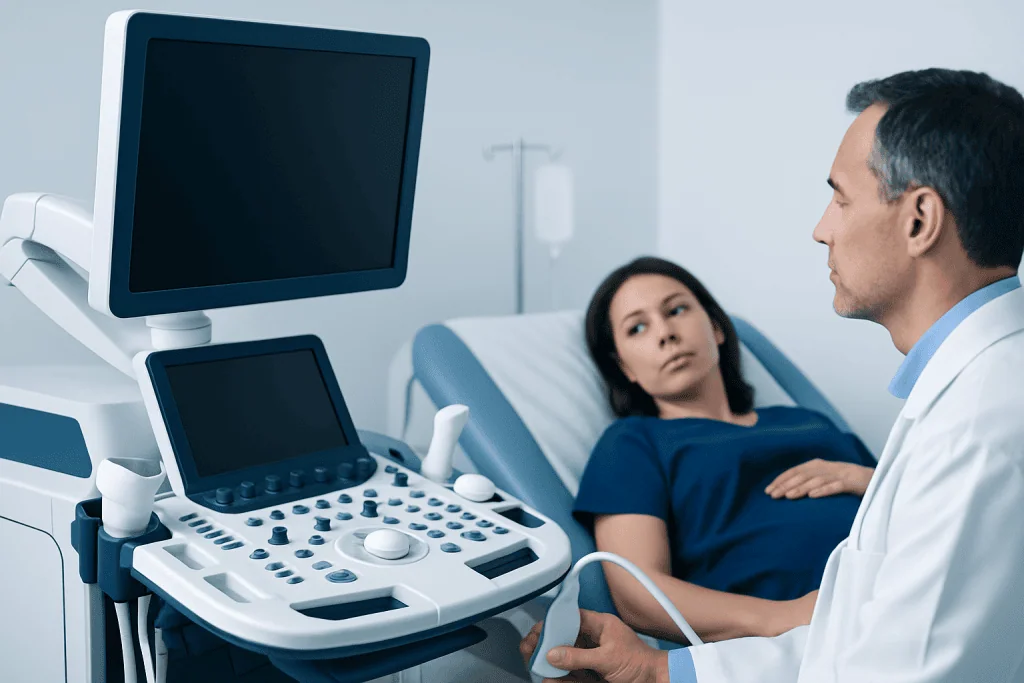
Imaging is often the most decisive part of an appendicitis test when the diagnosis is uncertain. Ultrasound may be used first, especially in children, teenagers, and pregnant patients, because it does not use radiation. It can sometimes show an enlarged appendix or signs of surrounding inflammation, although the appendix is not always clearly visible.
CT scanning is widely used in adults because it can provide detailed images and often helps confirm appendicitis or identify another cause of pain. This can be particularly useful when symptoms are not typical. MRI may be chosen in pregnancy or when radiation should be avoided and more detail than ultrasound is needed.
Imaging is selected based on the person’s age, body type, pregnancy status, symptoms, and how clear the bedside findings are. In some hospitals, a suspected case may be reviewed with a surgeon before or after imaging. If inflammation of the appendix is found, care then focuses on treating appendicitis and preventing complications.
What happens after a positive appendicitis test
If testing strongly suggests appendicitis, treatment usually begins quickly. Many patients are given fluids, pain relief, and antibiotics before a final treatment plan is carried out. The most common treatment is surgery to remove the appendix, often using a minimally invasive approach such as laparoscopic appendectomy.
In selected cases, especially when inflammation appears limited and there is no rupture, doctors may discuss non-surgical treatment with antibiotics. This option is not suitable for everyone and may carry a chance of recurrence later. A surgical team helps weigh the likely benefits and drawbacks for the individual patient.
If tests do not confirm appendicitis, doctors may look for another explanation for the pain. Depending on the findings, this can include observation, repeat examination, more imaging, or referral to another specialist. Some patients with a complicated infection or a pocket of pus may need abscess drainage or further treatment planning before surgery.
Care is tailored to the severity of inflammation and the person’s overall health. In advanced cases, treatment may include hospital monitoring and support from gastroenterology and surgical teams working together. Near the end of the care pathway, some international patients may also choose evaluation at Acibadem International, where multidisciplinary specialists in JCI-accredited hospitals diagnose and treat abdominal emergencies.
When to seek medical care
Medical care should be sought promptly for abdominal pain that becomes more severe, especially if it moves to the lower right side or is accompanied by fever, vomiting, or tenderness when walking or coughing. Appendicitis can progress over hours, and early assessment helps reduce the risk of complications.
Urgent evaluation is also important if the abdomen becomes hard, pain suddenly worsens after a brief improvement, or the person seems faint, confused, or very unwell. These signs can suggest a more serious abdominal problem and should not be monitored at home without medical advice.
For milder or unclear symptoms, it is still reasonable to contact a qualified doctor, urgent care clinic, or emergency department for guidance. Self-diagnosis can be difficult because several conditions can mimic appendicitis, including gallstones and urinary or gynecologic disorders.
Self-care, preparation, and questions to ask
There is no reliable home test for appendicitis. It is usually best not to ignore persistent abdominal pain or try to treat it only with over-the-counter remedies. Until a doctor has assessed the cause, avoiding heavy meals may be sensible, and some clinicians may advise avoiding laxatives because they can worsen discomfort in certain abdominal conditions.
Before the appointment or emergency visit, it can help to note when the pain began, whether it moved, any vomiting or fever, and what medicines have been taken. This information can speed up the assessment. If imaging or surgery becomes necessary, a clear timeline of symptoms may also help the medical team.
Useful questions to ask include whether imaging is needed, what other diagnoses are being considered, whether surgery is likely, and what warning signs should prompt immediate return. Patients and families often feel more reassured when they understand why several tests may be needed instead of one single appendicitis test.
Frequently asked questions
Is there one single appendicitis test?
Usually no. Doctors typically combine the medical history, physical exam, blood and urine tests, and sometimes imaging to decide whether appendicitis is present.
Can blood tests alone diagnose appendicitis?
Blood tests can support the diagnosis by showing inflammation or infection, but they cannot confirm appendicitis on their own. Some people with early appendicitis may even have normal blood results.
What is the best imaging test for appendicitis?
The best imaging test depends on the patient's age, pregnancy status, and symptoms. Ultrasound is often used first in children and pregnancy, while CT is commonly used in adults because it gives detailed images.
How long does it take to diagnose appendicitis?
The timing varies depending on how clear the symptoms are and whether imaging is needed. In many emergency settings, assessment begins right away and diagnosis is made within hours, but observation or repeat exams may sometimes be necessary.
Can appendicitis be mistaken for something else?
Yes. Stomach infections, constipation, kidney stones, urinary infections, ovarian conditions, and other digestive problems can cause similar pain. That is one reason doctors use several tests together rather than relying on symptoms alone.
Should someone eat or drink before an appendicitis evaluation?
If appendicitis is strongly suspected, it is often safest to follow medical advice about eating and drinking because surgery may be needed. If a person has severe abdominal pain, contacting a healthcare professional promptly is more important than trying to manage it at home.
References
- National Institute of Diabetes and Digestive and Kidney Diseases
- American College of Radiology
- National Health Service
- American College of Surgeons
- MedlinePlus
This article is for general information only and is not a substitute for professional medical advice. Please consult a qualified doctor about your individual situation.
Appendicitis in Turkey — costs, top hospitals & a free quote
JCI-accredited · board-certified surgeons · reply within 24h
Add us as a Preferred Source to see more of our trusted health content across Google Search, AI Overviews and Discover.

General Surgery
Open, laparoscopic and robotic surgery for a broad range of abdominal and soft-tissue conditions.
120 specialists in this unit