STI Test: A Complete Medical Overview

An STI test may include urine, blood, swab samples, or a physical examination depending on the infection being checked. The best time to test depends on the possible exposure date, symptoms, and the infection’s window period.
Key Takeaways
- An STI test may include urine, blood, swab samples, or a physical examination depending on the infection being checked.
- The best time to test depends on the possible exposure date, symptoms, and the infection’s window period.
- Many STIs can be present without symptoms, so testing may still be important after unprotected sex or a new partner.
- A positive result does not always mean serious illness; many STIs are treatable, and several are curable.
- Follow-up testing, partner notification, and completing treatment are important parts of care.
An STI test is a medical check for sexually transmitted infections using samples such as urine, blood, or swabs, and the right test depends on symptoms, sexual practices, and when exposure may have happened. Testing helps confirm or rule out infection, guides treatment, and can reduce the risk of passing an infection to others.
Overview: what an STI test is
An STI test is a medical test used to check for sexually transmitted infections. It may involve a urine sample, blood test, swab from the genitals, throat, or rectum, or sometimes a physical examination. Which test is used depends on the infection being considered, whether symptoms are present, and how long it has been since a possible exposure.
Testing is not only for people with symptoms. Many infections, including chlamydia, gonorrhea, human papillomavirus, and HIV, may cause no early symptoms at all. Because of this, a person can feel well and still carry an infection that needs treatment or follow-up.
An STI test can help answer several important questions: whether an infection is present, which organism is responsible, whether treatment is needed now, and whether a repeat test should be planned later. This makes testing a practical part of routine sexual health care, especially after unprotected sex, a new partner, or if a partner has been diagnosed with an infection.
Who should consider STI testing and when
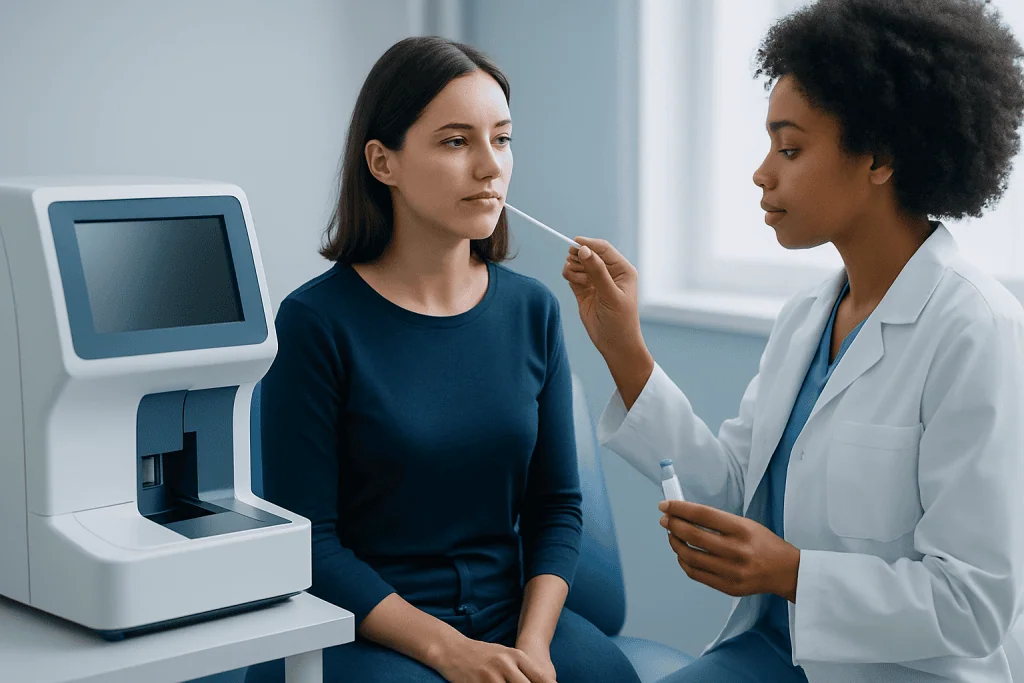
Testing may be recommended for anyone with symptoms that could suggest an STI, such as unusual discharge, genital sores, burning during urination, pelvic pain, testicular pain, bleeding after sex, or a new rash. It is also appropriate after a known exposure or if a sexual partner has symptoms or a confirmed diagnosis.
Regular screening may be advised even without symptoms. This can be relevant for sexually active adults with new or multiple partners, people who do not always use barrier protection, men who have sex with men, and people who are pregnant. Some infections can affect pregnancy and newborn health, so antenatal testing is an important part of care.
Timing matters because each infection has a “window period,” the time between exposure and when a test can reliably detect infection. Testing too early may miss an infection, which is why a doctor may recommend an initial test now and a repeat test later. If symptoms are present, testing should not be delayed simply to wait for the ideal window.
A clinician may also suggest tests based on the type of sexual contact. For example, oral or anal sex may require throat or rectal swabs in addition to urine testing. This tailored approach improves accuracy and avoids missing infections outside the genital area.
Types of STI tests and what they check for

There is no single test that checks for every sexually transmitted infection. Instead, clinicians choose from several kinds of tests based on the situation. Nucleic acid amplification tests, often called NAATs, are commonly used for infections such as chlamydia and gonorrhea because they are highly sensitive and can be performed on urine or swab samples.
Blood tests are commonly used to check for infections such as HIV, syphilis, and hepatitis B or hepatitis C when appropriate. Some blood tests look for parts of the virus or bacteria, while others detect the body’s immune response. This is one reason timing matters: antibodies may take time to become detectable after exposure.
Swabs may be taken from the cervix, vagina, urethra, penis, rectum, throat, or from a sore or blister. Swab testing can help diagnose herpes when lesions are present and can also detect gonorrhea or chlamydia at specific sites. In some cases, a clinician may perform a pelvic exam or genital exam to assess visible changes and decide which samples are needed.
Common STI testing pathways may include:
- Urine test for chlamydia and gonorrhea
- Blood test for HIV, syphilis, and selected hepatitis infections
- Swab of genital, rectal, or throat areas based on exposure
- Swab from a sore if herpes is suspected
- Cervical screening or HPV-related evaluation when clinically indicated
Symptoms, silent infections, and why testing matters
One reason STI testing is so important is that many infections do not cause obvious symptoms, especially early on. Chlamydia and gonorrhea may be mild or silent, yet still lead to complications if untreated. In women, some untreated infections can increase the risk of pelvic inflammatory disease, which may affect fertility. In men, certain infections can cause inflammation and discomfort in the reproductive tract.
When symptoms do occur, they can overlap with other conditions, so testing helps avoid guessing. Burning during urination may be caused by an STI, but it can also occur with urinary tract problems. Genital ulcers may suggest herpes or syphilis, but skin conditions and irritation can sometimes look similar. Laboratory testing clarifies the cause and helps match the right treatment to the infection.
Testing also supports public health and partner care. Identifying an infection allows timely treatment and helps reduce onward transmission. It may also guide testing for related conditions. For example, a person diagnosed with HIV or another STI may need a broader evaluation because some infections can occur together.
How doctors interpret STI test results
An STI test result is interpreted in the context of symptoms, exposure timing, and the type of sample collected. A negative result can be reassuring, but it does not always rule out infection if testing happened during the window period or if the sample site did not match the site of exposure. In those cases, repeat testing may be advised.
A positive result means an infection or evidence of past or current exposure has been detected, but the meaning differs by disease. Some infections are curable with antibiotics, while others are managed over time with antiviral treatment or monitoring. A clinician explains whether treatment is needed immediately, whether any confirmatory testing is required, and what follow-up is appropriate.
Results should also be understood with privacy, communication, and partner care in mind. A doctor may advise avoiding sexual contact until treatment is completed or until an infection has been excluded. Partner notification is often recommended so recent partners can be tested and treated if needed, which helps prevent reinfection.
For persistent symptoms despite negative tests, clinicians may look for non-STI causes or repeat specific tests. Evaluation may also include related specialties such as urology care or gynecologic assessment when urinary, genital, or pelvic symptoms need broader review.
Treatment options after an STI test
Treatment depends on the infection found. Bacterial STIs such as chlamydia, gonorrhea, and syphilis are generally treated with antibiotics, while viral infections such as herpes or HIV are managed with antiviral medicines and follow-up care. The aim is to relieve symptoms, prevent complications, and lower the chance of transmission.
It is important to complete the full treatment exactly as prescribed, even if symptoms improve quickly. Some infections also require a repeat test after treatment or a test of cure in selected situations. Follow-up can be especially important during pregnancy, after recent exposure, or when symptoms continue.
If an STI has caused complications, treatment may involve more than medication alone. For example, persistent pelvic pain or signs of pelvic inflammatory disease may need prompt gynecologic assessment. When broader reproductive evaluation is needed, a doctor may recommend gynecology care as part of ongoing management.
For people diagnosed with HIV, long-term care is essential and often involves regular blood tests, counseling, and antiviral therapy. In complex cases, coordinated assessment through infectious diseases care can help guide diagnosis, treatment, vaccination review, and prevention planning.
Prevention, self-care, and reducing future risk
Prevention starts with informed sexual health habits. Using condoms or other barrier methods correctly and consistently can reduce the risk of many STIs, though not all infections are fully prevented if they spread through skin-to-skin contact. Open communication with partners about testing, symptoms, and recent exposures can also support safer decisions.
Vaccination can help prevent some infections. Depending on age, health status, and previous vaccination history, a doctor may discuss vaccines such as hepatitis B and human papillomavirus. Routine health visits are a good opportunity to review personal risk factors and decide whether screening should be repeated at regular intervals.
Self-care after testing includes following medical advice, abstaining from sex if recommended until results are clear or treatment is completed, and avoiding self-medicating without guidance. Symptoms can improve while infection remains, and the wrong treatment can delay proper care. Reliable medical follow-up is the safest approach.
Near the end of the care pathway, some people may need coordinated support across specialties. Acibadem International’s multidisciplinary specialists in JCI-accredited hospitals diagnose and treat sexually transmitted infections and related complications for international patients when further evaluation is needed.
When to seek medical care
Medical care should be sought promptly if there has been a known exposure to an STI, if a partner has tested positive, or if symptoms such as genital sores, unusual discharge, pain during urination, pelvic pain, testicular pain, rectal pain, or fever develop. Early evaluation can shorten the time to diagnosis and treatment.
Urgent medical attention is especially important for severe pelvic or abdominal pain, pregnancy with possible STI exposure, a widespread rash with fever, or symptoms after sexual assault. Care is also important if symptoms persist despite a negative test or after treatment, because repeat testing or a different diagnosis may need to be considered.
Anyone unsure about whether to test should discuss personal risk, timing, and symptoms with a qualified doctor. A clinician can advise which samples are needed, when testing will be most accurate, and what steps to take while waiting for results.
Frequently asked questions
How soon after sex should someone get an STI test?
The timing depends on the infection and the type of test being used. Some tests can detect infection relatively early, while others may miss it during the window period. If symptoms are present, testing should be arranged promptly, and a doctor may recommend repeat testing later if the first result is too early to be conclusive.
Can a person have an STI without symptoms?
Yes. Many sexually transmitted infections can be present without causing noticeable symptoms, especially in the early stages. That is why testing may be recommended after unprotected sex, a new partner, or a known exposure even when a person feels well.
What samples are usually needed for an STI test?
Common samples include urine, blood, and swabs from the genital area, throat, rectum, or from a sore if one is present. The right sample depends on the infection being checked and the type of sexual contact involved. A doctor chooses the most appropriate test combination based on symptoms and history.
Does a negative STI test mean there is definitely no infection?
Not always. A negative result is reassuring, but it may be falsely reassuring if the test was taken too soon after exposure or if the infection is at a body site that was not tested. A clinician may advise repeat testing or additional swabs when the clinical suspicion remains high.
What happens if an STI test is positive?
The next steps depend on which infection is found. Many STIs can be treated effectively, and some are fully curable, while others require longer-term management. A doctor will explain treatment, whether partners should be informed and tested, and when follow-up testing is needed.
Are home STI tests reliable?
Some home collection kits can be useful when they are from reputable providers and processed by accredited laboratories. However, they may not be suitable for every situation, especially when symptoms are severe, a physical examination is needed, or urgent treatment may be required. A medical professional can help decide whether home testing or clinic-based testing is more appropriate.
This article is for general information only and is not a substitute for professional medical advice. Please consult a qualified doctor about your individual situation.
Explore treatments in Turkey — costs, top hospitals & a free quote
JCI-accredited · board-certified surgeons · reply within 24h
Add us as a Preferred Source to see more of our trusted health content across Google Search, AI Overviews and Discover.

More from the Health Library

Apical Pulse Location — Explained by Medical Evidence, Not Myths

Premenstrual Stress: A Complete Medical Overview

Heart Labeled: What Patients Need to Know
Chronic Stress: A Complete Medical Overview

Trendelenburg Position: What Patients Need to Know