Trendelenburg Position: What Patients Need to Know

Trendelenburg position means lying on the back with the head lower than the feet. It is used mainly in selected medical and surgical settings rather than as routine first aid.
Key Takeaways
- Trendelenburg position means lying on the back with the head lower than the feet.
- It is used mainly in selected medical and surgical settings rather than as routine first aid.
- Potential benefits depend on the situation, while risks can include breathing difficulty, pressure effects, and discomfort.
- Its use should be guided by trained healthcare professionals who can monitor the patient closely.
- Patients should ask why the position is being used, how long it will last, and what side effects to report.
The trendelenburg position is a body position in which a person lies flat on the back with the feet raised above the head. In modern medicine, it has specific uses during some procedures and operations, but it is not a standard treatment for most emergencies or low blood pressure outside clinical guidance.
Overview: what the trendelenburg position means
The trendelenburg position places a person on their back with the whole body tilted so the feet are higher than the head. In practice, the angle may be mild or more pronounced, depending on the procedure and the patient’s condition. A related position, reverse Trendelenburg, tilts the body the other way so the head is higher than the feet.
For patients, the most important point is that this is a positioning technique, not a disease or a treatment by itself. Clinicians use it for specific reasons, such as improving access during surgery, helping with the placement of some lines or devices, or adjusting how organs and tissues are positioned during an operation.
Older first-aid advice sometimes suggested the trendelenburg position for shock or fainting. Modern medical practice is more selective. Research has shown that it does not reliably improve outcomes in many emergency situations and may create problems for breathing or comfort, so it is no longer used routinely for those purposes.
Why doctors use it in modern medical care
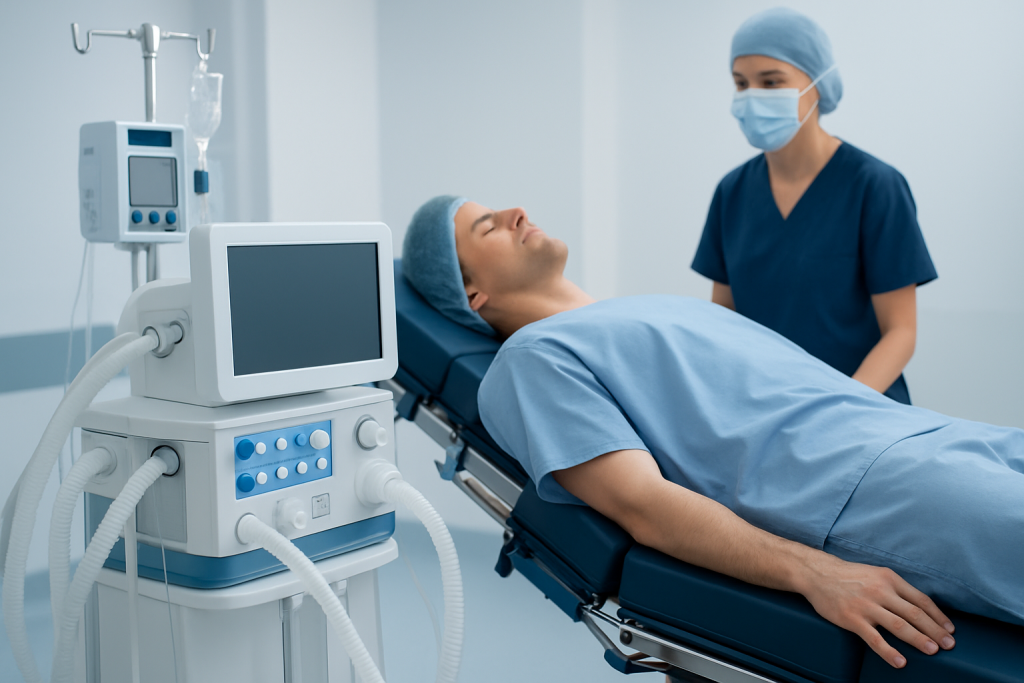
Today, the trendelenburg position is most often used in controlled medical settings. In the operating room, it can help surgeons see and reach structures in the lower abdomen or pelvis more easily because gravity moves the abdominal organs upward. This may be useful during some minimally invasive or open procedures.
It may also be used for certain bedside or procedural tasks, such as placement of a central venous catheter, because body tilt can affect vein size and the relative position of internal structures. Even in these situations, clinicians weigh the potential advantages against the patient’s heart, lung, brain, and eye health before deciding how much tilt to use.
For some operations, a surgical team may combine body positioning with specialized techniques such as robotic surgery or laparoscopic surgery. These approaches often require careful positioning to create the safest possible view and working space while keeping pressure points protected.
- Common medical uses include selected pelvic or lower abdominal surgery.
- It may help with exposure during gynecologic, urologic, or colorectal procedures.
- It can be used briefly during line placement or other monitored procedures.
- Its role in emergency care is limited and situation-dependent.
What patients may feel during the position

When a patient is awake in the trendelenburg position, they may notice pressure in the head, a sense of fullness in the face, nasal congestion, or mild shortness of breath. Some people feel uncomfortable, anxious, or as if they are sliding downward, even when secured safely. These sensations are often temporary, but they should be reported to the care team.
During surgery, many patients are under anesthesia and do not feel the position itself. Even so, the operating team takes steps to protect the body. Padding, straps, arm support, and careful alignment are used to reduce pressure injuries, nerve strain, and slipping. The team also watches the eyes, airway, circulation, and skin closely.
If the tilt is used for a longer procedure, the team may adjust the angle or timing based on the patient’s response. People with obesity, lung disease, glaucoma, heart disease, or brain-related conditions may need additional precautions because the position can affect breathing mechanics and pressure within the chest, eyes, or head.
Benefits, limits, and possible risks
The main benefit of the trendelenburg position is improved access for clinicians in carefully chosen situations. It can make certain operations technically easier and may assist with some procedural steps. In selected cases, that can support efficiency and visibility, especially in the pelvis or lower abdomen.
However, the position has clear limits. It is not a general-purpose remedy for low blood pressure, collapse, or shock. Raising the legs or using other medical measures may be more appropriate, depending on the cause. Because the body responds differently in each situation, the trendelenburg position should not be assumed to be helpful outside medical guidance.
Possible risks include difficulty breathing, reduced lung expansion, facial or airway swelling, increased pressure in the head or eyes, reflux of stomach contents, and nerve or skin pressure injury during prolonged procedures. These risks are more relevant in patients with heart or lung disease, obesity, pregnancy, raised intracranial pressure, or eye conditions such as glaucoma. If a person already has a complex condition such as glaucoma, the care team may modify or avoid this position.
When it may be avoided or used with caution
Doctors may avoid or limit the trendelenburg position if it could worsen another medical problem. This is especially important in people with severe breathing disorders, congestive heart failure, significant obesity, uncontrolled high eye pressure, increased pressure inside the skull, or a high risk of aspiration. Pregnant patients may also require different positioning because of changes in circulation and comfort.
Short periods of tilt may still be possible in some cases, but only with close monitoring. The decision depends on why the position is needed, how steep the tilt will be, how long it will last, and whether alternatives can achieve the same goal. The safest plan is individualized rather than routine.
Patients scheduled for surgery should tell their team about all chronic conditions, prior anesthesia problems, reflux symptoms, vision disorders, and mobility or nerve issues. This information helps the team plan positioning, anesthesia, and postoperative care more safely. If a patient is being evaluated for a procedure related to hernia, for example, body position may be one of several technical factors the surgical team reviews in advance.
How hospitals keep patients safe during positioning
Safe use of the trendelenburg position depends on preparation, monitoring, and teamwork. Before a procedure, clinicians assess breathing, circulation, eye health, mobility, and any condition that may increase risk. They also check whether the procedure truly requires the position and, if so, the smallest tilt angle and shortest duration likely to work.
During the procedure, the care team protects the head, neck, shoulders, arms, back, and legs with positioning devices and padding. They monitor oxygen levels, blood pressure, heart function, airway pressures, skin contact areas, and the patient’s overall stability. If warning signs appear, the angle can be reduced or the patient can be returned toward a flatter position.
After surgery, patients may be watched for breathing issues, swelling, headache, nausea, shoulder discomfort, numbness, or skin irritation. If a planned operation may need a larger tilt, surgeons and anesthesiologists often explain this beforehand as part of informed consent. At centers such as Acibadem International, multidisciplinary specialists in JCI-accredited hospitals evaluate positioning needs as part of overall surgical planning, including procedures such as general surgery.
When to seek medical care
A patient should seek medical advice if they have concerns about why the trendelenburg position may be used during a planned test, procedure, or surgery. It is reasonable to ask whether it is necessary, what alternatives exist, and whether any personal conditions make it less suitable. Clear communication can help reduce anxiety and improve safety.
After a procedure, prompt medical attention is important if there is persistent shortness of breath, chest pain, severe headache, vision changes, marked facial swelling, fainting, new weakness, numbness, or ongoing vomiting. These symptoms do not always mean a positioning problem, but they should be assessed by a doctor without delay.
In emergencies outside the hospital, people should not place someone in the trendelenburg position unless a qualified clinician has specifically advised it. If a person collapses, has trouble breathing, seems confused, or may be seriously injured, emergency services should be contacted and standard first-aid guidance followed.
Frequently asked questions
What is the trendelenburg position in simple terms?
The trendelenburg position is when a person lies flat on their back and the bed or table is tilted so the feet are higher than the head. It is mainly a positioning method used in healthcare settings for selected procedures and operations.
Is the trendelenburg position still used for shock or fainting?
Not routinely. Older teaching sometimes recommended it, but modern practice is more cautious because it does not reliably improve outcomes and can make breathing harder in some people. The best response depends on the cause of the symptoms and should be guided by medical professionals.
Why might a surgeon use the trendelenburg position during an operation?
It can help move abdominal organs upward with gravity, giving the surgeon a clearer view of the pelvis or lower abdomen. This may be useful in some minimally invasive or open operations, especially when precision and exposure are important.
What are the risks of the trendelenburg position?
Potential risks include shortness of breath, pressure in the head or eyes, facial swelling, reflux, and pressure-related nerve or skin problems during longer procedures. The risk level varies by the patient’s health, the angle of tilt, and how long the position is used.
Who may need extra caution with this position?
People with lung disease, heart failure, obesity, glaucoma, increased pressure inside the skull, reflux, or pregnancy may need special consideration. Their doctors may change the angle, limit the duration, or choose another position if that would be safer.
Should patients be worried if their care team mentions this position?
Usually, no. In hospitals, positioning is planned carefully and used for a clear clinical reason. Patients should feel comfortable asking why it is needed, how long it will be used, and what symptoms they should report.
References
- World Health Organization
- American Society of Anesthesiologists
- National Institutes of Health
- MedlinePlus
- Cochrane
This article is for general information only and is not a substitute for professional medical advice. Please consult a qualified doctor about your individual situation.
Explore treatments in Turkey — costs, top hospitals & a free quote
JCI-accredited · board-certified surgeons · reply within 24h
Add us as a Preferred Source to see more of our trusted health content across Google Search, AI Overviews and Discover.
Check your numbers in seconds
BMI, calories, due date, blood pressure and 30+ more clinical calculators — free, instant, doctor-reviewed ranges.

More from the Health Library

Fatty Fish: What Patients Need to Know

Depth Perception: A Complete Medical Overview
MRI brain with and without contrast cpt: Symptoms, Causes, and Treatment — Complete Patient Guide

Healthy Eating: What Patients Need to Know
Sleep Training Baby: A Complete Medical Overview