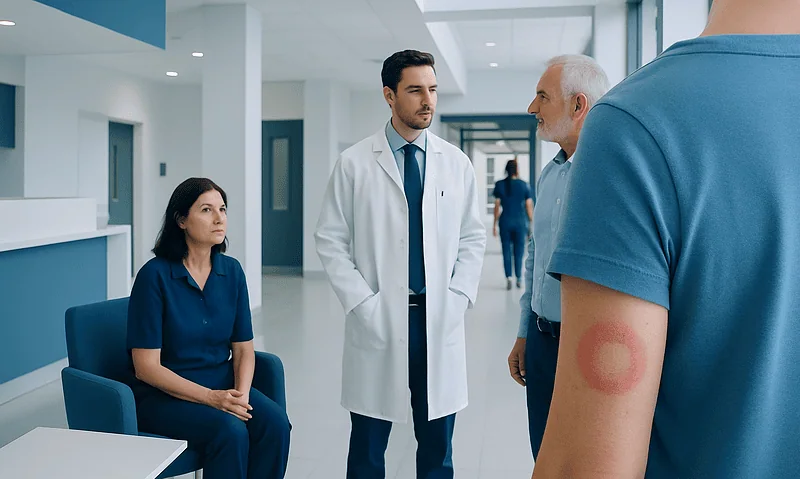
Stages of Shingles Rash Pictures Explained: Common Triggers and Red Flags

Shingles usually causes a painful rash on one side of the body or face. The rash often progresses from tingling skin to red patches, blisters, and then crusting.
Key Takeaways
- Shingles usually causes a painful rash on one side of the body or face.
- The rash often progresses from tingling skin to red patches, blisters, and then crusting.
- Early treatment works best, ideally within 72 hours of rash onset.
- Older age and a weakened immune system raise the risk of shingles and its complications.
- Eye involvement, severe pain, fever, or widespread rash should prompt medical assessment.
Stages of shingles rash pictures typically show a one-sided, band-like rash that starts with tingling or burning, develops into clusters of fluid-filled blisters, and then crusts over before healing. Recognizing the usual pattern can help people seek prompt care, especially because early antiviral treatment may reduce complications.
Overview: what the stages of shingles rash pictures usually show
When people search for stages of shingles rash pictures, they are usually trying to understand whether a new rash follows the typical pattern of shingles. In most cases, shingles begins with unusual skin sensations such as tingling, burning, itching, or pain, followed by a red rash and grouped blisters on one side of the body or face. The blisters then dry, crust, and gradually heal over about 2 to 4 weeks.
Shingles, also called herpes zoster, happens when the varicella-zoster virus becomes active again years after a person has had chickenpox. The rash often appears in a stripe or patch because the virus travels along a nerve. Although pictures can help people recognize common features, diagnosis should not be based on images alone because other skin conditions can look similar.
A practical way to understand shingles is by its timeline rather than by appearance alone. The rash often changes quickly over several days, and pain may start before anything can be seen on the skin. This combination of nerve pain plus a one-sided blistering rash is one of the most helpful clues.
How shingles changes over time

Pictures of shingles are often grouped by stage, but real-life rashes do not all look identical. Some people have only a few blisters, while others have larger clusters. Skin tone also affects how redness appears, so the earliest stage may look pink or red in lighter skin and darker, dusky, or more subtle in deeper skin tones.
The most common progression includes:
- Prodrome: pain, burning, tingling, itching, or sensitivity in one area of skin before the rash appears.
- Early rash: red or discolored patches and small bumps develop in a limited area, usually on one side.
- Blister stage: fluid-filled blisters form in clusters, often compared with chickenpox but more localized.
- Crusting stage: the blisters dry out, break down, and form scabs.
- Healing stage: the crusts fall away and the skin gradually settles, sometimes leaving temporary color change or lingering sensitivity.
Not everyone notices every stage clearly. In some people, especially older adults, pain can be more prominent than the visible rash. In others, the rash may be mild but still require treatment because complications can develop.
What the rash may look and feel like at each stage

Before the rash: The earliest stage can be confusing because there may be no visible skin change at first. People may feel burning, stabbing, aching, or tingling in a narrow band on the chest, back, abdomen, face, or scalp. The area may also be very sensitive to touch, even from clothing.
Red patches and bumps: Over the next day or two, a stripe or patch of skin becomes red or otherwise discolored. Small raised bumps may appear. At this stage, shingles can be mistaken for insect bites, irritation, contact dermatitis, or a simple rash, especially if pain is still mild.
Blisters: The classic shingles appearance is a cluster of clear, fluid-filled blisters on an inflamed base. These blisters usually stay on one side of the body and rarely cross the midline. They may continue appearing for several days, and the skin often feels sore, itchy, or sharply painful.
Crusting and healing: After about 7 to 10 days, the blisters begin to dry and scab over. The skin may remain tender after the visible rash fades. Some people develop lingering nerve pain, called postherpetic neuralgia, which is one reason early evaluation matters. For a broader overview of the condition, readers may find shingles helpful.
Common triggers and risk factors
Shingles occurs when the chickenpox virus, which remains dormant in nerve tissue after the original infection, becomes active again. The exact reason this happens is not always clear, but it is more likely when immune control over the virus weakens. Shingles is not caused by poor hygiene, and it does not mean a person has been newly infected with a different virus.
Several factors are linked with a higher risk of shingles:
- Older age, especially after age 50
- A weakened immune system from illness or medical treatment
- Stress or physical strain, which may affect immune function
- Recent illness or recovery from surgery
- A history of chickenpox earlier in life
Some people describe stress as a “trigger,” but stress alone does not fully explain shingles. It is better understood as one of several factors that may contribute when the immune system is under pressure. People receiving treatments that affect immunity may need extra attention if a suspicious rash appears.
Shingles can also be confused with other causes of blistering or painful rash, including eczema, allergic reactions, impetigo, fungal infections, and herpes infections. This is another reason why professional assessment is useful, especially when symptoms are on the face or near the eyes.
Diagnosis and why early assessment matters
Doctors usually diagnose shingles by examining the rash and asking about symptoms such as one-sided pain, tingling, and the timing of blister formation. In straightforward cases, no special test is needed. If the appearance is unusual, a clinician may take a sample from a blister to check for the virus.
Early diagnosis is important because antiviral treatment tends to work best when started within 72 hours of the rash appearing. Treatment may still be helpful later in selected cases, especially if new blisters are still forming or if the eyes, ears, or immune system are involved. A doctor will also consider whether another condition could be causing the rash.
Medical evaluation is particularly important when shingles affects the forehead, nose, eyelids, or eye area because vision can be threatened. Facial weakness, hearing changes, dizziness, or severe headache also need prompt review. In these situations, assessment may involve specialists and sometimes additional testing. If clinicians suspect related nerve or brain involvement, they may use MRI scanning as part of the work-up.
Treatment options and symptom relief
The main medical treatment for shingles is antiviral medication prescribed by a doctor. These medicines do not instantly remove the rash, but they can shorten the illness and may lower the risk of some complications when started early. Pain relief is also an important part of care because nerve pain can be significant even when the rash seems limited.
Depending on the person’s symptoms, treatment may include antiviral therapy, pain-relieving medicines, soothing skin care, and follow-up for complications. If pain persists after the rash has healed, doctors may assess for postherpetic neuralgia and recommend targeted options. In selected situations involving longer-lasting nerve pain, pain management may form part of care.
At home, people are generally advised to keep the rash clean and dry, avoid scratching, wear loose clothing, and rest as needed. Cool compresses may ease discomfort for some people. Until the blisters have fully crusted over, it is wise to avoid direct contact between the rash and people who have never had chickenpox or the vaccine, pregnant individuals without immunity, newborns, and people with weakened immune systems.
When shingles affects the eye or surrounding structures, urgent specialist care may be needed to protect vision. Evaluation can overlap with ophthalmology services if there is eye pain, redness, blurred vision, or a rash on the forehead or nose.
Prevention, self-care, and recovery
Vaccination is the most effective way to reduce the risk of shingles and its complications in eligible adults. National recommendations vary by country, age, and health status, so it is sensible to ask a doctor or pharmacist which vaccine schedule is appropriate. Even people who have had shingles before may still be advised to receive vaccination later.
During recovery, symptoms often improve gradually rather than all at once. The rash may heal within a few weeks, but skin sensitivity or tiredness can linger. Gentle skin care, adequate sleep, regular fluids, and practical pain management can support recovery while the body settles.
Some people worry that every twinge after shingles means the infection is still active. In many cases, lingering discomfort reflects irritated nerves rather than an ongoing skin infection. However, severe or persistent pain should still be discussed with a clinician, particularly in older adults. Near the end of the care pathway, patients seeking cross-border evaluation may wish to know that Acibadem International’s multidisciplinary specialists and JCI-accredited hospitals diagnose and treat shingles-related conditions for international patients.
When to seek medical care
A person should seek medical care promptly if they think they may have shingles, especially if the rash is new and painful. Timing matters because treatment is most effective early. Same-day or urgent review is advisable if the rash involves the face, scalp, ear, or eye area.
Red flags include:
- Eye pain, redness, blurred vision, or a rash near the eye
- Severe pain, weakness, confusion, or bad headache
- Fever or feeling very unwell
- A widespread rash or blisters on multiple parts of the body
- Pregnancy, a weakened immune system, or current cancer treatment
- Signs of skin infection such as increasing redness, swelling, warmth, or pus
Even if the rash seems mild, professional advice is worthwhile when the diagnosis is uncertain. Many conditions can look alike in photos, and shingles is easier to treat well when recognized early.
Frequently asked questions
What are the stages of shingles rash pictures most often showing?
They usually show a sequence from tingling or burning skin to a red patch, then grouped blisters, followed by crusting and healing. The rash is typically limited to one side of the body or face and often follows a stripe-like pattern.
How long does each stage of shingles last?
The early nerve symptoms may start a few days before the rash appears. Blisters often form over 3 to 5 days, then crust over within about 7 to 10 days, with overall healing commonly taking 2 to 4 weeks.
Can shingles happen without a rash?
Yes, in some cases people have shingles-related nerve pain with little or no visible rash. Because this can be harder to recognize, a doctor may need to consider the pattern of pain and other possible causes.
Is shingles contagious?
A person with shingles cannot give another person shingles directly. However, the fluid from active blisters can spread varicella-zoster virus to someone who is not immune, causing chickenpox rather than shingles.
What can be mistaken for shingles?
Conditions such as contact dermatitis, eczema, herpes simplex, impetigo, fungal infections, and insect bites can sometimes resemble shingles. The one-sided distribution and nerve pain make shingles more likely, but a clinician may be needed to confirm the diagnosis.
When should someone worry about shingles?
Medical attention is important if the rash is near the eye, on the face, or if there is severe pain, fever, weakness, or a widespread eruption. People who are pregnant, older, or immunocompromised should also seek prompt advice because complications may be more likely.
References
- Centers for Disease Control and Prevention
- National Institute on Aging
- American Academy of Dermatology
- National Health Service
- Mayo Clinic
This article is for general information only and is not a substitute for professional medical advice. Please consult a qualified doctor about your individual situation.
Shingles in Turkey — costs, top hospitals & a free quote
JCI-accredited · board-certified surgeons · reply within 24h
Add us as a Preferred Source to see more of our trusted health content across Google Search, AI Overviews and Discover.