Bloodshot Eye on One Side: A Complete Medical Overview

A bloodshot eye on one side can be harmless, but the cause matters more than the redness alone. Common reasons include dryness, allergy, irritation, contact lens problems, infection, and subconjunctival hemorrhage.
Key Takeaways
- A bloodshot eye on one side can be harmless, but the cause matters more than the redness alone.
- Common reasons include dryness, allergy, irritation, contact lens problems, infection, and subconjunctival hemorrhage.
- Redness with eye pain, blurred vision, light sensitivity, or trauma should be assessed urgently.
- Treatment depends on the cause and may range from lubricating drops to targeted medical treatment.
- Avoid using leftover eye drops or wearing contact lenses until the eye has been evaluated if symptoms are significant.
A bloodshot eye on one side usually means the white of one eye looks red because tiny surface blood vessels have widened or broken. It is often linked to irritation, dryness, allergy, or a harmless subconjunctival hemorrhage, but pain, light sensitivity, discharge, or vision changes can signal a problem that needs prompt medical evaluation.
What a Bloodshot Eye on One Side Usually Means
A bloodshot eye on one side means one eye looks red because the tiny blood vessels on the surface of the eye have become more visible. This can happen when the eye is irritated, inflamed, dry, infected, or injured. In many people, the cause is minor and temporary, such as dryness, allergy, or a small broken blood vessel.
Even so, a single red eye should not be judged by appearance alone. Doctors look at whether there is pain, discharge, itching, light sensitivity, swelling, or any change in vision. These details help distinguish a simple problem from a condition that needs timely treatment.
It also helps to know which part of the eye is red. A bright red patch on the white of the eye often suggests a subconjunctival hemorrhage, while more diffuse redness can occur with irritation, infection, or inflammation. If redness happens suddenly after trauma, contact lens use, or chemical exposure, it deserves more careful attention.
Common Causes of a Single Bloodshot Eye
One of the most common causes is simple irritation. Smoke, dust, wind, chlorine, cosmetics, and prolonged screen time can dry the eye surface and make blood vessels look enlarged. Allergies may also affect one eye more than the other, especially if a person rubs one eye more often.
A subconjunctival hemorrhage is another frequent reason. This happens when a tiny blood vessel breaks under the clear surface covering of the white of the eye. It can look dramatic, but it is often painless and usually clears on its own over days to weeks.
Infection can also cause one red eye. Viral or bacterial conjunctivitis may begin in one eye before spreading, and corneal infections are more likely in contact lens users. Inflammation deeper in the eye, such as uveitis, is less common but more serious because it may affect vision and cause pain or light sensitivity.
Doctors may also consider other eye conditions depending on the symptoms, including glaucoma or problems involving the cornea. Less common causes include a scratched cornea, eyelid inflammation, a foreign body in the eye, or a rise in eye pressure.
Symptoms That Help Identify the Cause

The pattern of symptoms often provides the best clue. Itching points more toward allergy, while burning or a gritty feeling often suggests dryness or surface irritation. Thick discharge can occur with bacterial infection, whereas watery tearing is more common with viral irritation or allergy.
Pain is especially important. Mild discomfort may happen with dryness or minor irritation, but significant pain is more concerning and can suggest a corneal injury, inflammation inside the eye, or a pressure-related emergency. Sensitivity to light, headache, nausea, or halos around lights should never be ignored.
Vision changes are another key warning sign. Blurred vision, double vision, sudden loss of vision, or trouble focusing suggest that the problem may extend beyond simple surface redness. Contact lens wearers should be particularly cautious, because redness plus pain or blurred vision may indicate a corneal problem that needs prompt care.
- Itching: often linked to allergy
- Grittiness or burning: often linked to dryness or irritation
- Bright red patch without pain: often a subconjunctival hemorrhage
- Discharge, crusting, or swelling: can suggest infection
- Pain, light sensitivity, or blurred vision: requires urgent medical assessment
How Doctors Diagnose a Bloodshot Eye on One Side
Diagnosis starts with a focused history. A doctor will ask when the redness began, whether it came on suddenly or gradually, and whether there are symptoms such as pain, discharge, itchiness, light sensitivity, or visual changes. They will also ask about contact lenses, recent illness, allergies, eye rubbing, trauma, new eye products, and possible chemical exposure.
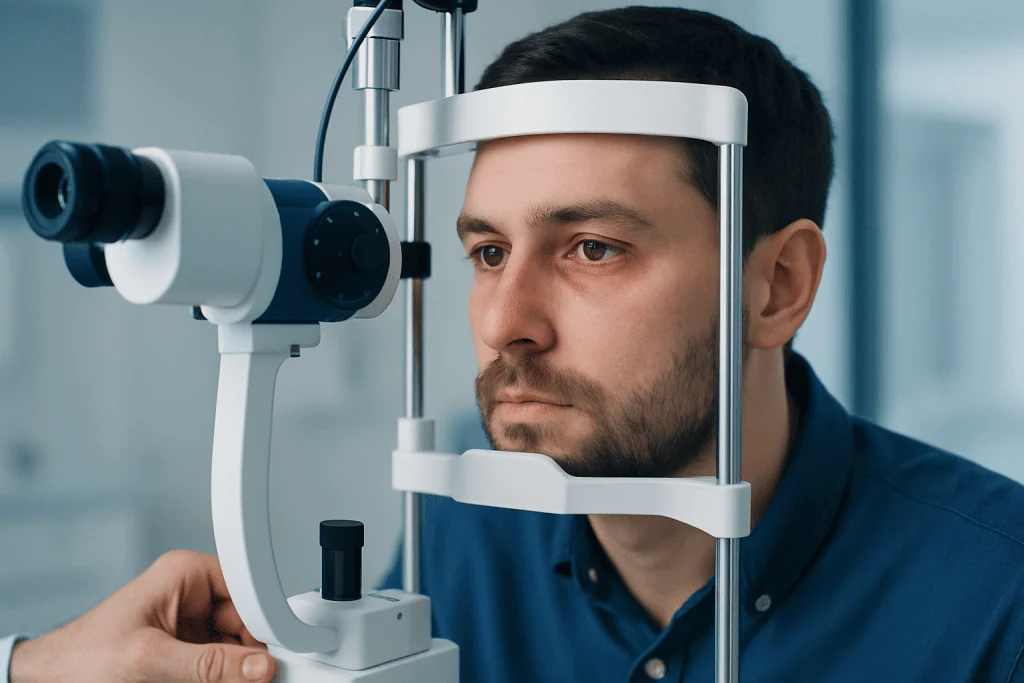
The eye exam may include checking visual acuity, looking at the eyelids and conjunctiva, and examining the cornea with a light or slit lamp. Fluorescein dye may be used to look for a scratch, ulcer, or foreign body on the cornea. In some cases, eye pressure is measured, especially if glaucoma or deeper inflammation is a concern.
Not every red eye needs extensive testing. A painless subconjunctival hemorrhage often can be recognized by appearance alone. But when symptoms suggest infection, inflammation, injury, or raised eye pressure, timely assessment is important to protect vision and guide treatment.
Treatment Options Depend on the Cause
There is no single treatment for a bloodshot eye on one side because the best approach depends on what is causing it. Lubricating eye drops may help dryness or mild irritation, while avoiding smoke, dust, and eye rubbing can support healing. If there is a subconjunctival hemorrhage, treatment is often not needed, though artificial tears may improve comfort if the eye feels slightly irritated.
Allergic eye redness may improve with allergen avoidance, cool compresses, and clinician-recommended anti-allergy drops. Bacterial infection may require prescription drops, while viral conjunctivitis is often managed with supportive care and good hygiene. Contact lenses should usually be removed until a doctor advises it is safe to wear them again.
If the redness is caused by corneal disease, inflammation inside the eye, or elevated eye pressure, specialized treatment is needed. Depending on the diagnosis, care may involve cornea treatment, glaucoma treatment, or a broader eye treatment plan directed by an ophthalmologist.
People should avoid self-treating with leftover antibiotic or steroid eye drops. Some drops can mask symptoms or worsen certain conditions. A doctor can help choose the safest option, especially when only one eye is affected and the cause is not obvious.
Self-Care and Prevention
Many episodes of one-sided eye redness can be reduced by protecting the eye surface. Regular blinking during screen use, staying hydrated, and using preservative-free lubricating drops when recommended can help with dryness. Good hand hygiene and avoiding eye rubbing are also important, especially during allergy season or when someone around the patient has conjunctivitis.
Contact lens care is essential. Lenses should be cleaned and replaced exactly as directed, and they should never be worn longer than recommended. Sleeping in lenses, swimming with lenses, or using them while the eye is already irritated can increase the risk of infection.
Protective eyewear may help prevent redness related to dust, chemicals, sports, or workplace exposure. When eye makeup or skin products seem to trigger irritation, stopping the suspected product and discussing alternatives with a clinician may prevent recurrence. Ongoing or repeated redness should be evaluated rather than repeatedly treated at home.
When to Seek Medical Care
A bloodshot eye on one side should be assessed promptly if it comes with moderate to severe pain, blurred vision, sensitivity to light, marked swelling, or a feeling that something is stuck in the eye. Urgent care is also needed after an eye injury, a chemical splash, or if the eye becomes red while wearing contact lenses.
Medical attention is also appropriate if redness does not improve, keeps returning, or is associated with pus-like discharge, fever, headache, or nausea. A painless bright red patch on the white of the eye is often less urgent, but it should still be discussed with a doctor if it happens repeatedly or if the person takes blood thinners or has uncontrolled blood pressure.
Specialist eye care can help clarify the cause and protect vision. Near the end of the care pathway, patients may be referred for ophthalmology care when a detailed eye examination or targeted treatment is needed. Acibadem International’s multidisciplinary specialists and JCI-accredited hospitals diagnose and treat eye conditions for international patients when specialist assessment is required.
Frequently asked questions
Is a bloodshot eye on one side usually serious?
Not always. A single red eye is often caused by dryness, irritation, allergy, or a small broken blood vessel on the eye surface. It becomes more concerning when redness is paired with pain, light sensitivity, discharge, or any change in vision.
How long does a bloodshot eye on one side last?
The duration depends on the cause. Mild irritation may improve within hours to a few days, while a subconjunctival hemorrhage can take one to two weeks, sometimes longer, to fade. If redness persists or worsens, a doctor should assess it.
Can stress cause one eye to become bloodshot?
Stress itself is not usually a direct cause, but it may contribute indirectly. Poor sleep, eye rubbing, dryness, and elevated blood pressure can all make redness more likely in some people.
Should contact lenses be removed if one eye becomes red?
Yes. Contact lenses should be removed right away if one eye becomes red, painful, or sensitive to light. Contact lens wear can increase the risk of corneal irritation or infection, so the eye should not be re-lensed until a clinician says it is safe.
Can a bloodshot eye on one side be caused by high blood pressure?
High blood pressure does not usually cause general eye redness by itself, but it may be associated with subconjunctival hemorrhage in some cases. Repeated episodes of a red patch on the white of the eye should be discussed with a doctor, especially if blood pressure is not well controlled.
Are over-the-counter redness-relief drops a good idea?
They may briefly reduce redness, but they do not treat the underlying cause and can sometimes lead to rebound redness if used too often. If the eye is painful, sensitive to light, or red for no clear reason, medical advice is safer than repeated self-treatment.
This article is for general information only and is not a substitute for professional medical advice. Please consult a qualified doctor about your individual situation.
Explore treatments in Turkey — costs, top hospitals & a free quote
JCI-accredited · board-certified surgeons · reply within 24h
Add us as a Preferred Source to see more of our trusted health content across Google Search, AI Overviews and Discover.

More from the Health Library

Tracheostomy: An Evidence-Based Guide for Patients

Somnolence: An Evidence-Based Guide for Patients

Classical Conditioning Examples: A Complete Medical Overview

Myeloproliferative Neoplasm: A Complete Medical Overview

Macula: An Evidence-Based Guide for Patients