Macula: An Evidence-Based Guide for Patients

The macula is responsible for sharp central vision and detailed visual tasks. Problems affecting the macula often cause blurred, wavy, dark, or missing areas in central vision.
Key Takeaways
- The macula is responsible for sharp central vision and detailed visual tasks.
- Problems affecting the macula often cause blurred, wavy, dark, or missing areas in central vision.
- Common macular conditions include age-related macular degeneration, diabetic macular edema, macular hole, and epiretinal membrane.
- Regular eye exams can help detect macular changes before noticeable vision loss develops.
- Treatment depends on the cause and may include monitoring, medicines, laser procedures, or retinal surgery.
The macula is a small but highly important area in the center of the retina that allows a person to see fine detail, read, recognize faces, and perceive color clearly. When the macula is affected by aging, diabetes, inflammation, or other eye conditions, central vision may become blurred, distorted, or less sharp, making early evaluation important.
What the Macula Is and Why It Matters
The macula is the central part of the retina, the light-sensitive tissue lining the back of the eye. Although it is small, it plays a major role in everyday sight by producing the sharp, detailed central vision needed for reading, driving, recognizing faces, and seeing fine patterns. It also supports accurate color perception.
In simple terms, the macula is the area that helps a person focus on what is directly in front of them. Peripheral vision usually remains separate from macular function, so someone with a macular problem may still see objects to the side while noticing blur or distortion in the center of vision.
Because the macula is so specialized, even minor changes can affect quality of life. People may first notice difficulty reading small print, seeing straight lines as wavy, or needing brighter light for close work. These symptoms do not always mean permanent damage, but they should be evaluated by an eye specialist.
How the Macula Supports Clear Vision
The macula contains a dense concentration of light-sensing cells called photoreceptors, especially cones. Cones are essential for seeing color and fine detail in bright light. At the very center of the macula is the fovea, the point responsible for the sharpest visual acuity.
When light enters the eye, it is focused onto the retina. The macula processes the central part of this image and sends signals through the optic nerve to the brain. This is why healthy macular function is necessary for precision tasks such as threading a needle, using a smartphone, or reading facial expressions.
If the macula swells, thins, develops abnormal blood vessels, or forms scar-like tissue, the image reaching the brain becomes less clear. This can lead to symptoms that are different from general eye strain or a need for new glasses. In macular disease, distortion or missing spots in central vision are often more important clues than simple blurriness.
Symptoms of Macular Problems

Macular conditions often affect central vision first. Symptoms may come on gradually, as with age-related changes, or more suddenly, as with some retinal conditions. Changes in one eye can be easy to miss at first because the other eye may compensate.
Common symptoms include:
- Blurred or reduced central vision
- Straight lines appearing bent, wavy, or distorted
- Difficulty reading or recognizing faces
- A dark, gray, or empty spot in the center of vision
- Colors appearing less bright or less distinct
- Need for brighter light during close work
Not every visual symptom is caused by the macula. Dry eyes, cataracts, refractive errors, and other eye conditions can also blur vision. However, distortion, central blind spots, or a sudden drop in vision should not be ignored, because these features can suggest a retinal problem that needs prompt assessment.
Conditions That Can Affect the Macula
Several eye diseases can involve the macula. One of the most common is macular degeneration, especially in older adults. In this condition, the macula gradually deteriorates, leading to loss of central vision. Some forms progress slowly, while others involve abnormal blood vessels and may worsen more quickly.
Diabetes can also damage the macula. In diabetic retinopathy, leaking blood vessels may cause fluid to collect in the macula, a problem known as diabetic macular edema. This swelling can reduce visual clarity and may develop even before a person notices major symptoms.
Other macular disorders include a macular hole, epiretinal membrane, central serous chorioretinopathy, inherited retinal diseases, inflammation, trauma, and complications from retinal vein occlusion. Some people may also develop changes in the vitreous gel that pull on the macula, altering its shape and affecting vision.
Risk factors depend on the underlying condition but often include older age, diabetes, smoking, high blood pressure, family history, high cholesterol, previous eye disease, and long-term retinal stress. A person with these risk factors may benefit from regular dilated eye examinations even if vision still seems normal.
How Doctors Examine the Macula
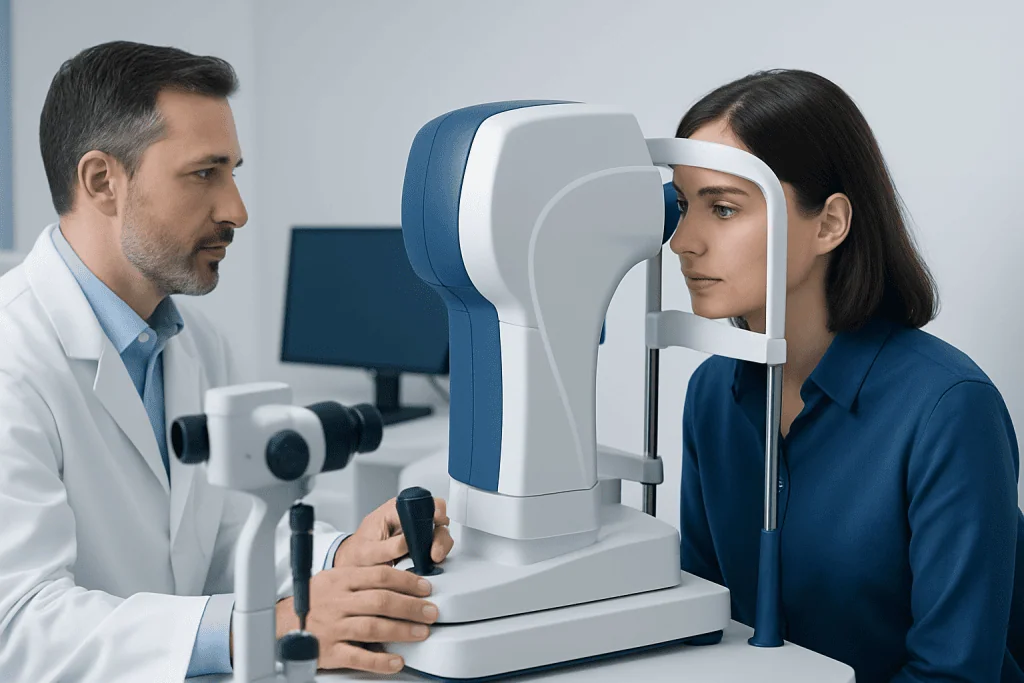
Evaluation usually begins with a detailed eye history and a vision test. The eye doctor may ask about distortion, reading difficulty, sudden vision changes, diabetes, medication use, and family history. A dilated eye exam allows the retina and macula to be viewed directly.
Modern retinal imaging is often very helpful. Optical coherence tomography, commonly called OCT, creates detailed cross-sectional images of the retina and can show swelling, holes, traction, or fluid beneath the macula. Retinal photography and fluorescein angiography may also be used in selected cases to assess blood vessels and guide treatment planning.
Some patients are asked to monitor their vision at home with an Amsler grid, a simple square grid that can help detect new distortion in central vision. This does not replace an exam, but it can help a person notice changes earlier and seek timely care.
If a macular condition is suspected, the doctor may also look for related issues elsewhere in the eye, such as cataract, glaucoma, or widespread retinal disease. A complete assessment helps identify the exact cause, since treatment depends on the underlying diagnosis rather than the symptom alone.
Treatment Options for Macular Disease
Treatment is tailored to the condition affecting the macula. Some mild or stable changes are monitored with regular exams and imaging. Others need active treatment to preserve vision or reduce the chance of further damage. The goal is not always to restore completely normal sight, but often to stabilize vision and improve daily function.
For certain conditions, medicines delivered by injection into the eye may reduce swelling or block abnormal blood vessel growth. This approach is commonly used in wet macular degeneration and diabetic macular edema. In some cases, retinal laser treatment may also be considered as part of care for specific vascular or fluid-related problems.
When structural changes are present, surgery may be recommended. A retinal specialist may consider vitrectomy surgery for a macular hole, traction on the macula, or an epiretinal membrane. If vision loss is linked to broader retinal disease, management may also involve procedures used in retina treatment plans, depending on the exact findings.
Patients who have diabetes may also need coordinated management of blood sugar, blood pressure, and cholesterol to support retinal health. In selected cases of diabetic eye disease, doctors may discuss therapies used in diabetic retinopathy treatment. Supportive strategies such as updated glasses, magnifiers, and low-vision aids can also help people remain independent in daily life.
Protecting Macular Health in Daily Life
Not all macular diseases can be prevented, but healthy habits can lower risk and support long-term eye health. Avoiding smoking is especially important, since smoking is strongly associated with retinal damage and progression of some macular disorders. Managing chronic conditions such as diabetes and high blood pressure is also essential.
General self-care measures include scheduling regular eye exams, wearing sunglasses that protect against ultraviolet light, following a balanced diet rich in vegetables and other nutrient-dense foods, and staying physically active within a doctor’s recommendations. People with known macular disease may be advised to monitor one eye at a time for new distortion or blurred central vision.
It is also helpful to protect the eyes from injury and to seek evaluation after significant eye trauma. Good lighting at home, larger print, and visual aids can reduce strain if central vision is already affected. These practical steps do not replace treatment, but they can make day-to-day activities easier and safer.
When to Seek Medical Care
A person should arrange an eye examination if they notice gradual blurring in the center of vision, increasing trouble reading, or new difficulty recognizing faces. Even if symptoms seem mild, persistent central visual changes deserve professional assessment because the macula can be affected before major vision loss becomes obvious.
Urgent medical attention is important if there is sudden distortion, a new dark or blank spot in central vision, rapid decrease in sight, flashes of light, a shower of floaters, or loss of part of the visual field. These symptoms may indicate a retinal problem that should be examined promptly.
People with diabetes, a family history of retinal disease, or previous macular problems should keep regular follow-up appointments even when they feel well. If specialist care is needed, Acibadem International’s multidisciplinary eye teams in JCI-accredited hospitals diagnose and treat macular conditions for international patients using modern retinal imaging and medical or surgical approaches as appropriate.
Frequently asked questions
What does the macula do?
The macula provides sharp central vision, which is needed for reading, recognizing faces, and seeing fine detail. It also plays an important role in accurate color vision.
Can a person have a macular problem without going blind?
Yes. Many macular conditions mainly affect central vision rather than total sight. Peripheral vision may remain, but tasks such as reading or driving can become more difficult.
Are blurry vision and macular disease the same thing?
No. Blurry vision can happen for many reasons, including dry eyes, cataracts, or a change in glasses prescription. Macular disease is one possible cause, especially when blurring affects the center of vision or causes distortion.
Is macular damage always permanent?
Not always. Some macular problems can improve or stabilize with timely treatment, depending on the cause and how early it is found. In other cases, treatment focuses on slowing progression and preserving remaining vision.
How is a macular problem diagnosed?
Doctors usually diagnose macular problems with a dilated eye exam and retinal imaging, especially optical coherence tomography. Additional tests may be used to evaluate retinal blood vessels or monitor disease activity.
Who should have regular checks for macular disease?
Older adults, people with diabetes, smokers, and those with a family history of retinal disease may have higher risk and benefit from routine eye exams. A doctor can recommend how often follow-up is needed based on age, symptoms, and medical history.
References
- American Academy of Ophthalmology
- National Eye Institute
- Centers for Disease Control and Prevention
- National Health Service
- International Council of Ophthalmology
This article is for general information only and is not a substitute for professional medical advice. Please consult a qualified doctor about your individual situation.
Explore treatments in Turkey — costs, top hospitals & a free quote
JCI-accredited · board-certified surgeons · reply within 24h
Add us as a Preferred Source to see more of our trusted health content across Google Search, AI Overviews and Discover.
Check your numbers in seconds
BMI, calories, due date, blood pressure and 30+ more clinical calculators — free, instant, doctor-reviewed ranges.

More from the Health Library

Treat Gyno — Explained by Medical Evidence, Not Myths

Early Satiety: What Patients Need to Know

Mild Rosacea: An Evidence-Based Guide for Patients

Eggplant Benefits — Explained by Medical Evidence, Not Myths

Narcolepsy Type 2 — Explained by Medical Evidence, Not Myths