Missed Abortion: What Patients Need to Know

Missed abortion is a form of miscarriage where pregnancy tissue remains in the uterus after development has stopped. Some people have no clear symptoms, while others notice reduced pregnancy symptoms, light bleeding, or cramping.
Key Takeaways
- Missed abortion is a form of miscarriage where pregnancy tissue remains in the uterus after development has stopped.
- Some people have no clear symptoms, while others notice reduced pregnancy symptoms, light bleeding, or cramping.
- Diagnosis is usually based on ultrasound findings and, in some cases, repeat blood tests or follow-up imaging.
- Treatment options may include expectant management, medication, or a procedure to remove tissue from the uterus.
- Prompt medical care is important for heavy bleeding, severe pain, fever, or signs of infection.
Missed abortion is a type of early pregnancy loss in which the pregnancy stops developing, but the body has not yet expelled the pregnancy tissue. It may cause few or no immediate symptoms, so diagnosis often relies on ultrasound and follow-up medical evaluation.
Overview
A missed abortion, also called a missed miscarriage, is an early pregnancy loss in which the embryo or fetus has stopped developing, but the pregnancy tissue remains in the uterus for a time. Despite the term, it does not refer to an elective abortion. The word is a medical term used in some clinical settings, though many patients and clinicians prefer “missed miscarriage” because it is clearer and less distressing.
Unlike some miscarriages that begin with obvious bleeding and cramping, a missed abortion may cause few noticeable symptoms at first. A person may still feel pregnant for a period of time because hormone levels can decline gradually rather than all at once. For this reason, the condition is often discovered during a routine prenatal visit or ultrasound rather than after sudden symptoms at home.
This type of pregnancy loss is unfortunately common in early pregnancy. In many cases, it happens because the pregnancy was not developing normally from the start. Knowing this can help patients understand that routine activities, travel, exercise, work, or emotional stress are not usually the cause.
How a Missed Abortion May Feel
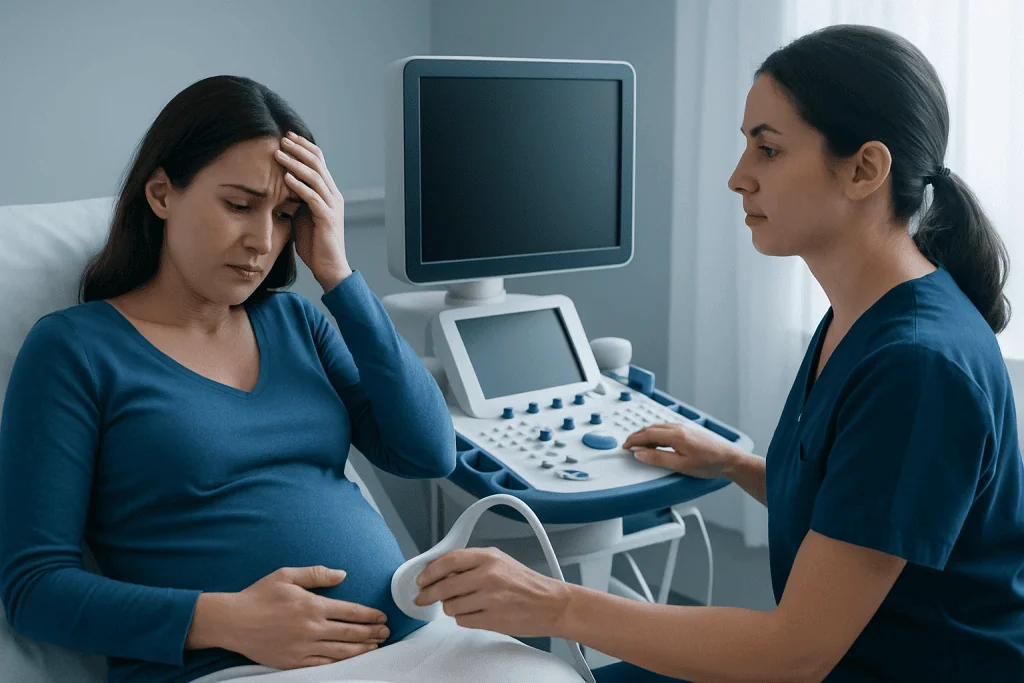
A missed abortion can be physically subtle. Some people have no symptoms at all and only learn about the loss during an ultrasound. Others notice that common early pregnancy symptoms such as nausea, breast tenderness, fatigue, or food aversions begin to lessen. These changes alone do not always mean a miscarriage, but they can sometimes be part of the picture.
When symptoms do occur, they may include light vaginal bleeding, brown spotting, mild cramping, or a feeling that the pregnancy has changed. In some cases, there is no bleeding because the cervix remains closed and the uterus has not yet started to expel tissue. This is one reason the diagnosis can come as a surprise.
The emotional experience can also be complex. A person may feel shock, sadness, confusion, guilt, numbness, or even uncertainty if there were few physical signs. These reactions are all valid. Pregnancy loss affects each person differently, and emotional support can be an important part of care.
Causes and Risk Factors

Most first-trimester miscarriages, including many missed abortions, happen because of chromosomal problems in the embryo. These changes usually occur by chance and prevent normal development. They are not typically caused by exercise, intercourse, work, a minor fall, or everyday stress.
Other factors can increase the risk of miscarriage in general, though they do not explain every case. These may include advanced maternal age, certain uterine abnormalities, uncontrolled diabetes, thyroid disease, some autoimmune conditions, smoking, heavy alcohol use, and some infections. Hormonal problems and clotting disorders may also play a role in selected patients.
Sometimes a missed abortion occurs in the setting of a pregnancy that never developed normally, such as a molar pregnancy, though this is less common. If pregnancy losses recur, a doctor may evaluate for underlying causes such as structural uterine conditions, endocrine disorders, or genetic factors. One loss alone does not necessarily mean there will be problems with future pregnancies.
How Doctors Diagnose It
Diagnosis usually depends on ultrasound rather than symptoms alone. An ultrasound may show that an embryo or fetus is measuring smaller than expected, that there is no detectable heartbeat at a stage when one should be visible, or that the gestational sac is present without expected development. To avoid mistakes, clinicians follow careful criteria and may recommend repeat imaging if dates are uncertain.
Blood tests can also help. Levels of human chorionic gonadotropin, or hCG, may rise more slowly than expected or begin to fall. However, hCG results are not enough by themselves to confirm a missed abortion, because hormone levels vary from one pregnancy to another. They are most useful when interpreted along with ultrasound findings and the patient’s history.
A pelvic exam may be performed, but it often does not give a complete answer on its own. In a missed abortion, the cervix may still be closed and there may be little bleeding. If there is concern for an ectopic pregnancy, severe pain, heavy bleeding, or infection, doctors may arrange urgent evaluation and additional testing. Patients being evaluated for related pregnancy concerns may also be assessed in services linked to obstetrics and gynecology care.
Treatment Options and What Recovery Can Involve
After diagnosis, treatment is usually based on the stage of pregnancy, symptoms, the patient’s medical history, and personal preferences. In many cases, there are three main approaches: expectant management, medication, or a procedure to remove the pregnancy tissue. A doctor can explain the benefits and limits of each option and help decide which is most appropriate.
Expectant management means allowing the body time to pass the tissue naturally. This may be suitable for some stable patients who prefer to avoid medication or a procedure, but timing can be unpredictable. Medication may be offered to help the uterus empty more effectively. A procedural option, often uterine aspiration or dilation and curettage, may be recommended if there is heavy bleeding, infection, persistent retained tissue, anemia, or a preference for faster completion. In selected cases, this may involve dilatation and curettage.
Recovery varies, but cramping and bleeding are common after the tissue passes or is removed. The care team may advise when to use pads instead of tampons, when intercourse can resume, and when to repeat a pregnancy test or return for follow-up. If tissue remains in the uterus, further treatment may be needed. Related evaluation and treatment may overlap with fertility and reproductive medicine support when future pregnancy planning is discussed.
Emotional recovery may take longer than physical recovery. Some people want to try to conceive again soon, while others need more time. A doctor can review when it is medically safe to try again and whether any further testing is needed, especially after recurrent losses that may warrant assessment for conditions such as recurrent pregnancy loss.
Prevention and Self-Care
Not every missed abortion can be prevented, and many occur because of random chromosomal changes that no one could have predicted or stopped. For that reason, self-blame is not helpful or medically accurate in most cases. Even when there are risk factors, a single miscarriage usually does not mean a person did anything wrong.
General preconception and pregnancy health may lower some risks and support overall well-being. Helpful steps include taking folic acid as advised, managing chronic conditions such as diabetes or thyroid disease, avoiding smoking and alcohol, attending prenatal visits, and discussing all medications and supplements with a qualified clinician. If there is a history of miscarriage, the doctor may suggest earlier ultrasound follow-up in a future pregnancy.
After a missed abortion, self-care may include rest, hydration, pain relief recommended by a doctor, and emotional support from loved ones, a counselor, or a support group. It can also help to ask the care team what to expect in the days ahead, including bleeding patterns, warning signs, and when menstruation might return.
When to Seek Medical Care
Medical review is important any time there is suspected pregnancy loss. A person should contact a healthcare professional promptly for vaginal bleeding in pregnancy, worsening cramping, or a sudden loss of pregnancy symptoms combined with concern. Even if symptoms are mild, an ultrasound or follow-up testing may be needed to clarify what is happening.
Urgent medical care is needed for heavy bleeding, severe abdominal pain, fainting, shoulder pain, fever, chills, or foul-smelling vaginal discharge. These symptoms can suggest heavy blood loss, infection, or another urgent condition such as ectopic pregnancy. Patients should not wait at home if they feel weak, dizzy, or unwell.
Follow-up care also matters after treatment or expectant management. A doctor may recommend a repeat ultrasound, blood test, or office visit to confirm that the uterus has emptied and recovery is progressing safely. Near the end of the care journey, some international patients choose evaluation through Acibadem International, where multidisciplinary specialists in JCI-accredited hospitals diagnose and treat pregnancy loss and related reproductive conditions.
Frequently asked questions
What is the difference between missed abortion and miscarriage?
Missed abortion is a type of miscarriage. It means the pregnancy has stopped developing, but the tissue has not yet been passed from the uterus. Many people prefer the term “missed miscarriage” because it is easier to understand and less upsetting.
Can a missed abortion happen without bleeding?
Yes. Some people have no bleeding or only light spotting because the cervix remains closed and the body has not started to expel the tissue. This is why the diagnosis is often made on ultrasound rather than from symptoms alone.
Did stress or exercise cause a missed abortion?
In most cases, no. Early pregnancy loss is commonly related to chromosomal problems in the embryo that happen by chance. Everyday stress, work, exercise, and sexual activity are not usually the cause.
How is a missed abortion confirmed?
Doctors usually confirm it with ultrasound findings, sometimes along with repeat blood tests for hCG. If pregnancy dates are uncertain, they may repeat the ultrasound after a short interval to make sure the diagnosis is accurate before recommending treatment.
What are the treatment choices for missed abortion?
The main options are waiting for the tissue to pass naturally, using medication to help the uterus empty, or having a procedure such as uterine aspiration or dilation and curettage. The best choice depends on symptoms, gestational age, medical history, and personal preference.
Will a missed abortion affect future fertility?
A single missed abortion usually does not affect future fertility. Many people go on to have healthy pregnancies afterward. If losses happen repeatedly, a doctor may recommend further evaluation for underlying causes.
References
- American College of Obstetricians and Gynecologists
- National Institute for Health and Care Excellence
- Royal College of Obstetricians and Gynaecologists
- World Health Organization
This article is for general information only and is not a substitute for professional medical advice. Please consult a qualified doctor about your individual situation.
Explore treatments in Turkey — costs, top hospitals & a free quote
JCI-accredited · board-certified surgeons · reply within 24h
Add us as a Preferred Source to see more of our trusted health content across Google Search, AI Overviews and Discover.

More from the Health Library

Marionette Lines: An Evidence-Based Guide for Patients

Asymptomatic: What Patients Need to Know

Herbal Tea: An Evidence-Based Guide for Patients

Icu nurse: Symptoms, Causes, and Treatment — Complete Patient Guide

Broken Tailbone: A Complete Medical Overview