How Can I Get Rid of Keloids? Causes, Explanations, and Next Steps

Keloids are raised scars that grow beyond the original skin injury. They are usually harmless but may itch, feel tender, or continue enlarging over time.
Key Takeaways
- Keloids are raised scars that grow beyond the original skin injury.
- They are usually harmless but may itch, feel tender, or continue enlarging over time.
- Treatment may include steroid injections, silicone therapy, cryotherapy, laser treatment, or surgery, often in combination.
- Keloids can return after treatment, so follow-up care matters.
- A doctor should assess any fast-growing, painful, bleeding, or uncertain skin lesion.
How can I get rid of keloids? In many cases, keloids are harmless overgrowths of scar tissue, and treatment can often reduce their size, firmness, itch, or discomfort even if complete removal is not always possible. Medical review is important if a scar is growing, painful, frequently irritated, or causing cosmetic or functional concerns, because a doctor can confirm the diagnosis and discuss options to flatten it and lower the chance of recurrence.
Overview: Can keloids be removed?
For people asking, “how can I get rid of keloids,” the most helpful first answer is that keloids can often be improved, but they are not always permanently removed with one treatment. A keloid is a thick, raised scar that grows beyond the edges of the original skin injury. It may develop after acne, ear piercing, surgery, burns, cuts, vaccinations, or even small areas of skin irritation.
In many cases, keloids are medically harmless. They do not usually turn into cancer, and they are not contagious. Still, they can be distressing because they may be very noticeable, itchy, tender, or continue enlarging for months or years.
Medical review becomes important if the scar is changing, causing symptoms, limiting movement, or if there is any doubt about whether it is truly a keloid. Doctors usually diagnose keloids by examining the skin and asking how the scar started, how fast it grew, and whether the person has had similar scars before.
Once the diagnosis is clear, treatment is tailored to the person’s skin, symptoms, scar location, and treatment goals. A dermatologist or plastic surgeon may advise a combination approach rather than a single procedure, because keloids are known to come back more easily than ordinary scars.
What keloids look and feel like
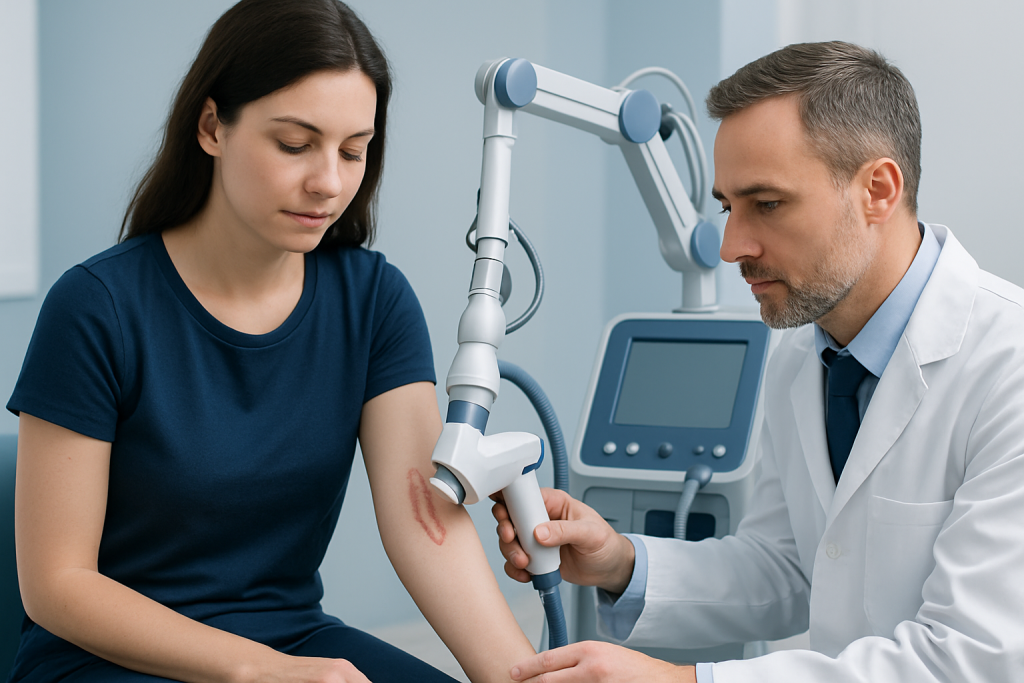
Keloids often begin as a healing scar that becomes thicker and more raised over time. They may appear shiny, smooth, firm, and rubbery. Their color varies depending on skin tone and age of the scar, ranging from pink or red to brown or darker than the surrounding skin.
One feature that helps distinguish a keloid from a typical scar is that it extends beyond the original injury. For example, after an ear piercing, the scar may continue to enlarge past the piercing site. This differs from hypertrophic scars, which are also raised but usually stay within the original wound boundaries.
Symptoms can include:
- Itching or burning
- Tenderness or pain when touched
- A tight or pulling feeling
- Cosmetic concern due to size or location
- Reduced movement if the scar is near a joint
Not every raised scar is a keloid. Some skin growths, cysts, infections, and other scar types can look similar. That is why a proper skin examination matters, especially if the lesion is rapidly changing or behaving differently from a typical scar.
Why keloids happen and who is more likely to get them

Keloids form when the skin’s healing response becomes overactive. After an injury, the body produces collagen to repair damaged tissue. In keloids, this repair process continues longer than needed, creating excess scar tissue that grows outward and upward.
Several factors may increase the chance of developing a keloid. Personal or family history is important, because some people are more genetically prone to this kind of scarring. Keloids are also more common on certain parts of the body, especially the chest, shoulders, upper back, jawline, and earlobes.
Triggers and risk factors may include:
- Ear piercing or other body piercings
- Surgical incisions
- Acne or inflamed skin conditions
- Cuts, burns, or insect bites
- Vaccination sites
- Skin tension during wound healing
- Younger age, especially from the teens through early adulthood
Having a tendency to form keloids does not mean every wound will become one. However, it does mean prevention deserves extra attention. People who have had one keloid should tell doctors before elective surgery, cosmetic procedures, or piercing, so steps can be taken to reduce future risk.
How doctors diagnose keloids
Doctors usually diagnose a keloid by taking a careful history and examining the scar. They will ask when the mark first appeared, what caused the original skin injury, whether it has kept growing, and whether there is itching, tenderness, or bleeding. They may also ask about previous scars and family history.
In most cases, no special test is needed. The diagnosis is often clinical, meaning it is based on how the scar looks and behaves. A classic keloid is raised, firm, and clearly extends beyond the original wound.
If the appearance is unusual, the doctor may consider other possibilities such as hypertrophic scar, cyst, infection, dermatofibroma, or another skin lesion. Occasionally, further assessment is needed to rule out other conditions, especially if a lesion developed without a clear injury or is changing in an unexpected way.
Depending on the person’s symptoms and treatment goals, the doctor may refer to a skin specialist. In some cases, related information about skin cancer or general skin diseases may be useful when discussing how doctors evaluate suspicious or atypical skin growths, although most keloids are benign scars rather than dangerous lesions.
Treatment options: what can actually help
The best treatment depends on the size, age, location, and symptoms of the keloid, as well as the person’s skin type and history of recurrence. The main goals are to flatten the scar, reduce symptoms such as itching or pain, and improve appearance. Because keloids may return, doctors often recommend combining treatments rather than relying on one method alone.
Common medical options include corticosteroid injections, which are among the most widely used first-line treatments. These injections can soften and flatten a keloid over time and may also reduce itching or tenderness. Silicone gel sheets or silicone-based topical products are often used alongside injections, especially for newer scars or after procedures.
Other options may include cryotherapy to freeze part of the scar, pressure therapy for some locations such as the earlobes, and laser treatment to improve redness, thickness, or texture in selected cases. For some people, specialists may also discuss dermatology care for tailored scar management and skin follow-up.
Surgery can remove a bulky keloid, but surgery alone has a significant risk of the keloid returning. Because of this, doctors often pair excision with additional therapy such as steroid injections, silicone therapy, pressure earrings for ear keloids, or other scar-control measures. In selected situations, a specialist may also consider plastic and reconstructive surgery when function, contour, or cosmetic concerns are substantial.
Self-care and prevention after a scar forms
Home care cannot reliably remove a true keloid, but it can support comfort and help protect healing skin. Gentle skin care, avoiding friction, and not picking at the scar can reduce irritation. If a clinician recommends silicone gel or silicone sheets, consistent use is important because benefits usually appear gradually rather than immediately.
Sun protection also matters. Scars can darken with sun exposure, making them more noticeable and longer-lasting in appearance. A doctor may advise covering the area, using sun-protective clothing, or applying sunscreen once the skin has healed enough.
People prone to keloids may be able to lower risk by avoiding unnecessary piercings or cosmetic procedures that injure the skin. If surgery is medically needed, they should tell the surgeon about their keloid history beforehand so preventive steps can be planned after the wound closes.
It is best to be cautious with over-the-counter “scar removal” products that promise complete disappearance. Some may help ordinary scars look softer, but many do not remove established keloids. If a scar keeps growing or remains bothersome, professional assessment is usually more effective than repeated self-treatment.
When to seek medical care
Most keloids are not emergencies, but there are clear situations when a doctor should evaluate the area. Medical care is a good idea if a scar continues to enlarge, becomes painful, repeatedly catches on clothing or jewelry, or interferes with sleep, movement, or daily activities.
Prompt assessment is especially important if the skin lesion bleeds easily, forms an open sore, becomes very inflamed, changes quickly in color or shape, or appears without a known injury. These features do not necessarily mean something serious is present, but they deserve a proper diagnosis.
A person may also want medical advice if the scar causes emotional distress or self-consciousness. Quality of life matters, and visible scars can affect comfort in social or work settings. A clinician can explain realistic results, likely number of treatments, and the chance of recurrence before any procedure begins.
Near the end of the care pathway, some people choose to seek treatment in specialist centers. Acibadem International’s multidisciplinary specialists and JCI-accredited hospitals diagnose and treat keloids and other complex scar conditions for international patients.
Frequently asked questions
Can keloids go away on their own?
Keloids usually do not disappear completely without treatment. Some may become less active over time, but many remain raised and noticeable. If a keloid is growing or bothersome, a doctor can discuss options to improve it.
What is the best treatment for keloids?
There is no single best treatment for every keloid. Corticosteroid injections, silicone therapy, cryotherapy, laser treatment, and surgery may all be used depending on the scar. Combination treatment is often recommended because it can improve results and reduce recurrence risk.
Can I remove a keloid at home?
Home care may help support comfort, but it does not reliably remove a true keloid. Silicone products may help some scars over time if used consistently. It is safest to avoid cutting, picking, or trying harsh home remedies on the area.
Do keloids come back after treatment?
Yes, keloids can return after treatment, especially if they are removed with surgery alone. That is why doctors often combine treatments and arrange follow-up care. Recurrence does not mean treatment failed completely, but it may mean more than one step is needed.
Are keloids dangerous?
Keloids are usually benign, meaning they are not cancerous and are often harmless from a medical standpoint. However, they can itch, hurt, continue enlarging, or affect confidence and comfort. Any uncertain or unusual skin growth should still be examined by a doctor.
Who is more likely to develop keloids?
People with a personal or family history of keloids are more likely to develop them. They are also more common after piercings, surgery, acne, burns, and other skin injuries. Certain body areas, such as the chest, shoulders, back, jawline, and earlobes, are more prone to keloid formation.
References
- American Academy of Dermatology
- National Health Service
- Mayo Clinic
- DermNet
- MedlinePlus
This article is for general information only and is not a substitute for professional medical advice. Please consult a qualified doctor about your individual situation.
Explore treatments in Turkey — costs, top hospitals & a free quote
JCI-accredited · board-certified surgeons · reply within 24h
Add us as a Preferred Source to see more of our trusted health content across Google Search, AI Overviews and Discover.