Best Time to Take Blood Pressure — Explained by Medical Evidence, Not Myths

Most clinicians recommend checking blood pressure in the morning and evening at consistent times. Readings are most useful when taken before caffeine, exercise, smoking, and stressful activity.
Key Takeaways
- Most clinicians recommend checking blood pressure in the morning and evening at consistent times.
- Readings are most useful when taken before caffeine, exercise, smoking, and stressful activity.
- Proper technique matters as much as timing, including resting quietly and using a well-fitted upper-arm cuff.
- A single high reading does not always mean hypertension; patterns over days or weeks are more informative.
- Medical advice is important if readings are repeatedly high, very low with symptoms, or suddenly much different than usual.
The best time to take blood pressure is usually twice a day: once in the morning before food, caffeine, exercise, or smoking, and again in the evening at a consistent time. What matters most is not a single “perfect” hour, but using the same routine and correct technique so readings can be compared accurately over time.
Overview: what medical evidence says about timing
The best time to take blood pressure is generally in the morning and again in the evening, at about the same times each day. For many people, the most reliable morning reading is taken before breakfast and before coffee, tea, nicotine, or exercise. The evening reading is usually most helpful when taken before bed, after the person has been sitting quietly for a few minutes.
This advice is based on how blood pressure naturally changes over the day. It follows a daily rhythm, often rising in the morning, changing with physical activity and stress, and dipping during sleep. Because of this normal variation, a reading taken at a random time can be difficult to interpret unless it is compared with readings taken under similar conditions.
Medical evidence supports home monitoring because it can show patterns that may not appear during a clinic visit. Some people have higher readings in medical settings due to anxiety, while others may have normal office readings but higher numbers at home. Consistent home checks can help doctors evaluate possible high blood pressure more accurately.
Why one fixed clock time is less important than a consistent routine
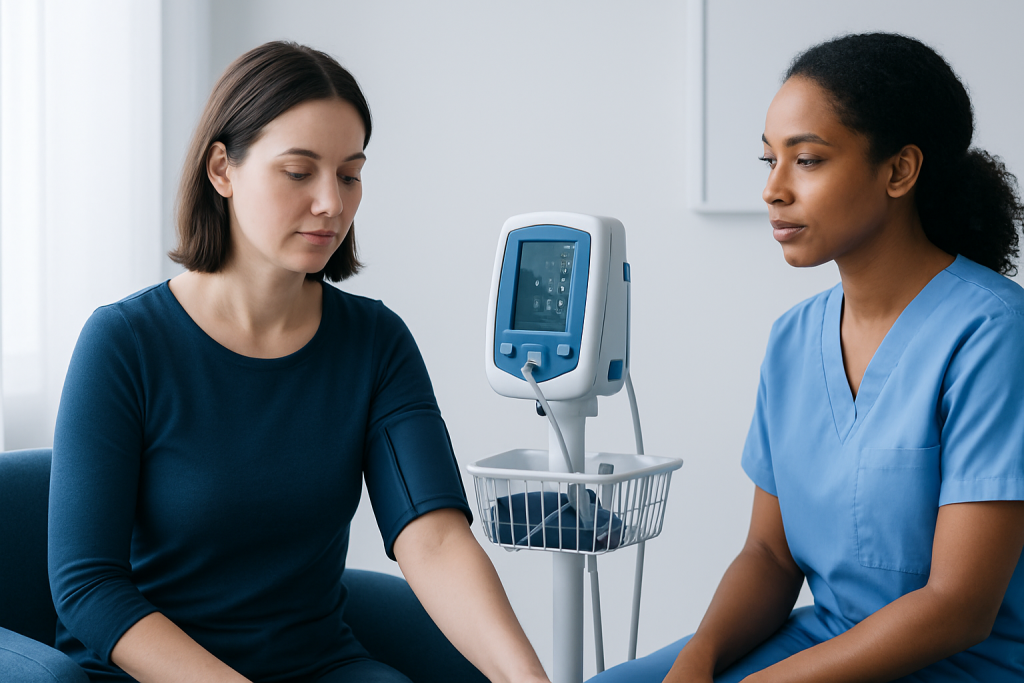
There is no universal single best clock time for every person. A night-shift worker, for example, may wake up in the afternoon rather than the morning, so their “morning” reading should be taken soon after waking. The key principle is to measure blood pressure during comparable parts of the day and under similar conditions.
Consistency matters because many everyday factors can temporarily raise or lower blood pressure. These include recent walking, climbing stairs, emotional stress, pain, a full bladder, alcohol, large meals, or certain medicines. If readings are taken at different times and after different activities, it becomes much harder to tell whether blood pressure is truly changing.
For this reason, doctors often suggest choosing a practical routine that can be repeated most days. For example, one reading may be taken within an hour of waking and another in the evening before dinner or before bed. When a person follows the same sequence each time, the results are more meaningful and easier to review during a medical visit.
How to take blood pressure correctly at home

Timing alone does not guarantee an accurate reading. Good technique is equally important. An automated upper-arm monitor is usually preferred over wrist or finger devices because it tends to be more reliable when used correctly. The cuff should fit the arm properly, and the monitor should be validated according to recognized standards.
Before measuring, the person should avoid exercise, caffeine, smoking, and vaping for about 30 minutes if possible. They should sit quietly for at least 5 minutes with back supported, feet flat on the floor, and legs uncrossed. The arm should rest on a table so the cuff is at heart level, and talking should be avoided during the measurement.
Taking more than one reading is often helpful. Many clinicians advise taking two readings, one minute apart, and recording both or the average, depending on the doctor’s instructions. Keeping a written or digital log with the date, time, and any relevant notes, such as symptoms or medication timing, can make home blood pressure monitoring more useful.
- Use the same arm each time unless a clinician advises otherwise.
- Empty the bladder before the test.
- Do not measure over clothing.
- Try not to check repeatedly out of worry, as frequent rechecking can increase anxiety and confuse the pattern.
Morning, evening, and medication timing
Morning and evening readings can each provide different information. Morning readings may show the blood pressure level after waking, before daily activities begin. Evening readings can reflect how blood pressure behaves later in the day. Together, they give a more complete picture than a single daily measurement.
For people taking blood pressure medicine, timing should be discussed with the prescribing doctor. In many cases, readings are most informative when taken before the daily dose, because this helps show the baseline level and whether treatment is providing enough control over a full day. However, some doctors may also ask for a reading at a different point after medication to understand how the medicine is working.
Medication schedules should not be changed based on home readings alone unless a doctor has provided clear instructions. If treatment is being reviewed, the doctor may recommend structured home monitoring, 24-hour ambulatory monitoring, or specialist evaluation such as cardiology care when needed. In some people, blood pressure patterns are linked to broader heart or vessel health, including heart disease.
Common reasons readings vary from day to day
It is normal for blood pressure to change somewhat throughout the day and from one day to another. Temporary changes can happen with stress, poor sleep, dehydration, illness, menstrual cycle changes, travel, heat, or pain. For this reason, doctors usually look for trends rather than placing too much emphasis on a single reading.
Some people become concerned when one reading is higher than expected, but context is important. A reading taken just after rushing to answer the door, drinking coffee, or arguing with someone may not reflect the usual blood pressure level. Repeating the measurement after resting quietly is often more useful than reacting immediately.
Repeatedly inconsistent readings can also happen because of technique problems. A cuff that is too small, unsupported feet, a dangling arm, talking during the test, or a monitor that has not been checked for accuracy can all affect the result. If home values seem very different from clinic readings, a doctor may compare the device with office equipment or consider check-up and diagnostics to assess overall cardiovascular risk.
When home monitoring is especially helpful
Home monitoring can be useful for many adults, especially those with diagnosed hypertension, borderline readings, diabetes, kidney disease, pregnancy-related blood pressure concerns, or a family history of cardiovascular disease. It can also help when doctors suspect white-coat hypertension, where readings rise in clinical settings, or masked hypertension, where blood pressure is higher outside the clinic than during an appointment.
Structured home monitoring is often more helpful than occasional spot checks. A doctor may suggest measuring twice daily for several days, often over one week, and then reviewing the average while ignoring the first day in some cases. This approach reduces the influence of random variation and gives a more dependable picture.
Home monitoring does not replace professional care. Instead, it adds information that can guide diagnosis and treatment. If readings remain elevated, doctors may recommend lifestyle changes, further tests, or specific treatment options. In some cases, support from internal medicine specialists helps coordinate evaluation of blood pressure alongside other health conditions.
Practical self-care to support healthy blood pressure habits
People often focus on the number itself, but the routine around measuring can also support better long-term habits. Taking blood pressure at the same times each day may encourage regular medication use, attention to sleep, and awareness of how diet, exercise, and stress affect the body. A calm, repeatable routine is more useful than checking only when feeling worried.
General healthy lifestyle steps can help support blood pressure control. These include limiting excess salt, following a balanced eating pattern rich in fruits and vegetables, staying physically active, maintaining a healthy weight, avoiding tobacco, moderating alcohol, and managing stress. Good sleep also matters, as poor sleep quality can contribute to blood pressure problems in some people.
Anyone starting a home monitoring plan should ask their doctor how often to measure and what range is acceptable for their age, medical history, and treatment plan. Individual targets can differ, especially in older adults, during pregnancy, or in people with diabetes, kidney disease, or established cardiovascular disease.
When to seek medical care
Medical care is important if home blood pressure readings are repeatedly higher or lower than the doctor’s recommended range, even if there are no symptoms. A clinician can review the pattern, check the measurement technique, and decide whether further evaluation or treatment changes are needed. It is generally more useful to bring a log of several readings than to rely on memory alone.
Urgent medical attention is needed if a very high blood pressure reading happens together with symptoms such as chest pain, severe shortness of breath, weakness on one side, trouble speaking, fainting, confusion, or a severe sudden headache. These symptoms may signal a medical emergency and should not be managed only by repeating the reading at home.
If a person has ongoing concerns, multidisciplinary specialists at Acibadem International and its JCI-accredited hospitals can evaluate blood pressure patterns and related conditions for international patients. The most important step is to seek advice from a qualified doctor rather than making medication changes alone.
Frequently asked questions
Is morning or evening the best time to take blood pressure?
For most people, both times are useful. A morning reading before food, caffeine, smoking, or exercise and an evening reading at a consistent time give a better overall picture than checking only once a day. The main goal is to measure under the same conditions each time.
Should blood pressure be checked before or after taking medication?
Many doctors prefer a reading before the daily blood pressure medicine because it can show the baseline level before the dose. In some situations, a doctor may also want readings after medication to see how well it is working. The best plan depends on the person’s treatment schedule and should be confirmed with the prescribing clinician.
How many readings should be taken each time?
It is often helpful to take two readings about one minute apart and record both or the average, depending on medical advice. This can reduce the effect of small random fluctuations. If the readings are very different, a doctor may recommend repeating the measurement after a longer rest.
Can coffee or exercise affect a blood pressure reading?
Yes. Caffeine, exercise, smoking, and emotional stress can temporarily raise blood pressure, which may make the reading less representative of the usual level. That is why it is generally best to avoid these triggers for about 30 minutes before measuring, if possible.
What if one home reading is unusually high?
A single high reading does not always mean there is an immediate problem, especially if the person has recently been active, stressed, or in pain. It is usually reasonable to sit quietly for a few minutes and repeat the measurement. If high readings keep happening or symptoms develop, medical advice is important.
Are wrist monitors as accurate as upper-arm monitors?
Upper-arm monitors are usually preferred because they tend to be more accurate and consistent when properly fitted and used. Wrist devices can be more sensitive to body position and may give less reliable results. If a wrist monitor is used, following the device instructions exactly is especially important.
This article is for general information only and is not a substitute for professional medical advice. Please consult a qualified doctor about your individual situation.
Explore treatments in Turkey — costs, top hospitals & a free quote
JCI-accredited · board-certified surgeons · reply within 24h
Add us as a Preferred Source to see more of our trusted health content across Google Search, AI Overviews and Discover.
Check your numbers in seconds
BMI, calories, due date, blood pressure and 30+ more clinical calculators — free, instant, doctor-reviewed ranges.

More from the Health Library

Mitral Valve Prolapse: A Complete Medical Overview

Lung Biopsy: What Patients Need to Know

Appetite Suppressant: An Evidence-Based Guide for Patients

Over the Counter Tapeworm Medicine for Humans: A Complete Medical Overview
Spirometer: What Patients Need to Know