Spirometer: What Patients Need to Know
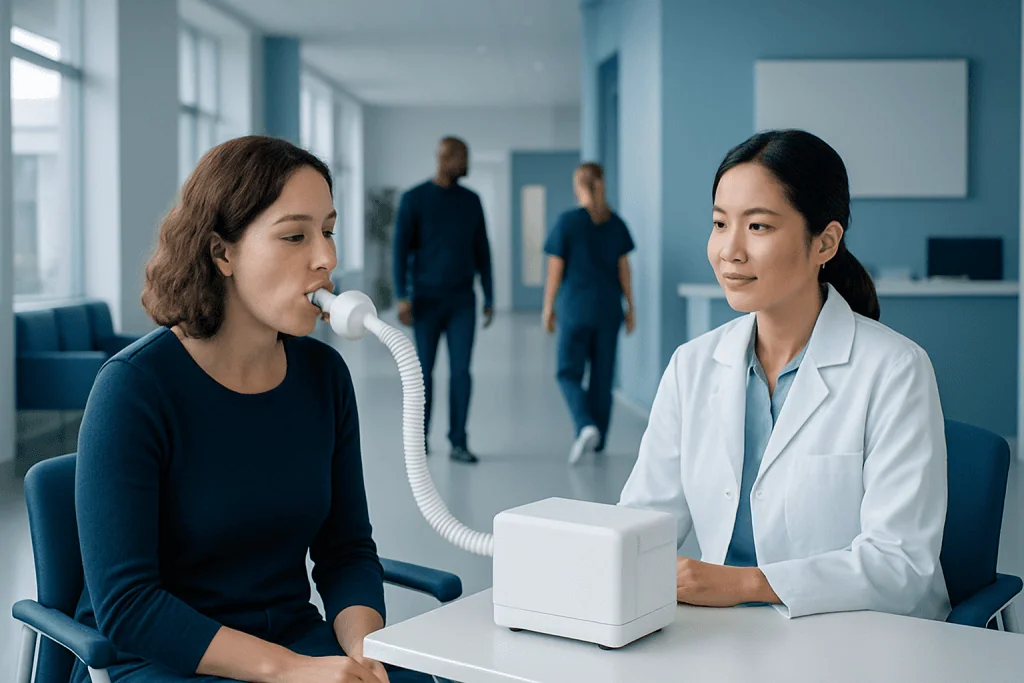
A spirometer helps measure lung function, especially airflow and lung volume. Spirometry is commonly used to evaluate asthma, COPD, and other breathing problems.
Key Takeaways
- A spirometer helps measure lung function, especially airflow and lung volume.
- Spirometry is commonly used to evaluate asthma, COPD, and other breathing problems.
- Results are interpreted by a healthcare professional in the context of symptoms, age, height, and medical history.
- Different spirometers are used in clinics for testing and at home or in hospitals for breathing exercises.
- Proper technique is important because inaccurate effort can affect spirometer results.
A spirometer is a medical device that measures how much air a person can breathe in and out, and how quickly they can exhale. It is commonly used to help diagnose, monitor, or assess breathing conditions and to support recovery after illness or surgery.
Overview: What a spirometer does
A spirometer is a device used to assess how well the lungs are working. It measures the amount of air a person can inhale and exhale and, importantly, how fast air can be blown out. In everyday practice, the word “spirometer” may refer either to the machine used for a spirometry test in a clinic or to a simple incentive spirometer used after surgery to encourage deep breathing.
For patients, this distinction matters. A clinical spirometer is used for diagnosis and monitoring of lung function. An incentive spirometer is a handheld device used as part of recovery and self-care, especially after an operation or a period of limited movement. Both relate to breathing, but they serve different purposes.
Spirometry is one of the most common lung function tests. Doctors often request it when a person has symptoms such as shortness of breath, wheezing, chronic cough, or chest tightness. It may also be used to monitor known conditions such as asthma or COPD, or to check lung health before surgery.
Why patients may need a spirometer test
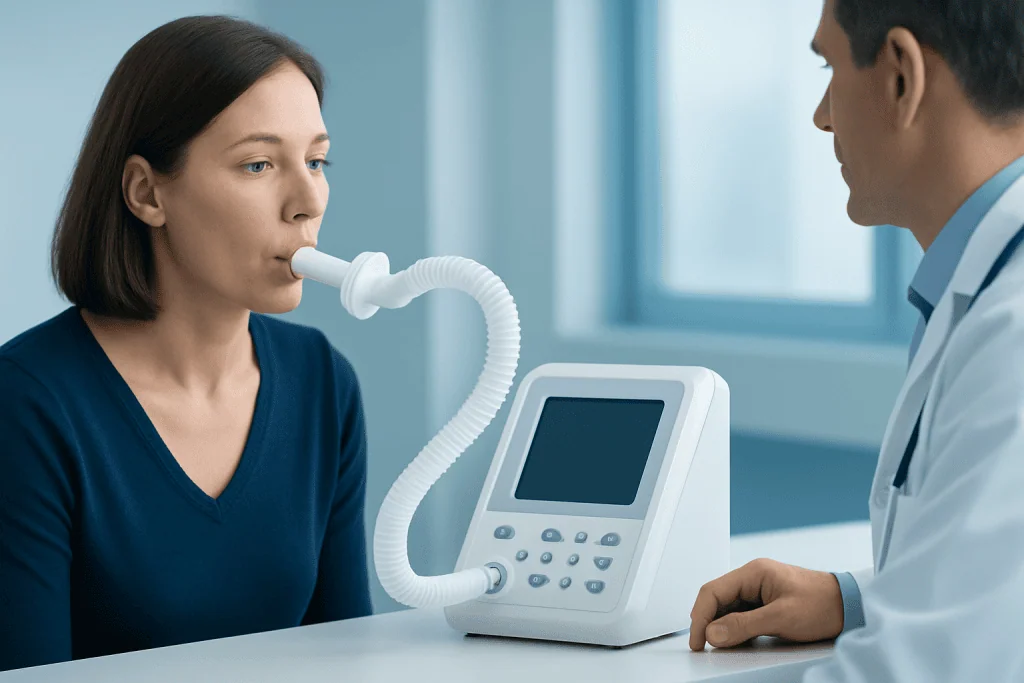
A spirometer test helps clinicians understand whether breathing symptoms are related to narrowed airways, reduced lung capacity, or another pattern of lung function change. It is usually quick, noninvasive, and done in an outpatient setting. In many cases, it provides useful information before more complex testing is considered.
Doctors may recommend spirometry for several reasons. It can help diagnose a condition, measure its severity, check how well treatment is working, or follow changes over time. It is also used before some surgeries to estimate respiratory fitness and after certain illnesses to guide recovery planning.
- Persistent cough or wheezing
- Shortness of breath during activity or at rest
- Monitoring chronic lung disease
- Evaluation before surgery
- Assessment of exposure to smoking or workplace irritants
- Follow-up after respiratory illness
In some settings, spirometry is part of a broader respiratory evaluation that may include imaging, oxygen measurements, or specialist review. If symptoms are ongoing or unexplained, a doctor may recommend pulmonology evaluation to interpret the results in the context of the full medical picture.
How spirometry works and what to expect
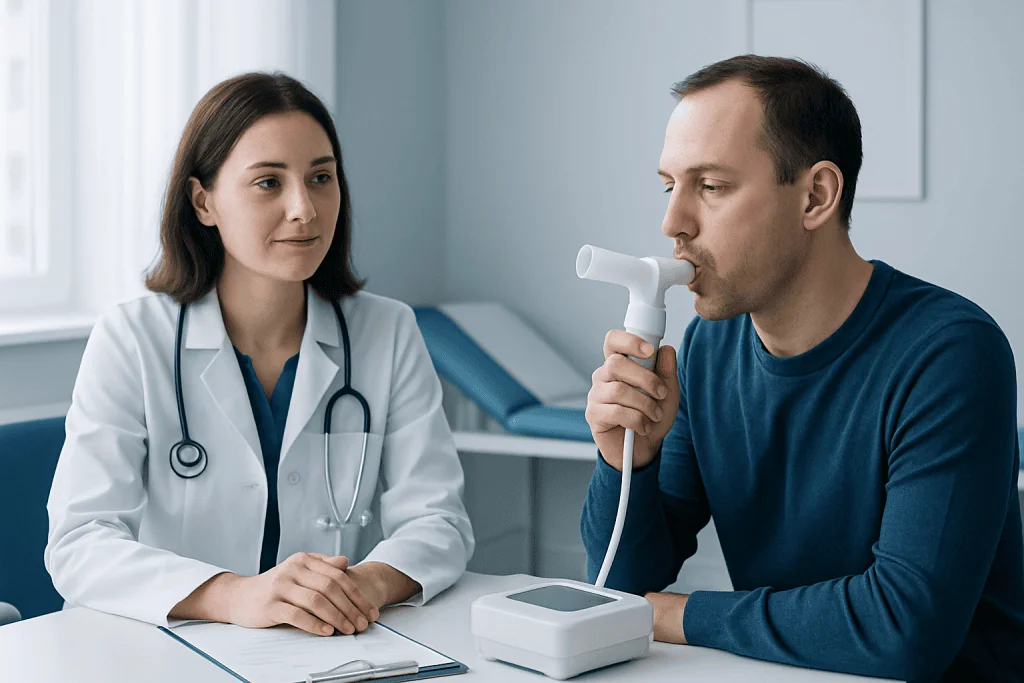
During a spirometry test, the patient is asked to breathe into a mouthpiece connected to the machine. A nose clip is often used so that all air moves through the mouth. The most common maneuver involves taking the deepest possible breath in, then blowing out as hard and as fast as possible until the lungs feel empty. This may be repeated several times to make sure the results are reliable.
The test itself is usually safe and brief. Some people feel lightheaded for a few moments after forceful exhalation, but this generally settles quickly. Clear instructions from the technician are important, because the quality of the result depends heavily on effort and technique.
Sometimes spirometry is performed before and after using an inhaled bronchodilator. This helps show whether airflow improves with medication, which can support diagnosis and treatment decisions. Patients may be asked to avoid smoking, heavy meals, vigorous exercise, or certain inhalers for a period before the test, depending on the doctor’s instructions.
An incentive spirometer works differently. Instead of measuring airflow for diagnosis, it encourages slow, deep breaths. A patient inhales through the device to raise a marker or piston, helping keep the lungs expanded and reducing the risk of shallow breathing after surgery. It is commonly introduced as part of thoracic surgery or other postoperative care plans.
Understanding spirometer results
Spirometer results are reported as numbers and percentages that describe lung function. Two of the most important measurements are FEV1, which is the amount of air exhaled in the first second, and FVC, which is the total amount exhaled during a forced breath out. The ratio between these values can help indicate whether airflow is obstructed.
Doctors compare the measured values with predicted values based on age, sex, height, and sometimes ethnicity, depending on the reference standards used. A low FEV1/FVC ratio may suggest obstructive lung disease, while a reduced FVC with a normal ratio can suggest a restrictive pattern. However, spirometry alone does not diagnose every condition, and abnormal results may need further testing.
Interpretation should always consider symptoms, medical history, smoking history, medications, and physical examination. A result that appears normal does not always rule out disease, especially if symptoms are intermittent or if the test was done during a symptom-free period. Likewise, mildly abnormal values may not always mean a serious problem.
When needed, doctors may combine spirometry with additional respiratory assessments such as diffusion testing, exercise testing, or imaging. In more complex cases, this may be part of a broader check-up or specialist evaluation to understand the cause of breathlessness more fully.
Conditions a spirometer can help assess
Spirometry is especially useful in conditions that affect airflow. It is commonly used in the assessment of asthma and COPD, where it helps identify airway narrowing and monitor response to treatment. In asthma, airflow limitation may improve after bronchodilator use, while COPD often shows more persistent obstruction.
The test may also support evaluation of chronic bronchitis, emphysema, occupational lung exposure, and some neuromuscular or chest wall disorders. In restrictive lung disease, spirometry may suggest reduced lung volume, although additional tests are often needed to confirm the pattern and identify the cause.
Not every breathing problem can be fully explained by spirometry. For example, shortness of breath may also arise from heart conditions, anxiety, anemia, obesity, or deconditioning. That is why spirometry is best viewed as one important tool rather than a complete answer on its own.
In patients with ongoing symptoms, a doctor may also investigate related conditions such as pneumonia recovery, upper airway problems, or cardiovascular causes. The next steps depend on the patient’s symptoms, examination findings, and test results.
Using an incentive spirometer at home or in hospital
An incentive spirometer is often given to patients after surgery or during recovery from illness to help encourage deep breathing. It is not used to diagnose disease. Instead, it helps open the air sacs in the lungs, supports better ventilation, and may reduce the risk of complications linked to shallow breathing, such as mucus buildup or partial lung collapse.
Patients are usually asked to sit upright, seal their lips around the mouthpiece, and inhale slowly and deeply enough to raise the indicator to a target level. The emphasis is on slow, controlled inhalation rather than forceful blowing out. After each deep breath, holding the breath briefly may help keep the lungs expanded.
Healthcare teams often recommend repeating the exercise several times each hour while awake, but exact instructions can vary depending on the operation or condition. Good pain control can be important, because discomfort after surgery may make deep breathing difficult. Gentle coughing after the exercise may also be advised to help clear secretions.
If a patient is unsure whether the device is being used correctly, it is best to ask a nurse, respiratory therapist, or doctor for a demonstration. Technique matters, and personalized guidance can make the exercise more effective and more comfortable.
Preparing for the test and improving accuracy
A few simple steps can help spirometry results be as accurate as possible. Patients should follow any instructions given before the appointment, especially regarding inhalers or other respiratory medicines. Wearing loose clothing can make it easier to take a full breath, and arriving a little early can help reduce rushing and anxiety.
Smoking shortly before the test, eating a very heavy meal, or vigorous exercise can affect breathing performance. It is also helpful to tell the testing team about recent chest infections, eye surgery, abdominal surgery, or heart problems, as these may influence whether the test should be postponed or modified.
Common causes of inaccurate results include an incomplete seal around the mouthpiece, starting too slowly, stopping the exhalation too soon, or coughing during the maneuver. This is why the test is repeated several times. The technician looks for consistent efforts so the doctor can interpret the numbers with confidence.
Patients should not worry if the first attempt feels unfamiliar. Most people improve once they understand the technique. Clear coaching and a calm setting usually make the process straightforward.
When to seek medical care
A spirometer can provide useful information, but it does not replace medical assessment when symptoms are severe or worsening. A person should seek prompt medical care if they have sudden shortness of breath, chest pain, bluish lips, confusion, coughing up blood, or wheezing that does not improve with usual treatment. These symptoms may need urgent attention.
It is also sensible to arrange a medical review if a cough lasts for several weeks, breathlessness begins to limit normal activities, or nighttime symptoms repeatedly disturb sleep. Even mild symptoms deserve discussion if they are becoming more frequent or if there is a history of smoking, occupational exposure, or lung disease.
For ongoing evaluation, treatment decisions should be guided by a qualified clinician rather than by home interpretation of device readings alone. Near the end of the care pathway, patients may benefit from coordinated respiratory assessment; Acibadem International’s multidisciplinary specialists and JCI-accredited hospitals diagnose and treat respiratory conditions for international patients, including cases that need further testing or specialist follow-up such as pulmonary rehabilitation.
Frequently asked questions
What is a spirometer used for?
A spirometer is used to measure how well the lungs move air in and out. It helps doctors assess breathing symptoms, diagnose some lung conditions, and monitor treatment over time.
Is spirometry the same as an incentive spirometer?
No. Spirometry in a clinic is a diagnostic lung function test, while an incentive spirometer is a breathing exercise device often used after surgery or illness. They are related to lung health but have different purposes.
Can a spirometer diagnose asthma or COPD by itself?
Spirometry can strongly support the diagnosis of asthma or COPD, but it is usually interpreted along with symptoms, history, examination, and sometimes other tests. A doctor uses the full clinical picture rather than one number alone.
How should a patient prepare for a spirometry test?
Preparation may include avoiding smoking, heavy meals, and vigorous exercise for a period before the test. Some patients are also asked to pause certain inhalers, but this should only be done if a doctor or testing center gives that instruction.
Are spirometer results always accurate?
Results are most accurate when the patient follows instructions carefully and repeats the test with good effort. Poor technique, coughing, fatigue, or recent illness can affect the numbers, which is why trained staff check for consistency.
Can a person use a spirometer at home?
A person may use an incentive spirometer at home if it has been recommended for recovery or breathing exercises. Home devices do not replace professional medical evaluation when symptoms are new, severe, or getting worse.
This article is for general information only and is not a substitute for professional medical advice. Please consult a qualified doctor about your individual situation.
Explore treatments in Turkey — costs, top hospitals & a free quote
JCI-accredited · board-certified surgeons · reply within 24h
Add us as a Preferred Source to see more of our trusted health content across Google Search, AI Overviews and Discover.

More from the Health Library

Frontal: What Patients Need to Know
Renal Ultrasound: An Evidence-Based Guide for Patients

Mycoplasma Pneumoniae: What Patients Need to Know

Nattokinase — Explained by Medical Evidence, Not Myths

Miscarriage: A Complete Medical Overview