E Stim — Explained by Medical Evidence, Not Myths
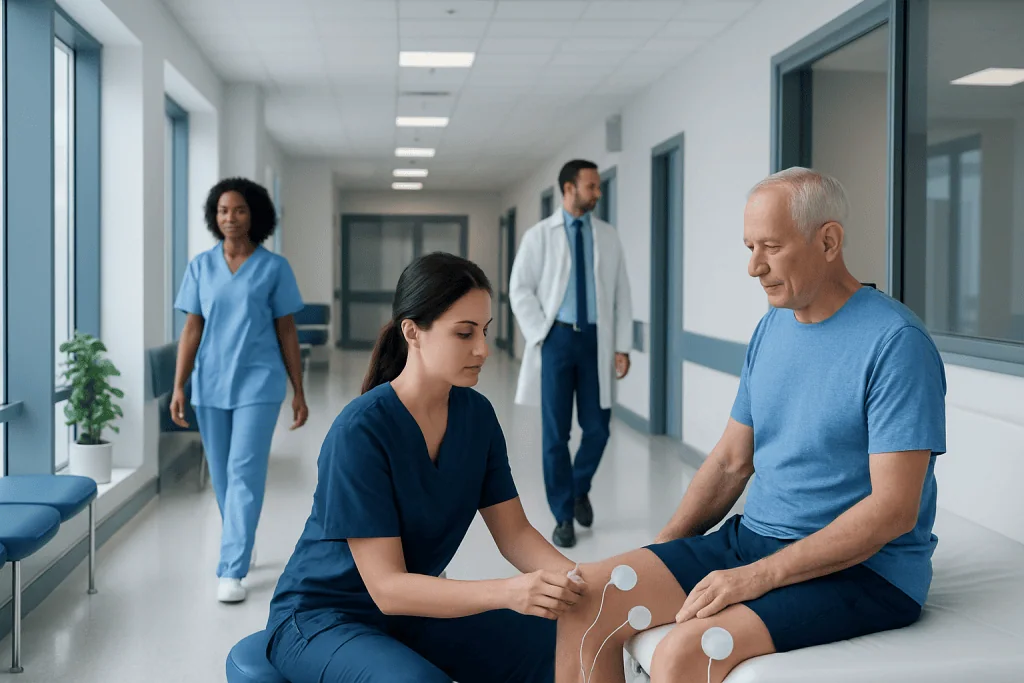
E stim refers to several therapies, including TENS for pain and NMES/EMS for muscle activation. The best use of e stim depends on the goal, such as pain relief, muscle retraining, or support during rehabilitation.
Key Takeaways
- E stim refers to several therapies, including TENS for pain and NMES/EMS for muscle activation.
- The best use of e stim depends on the goal, such as pain relief, muscle retraining, or support during rehabilitation.
- Evidence for e stim is mixed and condition-specific, so results vary from person to person.
- E stim is generally safe when used correctly, but it is not suitable for everyone, especially people with some implanted devices or certain medical conditions.
- Professional assessment helps determine whether e stim should be part of a broader treatment plan.
E stim is a broad term for electrical stimulation, a therapy that uses controlled electrical impulses to stimulate nerves or muscles. It can help with pain management or rehabilitation in selected cases, but it is not a universal fix and works best when matched to the right medical problem and supervised appropriately.
What e stim is and what it is not
E stim, short for electrical stimulation, is a therapy that delivers mild electrical impulses through the skin or directly to a targeted area to stimulate nerves or muscles. In practical terms, it is used for two main purposes: to help reduce certain types of pain and to help muscles contract during rehabilitation. It is not one single treatment but a group of related techniques, each designed for a different clinical goal.
The most commonly discussed forms are TENS, or transcutaneous electrical nerve stimulation, and NMES, or neuromuscular electrical stimulation. TENS is usually aimed at pain relief by stimulating sensory nerves. NMES is aimed at producing muscle contractions, often after injury, surgery, or periods of reduced movement. Some people also use the term EMS, or electrical muscle stimulation, especially in fitness settings, but medical use is more structured and condition-specific.
A common myth is that e stim can “heal” any painful area or quickly build strength without active rehabilitation. Medical evidence does not support such broad claims. E stim may be useful as one part of treatment, but it usually works best alongside exercises, physical therapy, activity modification, and management of the underlying condition.
How e stim works in the body
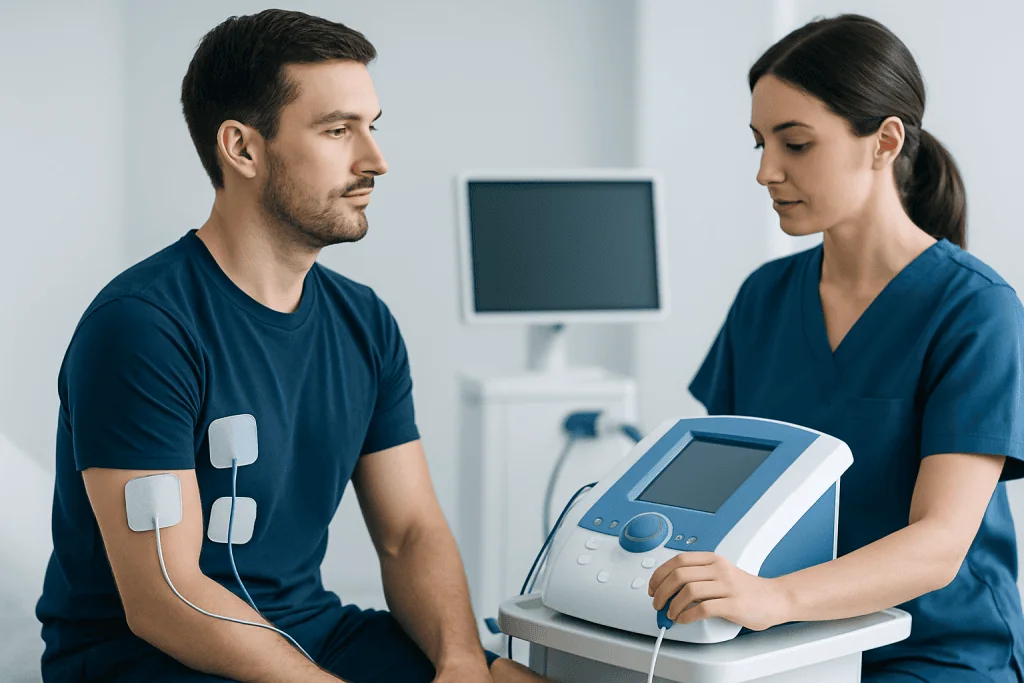
Electrical stimulation works by sending carefully controlled impulses through electrodes placed on the skin or through specialized medical devices. These impulses interact with the body’s normal electrical signaling. Depending on the settings used, the treatment can target sensory nerves, motor nerves, or both.
When used for pain, e stim may reduce how strongly pain signals are perceived. One proposed mechanism is that stimulation of non-painful sensory fibers can interfere with transmission of pain signals to the brain. Another is that treatment may support the release of the body’s natural pain-modulating chemicals in some people. This helps explain why some patients notice temporary relief during or after a session.
When used for rehabilitation, e stim can trigger muscle contractions in weak or inactive muscles. This may help maintain muscle activity, support retraining after surgery or injury, and improve a person’s ability to participate in a guided rehabilitation program. It is sometimes included in broader physical therapy and rehabilitation plans when a clinician believes muscle activation is likely to be helpful.
The benefit depends on the diagnosis, the correct electrode placement, the intensity and frequency settings, and whether the person follows a suitable treatment plan. That is why home devices do not always reproduce the results seen in a clinic.
When e stim may be used

E stim is used in several medical and rehabilitation settings. For pain, TENS may be considered for some cases of back pain, neck pain, osteoarthritis-related discomfort, or pain after injury, although the strength of evidence varies by condition. For rehabilitation, NMES may be used when a muscle is weak after surgery, immobilization, nerve injury, or certain neurological conditions.
In orthopedic care, clinicians may consider e stim after joint surgery or sports injury to help with muscle reactivation, especially when pain or swelling makes normal contraction difficult. It may also be used as part of recovery strategies for people being treated for a herniated disc or other musculoskeletal problems, depending on symptoms and examination findings.
In neurology and rehabilitation medicine, electrical stimulation can sometimes support recovery of movement patterns, walking, or limb function after selected nervous system injuries. For example, it may be incorporated into a structured neurological rehabilitation program when a specialist team determines that the goals are realistic and the approach is appropriate.
It is important to separate therapeutic use from wellness marketing. Consumer devices may advertise toning, fat reduction, or effortless strength gains, but medical e stim is not a substitute for exercise, weight management, or treatment of a disease. A careful diagnosis should come first.
What the evidence says: realistic benefits and limits
Medical evidence on e stim is best understood by asking a specific question: for which condition, for which goal, and with which type of device? Studies do not show one simple answer for all uses. Some patients report meaningful pain relief with TENS, while others notice little change. Similarly, NMES can be helpful for muscle activation in rehabilitation, but it is not equally useful in every patient or stage of recovery.
For pain management, evidence suggests that TENS may offer short-term relief for some people, particularly when the settings are individualized and the therapy is used consistently. However, it does not reliably treat the cause of pain, and it should not delay assessment of persistent or worsening symptoms. In chronic pain conditions, it may be one tool among many rather than a standalone solution.
For muscle weakness and rehabilitation, evidence is generally stronger when e stim is used as an adjunct to active therapy rather than on its own. In other words, it may help a weak muscle engage, but long-term function usually improves most when the person also performs targeted exercises and follows a broader rehabilitation plan. This principle also applies after orthopedic rehabilitation needs such as joint injury or surgery.
Because outcomes vary, it is reasonable for patients to ask what the goal is before starting treatment. Is the aim pain control, reducing swelling, preventing muscle loss, improving movement, or supporting exercise? A clear goal makes it easier to judge whether e stim is truly helping.
Who should avoid e stim or use caution
E stim is often well tolerated, but it is not suitable for everyone. People with implanted electrical devices, such as some pacemakers or defibrillators, should not use e stim unless their treating doctors confirm it is safe. Electrical currents can interfere with implanted devices in some circumstances. Caution is also needed in people with seizure disorders, significant heart rhythm problems, or reduced sensation in the treatment area.
Electrodes should not be placed over broken skin, active infection, or areas with severe skin irritation. They are also generally avoided over the front of the neck, across the chest in certain situations, or near the eyes unless specifically directed by a trained clinician. Pregnancy requires individual medical advice, particularly for abdominal or pelvic application.
Possible side effects are usually minor and may include skin redness, tingling discomfort, or muscle soreness. More intense stimulation does not necessarily mean better results. If treatment causes pain, burns, dizziness, palpitations, or worsening symptoms, it should be stopped and reviewed by a healthcare professional.
People with ongoing numbness, weakness, unexplained pain, or a known nerve problem may need a formal assessment before using e stim. Sometimes symptoms that seem muscular are related to spinal or nerve conditions that require a different approach, including assessment by teams experienced in neurosurgery or rehabilitation when indicated.
How doctors assess whether e stim is appropriate
Before recommending e stim, clinicians usually begin with the underlying question: what is causing the symptom? A physical examination, medical history, and review of daily function help determine whether the issue is mainly muscular, joint-related, nerve-related, or part of a broader pain condition. This matters because electrical stimulation is a tool, not a diagnosis.
In some cases, no special tests are needed before starting a short trial. In others, imaging or nerve studies may be appropriate, especially if there is significant weakness, radiating pain, or concern about nerve compression. For example, symptoms related to sciatica may require evaluation of the lumbar spine and a broader plan beyond symptom relief alone.
A supervised first session can be especially useful. It allows a professional to choose electrode placement, adjust intensity, explain what the sensation should feel like, and set realistic expectations. Patients who later use a home device generally do better when they have been taught how and when to use it safely.
Doctors also consider whether another treatment should come first. If pain is due to fracture, infection, severe arthritis, uncontrolled inflammation, or progressive neurological disease, addressing the root cause is more important than trying symptom-focused stimulation alone.
Treatment planning, self-care, and when to seek medical care
When e stim is recommended, it usually fits into a larger treatment plan rather than replacing one. That plan may include activity changes, stretching, strengthening, manual therapy, pain education, medications prescribed by a doctor, or treatment of the underlying condition. The most effective programs are individualized and reviewed over time to see whether they are actually improving pain, movement, or daily function.
At home, patients should use only the settings and schedule advised by their clinician or the device instructions. The skin should be clean and dry before electrode placement, and pads should be applied only to the recommended areas. If a person has increasing pain, skin irritation, new weakness, or no meaningful improvement after a reasonable trial, the approach should be reassessed rather than continued indefinitely.
Medical care should be sought promptly if pain follows a significant injury, if there is sudden or progressive weakness, loss of bladder or bowel control, chest pain, severe shortness of breath, fainting, fever with back or neck pain, or numbness in the groin area. These symptoms suggest that a more serious condition may be present and should not be managed with a home e stim device alone.
For ongoing symptoms, a specialist assessment can help clarify whether e stim is worthwhile and what type is most appropriate. Acibadem International’s multidisciplinary specialists in JCI-accredited hospitals evaluate and treat rehabilitation, spine, pain, and neurological conditions for international patients when more comprehensive care is needed.
Frequently asked questions
Is e stim the same as TENS?
Not exactly. E stim is a broad term for electrical stimulation, while TENS is one specific type used mainly for pain relief. Other forms, such as NMES, are used to activate muscles during rehabilitation.
Does e stim really help pain?
It can help some people, especially for short-term symptom relief, but results are variable. The benefit depends on the cause of pain, the device settings, and whether it is part of a broader treatment plan.
Can e stim build muscle on its own?
E stim can make a muscle contract and may help maintain or retrain muscle activity during recovery. However, it does not replace active exercise, strength training, or rehabilitation guided by a professional.
Is e stim safe to use at home?
Home use is often safe when the device is used correctly and the person has no relevant contraindications. It is best to get medical advice first if there is significant pain, weakness, numbness, pregnancy, a heart device, or a neurological condition.
Who should not use e stim?
People with some implanted pacemakers or defibrillators should avoid it unless their doctors specifically approve it. It may also be unsuitable over broken skin, areas of poor sensation, or in certain heart, seizure, or pregnancy-related situations.
How long does it take for e stim to work?
Some people feel symptom relief during the session or shortly afterward, especially with TENS for pain. For muscle retraining, progress is usually judged over days to weeks as part of a rehabilitation program.
This article is for general information only and is not a substitute for professional medical advice. Please consult a qualified doctor about your individual situation.
Explore treatments in Turkey — costs, top hospitals & a free quote
JCI-accredited · board-certified surgeons · reply within 24h
Add us as a Preferred Source to see more of our trusted health content across Google Search, AI Overviews and Discover.

More from the Health Library

Tonsil stones vs strep: Symptoms, Causes, and Treatment — Complete Patient Guide

Testicular Zits: An Evidence-Based Guide for Patients
Transthoracic Echocardiogram: What Patients Need to Know

Fast Digesting Carbs: A Complete Medical Overview

Dehumidifier: What Patients Need to Know