Staphylococcal Nasal Infection: Symptoms, Causes, and Treatment Options

Staphylococcal nasal infection usually affects the skin inside the nostrils rather than the deeper sinus cavities. Common symptoms include soreness, crusting, redness, swelling, and small painful bumps or boils.
Key Takeaways
- Staphylococcal nasal infection usually affects the skin inside the nostrils rather than the deeper sinus cavities.
- Common symptoms include soreness, crusting, redness, swelling, and small painful bumps or boils.
- Many cases are linked to skin irritation, nose picking, frequent blowing, chronic nasal discharge, or bacterial colonization.
- Doctors diagnose it mainly through history and examination, and sometimes use a swab if infections are recurrent or severe.
- Treatment may include topical antibiotic ointment, oral antibiotics, warm compresses, and avoiding further irritation.
- Prompt medical care is important if swelling spreads, fever develops, pain becomes severe, or the person has diabetes or a weakened immune system.
A staphylococcal nasal infection is a bacterial infection affecting the skin just inside the nostrils or nearby nasal tissues, most often caused by Staphylococcus bacteria. It can lead to tenderness, redness, crusting, pimples or boils, and usually improves with appropriate medical treatment and good skin care.
Overview
A staphylococcal nasal infection is a bacterial infection that usually involves the skin at the entrance of the nose, known as the nasal vestibule. In many cases, the bacteria involved are Staphylococcus aureus, which can live harmlessly on the skin or inside the nose in some people but may cause infection when the skin barrier is damaged.
This condition is different from a typical cold or seasonal allergy. Instead of mainly causing congestion or sneezing, it tends to produce localized soreness, redness, crusting, and tenderness in or around one nostril. Some people develop a small pimple-like bump, while others may form a boil or a cluster of inflamed follicles.
Because the nose is frequently touched, rubbed, and exposed to dryness or irritation, the area can become vulnerable to infection. The good news is that most staphylococcal nasal infections respond well to timely treatment. The exact treatment depends on how mild or extensive the infection is and whether it has spread beyond the surface skin.
How It Feels and Looks
Symptoms can start gradually or appear over a short period of time. A person may first notice a sore spot just inside the nostril, followed by redness, sensitivity, or a burning feeling. The area can become crusty, dry, or slightly swollen, and touching it may be uncomfortable.
When the infection affects a hair follicle, a small pustule or pimple may develop. If inflammation becomes deeper, it can form a boil, which is more painful and swollen. In some cases, there may be a little drainage of pus, bleeding after crusts come off, or a blocked sensation in the nostril.
Common signs and symptoms include:
- Tenderness or pain inside the nose
- Redness around the nostril opening
- Crusting or scabbing
- Dryness with fissures or small cracks
- Pus-filled bumps or boils
- Swelling of the nostril or nearby skin
- Occasional mild bleeding
If symptoms are mainly facial pressure, thick sinus drainage, and fever without soreness at the nostril entrance, the cause may be a different ENT problem rather than a superficial staphylococcal nasal infection.
Why It Happens

Staphylococcal bacteria commonly live on human skin and in the nose without causing disease. Infection usually happens when the skin inside the nostril is irritated or broken, allowing bacteria to enter and multiply. Even very small injuries can be enough to trigger infection.
Several everyday factors can contribute. Frequent nose picking, vigorous nose blowing, repeated wiping because of a cold, plucking nasal hairs, and prolonged dryness from low humidity or oxygen devices can all damage the skin. Chronic runny nose from allergies may also keep the area inflamed and vulnerable.
Risk may be higher in people who carry Staphylococcus aureus in the nose, have eczema or other skin-barrier problems, or live with conditions that affect immunity. Diabetes, ongoing cancer treatment, immunosuppressive medicines, and recent hospitalization can make infections more likely or harder to clear. Some recurrent cases are associated with bacterial colonization that may require a doctor to consider decolonization measures.
In some patients, nasal infection occurs alongside nearby skin infections or related ENT issues. If symptoms are part of a broader problem involving the nose and sinuses, a physician may also assess for conditions such as sinusitis.
How Doctors Diagnose It
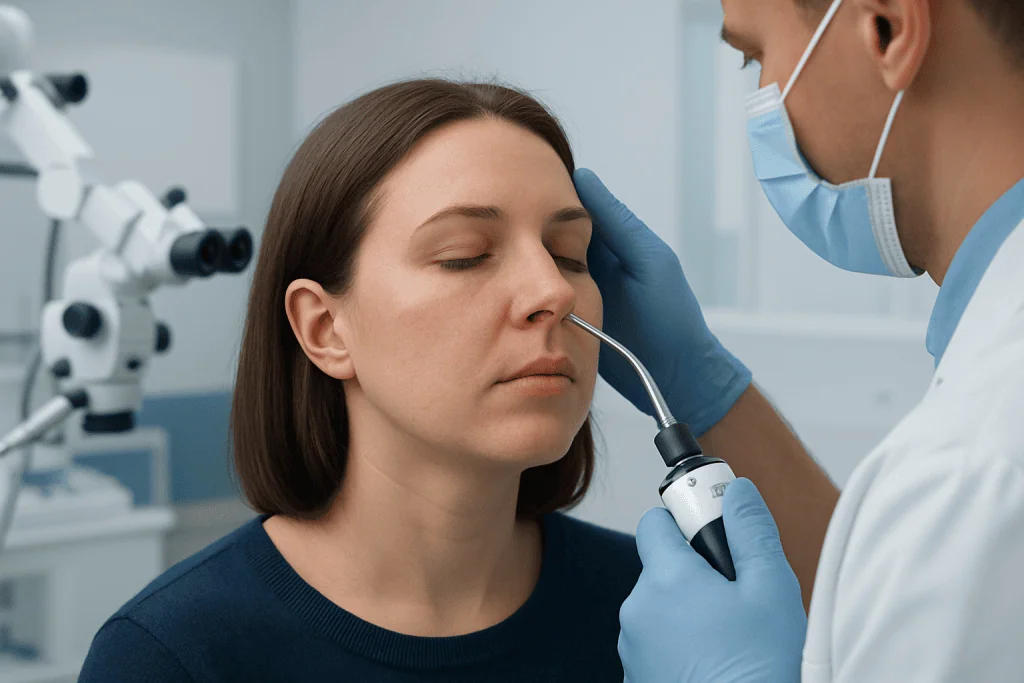
Diagnosis is usually based on a medical history and a careful physical examination. A doctor will look at the skin inside and around the nostrils, ask about pain, crusting, drainage, and recent irritation, and check whether the infection appears limited to the vestibule or has spread into surrounding tissues.
Most straightforward cases do not require extensive testing. However, a swab may be taken if the infection is recurrent, unusually severe, not responding to treatment, or if there is concern about antibiotic-resistant bacteria such as MRSA. A culture can help identify the exact organism and guide treatment choices.
Doctors also look for conditions that can mimic or contribute to infection, including herpes lesions, eczema, contact dermatitis, or recurrent folliculitis. If swelling extends into the face, there is marked pain, or deeper infection is suspected, further evaluation by an ear, nose, and throat specialist may be recommended.
When a more detailed nasal assessment is needed, examination by an ENT team and, in selected situations, endoscopic sinus evaluation and treatment may help clarify whether there is a related structural or inflammatory nasal problem.
Treatment Options
Treatment depends on how mild, localized, or extensive the infection is. Mild cases are often treated with a topical antibiotic ointment applied as prescribed to the affected area. This helps reduce bacterial growth and allows the irritated skin to heal. People are usually advised not to pick, squeeze, or scrub the area, since this can worsen inflammation.
If the infection is more painful, forms a boil, spreads to nearby skin, or does not improve with topical care, a doctor may prescribe oral antibiotics. Warm compresses may also be recommended to ease discomfort and support drainage of a localized boil. If an abscess forms, a clinician may need to drain it safely rather than having the person try to open it at home.
Good supportive care matters as well. Keeping the inside of the nose from becoming excessively dry, gently cleaning crusts only if advised, and managing contributing issues such as allergies or chronic discharge can lower irritation while treatment is underway. If recurrent infection is linked to persistent colonization, a clinician may discuss a short decolonization plan for the nose and skin.
Patients with repeated flare-ups or coexisting nasal disease may benefit from specialist care, particularly if symptoms overlap with chronic ENT problems such as nasal polyps. In selected cases where another nasal disorder needs treatment, options evaluated by ENT specialists can include septoplasty or sinus surgery, but these are not standard treatments for a simple staphylococcal nasal infection itself.
Self-care and Prevention
Self-care should focus on protecting the skin barrier and reducing opportunities for bacteria to enter damaged tissue. Gentle habits can make a meaningful difference, especially for people who have frequent irritation inside the nose.
Helpful steps may include avoiding nose picking, not plucking nasal hairs, blowing the nose gently, and washing hands regularly before touching the face. If dryness is a problem, a doctor may suggest a moisturizing approach that is safe for the nasal lining. It is also important to manage allergies or chronic nasal drainage so the tissue is not constantly inflamed.
Prevention tips include:
- Keep fingernails short and avoid scratching inside the nose
- Use tissues gently and replace them often
- Do not share personal items such as towels
- Follow treatment exactly as prescribed and finish the full course when advised
- Seek review for repeated infections, especially if there is diabetes or immune suppression
- Discuss recurrent staph infections with a doctor, as testing or decolonization may be appropriate
People should avoid starting leftover antibiotics on their own. The best treatment depends on the severity of infection, local resistance patterns, and whether another skin or nasal condition is present.
When to Seek Medical Care
Medical care is appropriate if symptoms do not improve within a few days, keep recurring, or are becoming more painful. A clinician should also assess any boil, visible pus, or spreading redness around the nostril. Early treatment can reduce discomfort and lower the chance of the infection extending into nearby facial skin.
Urgent medical attention is important if there is fever, rapidly increasing swelling, severe pain, redness spreading across the face, or swelling around the eyes. People with diabetes, weakened immunity, or recent major illness should seek prompt advice even for seemingly minor infections, because complications can develop more easily in these groups.
Anyone who is unsure whether the problem is a superficial staphylococcal nasal infection, sinus disease, or another skin condition should consult a qualified doctor. Near the end of the care pathway, if specialized evaluation is needed, Acibadem International’s multidisciplinary specialists in JCI-accredited hospitals diagnose and treat nasal and related ENT conditions for international patients.
Frequently asked questions
What is a staphylococcal nasal infection?
It is a bacterial infection affecting the skin in or around the nostrils, usually caused by Staphylococcus bacteria. It often involves the nasal vestibule rather than the deeper sinuses and can cause pain, crusting, redness, and swelling.
Is a staph infection in the nose the same as sinusitis?
No. A staph infection in the nose usually affects the skin just inside the nostril, while sinusitis involves inflammation or infection in the sinus cavities. The symptoms can overlap, but sinusitis more often causes congestion, facial pressure, and nasal discharge.
Can a staphylococcal nasal infection go away on its own?
Very mild irritation may improve, but a true bacterial infection often needs medical treatment, especially if there is pain, swelling, pus, or crusting. It is safest to have persistent or worsening symptoms assessed by a doctor.
How is a staphylococcal nasal infection treated?
Treatment may include topical antibiotic ointment, warm compresses, and avoiding further irritation to the nose. More severe or spreading infections may require oral antibiotics, and a boil or abscess sometimes needs drainage by a clinician.
Is a nasal staph infection contagious?
The bacteria can spread through direct contact or shared personal items, but not everyone exposed will develop an infection. Good hand hygiene, not touching the affected area, and not sharing towels or similar items can reduce spread.
When should someone worry about a staph infection in the nose?
Medical review is important if there is increasing pain, swelling, fever, spreading redness, or repeated infections. Urgent care is needed if swelling affects the face or eyes, or if the person has diabetes or a weakened immune system.
References
- Centers for Disease Control and Prevention
- American Academy of Otolaryngology–Head and Neck Surgery
- National Institute of Allergy and Infectious Diseases
- Merck Manual Consumer Version
This article is for general information only and is not a substitute for professional medical advice. Please consult a qualified doctor about your individual situation.
Explore treatments in Turkey — costs, top hospitals & a free quote
JCI-accredited · board-certified surgeons · reply within 24h
Add us as a Preferred Source to see more of our trusted health content across Google Search, AI Overviews and Discover.