Mrcp Procedure: A Complete Medical Overview
The mrcp procedure is a noninvasive imaging test based on MRI technology. It helps doctors look for gallstones, bile duct narrowing, inflammation, tumors, and pancreatic duct problems.
Key Takeaways
- The mrcp procedure is a noninvasive imaging test based on MRI technology.
- It helps doctors look for gallstones, bile duct narrowing, inflammation, tumors, and pancreatic duct problems.
- Unlike ERCP, MRCP is mainly diagnostic and does not treat a blockage during the same procedure.
- Preparation may include fasting and screening for metal implants, pacemakers, or contrast-related concerns.
- Results are interpreted together with symptoms, blood tests, and other imaging findings.
The mrcp procedure is a specialized MRI test that creates detailed images of the bile ducts, gallbladder, liver, and pancreatic duct without using an endoscope or surgery. It is commonly used to investigate pain, jaundice, abnormal liver tests, suspected gallstones, and other conditions affecting the biliary or pancreatic system.
What the MRCP Procedure Is
The mrcp procedure stands for magnetic resonance cholangiopancreatography. It is a specialized type of MRI scan designed to produce detailed images of the bile ducts, gallbladder, liver, pancreas, and pancreatic duct. In simple terms, it helps doctors see how bile and pancreatic fluids move through the duct system and whether anything is blocking or narrowing those pathways.
MRCP does not usually require a scope to be passed into the digestive tract. That is one of its main advantages. While some people confuse MRCP with procedures that treat bile duct problems, MRCP is primarily used to diagnose and clarify what may be causing symptoms or abnormal test results.
This test is often recommended when a doctor needs more information after blood tests, ultrasound, or CT findings. It can help evaluate suspected bile duct stones, inflammation, congenital duct abnormalities, and possible masses affecting the biliary or pancreatic system. In many cases, it helps determine whether a person may later need another procedure, such as ERCP, for treatment.
Why Doctors Order an MRCP
Doctors may request an MRCP when symptoms suggest a problem in the liver, gallbladder, bile ducts, or pancreas. Common reasons include upper abdominal pain, jaundice, unexplained itching, nausea, pancreatitis, or abnormal liver function tests. It may also be used when ultrasound results are unclear or when a closer look at the duct system is needed.
MRCP is especially helpful for identifying conditions such as bile duct stones, narrowing of the ducts, fluid collections, and structural changes caused by inflammation. It can also support the evaluation of gallstones when stones may have moved into the common bile duct, and it may assist in assessing suspected pancreatitis or pancreatic duct irregularities.
In some situations, MRCP is chosen because it avoids the risks of an invasive endoscopic test when the goal is imaging only. It may also be used before surgery, after prior treatment, or during follow-up when a doctor wants to monitor changes over time.
What MRCP Can Show

MRCP creates high-contrast images of fluid-filled structures, which makes the bile and pancreatic ducts stand out clearly. This allows radiologists to look for stones, blockages, strictures, swelling, cysts, leaks, and changes linked to inflammation or tumors. The test can also show whether the ducts are widened, which may suggest an obstruction downstream.
Depending on the clinical question, the MRI examination may include standard abdominal MRI images in addition to the MRCP sequences. This broader view can give useful information about nearby organs such as the liver, pancreas, and gallbladder. In that way, the test can help place duct changes in a larger anatomical context.
Although MRCP is very informative, it has limits. It does not remove stones, place stents, take tissue samples, or directly relieve an obstruction. If a problem is found that requires treatment, the next step may involve endoscopy, surgery, or another targeted intervention such as gallbladder surgery when clinically appropriate.
How to Prepare for the Test
Preparation instructions can vary by hospital, but many patients are asked not to eat or drink for several hours before the scan. Fasting helps reduce fluid and motion in the stomach and small bowel, which can improve image quality. Patients should follow the imaging center’s instructions carefully, especially if they take regular medicines.
Because MRCP uses MRI technology, safety screening is an important part of preparation. The care team will ask about pacemakers, aneurysm clips, cochlear implants, insulin pumps, retained metal fragments, or other implanted devices. Many modern implants are MRI-compatible, but each one must be checked before the scan.
Patients are usually asked to remove jewelry, watches, hearing aids, removable dental devices, and clothing with metal fasteners. Some MRCP studies are done without contrast, while others may include MRI contrast if the doctor needs more information about surrounding tissues. If contrast is planned, the team may ask about kidney function, prior contrast reactions, and pregnancy.
People who feel very anxious in enclosed spaces should mention this in advance. The team may offer practical support, such as scheduling advice, relaxation guidance, or discussing whether sedation is appropriate in selected cases.
What Happens During the MRCP Procedure
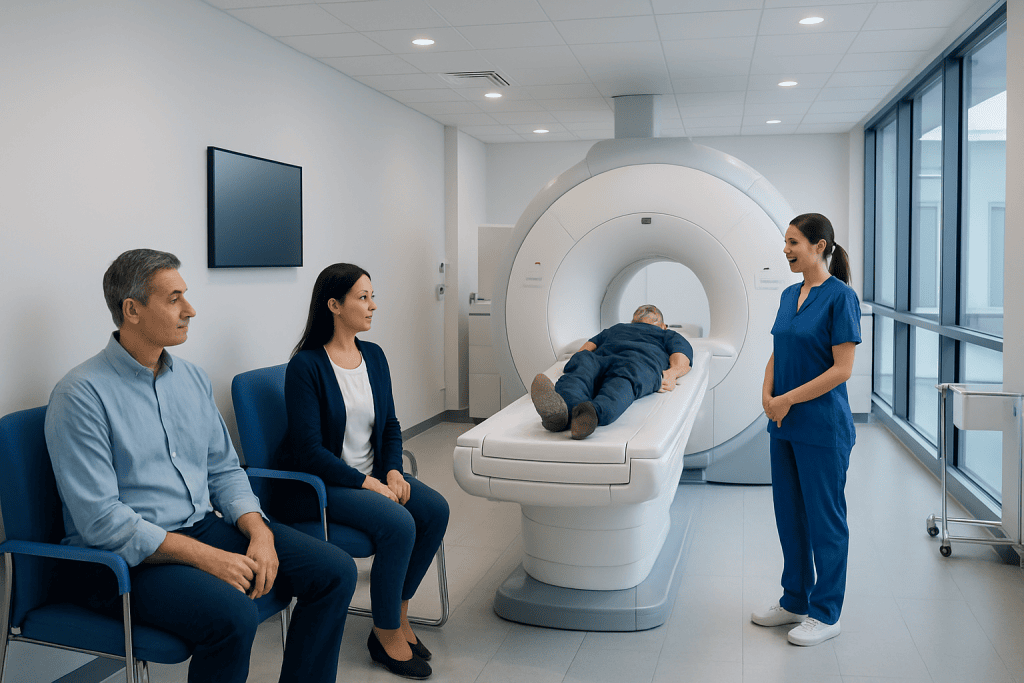
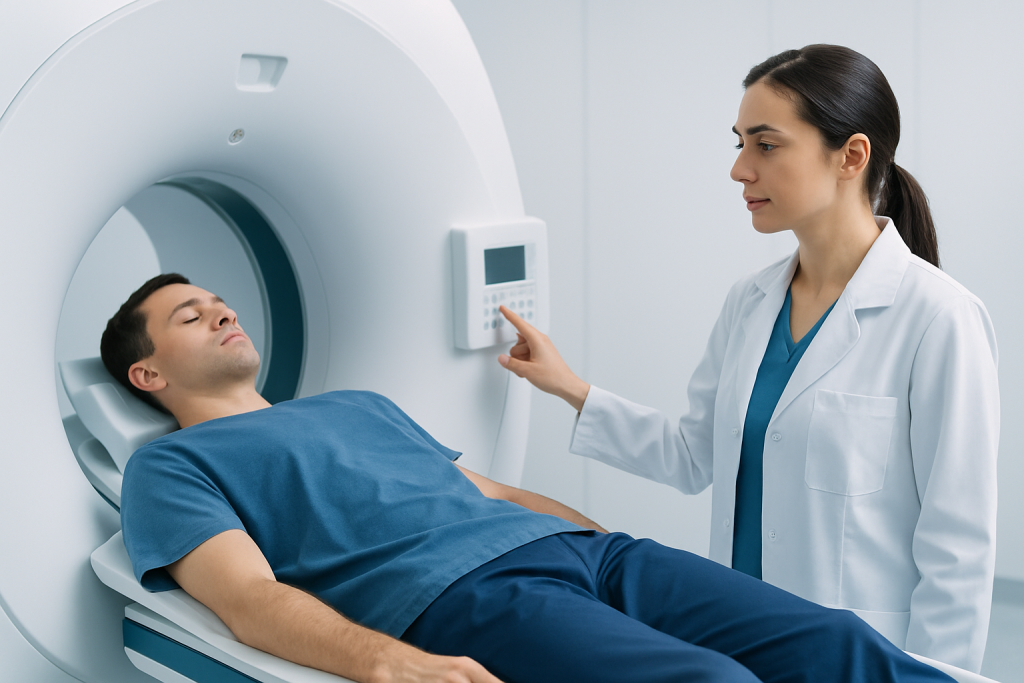
During the scan, the patient lies on a padded table that slides into the MRI machine. A technologist positions the body carefully so the upper abdomen is centered for the images. The test is painless, but the machine can be noisy, and it is important to remain as still as possible to avoid blurred images.
At certain moments, the patient may be asked to hold their breath for short periods. These breath-holds help produce clearer pictures of the ducts and nearby organs. The total time can vary, but many MRCP examinations are completed within about 30 to 60 minutes, depending on how many image sequences are needed.
Unlike endoscopic procedures, MRCP does not usually involve tubes passing through the mouth into the stomach or intestine. Most people go home shortly afterward and return to normal activities the same day unless they have received sedation. After the scan, a radiologist reviews the images and sends a report to the referring doctor, who explains what the findings mean in the context of the patient’s symptoms and test results.
Understanding the Results and Next Steps
An MRCP result may be described as normal, inconclusive, or abnormal. A normal study can reassure both patient and doctor that there is no clear evidence of major duct blockage or structural change at the time of imaging. However, a normal result does not always explain every symptom, so doctors may still consider other digestive or liver-related causes.
Abnormal findings can include gallstones in the common bile duct, duct widening, narrowing from scarring or inflammation, pancreatic duct changes, masses, or signs of previous injury. The meaning of these findings depends on the overall clinical picture. Blood tests, physical examination, ultrasound, CT, or MRI of the abdomen may also contribute to the final diagnosis.
If treatment is needed, the next step depends on what the scan shows. Some patients may need endoscopic treatment such as stone removal or stenting, while others may be managed with medicines, monitoring, or surgery. For selected patients with suspected pancreatic disease, doctors may also consider a more detailed evaluation such as endoscopic ultrasound when tissue sampling or closer inspection is needed.
Benefits, Limitations, and Safety
The main benefits of MRCP are that it is noninvasive, does not use ionizing radiation, and provides clear images of the duct system. For many patients, it is an excellent way to answer important diagnostic questions while avoiding the immediate risks that come with invasive endoscopic procedures. This makes it especially useful when the goal is to look carefully before deciding on treatment.
At the same time, MRCP is not the best test for every situation. Small stones or subtle abnormalities may occasionally be difficult to see, and image quality can be reduced by motion, certain body types, or nearby metal hardware. It also cannot provide treatment during the same session, so another procedure may still be required if a blockage is found.
MRCP is considered safe for most people, but MRI safety rules must always be followed. Patients with certain implants or severe claustrophobia may need special planning. If contrast is used, the care team weighs potential benefits and risks based on kidney function and medical history.
For international patients who need coordinated evaluation, Acibadem International’s multidisciplinary specialists and JCI-accredited hospitals diagnose and treat biliary and pancreatic conditions with imaging, endoscopic, and surgical expertise.
When to Seek Medical Care
A person should contact a doctor if they have persistent upper abdominal pain, yellowing of the skin or eyes, dark urine, pale stools, fever, unexplained weight loss, or repeated vomiting. These symptoms can have many causes, but they may indicate a problem involving the bile ducts, liver, gallbladder, or pancreas and deserve timely medical assessment.
Urgent medical care is especially important if severe pain occurs with fever, chills, confusion, fainting, or worsening jaundice. These features can suggest an infection or significant blockage that may need prompt treatment rather than imaging alone. People with known gallstones, recurrent pancreatitis, or abnormal liver tests should also follow up as advised by their clinician.
MRCP is a useful diagnostic tool, but it is only one part of care. The safest approach is to discuss symptoms, medicines, prior surgeries, and imaging history with a qualified doctor who can decide whether MRCP or another test is the most appropriate next step.
Frequently asked questions
What is the difference between MRCP and ERCP?
MRCP is a noninvasive MRI-based imaging test used mainly to diagnose problems in the bile and pancreatic ducts. ERCP is an endoscopic procedure that can both diagnose and treat certain problems, such as removing stones or placing a stent. Because ERCP is more invasive, MRCP is often used first when imaging alone may be enough.
Is the mrcp procedure painful?
The mrcp procedure is generally not painful. The person simply lies still during the scan, although the MRI machine can be loud and some people may feel uncomfortable in the enclosed space. If anxiety or claustrophobia is a concern, it is helpful to discuss this before the appointment.
How long does an MRCP take?
Many MRCP scans take about 30 to 60 minutes, though timing can vary. The total visit may be longer because of registration, safety screening, and preparation. If additional MRI images are needed, the exam may take more time.
Do patients need to fast before MRCP?
Many centers ask patients to avoid food and sometimes drinks for several hours before the test. This helps improve image quality, especially around the biliary system. The exact instructions can vary, so the imaging center's guidance should be followed.
Can MRCP detect gallstones?
Yes, MRCP can often detect stones in the bile ducts and can also provide useful information about the gallbladder and surrounding anatomy. It is particularly helpful when doctors suspect a stone has moved into the common bile duct. Very small stones, however, may sometimes require correlation with other tests.
Is contrast always used for MRCP?
No, many MRCP examinations are performed without contrast because the duct system can often be seen clearly with MRI techniques alone. In some cases, contrast may be added to assess surrounding organs or clarify uncertain findings. The decision depends on the clinical question and the patient's medical history.
What happens if MRCP shows a blockage?
If MRCP shows a blockage, the doctor will consider the cause, severity, symptoms, and blood test results before recommending next steps. Some people need endoscopic treatment, surgery, or further imaging, while others may only need monitoring. The treatment plan is individualized and based on the full clinical picture.
This article is for general information only and is not a substitute for professional medical advice. Please consult a qualified doctor about your individual situation.
Explore treatments in Turkey — costs, top hospitals & a free quote
JCI-accredited · board-certified surgeons · reply within 24h
Add us as a Preferred Source to see more of our trusted health content across Google Search, AI Overviews and Discover.

More from the Health Library

Burn Scars: An Evidence-Based Guide for Patients

Salter V Fracture — Explained by Medical Evidence, Not Myths

ALS Wiki: A Complete Medical Overview

Pictures of Bumps on Gums — Explained by Medical Evidence, Not Myths

Sulfasalazine: A Complete Medical Overview