Bacteria Clostridium Perfringens: What Patients Need to Know

Clostridium perfringens most commonly causes food poisoning with diarrhea and stomach cramps. Symptoms from food poisoning usually begin within hours of eating contaminated food and often improve within a day.
Key Takeaways
- Clostridium perfringens most commonly causes food poisoning with diarrhea and stomach cramps.
- Symptoms from food poisoning usually begin within hours of eating contaminated food and often improve within a day.
- The same bacterium can also cause rare but dangerous tissue infections, including gas gangrene.
- Safe food handling, proper cooking, and prompt wound care help reduce risk.
- Severe pain, fever, bloody stools, dehydration, or wound changes should be assessed by a doctor promptly.
Bacteria clostridium perfringens is a common germ found in the environment, food, and the intestines of humans and animals. It most often causes short-lived food poisoning, but in some situations it can lead to more serious infections in wounds or deep tissues that need urgent medical care.
Overview: what bacteria Clostridium perfringens means
Bacteria clostridium perfringens refers to a group of bacteria that live widely in soil, dust, sewage, and the intestines of people and animals. In everyday life, it is best known as a cause of food poisoning, especially when cooked foods are left at unsafe temperatures and then eaten. In many people, this form of illness is unpleasant but self-limited.
This bacterium can also behave very differently in some situations. If it enters damaged tissue through a wound or after surgery, it may multiply quickly and produce toxins that harm nearby tissue. That is why the same organism can be linked both to mild digestive illness and to rare but potentially life-threatening infections that need rapid treatment.
Understanding this difference helps patients know what to watch for. Mild stomach symptoms after a shared meal are managed very differently from severe wound pain, spreading swelling, or signs of infection. A doctor can help determine which form of illness is more likely and whether testing or urgent care is needed.
How people get infected
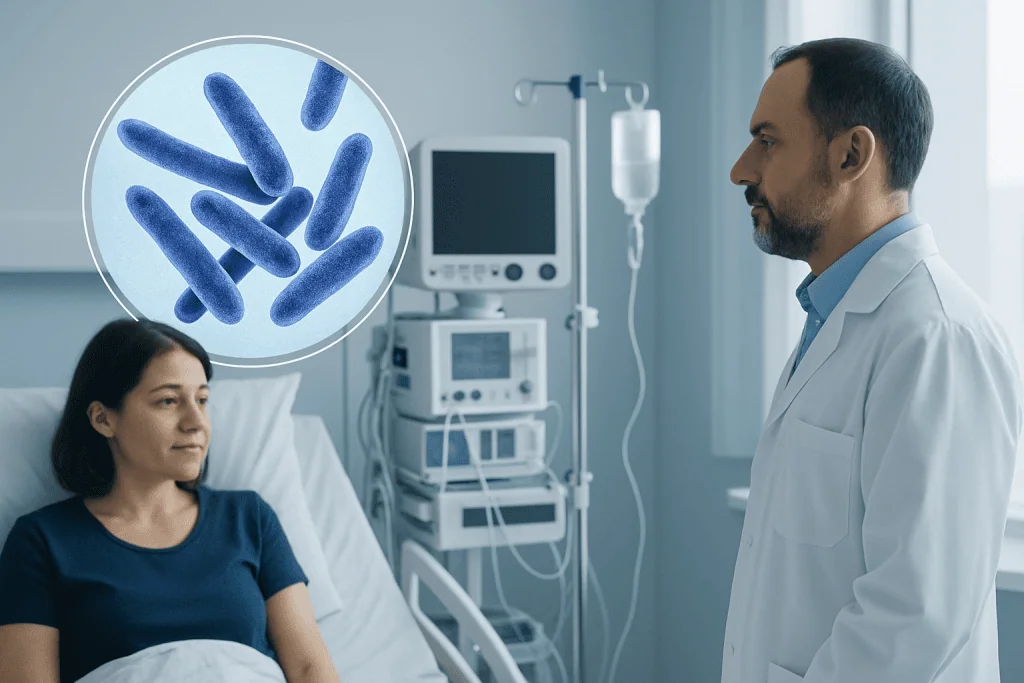
Clostridium perfringens food poisoning usually happens after eating food that contains large numbers of the bacteria. The germ forms spores that can survive cooking. If cooked meat, poultry, gravies, stews, or other prepared dishes are cooled too slowly or kept warm at unsafe temperatures, the spores can grow into bacteria that produce toxins in the intestines after the food is eaten.
Wound and tissue infections happen in a different way. The bacteria may enter the body through a deep cut, crush injury, burn, surgical wound, injection site, or an area with reduced blood flow. Once in damaged tissue, especially where oxygen levels are low, the bacterium can multiply rapidly.
Some people may also develop intestinal infection outside the usual food poisoning pattern, particularly if they are older, have chronic illness, or have recently been hospitalized. Although this is less common, it may require closer evaluation because symptoms can overlap with other gastrointestinal infections.
Symptoms: from food poisoning to serious tissue infection
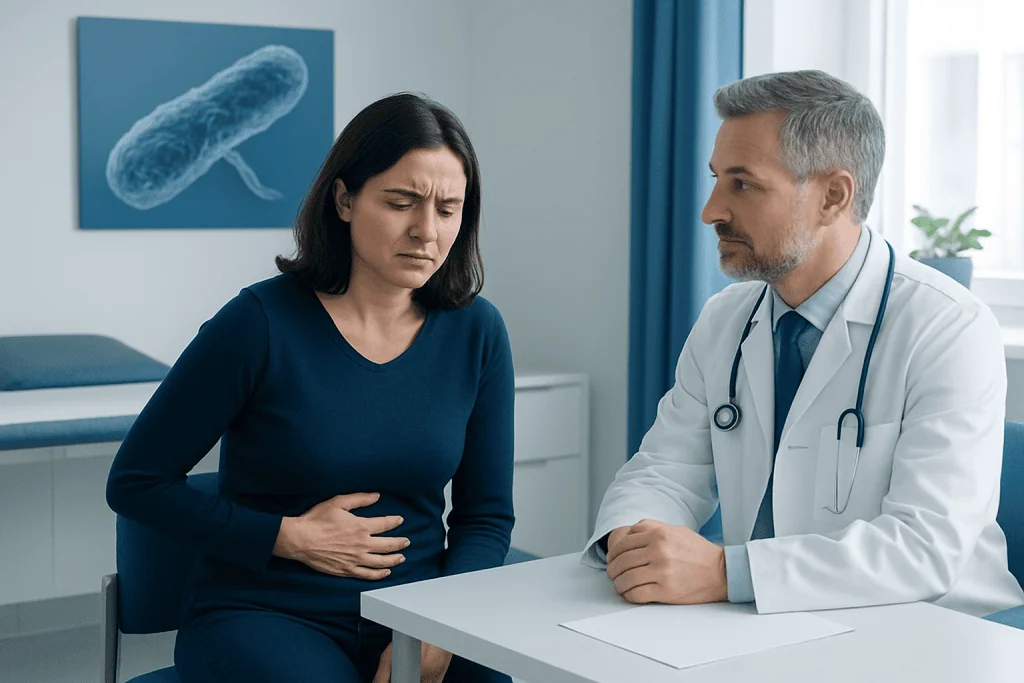
The most common illness caused by bacteria clostridium perfringens is food poisoning. Symptoms often begin about 6 to 24 hours after eating contaminated food. Typical symptoms include watery diarrhea and cramp-like abdominal pain. Nausea can occur, but vomiting and fever are less common than with some other foodborne infections.
For many people, symptoms improve within about 24 hours, although weakness and mild digestive upset may last a little longer. Because diarrhea can lead to fluid loss, it is important to rest and drink enough liquids. Young children, older adults, and people with other health conditions may become dehydrated more easily.
Rare but serious infections look very different. Severe pain around a wound, swelling, skin discoloration, foul-smelling drainage, fever, rapid heart rate, or a crackling feeling under the skin can suggest a deep tissue infection such as gas gangrene. In the bloodstream, toxins can cause serious illness quickly, so these symptoms require urgent medical attention.
- Food poisoning: diarrhea, abdominal cramps, bloating
- Less common digestive symptoms: nausea, mild fever
- Concerning wound symptoms: severe pain, redness, swelling, skin darkening, drainage
- Emergency symptoms: confusion, dizziness, low blood pressure, trouble breathing
Causes and risk factors
The bacterium itself is common, but illness usually depends on the setting. For food poisoning, the main risk factor is improper food storage after cooking. Large-volume meals prepared in advance, such as roasted meats, casseroles, soups, and gravies, are more likely to become a problem if they are not cooled or reheated correctly.
For tissue infection, risk rises when bacteria have a chance to enter deep or poorly oxygenated tissue. This may happen after trauma, surgery, bowel disease, reduced circulation, or uncontrolled diabetes. People with weakened immune systems may also be more vulnerable to severe infection, although healthy people can develop it after major injury as well.
Not every stomach illness after a meal is caused by this bacterium. Viruses, other bacteria, and noninfectious digestive conditions can cause similar symptoms. That is one reason doctors consider timing, food history, symptom pattern, and overall health before deciding whether testing is needed.
Diagnosis and medical evaluation
Many cases of C. perfringens food poisoning are diagnosed based on symptoms and exposure history rather than testing. If several people become ill after eating the same food, the cause may be suspected quickly. In mild cases that improve on their own, laboratory tests are often not necessary.
Testing may be considered if symptoms are severe, prolonged, unusual, or part of an outbreak investigation. Doctors may examine a stool sample or, in some settings, test suspected food. The goal is to confirm the cause and rule out other infections that may need a different approach.
Suspected wound or deep tissue infection is evaluated urgently. A doctor may perform a physical examination, blood tests, imaging, and sometimes tissue sampling. Rapid diagnosis is important because serious soft tissue infection can progress quickly and may need advanced diagnostic imaging as well as immediate specialist care.
Treatment options
Most people with uncomplicated food poisoning from bacteria clostridium perfringens recover with supportive care. The focus is on replacing fluids and allowing the digestive system to settle. Clear fluids, oral rehydration solutions, and a gradual return to light meals are commonly advised. Antibiotics are not usually needed for typical food poisoning caused by this bacterium.
If symptoms are severe, last longer than expected, or lead to significant dehydration, medical treatment may be needed. This can include intravenous fluids and evaluation for other causes of diarrhea. A doctor may also review medications and health conditions that could affect recovery.
Deep tissue or wound infections require urgent treatment. This may involve hospital care, intravenous antibiotics, and surgical removal of damaged tissue. In selected cases, doctors may use surgical treatment to control the infection and prevent further spread. If digestive symptoms suggest a more complex intestinal condition rather than simple food poisoning, a specialist may sometimes recommend gastroenterology evaluation to guide care.
Prevention and self-care
The best way to prevent C. perfringens food poisoning is careful food handling. Cook foods thoroughly, keep hot foods hot and cold foods cold, refrigerate leftovers promptly, and divide large portions into shallow containers so they cool more quickly. Reheat leftovers until they are steaming hot throughout before eating.
Good kitchen hygiene also matters. Clean hands, utensils, cutting boards, and surfaces help lower the risk of contamination. It is especially important to take extra care when preparing food for children, older adults, pregnant people, or anyone with a weakened immune system.
For wound prevention, prompt cleaning and medical assessment of deep or dirty injuries are important. Follow post-surgical instructions carefully and seek help if a wound becomes increasingly painful, swollen, or discolored. Near the end of a patient journey, some people may need coordinated care from surgeons, infectious disease specialists, and critical care teams. Acibadem International’s multidisciplinary specialists and JCI-accredited hospitals diagnose and treat serious infections in international patients when advanced evaluation is needed.
When to seek medical care
Medical advice is recommended if diarrhea is severe, lasts more than a couple of days, or is accompanied by signs of dehydration such as dizziness, dry mouth, very dark urine, or marked weakness. Patients should also contact a doctor if they have high fever, blood in the stool, severe abdominal pain, or symptoms after recent hospitalization or surgery.
Urgent care is especially important for suspected wound infection. Severe pain out of proportion to the appearance of the wound, rapidly spreading swelling, skin color changes, blisters, foul-smelling discharge, fever, or confusion should be treated as emergency warning signs. These symptoms may indicate a serious soft tissue infection that cannot be safely managed at home.
When in doubt, it is sensible to speak with a qualified healthcare professional. Early evaluation can clarify whether symptoms fit a brief foodborne illness or a condition that requires prompt tests, antibiotics, or surgery.
Frequently asked questions
What is bacteria clostridium perfringens?
It is a common bacterium found in the environment and in the intestines of humans and animals. It most often causes food poisoning, but in some cases it can also cause serious wound or tissue infections.
How quickly do symptoms start after eating contaminated food?
Symptoms usually begin within about 6 to 24 hours after eating contaminated food. The most common symptoms are abdominal cramps and diarrhea.
How long does C. perfringens food poisoning last?
Many people improve within 24 hours, although mild weakness or digestive upset can last a little longer. If symptoms are severe or continue beyond the expected time, a doctor should assess the person.
Do antibiotics help with Clostridium perfringens food poisoning?
Typical food poisoning caused by this bacterium usually does not need antibiotics. Treatment is mainly supportive, with rest and fluid replacement, unless a doctor suspects a more serious infection.
What foods are commonly linked to this infection?
Cooked meats, poultry, gravies, stews, soups, and dishes prepared in large amounts are commonly involved when they are not cooled or reheated safely. The risk rises when food stays too long in the temperature range that allows bacteria to multiply.
Can Clostridium perfringens be dangerous?
Yes, although the common food-poisoning form is often mild and short-lived. Rare wound and tissue infections can become serious very quickly and need urgent treatment.
When should someone go to the doctor?
A doctor should be consulted for dehydration, severe abdominal pain, high fever, blood in the stool, or symptoms that are not improving. Immediate emergency care is needed for severe wound pain, swelling, skin discoloration, foul-smelling drainage, or confusion.
This article is for general information only and is not a substitute for professional medical advice. Please consult a qualified doctor about your individual situation.
Persistent digestive symptoms? Get evaluated in Turkey
JCI-accredited · board-certified surgeons · reply within 24h
Add us as a Preferred Source to see more of our trusted health content across Google Search, AI Overviews and Discover.
Check your numbers in seconds
BMI, calories, due date, blood pressure and 30+ more clinical calculators — free, instant, doctor-reviewed ranges.

More from the Health Library

Cacao: A Complete Medical Overview

Levocarnitine: A Complete Medical Overview

Rheumatoid Nodules: A Complete Medical Overview

Straight Leg Raises: What Patients Need to Know

Parotid Gland: What Patients Need to Know

Vampire Facial: An Evidence-Based Guide for Patients
Infectious Diseases & Clinical Microbiology Specialists at Acibadem
Dr. Nevin Sarıgüzel
Infectious Diseases & Clinical Microbiology
Dr. Rehile Zengin
Infectious Diseases & Clinical Microbiology
Dr. Sedef Başgönül
Infectious Diseases & Clinical Microbiology
Dr. Semra Kavas
Infectious Diseases & Clinical Microbiology