Phytophotodermatitis: Diagnosis, Outlook, and Modern Treatment Approaches

Phytophotodermatitis is a phototoxic skin reaction caused by plant chemicals plus sun exposure. It often appears as irregular red patches, blisters, or drip-like streaks on sun-exposed skin.
Key Takeaways
- Phytophotodermatitis is a phototoxic skin reaction caused by plant chemicals plus sun exposure.
- It often appears as irregular red patches, blisters, or drip-like streaks on sun-exposed skin.
- The condition can be mistaken for burns, allergic rashes, or infection, so medical history is important.
- Treatment usually focuses on cooling the skin, reducing inflammation, protecting from sunlight, and preventing infection.
- Most people recover fully, but post-inflammatory darkening of the skin may persist for weeks or months.
- Avoiding contact with trigger plants and washing exposed skin promptly can reduce risk.
Phytophotodermatitis is a skin reaction that happens when certain plant substances touch the skin and are then activated by sunlight, especially ultraviolet A (UVA) rays. It is not contagious, and with accurate diagnosis, skin protection, and supportive care, most cases improve well, although discoloration can last longer than the initial rash.
Overview
Phytophotodermatitis is a non-infectious skin reaction that develops when the skin comes into contact with light-sensitizing chemicals found in certain plants or fruits and is then exposed to sunlight. The main trigger is a group of plant compounds called furocoumarins, which become activated by ultraviolet A light. This causes direct skin injury rather than an allergy.
The reaction often surprises people because it may begin hours after outdoor activity and can resemble a burn or rash. Common triggers include lime, lemon, celery, parsley, parsnip, fig, and some wild plants. A person may notice marks after gardening, preparing food, making drinks outdoors, or spending time in sunny weather after handling plant materials.
Unlike many common rashes, phytophotodermatitis often follows the exact pattern of contact. That means the skin changes may look like splashes, fingerprints, streaks, handprints, or drips. This distinctive shape can help clinicians recognize the condition.
In many cases, the initial inflammation settles within days to weeks. However, lingering brown or gray discoloration, called post-inflammatory hyperpigmentation, may remain for longer. When the diagnosis is uncertain, a dermatologist may help distinguish it from other forms of dermatitis and sun-related skin injury.
How It Looks and Feels

Symptoms usually begin within 24 hours after contact with a trigger plant and sun exposure, although timing can vary. Early signs often include redness, tenderness, a burning sensation, and swelling. In stronger reactions, blisters or large fluid-filled areas can form, making the skin look similar to a superficial burn.
The shape of the rash is often one of the strongest clues. Instead of a uniform patch, phytophotodermatitis may create irregular lines, droplets, or smudged areas where juice, sap, or crushed plant material touched the skin. Hands, forearms, legs, and feet are common sites because they are frequently exposed during food preparation, walking outdoors, or gardening.
After the redness settles, the affected skin may darken. This color change can be more noticeable in people with darker skin tones, but it can happen in any skin type. The dark marks are not dangerous, yet they may be cosmetically distressing and can take time to fade.
Itching may occur, but pain or burning is often more prominent than itch. If there is severe swelling, extensive blistering, or signs of infection such as increasing warmth, pus, or fever, medical assessment is important.
Causes and Risk Factors
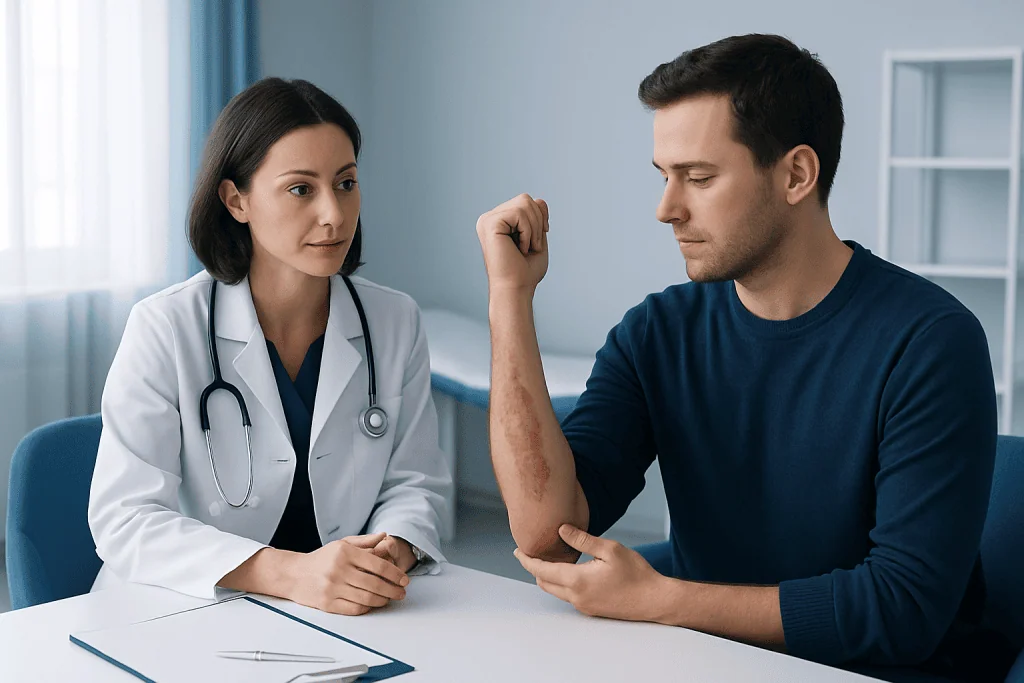
Phytophotodermatitis occurs when three factors come together: a photosensitizing plant chemical, skin contact, and enough sunlight exposure to activate the reaction. Furocoumarins are found in several plants, especially citrus fruits and members of the carrot family. Even a small amount of juice or sap on the skin can trigger a reaction if the skin is then exposed to strong sunlight.
Common examples include handling limes or lemons at the beach, bartending outdoors, gardening with celery or parsnip, cutting figs, or brushing against wild plants such as giant hogweed. Children may also develop it after playing outdoors with plant materials or fruit. Water, sweat, and heat may spread the plant substance over the skin and increase exposure.
The reaction is phototoxic, not an immune allergy. This means it can happen to anyone if the exposure is sufficient, even without previous sensitivity. Higher risk may be seen during summer, in sunny climates, during outdoor work, or when the skin is damp and uncovered.
Several other skin conditions can look similar, including sunburn, contact dermatitis, eczema flares, and some infections. If a person has repeated or unexplained reactions, clinicians may also consider other causes of photosensitivity and related skin conditions.
How Doctors Diagnose Phytophotodermatitis
Diagnosis is usually clinical, meaning it is based on the appearance of the rash and a careful history. A doctor will ask about recent outdoor activity, gardening, hiking, food preparation, fruit handling, and contact with plant sap or juice. The timing of symptoms after sun exposure is also very helpful.
The pattern on the skin often points strongly toward the diagnosis. Drip lines, hand-shaped marks, splash-like areas, or sharply outlined patches on sun-exposed skin are typical. Doctors also look for blistering, tenderness, and later pigmentation changes that fit the expected course.
Tests are not always needed. However, a clinician may use additional evaluation if the presentation is unusual, severe, or not improving as expected. This helps rule out burns, allergic contact dermatitis, bacterial infection, autoimmune photosensitivity, or other disorders. In selected cases, assessment by a dermatology specialist may be recommended.
Good diagnosis matters because the condition is often misunderstood. Mistaking it for infection may lead to unnecessary antibiotics, while missing the plant-and-sun trigger can result in repeated episodes. A clear explanation can also reassure patients and families that the condition is not contagious.
Modern Treatment Approaches and Supportive Care
Treatment depends on how severe the reaction is. Mild cases often improve with cool compresses, gentle skin care, avoiding further sun exposure, and keeping the area clean. A doctor may recommend a topical anti-inflammatory treatment for painful redness and swelling. If blistering is extensive or the reaction is more severe, prescription treatment may be needed.
The skin should be protected while it heals. Friction, harsh cleansers, and picking at blisters can worsen irritation or increase the chance of secondary infection. If blisters break, careful wound care may be advised to support healing. In some cases, doctors may suggest dressings or other burn-like supportive measures.
Pain control is sometimes part of treatment, especially when the affected area is large or sensitive. After the active inflammation improves, attention often turns to reducing persistent pigmentation. Fading of dark marks takes time, and careful sun protection is one of the most important steps. For lingering discoloration or uncertain rashes, a specialist in skin diseases treatment can guide management.
Modern care also emphasizes accurate recognition and prevention of repeat exposure. Instead of treating it as a simple rash alone, clinicians look at the whole pattern: trigger identification, skin barrier support, sun avoidance during healing, and follow-up when recovery is slower than expected. Near the end of the care pathway, if expert review is needed, Acibadem International’s multidisciplinary specialists at JCI-accredited hospitals diagnose and treat this condition for international patients.
Outlook and Recovery
The outlook for phytophotodermatitis is generally good. Most people recover without lasting damage once the trigger is removed and the skin is protected. The red, tender, or blistering stage usually settles over days to a few weeks, depending on the intensity of the reaction.
The most persistent feature is often hyperpigmentation. These brown, slate-gray, or uneven darker patches may remain after the visible inflammation has healed. Although this can be frustrating, the color usually fades gradually over time. In some people, especially after stronger reactions, it may last for several months.
Scarring is less common but may happen if there is deep skin injury, significant blistering, or secondary infection. Prompt care, avoiding trauma to the area, and protecting healing skin from the sun can help lower this risk. If the diagnosis was delayed, a doctor may review whether another skin disorder is contributing.
Recovery can also have an emotional side, especially if the marks are on visible areas such as the hands or legs. Reassurance is important: the condition is not contagious, and long-term outcomes are usually favorable. If pigmentation persists or causes concern, specialist follow-up can help set realistic expectations and discuss options for ongoing skin care.
Prevention and Self-care
Prevention centers on recognizing common triggers and reducing plant-sun exposure combinations. After handling limes, lemons, celery, parsley, figs, or similar plants, washing the skin promptly with soap and water may help remove photosensitizing residues. This is especially useful before going outdoors in bright sunlight.
Protective clothing can make a meaningful difference. Gloves for gardening or food preparation, long sleeves, and covering exposed skin during outdoor work may reduce direct contact and UV exposure. Broad-spectrum sunscreen is helpful for general sun protection, but it should not be relied on as the only measure if plant chemicals remain on the skin.
At home, self-care for a mild reaction includes cooling the area, avoiding additional sun, and using only gentle products unless a clinician recommends treatment. Fragranced or irritating products should be avoided on inflamed skin. If the diagnosis is uncertain, self-treatment should not delay professional evaluation.
People who enjoy gardening, hiking, outdoor cooking, or beach activities may benefit from learning which plants are common triggers. Awareness is often the most effective preventive tool because the condition is usually avoidable once the pattern is recognized.
When to Seek Medical Care
Medical care should be sought if the reaction is severe, very painful, widespread, or involves significant blistering. A doctor should also evaluate symptoms affecting the face, eyes, hands, genitals, or large areas of skin, since these locations may need closer attention.
Assessment is important if there are signs of infection, such as spreading redness, increasing warmth, pus, fever, or worsening pain after the first few days. Care is also wise if the diagnosis is not clear, if the rash keeps coming back, or if the person may have another sun-sensitivity disorder.
Children, older adults, and people with chronic skin disease may benefit from earlier medical review. Clinicians can help confirm the diagnosis, advise on wound care, and decide whether stronger anti-inflammatory treatment or specialist referral is needed. When symptoms are complex or persistent, evaluation through specialist dermatology care may be appropriate.
Frequently asked questions
What is phytophotodermatitis in simple terms?
Phytophotodermatitis is a skin reaction caused by certain plant or fruit chemicals mixing with sunlight on the skin. It is not an allergy and not an infection. The result can look like a burn, with redness, pain, blisters, and later dark marks.
How is phytophotodermatitis different from a sunburn?
Sunburn usually affects areas exposed evenly to the sun, while phytophotodermatitis often follows unusual patterns such as drips, streaks, or handprints. It happens only where plant chemicals touched the skin before sun exposure. The delayed darkening afterward is also very typical.
Which plants most often cause phytophotodermatitis?
Common triggers include limes, lemons, celery, parsley, parsnip, and figs. Some wild plants, including giant hogweed, can also cause strong reactions. The risk is higher when the skin is exposed to bright sunlight soon after contact.
How long does phytophotodermatitis last?
The inflamed stage often improves within days to a few weeks, depending on severity. However, the leftover skin discoloration may persist longer, sometimes for weeks or months. Sun protection can help prevent the darkening from becoming more noticeable.
Can phytophotodermatitis spread from person to person?
No, it is not contagious. It does not spread through touching another person. It only occurs when the skin itself has been exposed to a triggering plant chemical and then to sunlight.
Should blisters from phytophotodermatitis be popped?
Blisters should generally be left intact unless a doctor advises otherwise. Opening them at home can increase irritation and raise the risk of infection. If blisters are large, painful, or broken, medical guidance is recommended.
When should someone worry about phytophotodermatitis?
It is sensible to seek medical advice if the rash is very painful, extensive, blistering heavily, or affecting sensitive areas such as the face or eyes. Medical review is also important if there are signs of infection or if the diagnosis is uncertain. Prompt assessment can help confirm the cause and guide safe treatment.
References
- American Academy of Dermatology
- National Health Service
- Merck Manual Professional Edition
- DermNet
- Mayo Clinic
This article is for general information only and is not a substitute for professional medical advice. Please consult a qualified doctor about your individual situation.
Explore treatments in Turkey — costs, top hospitals & a free quote
JCI-accredited · board-certified surgeons · reply within 24h
Add us as a Preferred Source to see more of our trusted health content across Google Search, AI Overviews and Discover.