Twitching in Infants While Sleeping: What Patients Need to Know

Brief twitching during sleep in infants is often normal and may reflect an immature nervous system. Benign neonatal sleep myoclonus usually happens only while the baby is asleep and stops when the baby wakes.
Key Takeaways
- Brief twitching during sleep in infants is often normal and may reflect an immature nervous system.
- Benign neonatal sleep myoclonus usually happens only while the baby is asleep and stops when the baby wakes.
- Movements that also happen during wakefulness, are prolonged, or come with color change or breathing problems should be assessed promptly.
- Doctors may diagnose the cause through history, video recordings, examination, and sometimes tests such as EEG.
- Parents should avoid trying to restrain movements and should seek guidance if they are unsure.
Twitching in infants while sleeping is commonly caused by normal immature sleep-related movements, including benign neonatal sleep myoclonus. In many babies, these brief jerks happen only during sleep and stop on their own, but certain features can suggest a need for medical evaluation.
Overview
Twitching in infants while sleeping is often harmless. Many newborns and young infants have brief jerks, twitches, or startles during sleep because their brain and nervous system are still developing. One well-known cause is benign neonatal sleep myoclonus, a condition in which repetitive jerking occurs only during sleep and usually resolves with time.
For parents, these movements can be surprising and sometimes frightening, especially when they involve the arms, legs, or whole body. In most cases, the baby otherwise looks well, feeds normally, and behaves normally when awake. The pattern of the movement matters more than a single episode.
The main question is whether the movements are part of normal sleep behavior or whether they could represent seizures or another medical problem. A careful description of when the twitching happens, how long it lasts, and whether it stops when the infant wakes can help guide the next steps.
What Sleep Twitching Looks Like in Babies
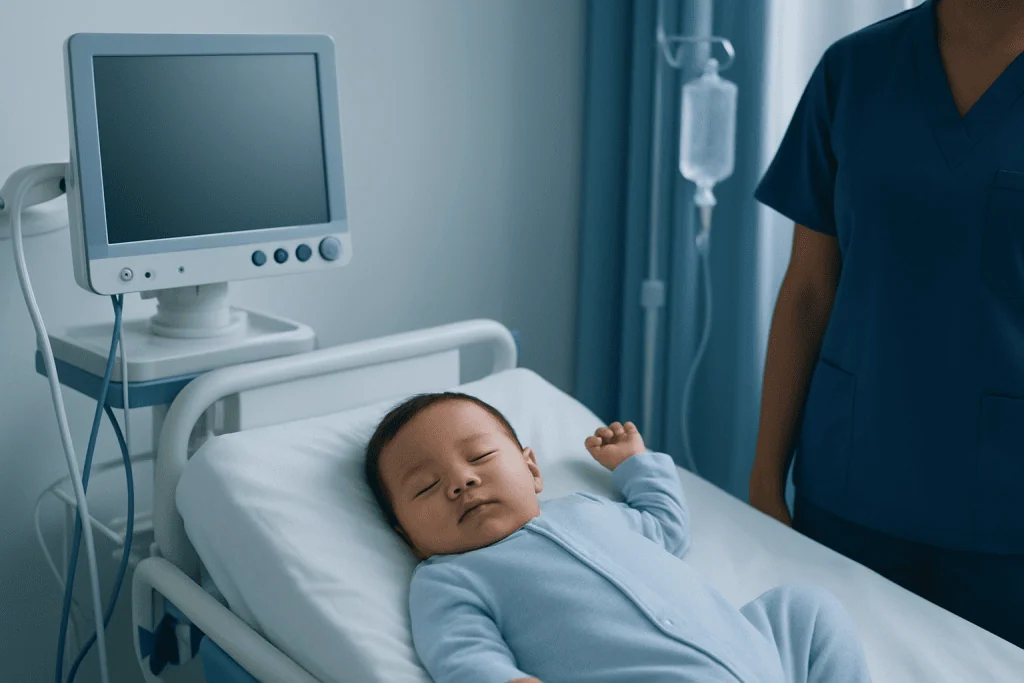
Infant sleep twitching can appear as small jerks of the hands, feet, face, or shoulders, or as repeated rhythmic movements of one limb or several limbs. These episodes may last a few seconds or come in clusters. They often occur during drowsiness or sleep, especially in younger babies.
Normal infant sleep also includes startle-like movements, stretching, grimacing, irregular breathing pauses, and brief body jerks. Because newborn sleep is active and sometimes noisy, many behaviors that look unusual are still within the range of normal development.
Benign neonatal sleep myoclonus usually has a few helpful clues:
- It happens during sleep, not when the baby is fully awake.
- It often stops when the infant is awakened.
- The baby is otherwise well between episodes.
- There is no ongoing change in alertness after the episode.
Video recordings taken safely by a caregiver can be very useful. They help a doctor see the exact movement pattern and may prevent unnecessary worry or testing.
Common Causes and Risk Factors
The most common explanation for twitching in infants while sleeping is the normal immaturity of the nervous system. In early life, sleep patterns are not yet fully organized, and sudden jerks can happen as the brain shifts between sleep states. Benign neonatal sleep myoclonus is part of this group and is not the same as epilepsy.
Another common movement is the Moro, or startle, reflex. This reflex can make a baby suddenly throw out the arms and then bring them back in, often in response to sound, movement, or the sensation of falling. Although this is different from repetitive twitching, parents may describe both as “jerking” during sleep.
Less commonly, sleep-related twitching may need further evaluation because it can resemble seizures. Conditions that may be considered include epileptic seizures, metabolic disturbances such as low blood sugar or low calcium, infection, medication or substance exposure, or brain injury. Risk may be higher in babies born prematurely, those with difficult deliveries, those who are unwell, or infants with abnormal development or feeding problems.
Importantly, a movement disorder cannot be diagnosed from appearance alone in every case. The child’s age, medical history, birth history, growth, and neurological examination all help determine whether the episodes fit a benign pattern or require more investigation.
How Doctors Tell the Difference
Doctors usually begin with a detailed history. They ask when the twitching started, whether it happens only during sleep, whether waking the baby stops the movements, how long episodes last, and whether there are associated changes such as eye deviation, lip smacking, stiffness, bluish color, breathing difficulty, poor feeding, or unusual sleepiness.
A physical and neurological examination follows. If the baby appears healthy, is developing normally, and the movements are typical of benign sleep myoclonus, testing may be limited or not needed. In other situations, especially if the events are unclear or concerning, a doctor may recommend further evaluation.
Tests can include blood work to check glucose, electrolytes, calcium, or signs of infection; neuroimaging in selected cases; or an electroencephalogram. An EEG test may help assess whether abnormal brain electrical activity is present. In some infants, additional evaluation by a pediatric neurology team is appropriate if the movements are frequent, atypical, or associated with developmental concerns.
Parents should know that seizures and benign sleep myoclonus can look similar to the untrained eye. That is why clinicians focus on the full pattern rather than one sign alone. Safe home video often provides valuable information that supports a clear diagnosis.
Treatment and Monitoring
If the diagnosis is benign neonatal sleep myoclonus or another normal sleep-related movement, treatment is usually not needed. Reassurance, observation, and routine follow-up are often enough. These movements typically improve as the infant’s nervous system matures.
Parents should not try to hold the limbs down forcefully during an episode. Restraining the movement can be distressing and is not helpful. Instead, they can observe the pattern, note how long it lasts, and see whether the twitching stops when the baby wakes.
If testing suggests another cause, treatment depends on the underlying problem. For example, doctors may address low blood sugar, infection, electrolyte imbalance, reflux-like arching that is being confused with jerking, or true seizures. When seizure disorders are suspected or confirmed, care may involve pediatric neurology and, in selected cases, further assessment with neurological rehabilitation planning if there are broader developmental needs.
In specialized centers, infants with complex neurological symptoms may also be evaluated with advanced brain and nervous system services, including neurology care. Near the end of the diagnostic journey, some families seek support in international centers; Acibadem International’s multidisciplinary specialists in JCI-accredited hospitals evaluate and treat children with neurological symptoms when appropriate.
What Parents Can Do at Home
Simple observation is often the most useful first step. Caregivers can note the time of day, whether the baby was asleep or waking, how the movements looked, and how long they lasted. Recording a short video, if it can be done safely without disturbing the infant, may help the doctor identify the event more quickly.
Safe sleep remains important. Babies should be placed on their backs on a firm, flat sleep surface without loose bedding, pillows, or soft toys. Good sleep habits will not necessarily stop twitching, but they support healthy rest and reduce other sleep-related risks.
Parents should avoid home remedies, over-the-counter sleep products, or supplements unless advised by a doctor. It is also best not to assume that every movement is a seizure or, on the other hand, that every episode is normal. If the pattern changes, becomes more frequent, or begins happening while the baby is awake, medical advice is sensible.
Regular pediatric checkups are valuable because growth, reflexes, tone, feeding, and development can be reviewed over time. If a child also has unusual stiffness, poor eye contact, delayed milestones, or other neurological signs, the doctor may consider whether another condition beyond simple sleep twitching is present.
When to Seek Medical Care
Medical review is appropriate if twitching in infants while sleeping is new, frequent, persistent, or difficult to distinguish from seizures. Parents should contact a doctor promptly if movements continue when the baby is fully awake, do not stop with arousal, or are followed by unusual sleepiness, poor responsiveness, or feeding difficulty.
Urgent care is needed if episodes are associated with breathing problems, bluish or pale color change, fever in a young infant, repeated vomiting, limpness, significant stiffness, or reduced consciousness. These signs do not always mean a serious condition, but they require timely assessment.
It is also wise to seek advice if the baby has known medical risks, such as prematurity, recent illness, abnormal birth history, head injury, or concerns about development. In more complex cases, doctors may explore related neurological conditions and sleep disorders, and some children may benefit from specialist review in areas such as movement disorders clinics for older age groups or dedicated pediatric neurology pathways, depending on the broader picture.
Frequently asked questions
Is twitching in infants while sleeping normal?
Often, yes. Many infants have brief jerks or twitches during sleep because their nervous system is still maturing. If the baby is otherwise well and the movements happen only during sleep, they are often benign, but a doctor should review anything unusual or persistent.
What is benign neonatal sleep myoclonus?
Benign neonatal sleep myoclonus is a harmless condition in which a newborn or young infant has repeated jerking movements during sleep. The episodes usually stop when the baby wakes and tend to resolve as the child grows. It is different from epilepsy, although it can look similar to caregivers.
How can parents tell the difference between sleep twitching and a seizure?
A helpful clue is whether the movements happen only during sleep and stop with waking. Seizures may occur during wakefulness, may not stop when the infant is aroused, and can be linked with color change, eye deviation, breathing difficulty, or altered responsiveness. Because the difference is not always obvious, a medical evaluation is important if there is any doubt.
Should parents wake the baby during an episode?
If it can be done gently and safely, waking the baby may help show whether the twitching stops, which can provide useful information for the doctor. Parents should not shake the infant or try to forcefully stop the movements. If the baby seems unwell in any way, prompt medical care is more important than testing this at home.
Do all babies with sleep twitching need tests such as EEG?
No. If the history and examination strongly suggest a benign sleep-related movement, testing may not be necessary. Doctors are more likely to order tests when episodes are atypical, happen while awake, or are associated with other concerning symptoms.
When should a parent seek urgent medical attention?
Urgent assessment is needed if the baby has trouble breathing, turns blue or very pale, has fever, becomes difficult to wake, feeds poorly, or has prolonged or repeated episodes. Care is also needed if movements happen when the baby is awake or if the child seems different from usual afterward.
This article is for general information only and is not a substitute for professional medical advice. Please consult a qualified doctor about your individual situation.
Explore treatments in Turkey — costs, top hospitals & a free quote
JCI-accredited · board-certified surgeons · reply within 24h
Add us as a Preferred Source to see more of our trusted health content across Google Search, AI Overviews and Discover.

More from the Health Library

Serum — Explained by Medical Evidence, Not Myths

Snri’s — Explained by Medical Evidence, Not Myths

Fructosamine Test: An Evidence-Based Guide for Patients

Doptelet: A Complete Medical Overview

Primidone — Explained by Medical Evidence, Not Myths