Primary Progressive Aphasia: An Evidence-Based Guide for Patients

Primary progressive aphasia mainly affects language first, not all thinking abilities at the beginning. There are several subtypes, and each can affect communication in a different way.
Key Takeaways
- Primary progressive aphasia mainly affects language first, not all thinking abilities at the beginning.
- There are several subtypes, and each can affect communication in a different way.
- Diagnosis usually involves neurological assessment, language testing, and brain imaging.
- Treatment focuses on speech-language therapy, symptom support, and practical communication strategies.
- Early evaluation helps clarify the cause and supports care planning for the patient and family.
Primary progressive aphasia is a neurological condition that slowly affects speaking, understanding, reading, or writing because of degeneration in language-related areas of the brain. It is not a stroke, and while there is no cure, careful diagnosis, speech therapy, and supportive care can help people communicate and plan for the future.
What primary progressive aphasia is
Primary progressive aphasia is a disorder in which language abilities gradually become more difficult over time. A person may first notice trouble finding words, forming sentences, understanding speech, reading, or writing. This happens because nerve cells in parts of the brain responsible for language slowly degenerate.
Unlike aphasia caused by a stroke or head injury, primary progressive aphasia develops gradually and is part of a neurodegenerative disease process. In the early stages, language problems are the main feature, while memory, movement, or daily functioning may be less affected. Over time, however, additional cognitive or behavioral changes can appear depending on the underlying disease.
Primary progressive aphasia is not a single disease but a clinical syndrome. Specialists often classify it into subtypes based on the pattern of language change. This matters because the symptoms, expected course, and sometimes the underlying brain pathology can differ from one person to another.
How symptoms may appear in daily life
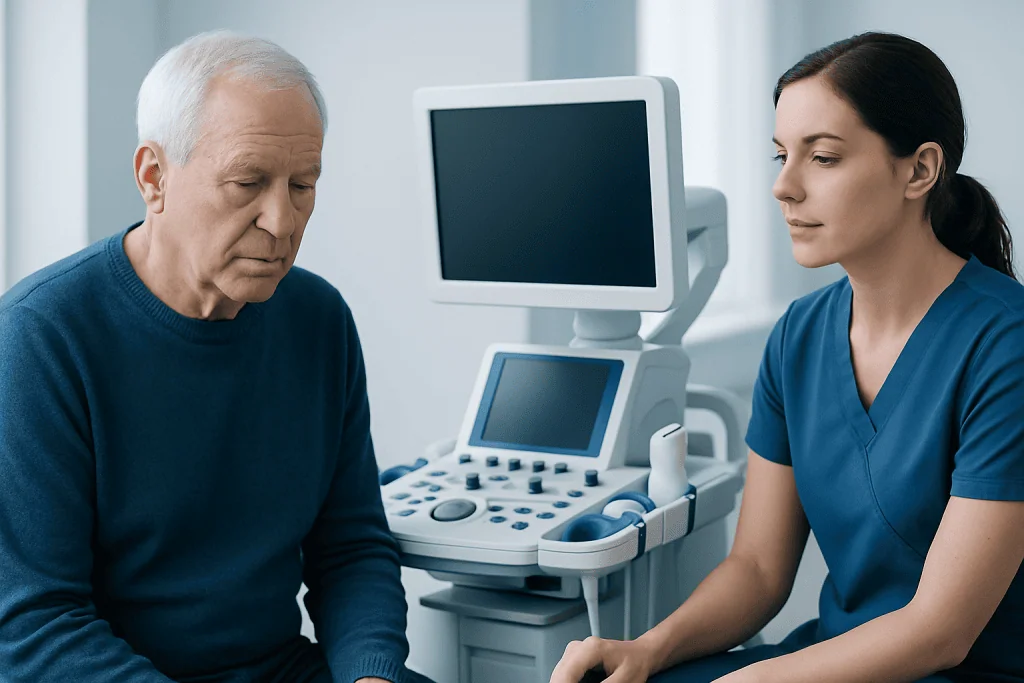
The symptoms of primary progressive aphasia often begin subtly. A person may pause often while speaking, substitute incorrect words, mispronounce familiar terms, or have increasing difficulty following conversation. Family members may first think the changes are related to stress, aging, hearing issues, or distraction, especially if the person otherwise seems well.
The exact symptoms depend on which language networks are most affected. Some people mainly struggle to retrieve words or name objects. Others have difficulty understanding the meaning of words, especially less common ones. Another group may speak slowly and with effort because planning the sounds and grammar of speech becomes harder.
Common language-related symptoms can include:
- Frequent word-finding pauses
- Speaking in short or simplified sentences
- Using the wrong word or a vague substitute such as “thing”
- Difficulty understanding complex speech
- Trouble reading, spelling, or writing messages
- Changes in pronunciation or speech fluency
As the condition progresses, communication at work, at home, and in social settings may become more tiring. Emotional reactions are also common. Many people feel frustrated because they know what they want to say but cannot express it as clearly as before. Supportive communication strategies can make a meaningful difference.
Subtypes, causes, and risk factors

Specialists usually describe three main subtypes of primary progressive aphasia: nonfluent/agrammatic, semantic, and logopenic. In the nonfluent/agrammatic form, speech may become effortful, slow, or grammatically incomplete. In the semantic form, understanding the meaning of words and recognizing objects or faces may gradually become more difficult. In the logopenic form, word-finding pauses and trouble repeating phrases are often more prominent.
The condition is caused by progressive degeneration in language-related areas of the brain, typically in the left hemisphere. Different protein abnormalities may underlie this degeneration, including forms associated with frontotemporal lobar degeneration or Alzheimer’s disease. Because of this, primary progressive aphasia overlaps with broader categories such as Alzheimer’s disease and frontotemporal dementia in some patients.
In most cases, the exact reason why the disease starts is not fully understood. Age is a risk factor, and symptoms often begin in mid to later adulthood. Some people have a family history of neurodegenerative disease, but many do not. Primary progressive aphasia is not usually caused by lifestyle choices, and it is not considered contagious.
Although risk factors can be discussed, diagnosis should not be based on symptoms alone. Similar communication problems may be seen with hearing loss, depression, stroke, brain tumors, medication effects, or other neurological disorders. That is why a structured medical assessment is important.
How doctors diagnose primary progressive aphasia
Diagnosis begins with a detailed medical history and a description of how language problems started and changed over time. Doctors usually ask both the patient and a close family member about speaking, comprehension, reading, writing, memory, behavior, and daily functioning. A neurological examination helps identify whether the problem appears limited to language or is part of a broader neurological condition.
Formal language and cognitive testing are often central to diagnosis. A speech-language pathologist or neuropsychologist may assess naming, sentence formation, grammar, repetition, understanding, reading, spelling, and memory. These tests help distinguish primary progressive aphasia from other causes of communication difficulty and may also suggest the likely subtype.
Brain imaging is commonly used to support the diagnosis and rule out other conditions. MRI can show patterns of atrophy in language areas, while other imaging methods may provide additional information when needed. In selected cases, clinicians may recommend laboratory tests, hearing evaluation, or biomarker studies to better understand whether the pattern fits a disease process such as Alzheimer’s.
A careful diagnosis matters for practical reasons. It guides treatment, helps the family understand what changes may come next, and supports planning for work, communication needs, and long-term care. In some centers, a multidisciplinary team may include neurology, speech-language therapy, neuropsychology, and advanced MRI scanning as part of the evaluation.
Treatment and support options
There is currently no cure that can stop or reverse primary progressive aphasia. Treatment is aimed at preserving communication for as long as possible, managing related symptoms, and supporting quality of life. The most important non-drug treatment is usually speech-language therapy, tailored to the person’s subtype, strengths, daily needs, and stage of disease.
Speech-language therapy may focus on word-retrieval practice, communication scripts, compensatory techniques, and tools such as notebooks, picture supports, or digital devices. Therapy can also train family members in communication methods, such as giving extra time, using short clear sentences, confirming meaning, and reducing background noise during conversations. For some people, these practical changes improve daily interactions more than expected.
Medication may sometimes be used to manage associated symptoms rather than the language disorder itself. For example, if anxiety, depression, sleep disturbance, or behavioral changes develop, a physician may discuss treatment options. If the underlying pattern suggests Alzheimer-related disease, doctors may consider whether therapies commonly used in that setting are appropriate, but this decision depends on the individual case.
As symptoms advance, some people benefit from broader rehabilitation and specialist care. Depending on needs, this may involve cognitive assessment, support for swallowing or movement changes, and planning around independence and safety. In appropriate settings, teams may coordinate neurology care with speech and language therapy to create a personalized management plan.
Living with the condition: self-care and communication strategies
Daily life with primary progressive aphasia can be demanding, but practical steps can reduce frustration. Many people do better when conversations happen in a quiet setting with one speaker at a time. Keeping routines consistent and discussing important topics when the person is rested can also help. It is often useful to allow extra time without interrupting or finishing sentences too quickly.
Families can support communication by asking yes-or-no questions when appropriate, writing key words down, using gestures, and confirming what was understood. Phones, tablets, reminder apps, notebooks, and picture-based tools may become increasingly valuable. Saving frequently used phrases, names, and contacts can support independence.
Self-care is not limited to communication. Regular physical activity, good sleep, management of hearing or vision problems, social connection, and treatment of mood symptoms can all support general well-being. If work responsibilities, driving, finances, or legal planning may be affected, early discussion is often less stressful than waiting for a crisis.
Near the later stages of care, families may need more structured support. A multidisciplinary approach can help address changing needs over time. Acibadem International’s multidisciplinary specialists in JCI-accredited hospitals diagnose and treat neurological conditions for international patients when further evaluation or ongoing care coordination is needed.
When to seek medical care
Medical attention is important if a person develops persistent or worsening language problems, especially when symptoms interfere with work, relationships, or daily tasks. Early assessment helps distinguish primary progressive aphasia from potentially treatable conditions such as hearing problems, medication effects, vitamin deficiencies, or other neurological disorders.
Urgent medical care is needed if language difficulty appears suddenly rather than gradually. Sudden trouble speaking, understanding speech, facial drooping, weakness, severe confusion, or sudden vision changes may suggest a stroke or another emergency and should be evaluated immediately.
It is also a good idea to seek review if new symptoms appear, such as major memory decline, significant personality or behavior change, swallowing problems, falls, or safety concerns at home. Ongoing follow-up allows the care plan to be adjusted as needs change and can connect families with supportive services.
Frequently asked questions
Is primary progressive aphasia the same as dementia?
Primary progressive aphasia is a type of neurodegenerative syndrome in which language decline is the main early problem. It can be part of a broader dementia process over time, but at the beginning other thinking skills may be relatively preserved. The relationship depends on the underlying disease and the stage of illness.
How is primary progressive aphasia different from aphasia after a stroke?
Aphasia after a stroke usually starts suddenly because blood flow to part of the brain is interrupted. Primary progressive aphasia develops gradually over months or years because of ongoing degeneration in language-related brain regions. This difference in onset is one of the most important clues during diagnosis.
Can primary progressive aphasia be cured?
There is no cure at present that can reverse or stop the disease completely. However, speech-language therapy, communication aids, and supportive medical care can help maintain function and reduce frustration. Early diagnosis often helps people and families plan more effectively.
Does primary progressive aphasia always affect memory first?
No. In primary progressive aphasia, language problems usually appear before major memory changes. Some people may later develop memory or behavioral symptoms, especially depending on the underlying neurodegenerative cause.
What kind of doctor evaluates primary progressive aphasia?
Evaluation is often led by a neurologist, ideally one with experience in cognitive or behavioral neurology. Speech-language pathologists and neuropsychologists also play an important role in assessing language and related thinking skills. Brain imaging and other tests may be used to clarify the diagnosis.
Can people with primary progressive aphasia still live independently?
Many people can remain independent in the early stages, especially with routines, written supports, and communication strategies. Independence may change over time as language and other abilities are affected. Regular follow-up helps identify when extra support is needed for safety and daily life.
References
- National Institute on Aging
- National Institute of Neurological Disorders and Stroke
- Mayo Clinic
- Cleveland Clinic
- American Speech-Language-Hearing Association
This article is for general information only and is not a substitute for professional medical advice. Please consult a qualified doctor about your individual situation.
Aphasia in Turkey — costs, top hospitals & a free quote
JCI-accredited · board-certified surgeons · reply within 24h
Add us as a Preferred Source to see more of our trusted health content across Google Search, AI Overviews and Discover.