Is Skin Cancer Deadly? Here Is What the Evidence Says

Most skin cancers are not deadly when they are found and treated early. Melanoma is the skin cancer most associated with death, but prompt treatment greatly improves outcomes.
Key Takeaways
- Most skin cancers are not deadly when they are found and treated early.
- Melanoma is the skin cancer most associated with death, but prompt treatment greatly improves outcomes.
- Basal cell carcinoma rarely spreads, while squamous cell carcinoma has a higher chance of becoming serious if neglected.
- Warning signs include a changing mole, a sore that does not heal, bleeding, crusting, or a rapidly growing spot.
- Doctors diagnose skin cancer with a skin exam and usually a biopsy to confirm the exact type.
- Sun protection and regular skin checks help lower risk and support early detection.
Skin cancer is often highly treatable, and many suspicious skin spots turn out not to be cancer at all. Still, some forms of skin cancer can become dangerous if they grow deeper or spread, so new or changing lesions should be checked without delay.
Overview: Is Skin Cancer Deadly?
In many cases, skin cancer is not deadly. The reason is that the most common types are often found early, grow slowly, and can be treated effectively before they cause serious harm. Many skin marks that worry people also turn out to be benign rather than cancerous.
However, the honest evidence-based answer is that skin cancer can be deadly in some situations. The risk depends mainly on the type of skin cancer, how deep it has grown, whether it has spread to lymph nodes or other organs, and how quickly treatment begins. This is especially important for melanoma, which is less common than some other skin cancers but more likely to spread.
Two very common non-melanoma skin cancers are basal cell carcinoma and squamous cell carcinoma. Basal cell carcinoma usually grows slowly and very rarely spreads to distant parts of the body, although it can damage nearby tissue if ignored. Squamous cell carcinoma is often curable too, but it has a greater chance of growing deeper or spreading than basal cell carcinoma, particularly if diagnosis is delayed.
A practical way to think about the question is this: skin cancer is often treatable and frequently curable, but it should never be dismissed. Any suspicious skin change deserves medical review so that a harmless lesion can be reassured and a true cancer can be treated early.
Why Some Skin Cancers Are More Serious Than Others
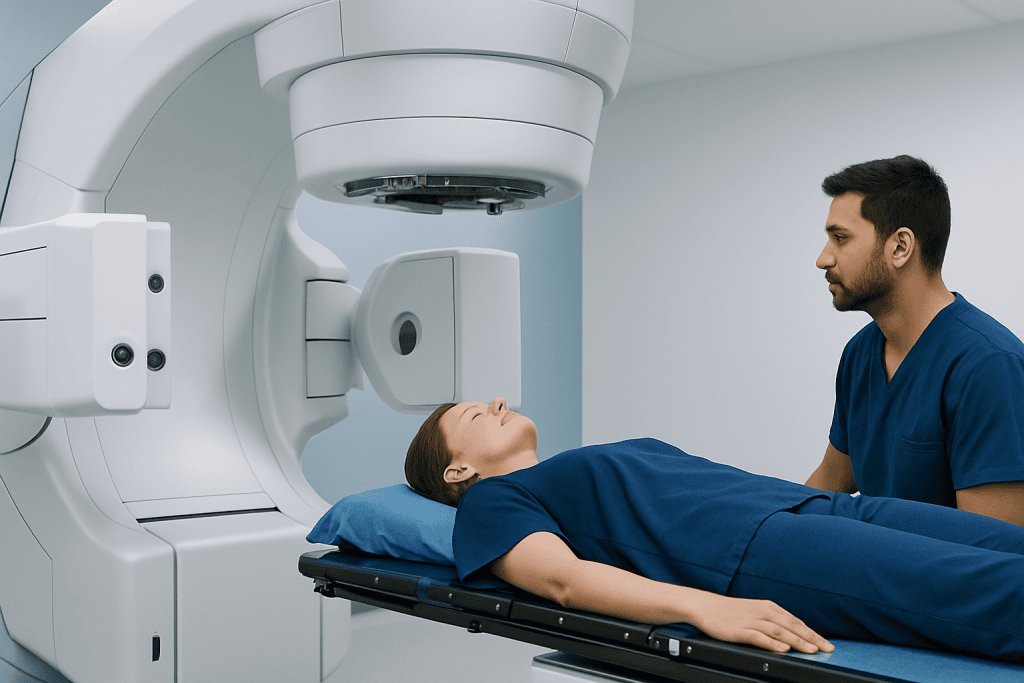
The danger of skin cancer is not the same for every person or every lesion. Doctors assess seriousness by looking at the cancer type, its size, its depth in the skin, how quickly it is changing, and whether there is evidence of spread. A very small early lesion on the skin surface is very different from a neglected cancer that has invaded deeper structures.
Melanoma is the form most people worry about when asking whether skin cancer is deadly. That concern is understandable because melanoma can spread through the lymphatic system or bloodstream. Even so, when melanoma is recognized early and removed promptly, treatment can be very successful. A delayed diagnosis is one of the main reasons it becomes more dangerous.
Non-melanoma skin cancers are usually less aggressive, but they still matter. Basal cell carcinoma can enlarge over time and invade surrounding skin, cartilage, or bone if left untreated. Squamous cell carcinoma can sometimes spread, especially when it develops on the lips, ears, scar tissue, chronic wounds, or in people with weakened immune systems. People who want to understand the broader condition can also read about skin cancer.
In short, the term “deadly” is too broad to apply equally to all skin cancers. The evidence supports a more reassuring and more precise message: risk exists, but early assessment makes a major difference.
Warning Signs That Deserve Medical Review

Most moles, freckles, and small skin marks are harmless. Still, certain changes should prompt a professional skin check because they may signal skin cancer or another condition that needs attention. A spot does not need to be painful to be important.
Doctors often teach the ABCDE guide for possible melanoma: asymmetry, irregular border, more than one color, diameter that seems larger than expected, and evolution, meaning any change over time. Evolution is especially useful because a lesion that is clearly changing is more concerning than one that has looked the same for years.
Other red flags can suggest non-melanoma skin cancer. These include a sore that does not heal, a pearly or shiny bump, a rough scaly patch, a crusted growth, a lesion that bleeds easily, or a spot that becomes tender, itchy, or painful without a clear reason.
- A new mole or growth appearing in adulthood
- A mole that changes in size, shape, or color
- A spot that repeatedly bleeds, scabs, or ulcerates
- A wound that has not healed after several weeks
- A dark streak under a nail or pigment spreading around the nail
- A lesion on sun-exposed skin that is enlarging or becoming firmer
These signs do not automatically mean cancer. They are signals that the skin should be evaluated rather than watched indefinitely at home.
What Raises the Risk of Dangerous Skin Cancer
Ultraviolet radiation is the main environmental risk factor for most skin cancers. This includes sunlight and indoor tanning devices. Repeated sun exposure over many years, as well as intense intermittent exposure that causes sunburn, can damage skin cells and increase the chance of cancer developing later.
Individual risk also varies. People with fair skin, light eyes, freckles, or hair that burns easily tend to have less natural protection from UV radiation. A personal history of skin cancer, a family history of melanoma, many moles, atypical moles, or a weakened immune system can all raise concern.
Age can increase risk because sun damage accumulates over time, but skin cancer is not limited to older adults. Melanoma can occur in younger adults, and anyone can develop suspicious lesions. Skin cancers may also appear in less obvious places, including the scalp, soles, nails, or areas not regularly exposed to sun.
Some skin cancers become more serious because they are overlooked, not because they were aggressive from the start. Lesions may be mistaken for acne, eczema, a nonhealing scratch, or an age-related mark. That is why persistent or unusual changes should be examined, especially in higher-risk individuals.
How Doctors Diagnose Suspicious Skin Changes
When a person sees a doctor for a concerning spot, the first step is usually a careful history and skin examination. The doctor will ask when the lesion appeared, whether it has changed, whether it bleeds or itches, and whether there is a personal or family history of skin cancer. The rest of the skin may also be examined because more than one lesion can be present.
A dermatologist may use a dermatoscope, a handheld device that helps visualize patterns and colors beneath the skin surface. This can improve the assessment of moles and pigmented lesions, but it does not replace tissue diagnosis when cancer is suspected.
The definitive way to diagnose skin cancer is usually a biopsy. In a biopsy, the doctor removes all or part of the lesion so it can be examined under a microscope. Pathology identifies the exact cancer type and important details such as depth and whether the margins are involved.
If melanoma or a higher-risk skin cancer is confirmed, additional tests may be needed in selected cases. These can include lymph node assessment or imaging studies, depending on the stage and clinical findings. Related evaluations may involve MRI scanning or other imaging when deeper spread is a concern, although many early skin cancers do not require extensive testing.
Treatment Options and Outlook
Treatment depends on the type of skin cancer, its size and location, and whether it has spread. For many skin cancers, especially early ones, the main treatment is complete removal of the lesion. This is why timely diagnosis is so important: treatment is often simpler and more effective before the cancer grows deeper.
Common approaches may include minor surgical excision, specialized skin cancer surgery, topical treatments for selected superficial lesions, cryotherapy in some situations, or radiotherapy when surgery is not suitable. For melanoma and some higher-risk squamous cell carcinomas, treatment planning may be more complex and can involve wider excision, lymph node evaluation, and oncology care.
When skin cancer is more advanced, doctors may recommend systemic therapies such as immunotherapy, targeted therapy, or other cancer treatments based on the tumor type and stage. In some cases, imaging such as PET-CT scan or CT scan may help assess whether cancer has spread beyond the skin.
The outlook is often very good when skin cancer is caught early. That is the key evidence-based reassurance behind this topic. International patients seeking assessment can be supported by Acibadem International, where multidisciplinary specialists in JCI-accredited hospitals diagnose and treat cancers including melanoma using individualized care plans.
Prevention and Self-Checks
Not every case of skin cancer can be prevented, but risk can be reduced. The most important daily habit is protecting the skin from ultraviolet exposure. This includes using broad-spectrum sunscreen, seeking shade during strong midday sun, and wearing protective clothing, sunglasses, and a wide-brimmed hat when practical.
Indoor tanning should be avoided because tanning devices also expose the skin to damaging UV radiation. People who work outdoors or spend long hours in the sun may need to reapply sunscreen regularly and combine it with clothing-based protection rather than relying on sunscreen alone.
Regular self-checks can help people notice change earlier. A monthly skin review in good lighting, using a mirror for hard-to-see areas, is a reasonable approach for many adults. It can help to take photographs of moles or lesions over time so that subtle changes are easier to identify.
Anyone with a history of skin cancer, atypical moles, or strong family risk should ask a doctor how often professional skin examinations are needed. Prevention lowers risk, but early detection remains just as important.
When to Seek Medical Care
Medical review is appropriate if a skin spot is new, clearly changing, or not healing as expected. People should not wait for pain or severe symptoms before making an appointment, because early skin cancers are often painless.
More urgent assessment is sensible if a lesion is rapidly enlarging, repeatedly bleeding, becoming ulcerated, or associated with swollen lymph nodes nearby. A dark lesion with multiple colors, an irregular border, or obvious change over weeks to months should also be examined promptly.
People with a previous skin cancer, a weakened immune system, or a strong family history should have a lower threshold for seeking care. If there is uncertainty, it is reasonable to ask a qualified doctor or dermatologist to review the lesion rather than trying to diagnose it at home.
Prompt evaluation does not mean the spot is dangerous. In many cases it provides reassurance. When a lesion is cancerous, early attention gives the best chance for simple treatment and a favorable outcome.
Frequently asked questions
Is skin cancer usually fatal?
No. Many skin cancers are found early and treated successfully, and some suspicious spots are not cancer at all. The main exception is when a more aggressive type, especially melanoma, is diagnosed late or has already spread.
Which type of skin cancer is most dangerous?
Melanoma is generally considered the most dangerous common type because it is more likely to spread to other parts of the body. Basal cell carcinoma is usually less dangerous, while squamous cell carcinoma falls in between and can become serious if neglected.
Can a harmless-looking mole still be skin cancer?
Yes, sometimes early skin cancer can look subtle. That is why doctors focus not only on appearance but also on change over time, bleeding, nonhealing, or other unusual behavior.
How do doctors confirm whether a spot is cancerous?
Doctors begin with a skin examination and may use dermatoscopy to look more closely at the lesion. A biopsy is usually needed to confirm the diagnosis because the tissue must be examined under a microscope.
If skin cancer is found early, is it curable?
Many early skin cancers can be treated very effectively, often with complete removal. The exact outlook depends on the cancer type and stage, but early diagnosis is strongly linked with better outcomes.
When should someone worry about a skin spot?
A spot should be checked if it is new, changing, bleeding, crusting, or not healing. It is also sensible to seek medical advice if a mole becomes asymmetrical, develops irregular borders, shows multiple colors, or grows noticeably.
This article is for general information only and is not a substitute for professional medical advice. Please consult a qualified doctor about your individual situation.
Skin Cancer in Turkey — costs, top hospitals & a free quote
JCI-accredited · board-certified surgeons · reply within 24h
Add us as a Preferred Source to see more of our trusted health content across Google Search, AI Overviews and Discover.

Dermatology Specialists at Acibadem





More from the Health Library
Road Rash: Possible Causes and When to Seek Care

Trapped Gas Pain: Common Causes, Related Conditions, and When to See a Doctor

How Long Does It Take to Break a Habit? A Doctor-Reviewed Answer

Is Goat Milk Cheese Good for You? Causes, Explanations, and Next Steps

Why Do We Have Fingernails? A Doctor-Reviewed Answer