How to Stop an Earache Fast? Causes, Explanations, and Next Steps

Many earaches are harmless and settle within a short time, especially when linked to a cold, pressure changes, or minor irritation. The safest fast relief usually includes rest, a warm compress, and over-the-counter pain medicine used as directed.
Key Takeaways
- Many earaches are harmless and settle within a short time, especially when linked to a cold, pressure changes, or minor irritation.
- The safest fast relief usually includes rest, a warm compress, and over-the-counter pain medicine used as directed.
- Ear pain does not always come from the ear itself; the jaw, teeth, throat, or sinuses can also cause it.
- Fever, pus or blood from the ear, swelling behind the ear, worsening pain, or hearing loss need prompt medical review.
- A doctor can usually identify the cause through symptom history, an ear exam, and sometimes hearing or imaging tests.
Most earaches are temporary and improve with simple measures such as pain relief, warmth, and avoiding further irritation. Fast relief depends on the cause, so red-flag symptoms like fever, ear drainage, sudden hearing loss, or severe pain should be checked by a doctor.
How to stop an earache fast: the safest first steps
If someone wants to know how to stop an earache fast, the best first steps are usually simple and safe: rest, use a warm compress over the outer ear, and take an over-the-counter pain reliever if it is suitable for that person and used exactly as directed on the label. Many earaches are not dangerous and improve as the irritation or pressure settles, especially if they happen during a cold, after flying, or with temporary congestion.
It also helps to avoid putting anything into the ear, including cotton swabs, oils, or unprescribed drops. Keeping the head slightly elevated may reduce pressure, and swallowing, yawning, or chewing gum can help if the pain started after a flight or altitude change. If the pain is linked to recent swimming, gently drying the outer ear area and avoiding more water exposure may be useful.
Fast relief does not always mean the cause has been treated. Ear pain can come from infection, pressure changes, wax buildup, jaw clenching, dental problems, throat inflammation, or skin irritation in the ear canal. That is why severe or persistent pain should not be ignored, even if it briefly improves.
What an earache can feel like
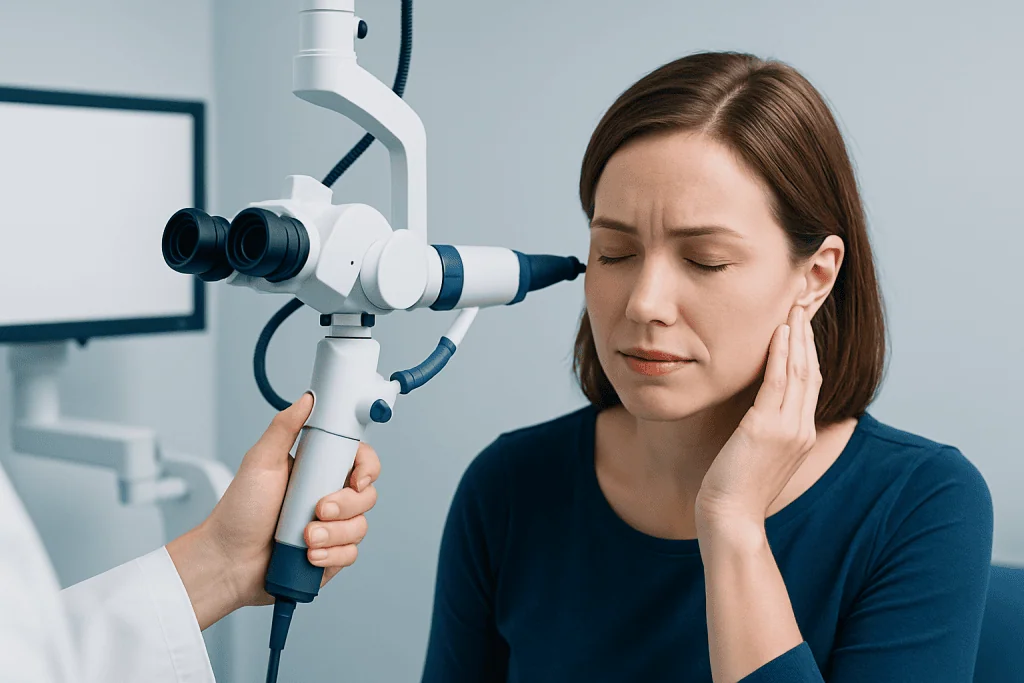
Earache is a symptom rather than a diagnosis. Some people describe a sharp, stabbing pain, while others feel pressure, fullness, throbbing, burning, or tenderness when touching the ear. The discomfort may affect one ear or both and can come on suddenly or build gradually over hours or days.
Other symptoms often provide clues to the cause. A middle ear problem may create muffled hearing, popping, pressure, or pain after a cold. An outer ear problem may cause pain when the ear is touched or pulled. Earwax can create fullness and reduced hearing, while jaw-related pain may be worse with chewing.
Children may show ear pain differently than adults. They may tug at the ear, be unusually irritable, have trouble sleeping, or feed poorly. A young child with fever and persistent crying may need medical assessment because they cannot always explain what the pain feels like.
- Pressure or fullness in the ear
- Muffled hearing or ringing
- Pain with chewing or jaw movement
- Discomfort after a cold, flight, or swimming
- Drainage, itching, or tenderness of the outer ear
Common causes and why the pain happens

Ear pain has many possible causes, and understanding them helps explain why the right treatment differs from person to person. One of the most common reasons is a middle ear infection, often after a cold, when swelling blocks the Eustachian tube and fluid builds up behind the eardrum. This can create pressure and pain and sometimes leads to middle ear infection.
Another common cause is inflammation of the ear canal, often called swimmer’s ear. This type of pain tends to worsen when the outer ear is touched and may be linked to moisture, skin irritation, or infection. In some cases, the problem is not infection at all but temporary blockage from earwax, pressure changes during flying or diving, or congestion from allergies or sinus illness.
Ear pain can also be referred pain, meaning the ear feels sore even though the problem starts elsewhere. The jaw joint, teeth, gums, tonsils, and throat share nerve pathways with the ear. Teeth grinding, a dental abscess, sore throat, or temporomandibular joint strain can all feel like an earache. Less commonly, skin conditions, trauma, or a foreign object in the ear are responsible.
Knowing the likely source matters because treatment for ear infection is different from treatment for wax, jaw tension, or pressure imbalance. If symptoms do not fit a simple explanation or keep returning, a clinical assessment is the safest next step.
What not to do when trying to relieve ear pain
When pain is uncomfortable, it is natural to look for quick fixes. However, some common home approaches can make the problem worse. Cotton swabs can push wax deeper, scratch the ear canal, and irritate the skin. Sharp objects should never be used to remove wax or scratch inside the ear.
It is also best not to put random drops, oils, or herbal products into the ear unless a clinician has confirmed they are appropriate. If the eardrum is perforated or there is an infection, unsuitable drops may irritate the ear further. Ear candling is not recommended because it does not safely remove wax and may cause burns or injury.
Antibiotics should not be started without medical advice. Ear pain is often caused by pressure, inflammation, or irritation rather than a bacterial infection, so antibiotics may not help and are not the right first step in many cases. Care should stay focused on safe symptom relief until the cause is clearer.
When to seek medical care
Medical care is important if ear pain is severe, keeps worsening, or lasts more than a short period without improving. A person should also seek review if there is fever, fluid, pus, or blood coming from the ear, sudden hearing loss, marked dizziness, swelling behind the ear, or significant redness of the outer ear. These symptoms may suggest a condition that needs prompt treatment.
Infants, very young children, and people with weakened immune systems should be assessed sooner because complications can develop more easily or symptoms may be harder to interpret. Pain after a head injury, a foreign object in the ear, or recent ear surgery also deserves prompt attention. If there is facial weakness, severe headache, or persistent vomiting, urgent evaluation is appropriate.
Even without alarm symptoms, recurrent earaches should be discussed with a doctor. Repeated episodes may point to chronic ear disease, allergy-related congestion, jaw disorders, or hearing issues that benefit from specialist input. Early assessment can often prevent prolonged discomfort and reduce the chance of complications.
How doctors diagnose the cause
A doctor usually begins by asking when the pain started, whether it followed a cold, flight, swimming, or injury, and whether there are related symptoms such as fever, sore throat, jaw pain, hearing changes, or drainage. This history often gives strong clues to whether the source is the middle ear, ear canal, pressure imbalance, wax, or a problem outside the ear.
The ear is then examined with an otoscope to look for redness, swelling, wax blockage, fluid behind the eardrum, or signs of injury. The doctor may also check the nose, throat, lymph nodes, teeth, and jaw because these areas commonly refer pain to the ear. In many cases, this examination is enough to make the diagnosis and plan treatment.
If symptoms are unusual, severe, or persistent, additional tests may be needed. Hearing tests can help assess how the ear is functioning. In selected cases, doctors may arrange imaging or refer the person for an ENT evaluation, including ENT assessment and treatment, especially when pain recurs, hearing is affected, or the diagnosis is uncertain.
Treatment options based on the cause
Treatment depends on what is causing the pain. For pressure-related discomfort during a cold or after flying, care may focus on pain relief, hydration, rest, and measures that help the Eustachian tube open naturally. If earwax is the main issue, removal by a professional may quickly improve fullness and hearing. A clinician may also advise ear cleaning when hardened wax is contributing to symptoms.
If the cause is an outer ear infection, treatment may involve prescribed ear drops and steps to keep the ear dry while it heals. For a middle ear infection, doctors decide on management based on age, severity, examination findings, and overall health. Some people need medication, while others can be safely monitored with symptom treatment and follow-up.
When the pain actually comes from the jaw, throat, or teeth, treating the ear alone will not solve the problem. Dental care, management of jaw clenching, or treatment of throat inflammation may be more effective. If hearing loss, chronic infections, or structural problems are present, doctors may consider more advanced approaches such as ear surgery in selected cases.
For international patients who need evaluation, Acibadem International offers multidisciplinary care in JCI-accredited hospitals for ear, nose, and throat conditions, with treatment planned according to the underlying cause rather than the symptom alone.
Prevention and self-care after the pain improves
Preventing future earaches often means reducing irritation and protecting the ear’s natural defenses. It helps to avoid inserting objects into the ear canal, including cotton swabs. After swimming or showering, gently dry the outer ear and follow any advice given by a clinician if someone is prone to moisture-related ear canal irritation.
Managing colds, allergies, and sinus congestion may also reduce pressure-related ear pain. During flights, swallowing, yawning, and staying hydrated can help equalize pressure. People who grind their teeth or clench the jaw may benefit from dental or jaw evaluation if earache is a recurring complaint.
Any ongoing hearing changes, repeated infections, or frequent blocked-ear sensations deserve medical review instead of repeated self-treatment. Although many earaches are short-lived, persistent or recurrent symptoms should be checked to make sure the correct cause is being addressed.
Frequently asked questions
What helps an earache quickly at home?
A warm compress placed over the outer ear and an over-the-counter pain reliever, if appropriate and used as directed, often provide the quickest safe relief. Rest and avoiding anything inside the ear can also help. If symptoms are severe or unusual, home care should not replace medical assessment.
Can an earache go away on its own?
Yes, many earaches settle on their own, especially those linked to a cold, mild pressure changes, or temporary irritation. However, the pain should gradually improve rather than worsen. Persistent, recurrent, or severe symptoms need medical review.
Should someone use ear drops for every earache?
No. Ear drops are not right for every cause of ear pain, and some products should not be used if the eardrum may be damaged. It is safest to use only drops recommended by a healthcare professional or clearly labeled for the situation.
Why does the ear hurt even if there is no ear infection?
Ear pain can come from wax blockage, pressure changes, skin irritation, or inflammation of the ear canal. It can also be referred from the jaw, teeth, throat, or sinuses because these areas share nerve pathways with the ear. That is why an earache does not always mean infection.
When is an earache an emergency?
Urgent care is needed if there is sudden hearing loss, severe dizziness, swelling behind the ear, a high fever, significant redness, blood or pus from the ear, or pain after an injury. Facial weakness or severe headache should also be assessed promptly. These features can indicate a more serious problem.
Is it safe to clean the ear with a cotton swab?
No, cotton swabs are not recommended inside the ear canal. They often push wax deeper and can scratch the skin or injure the eardrum. If wax is causing pain or blocked hearing, professional removal is safer.
This article is for general information only and is not a substitute for professional medical advice. Please consult a qualified doctor about your individual situation.
Explore treatments in Turkey — costs, top hospitals & a free quote
JCI-accredited · board-certified surgeons · reply within 24h
Add us as a Preferred Source to see more of our trusted health content across Google Search, AI Overviews and Discover.

More from the Health Library

What Is Viagra? A Doctor-Reviewed Answer

Is Fish Meat? Causes, Explanations, and Next Steps

How Many Eggs Can You Eat a Day? Causes, Explanations, and Next Steps

How to Get Clear Skin? Here Is What the Evidence Says

How to Stop Period Pain Immediately at Home? Causes, Explanations, and Next Steps