Skin Purging: A Complete Medical Overview

Skin purging usually happens after starting ingredients such as retinoids, alpha hydroxy acids, beta hydroxy acids, or other exfoliating treatments. Purging tends to occur in areas where a person already gets clogged pores or acne and often improves as the skin adjusts.
Key Takeaways
- Skin purging usually happens after starting ingredients such as retinoids, alpha hydroxy acids, beta hydroxy acids, or other exfoliating treatments.
- Purging tends to occur in areas where a person already gets clogged pores or acne and often improves as the skin adjusts.
- New rash, burning, swelling, severe itching, or breakouts in unusual areas are more suggestive of irritation or an allergic reaction than skin purging.
- Gentle skin care, patience, and gradual product use are often helpful, but persistent or severe symptoms should be assessed by a dermatologist.
- Not every flare after a new product is skin purging; some products simply cause acne or irritate the skin barrier.
Skin purging is a temporary worsening of spots that can appear after starting certain active skincare ingredients, especially those that increase skin cell turnover. It is different from simple irritation or a new breakout pattern, and understanding that difference helps guide safer skin care decisions.
Overview: what skin purging means
Skin purging is a temporary flare of acne-like bumps that may happen after a person starts a skincare product that speeds up skin cell turnover. As these products bring existing clogged pores to the surface faster, whiteheads, blackheads, small inflamed pimples, or tiny bumps can appear before the skin begins to settle. This can be frustrating, but in the right setting it is often a short-lived adjustment phase rather than a sign that the product is harming the skin.
Purging is most often linked to ingredients such as retinoids, alpha hydroxy acids, beta hydroxy acids, azelaic acid, and some prescription acne treatments. These products can uncover blemishes that were already forming under the skin. The key point is that purging does not create an entirely new skin disease; instead, it tends to accelerate the appearance of congestion that was already present.
It is also important to know that the term is sometimes overused. Many reactions that people call skin purging are actually irritation, sensitivity, or acne caused by a product that does not suit the skin. A careful look at timing, symptoms, and the type of lesions can help distinguish one from another.
How skin purging differs from a regular breakout
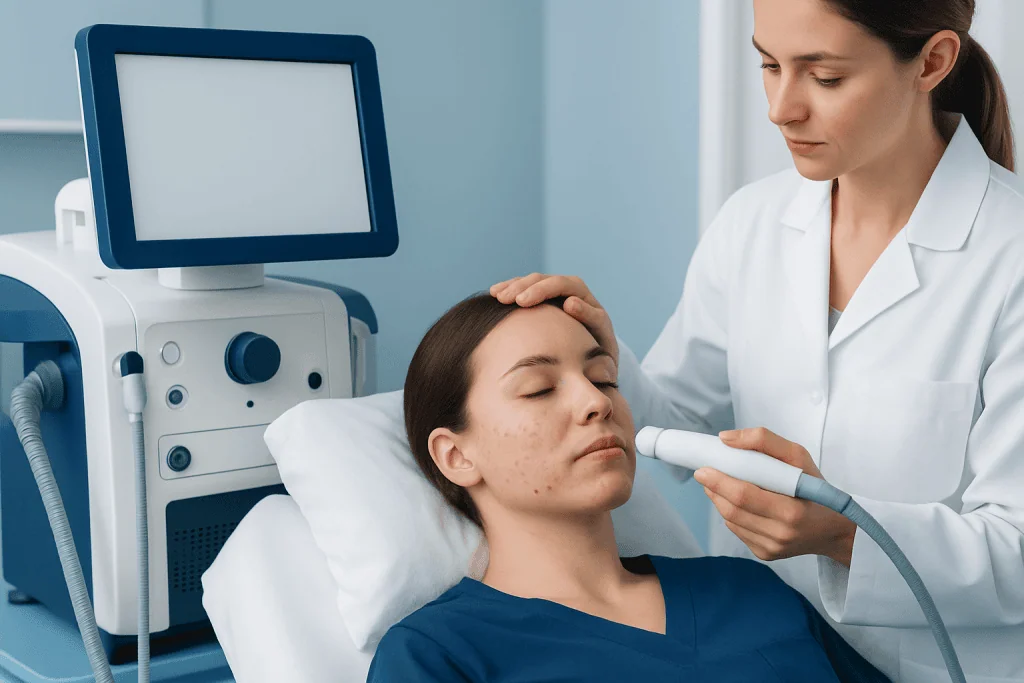
The most useful difference is location and timing. Skin purging usually appears soon after a person starts or increases a product with active ingredients, often within the first few weeks. It tends to affect the same areas where clogged pores, blackheads, or acne usually occur, such as the forehead, cheeks, chin, or jawline.
A regular breakout from a pore-clogging or unsuitable product can look similar, but it may appear in new areas where acne is not normally present and may continue getting worse the longer the product is used. Irritation usually causes more stinging, burning, redness, peeling, or tenderness than classic purging. Allergic contact dermatitis may cause itching, swelling, or a rash-like pattern rather than true acne lesions.
Skin purging generally follows a predictable course: lesions come to the surface more quickly, then gradually improve if the skin tolerates the treatment. If the reaction persists for many weeks without improvement, becomes more painful, or includes widespread redness and discomfort, it is less likely to be simple purging and more likely to need medical review.
- More likely to be purging: familiar acne-prone areas, small pimples or clogged pores, begins after cell-turnover products
- More likely to be irritation: burning, marked dryness, scaling, stinging, raw feeling
- More likely to be a product-related breakout: new pattern of acne, unusual areas, continued worsening over time
Common triggers and who may be more likely to notice it

Products that increase exfoliation or speed the renewal of skin cells are the most common triggers. These include over-the-counter retinol, prescription retinoids, salicylic acid, glycolic acid, lactic acid, chemical peels, and some acne medications. In some people, adding several active products at the same time can make the skin more reactive and make it harder to tell whether purging or irritation is happening.
People who already have acne, comedones, or oily skin may be more likely to notice purging because they have more blocked pores beneath the surface. A person with very sensitive or dry skin may be more likely to experience irritation at the same time, which can complicate the picture. This overlap is one reason a simple, gradual approach is often recommended when introducing active skincare.
Purging is not caused by poor hygiene. It is also not a sign that the skin is “detoxing.” The process is related to how the skin sheds cells and how blocked follicles come to the surface. People with a history of acne or frequent congestion may benefit from medical guidance before starting stronger exfoliating or retinoid-based products.
What symptoms are typical, and how long can it last?
Typical skin purging causes blemishes that resemble a brief intensification of existing acne. This may include small whiteheads, blackheads, papules, or pustules. Some dryness or mild flaking can also occur if the product is active, but severe burning, cracking, swelling, or intense itching are not typical features of uncomplicated purging.
In many cases, purging starts within two to six weeks after beginning a new active ingredient or increasing its strength or frequency. It often improves within about one skin cycle, though exact timing varies by age, skin type, product strength, and how often the product is applied. If symptoms continue beyond six to eight weeks without signs of improvement, another explanation should be considered.
Because many skin conditions can mimic purging, it is reasonable to pause and reassess if lesions become nodular, cystic, very painful, or widespread. Conditions such as eczema or rosacea can worsen with harsh products, and their treatment is different from acne-focused care. A doctor or dermatologist can help identify the cause when the pattern is unclear.
How doctors evaluate skin purging
Skin purging is diagnosed clinically, meaning it is usually based on the medical history and a skin examination rather than a special test. A doctor will ask when the symptoms began, what products were started or changed, how often they are used, and whether the person has had acne or sensitivity in the past. The distribution of lesions and the presence of redness, scaling, or itching can provide important clues.
Dermatologists also look for signs that point away from purging. These include rash-like patches, marked inflammation, oozing, significant swelling, or lesions in places that are unusual for the patient. Sometimes the issue is irritant contact dermatitis, allergic contact dermatitis, folliculitis, perioral dermatitis, or acne caused by comedogenic products rather than true purging.
If needed, a doctor may recommend stopping one or more products, simplifying the routine, or reintroducing ingredients one at a time. In people with moderate to severe acne, medical assessment can also help determine whether prescription-based acne treatment is more appropriate than repeated over-the-counter experimentation.
Treatment and practical skin care steps
The main approach is to protect the skin barrier while using active ingredients carefully. In mild cases where the symptoms fit the pattern of purging, a person may continue the product but reduce frequency, for example using it every few days rather than daily, if a clinician has not advised otherwise. Gentle cleansing, regular moisturizing, and daily broad-spectrum sunscreen are important because active ingredients can increase dryness and sun sensitivity.
It is generally wise to avoid layering several strong actives at once. Combining retinoids, exfoliating acids, scrubs, and drying acne products can lead to irritation that looks worse than the original skin concern. A simple routine often works best: a mild cleanser, a non-comedogenic moisturizer, sunscreen, and only one main active product at a time.
If the reaction appears more consistent with irritation, stopping the suspected product is usually safer than pushing through. Medical guidance is especially useful when symptoms are painful, recurrent, or severe, or when acne is leaving marks or scars. Some people may benefit from dermatologist-directed therapies such as chemical peels or other tailored options once the skin has been properly assessed. In selected cases, specialist evaluation can also guide skin care and dermatology support for persistent or complex concerns.
Prevention and self-care
Purging cannot always be avoided, but the risk of confusion and irritation can be reduced. Starting one new active product at a time makes it easier to identify what is helping and what is not. Many people do better when they begin with a lower strength or fewer applications per week and increase gradually as tolerated.
Patch testing on a small area may help identify obvious sensitivity, although it does not always predict purging. Choosing non-comedogenic skin care and avoiding harsh physical scrubs can also support the skin barrier. Picking or squeezing spots should be avoided because it may worsen inflammation and raise the risk of discoloration or scarring.
Good self-care includes patience. Skin usually needs time to respond, and changing products too often can create a cycle of irritation. Keeping a brief list of when products were started and how the skin reacted can be very helpful for both self-monitoring and any future medical visit.
When to seek medical care
Medical advice is appropriate if a person is unsure whether the reaction is purging, irritation, or another skin condition. A dermatologist should be consulted when there is severe redness, swelling, crusting, pain, widespread peeling, intense itching, or a rash that spreads beyond typical acne areas. Care is also important if symptoms continue for more than six to eight weeks, if breakouts are becoming deeper or cystic, or if scarring or dark marks are developing.
Professional assessment can prevent prolonged use of products that are not suitable for the skin. It can also help identify conditions that are commonly mistaken for purging and set out a more effective treatment plan. For international patients who need specialist evaluation, Acibadem International’s multidisciplinary specialists in JCI-accredited hospitals diagnose and treat a wide range of skin concerns in a coordinated setting.
People with underlying skin disorders, very sensitive skin, or a history of severe acne often benefit from earlier guidance rather than trial and error. Prompt advice is especially valuable if over-the-counter measures are not helping or if the skin reaction is affecting daily comfort and confidence.
Frequently asked questions
Is skin purging a real medical phenomenon?
Yes. The term is commonly used to describe a temporary flare of acne-like lesions after starting products that increase skin cell turnover, such as retinoids or exfoliating acids. However, not every post-product flare is purging, so symptoms should be assessed in context.
How can someone tell the difference between skin purging and irritation?
Purging usually shows up as familiar acne-type spots in areas where breakouts already happen. Irritation is more likely to cause burning, stinging, pronounced redness, dryness, scaling, or itching, and it may not follow the usual acne pattern.
How long does skin purging usually last?
It often begins within the first few weeks of starting a new active product and may improve within about four to eight weeks. If the reaction keeps worsening or does not start to settle in that time, it may not be simple purging.
Should a person stop using the product if skin purging happens?
That depends on the pattern and severity. If the symptoms look like mild, expected purging, a clinician may suggest continuing more gradually, but if there is significant irritation, pain, swelling, or uncertainty, stopping the product and seeking advice is safer.
Can moisturizing make skin purging worse?
A suitable non-comedogenic moisturizer usually helps rather than harms. It supports the skin barrier, can reduce dryness and irritation from active ingredients, and may make treatment easier to tolerate.
Can skin purging happen with any new skincare product?
No. It is most associated with products that increase exfoliation or speed cell turnover, such as retinoids and certain acids. A new cleanser, oil, or cream that causes spots is more likely to be clogging pores or irritating the skin than causing true purging.
References
- American Academy of Dermatology
- National Health Service
- Mayo Clinic
- MedlinePlus
- British Association of Dermatologists
This article is for general information only and is not a substitute for professional medical advice. Please consult a qualified doctor about your individual situation.
Explore treatments in Turkey — costs, top hospitals & a free quote
JCI-accredited · board-certified surgeons · reply within 24h
Add us as a Preferred Source to see more of our trusted health content across Google Search, AI Overviews and Discover.