Brain Embolism: An Evidence-Based Guide for Patients

Brain embolism is a sudden blockage of a brain artery by material that has traveled from another part of the body. It commonly causes an ischemic stroke and needs emergency evaluation right away.
Key Takeaways
- Brain embolism is a sudden blockage of a brain artery by material that has traveled from another part of the body.
- It commonly causes an ischemic stroke and needs emergency evaluation right away.
- Symptoms often begin suddenly and may include weakness, facial drooping, speech trouble, vision changes, or loss of balance.
- Doctors use brain imaging, heart testing, and blood vessel studies to identify the cause and guide treatment.
- Treatment may include clot-dissolving medicine, catheter-based procedures, and long-term prevention of future strokes.
Brain embolism is a medical emergency in which material such as a blood clot travels through the bloodstream and suddenly blocks an artery in the brain. It is one cause of ischemic stroke, and rapid diagnosis and treatment can help limit brain injury and improve recovery.
Overview
Brain embolism is a condition in which a clot or other material forms elsewhere in the body, travels through the bloodstream, and lodges in an artery supplying the brain. When blood flow is cut off, part of the brain is deprived of oxygen and nutrients. This can quickly damage brain tissue and lead to an ischemic stroke.
Many people use the term “brain embolism” to describe an embolic stroke. In simple terms, the blockage does not start inside the narrowed brain artery itself; instead, it arrives from another source, often the heart or a large artery in the neck. Understanding this difference helps explain why doctors often look beyond the brain to find the cause.
Because brain cells are highly sensitive to interrupted blood flow, a brain embolism is treated as a medical emergency. Fast care can help restore circulation, reduce disability, and lower the risk of complications. For this reason, sudden neurologic symptoms should never be ignored, even if they seem to improve after a few minutes.
Symptoms and warning signs
Symptoms of brain embolism usually begin suddenly. They depend on which part of the brain is affected, but the pattern is often abrupt rather than gradual. A person may feel well one moment and then develop clear neurologic changes within minutes.
Common warning signs include weakness or numbness on one side of the body, facial drooping, trouble speaking, difficulty understanding words, sudden vision loss or double vision, dizziness, poor coordination, or trouble walking. Some people also have a sudden severe headache, although headache is not always present in an ischemic stroke.
A helpful way to recognize possible stroke is the FAST message: face drooping, arm weakness, speech difficulty, time to call emergency services. Other symptoms can include confusion, sudden trouble swallowing, or a sudden decline in alertness.
- One-sided weakness or numbness
- Facial asymmetry or drooping
- Slurred speech or inability to speak
- Sudden vision problems
- Loss of balance or coordination
- Sudden confusion or trouble understanding
Symptoms that come and go may still be serious. A temporary episode can be a transient ischemic attack, sometimes called a “mini-stroke,” which may warn of a larger stroke to come. Even if symptoms fully resolve, urgent medical assessment is still important.
What causes brain embolism and who is at risk?
The most common cause of brain embolism is a blood clot that forms in the heart and then travels to the brain. This can happen in people with atrial fibrillation, certain valve disorders, heart failure, recent heart attack, or infections affecting the heart valves. In some cases, a clot forms on a heart valve or in a poorly contracting area of the heart and later breaks loose.
Emboli can also come from large arteries, especially the carotid arteries in the neck, when atherosclerotic plaque becomes unstable and sends clot material upward. Less commonly, fat droplets, air bubbles, or other rare substances can act as emboli. Doctors may also evaluate for a patent foramen ovale or clotting disorders in selected patients, especially when a stroke happens at a younger age or without an obvious reason.
Several risk factors increase the chance of an embolic stroke. These include high blood pressure, diabetes, smoking, high cholesterol, obesity, limited physical activity, older age, and a prior stroke or transient ischemic attack. Conditions that affect blood clotting can also play a role.
In practice, brain embolism overlaps with broader stroke conditions such as stroke and carotid artery disease. Identifying the exact source matters because long-term treatment is often aimed at preventing new clots from forming in the heart or arteries.
How doctors diagnose it
Diagnosis starts with an urgent clinical assessment focused on when symptoms began, what symptoms occurred, and whether a person uses blood thinners or has heart disease. Time matters because some stroke treatments are only effective within specific time windows. Emergency teams also quickly check blood sugar, blood pressure, oxygen levels, and neurologic function.
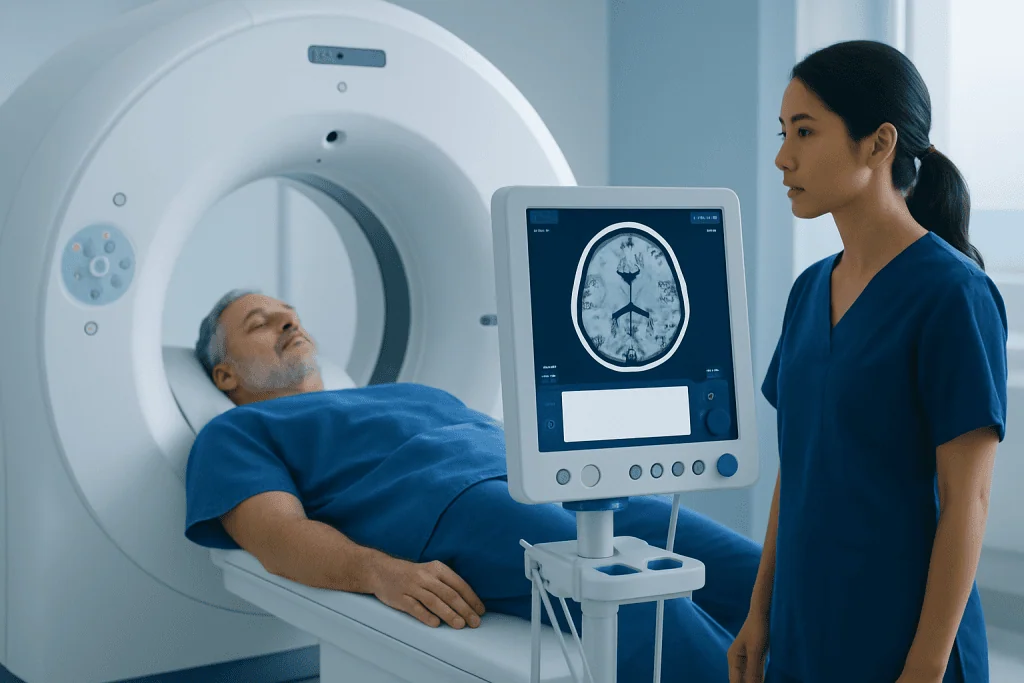
Brain imaging is essential. A non-contrast CT scan is often the first test because it can rapidly help rule out bleeding. MRI can provide more detailed information about the affected brain tissue in some cases. Imaging of the blood vessels, such as CT angiography, MR angiography, or carotid ultrasound, may be used to look for a blocked artery or narrowing in the neck vessels.
Doctors also investigate where the embolus came from. Heart monitoring may detect atrial fibrillation or other rhythm problems. An electrocardiogram and echocardiogram can help identify structural heart issues, clots inside the heart, or valve disease. Blood tests may support diagnosis and treatment planning.
Depending on the findings, patients may be referred for specialist care in neurology or interventional neuroradiology when advanced stroke procedures are considered. The goal is not only to confirm the stroke but also to find the source and reduce the risk of another event.
Treatment options
Treatment depends on how quickly the person arrives, the size and location of the blockage, and whether the stroke is caused by bleeding or lack of blood flow. If brain embolism is confirmed as an ischemic stroke and the patient is eligible, doctors may use clot-dissolving medication to reopen the blocked vessel. This treatment is most effective when given as early as possible after symptoms begin.
For some patients with a large artery blockage, a catheter-based procedure called mechanical thrombectomy may be recommended. In this treatment, specialists guide a device through the blood vessels to remove the clot directly. This approach has become an important option for selected patients with major vessel occlusion and may improve outcomes when performed promptly.
After the emergency phase, treatment turns to preventing future emboli. This may include antiplatelet medicine or anticoagulants, especially if atrial fibrillation is found. Blood pressure control, cholesterol management, diabetes care, and smoking cessation are also central parts of treatment. If severe carotid narrowing is present, doctors may discuss procedures such as carotid endarterectomy in carefully selected cases.
Rehabilitation is often an essential part of recovery. Depending on symptoms, patients may need physical therapy, speech and language therapy, occupational therapy, and ongoing follow-up in stroke rehabilitation. Recovery varies widely, and a personalized care plan can support mobility, communication, swallowing, and daily function.
Prevention and self-care after a brain embolism
Preventing another embolic event usually involves treating both the immediate cause and the underlying risk factors. For example, if atrial fibrillation is the source, a doctor may recommend long-term blood-thinning treatment. If artery disease is involved, cholesterol-lowering therapy and management of blood pressure become especially important.
Healthy habits support medical treatment. Stopping smoking, limiting alcohol, eating a balanced diet rich in vegetables, fruits, whole grains, and lean proteins, and staying physically active within a doctor’s advice can all help reduce future stroke risk. Good sleep, stress management, and routine follow-up are also useful parts of a prevention plan.
Self-care after a stroke should be realistic and structured. Taking medicines exactly as prescribed, keeping medical appointments, and learning the warning signs of recurrent stroke are practical steps. Family support can also be helpful, especially if a person is coping with weakness, language problems, or changes in mood and memory.
Because brain embolism can have different underlying causes, prevention is not one-size-fits-all. A specialist may recommend heart rhythm monitoring, vascular follow-up, rehabilitation exercises, or swallowing evaluation depending on the person’s needs. Acibadem International’s multidisciplinary specialists and JCI-accredited hospitals diagnose and treat stroke-related conditions for international patients.
When to seek medical care
Immediate medical care is needed for any sudden symptom that could suggest a stroke. This includes facial drooping, one-sided weakness, speech difficulty, sudden confusion, abrupt vision loss, severe imbalance, or a sudden unexplained change in consciousness. It is safest to call emergency services rather than wait to see if the symptoms pass.
Urgent evaluation is also important if symptoms last only a short time and then improve. A transient ischemic attack may be brief, but it can be an early warning of a more serious stroke. Rapid assessment may allow doctors to start preventive treatment before another event occurs.
People recovering from a brain embolism should also contact their doctor promptly for new or worsening symptoms, medication side effects, falls, swallowing difficulty, or signs of depression and anxiety. Follow-up care is an important part of recovery and long-term prevention.
Frequently asked questions
Is a brain embolism the same as a stroke?
A brain embolism is one cause of an ischemic stroke. It happens when a clot or other material travels from elsewhere in the body and blocks a brain artery. Not all strokes are embolic, but a brain embolism is treated as a stroke emergency.
What is the difference between a thrombotic stroke and an embolic stroke?
In a thrombotic stroke, the clot usually forms directly in an artery supplying the brain, often where there is atherosclerotic narrowing. In an embolic stroke, the blockage starts somewhere else, such as the heart or neck arteries, and then travels to the brain. This difference matters because it can change the tests and long-term prevention plan.
Can brain embolism symptoms go away on their own?
Sometimes symptoms improve quickly, especially if the blockage is temporary or blood flow is restored. However, even short-lived symptoms can signal a transient ischemic attack or a stroke in progress. Any sudden neurologic symptom should be assessed urgently by a medical professional.
What tests are used to find the source of a brain embolism?
Doctors often use brain CT or MRI, imaging of the blood vessels, heart rhythm monitoring, an electrocardiogram, and echocardiography. They may also order blood tests and, in some cases, longer-term heart monitoring. The aim is to confirm the stroke and identify where the embolus came from.
Can a brain embolism be treated if the patient arrives late?
Treatment options depend on the timing, imaging findings, and the type of blocked vessel. Some patients may still be eligible for certain procedures even if they do not arrive immediately, while others may need supportive care and prevention-focused treatment. A stroke team can decide the safest and most appropriate approach.
How can someone reduce the risk of another brain embolism?
Risk reduction often includes treating the underlying cause, such as atrial fibrillation or carotid artery disease, and controlling blood pressure, diabetes, and cholesterol. Not smoking, staying active, taking prescribed medicines, and attending follow-up visits are all important. The most effective prevention plan is individualized with a qualified doctor.
References
- World Health Organization
- American Stroke Association
- National Institute of Neurological Disorders and Stroke
- Centers for Disease Control and Prevention
- National Health Service
This article is for general information only and is not a substitute for professional medical advice. Please consult a qualified doctor about your individual situation.
Explore treatments in Turkey — costs, top hospitals & a free quote
JCI-accredited · board-certified surgeons · reply within 24h
Add us as a Preferred Source to see more of our trusted health content across Google Search, AI Overviews and Discover.
Check your numbers in seconds
BMI, calories, due date, blood pressure and 30+ more clinical calculators — free, instant, doctor-reviewed ranges.