Demodectic Mange: What Patients Need to Know

Demodectic mange refers to skin problems caused by an overgrowth of Demodex mites. It can resemble other skin conditions, including rosacea, eczema, folliculitis, or acne-like eruptions.
Key Takeaways
- Demodectic mange refers to skin problems caused by an overgrowth of Demodex mites.
- It can resemble other skin conditions, including rosacea, eczema, folliculitis, or acne-like eruptions.
- Diagnosis usually depends on a skin examination and sometimes microscopic testing of skin or follicle samples.
- Treatment may include gentle skin care, prescription creams or lotions, and management of related skin inflammation.
- Medical review is important if symptoms are persistent, widespread, worsening, or affecting the eyes.
Demodectic mange is a skin condition linked to overgrowth of Demodex mites, tiny organisms that normally live in or near hair follicles. When mite numbers increase or the skin becomes more reactive, people may develop redness, roughness, itching, and inflammation that often need medical assessment to confirm the cause and guide treatment.
Overview
Demodectic mange is a skin condition caused by an excessive number of Demodex mites on the skin. These microscopic mites are common and often live harmlessly in hair follicles and sebaceous glands. In some people, however, the mites become more numerous or trigger inflammation, leading to visible skin symptoms.
In human medicine, this condition is often called demodicosis rather than mange. The term “mange” is more commonly used for mite-related skin disease in animals, but patients may still search for demodectic mange when trying to understand redness, scaling, or irritation linked to Demodex. A key point is that the presence of these mites alone does not always mean disease; symptoms usually develop when the balance between the skin, immune response, and mites is disrupted.
Demodectic mange most often affects the face, especially the cheeks, forehead, nose, eyelids, and chin. It may also appear on the scalp, ears, neck, or upper chest. Because it can look similar to rosacea or other inflammatory skin problems, professional evaluation is often helpful when symptoms do not improve with standard skin care.
Symptoms and How It May Feel
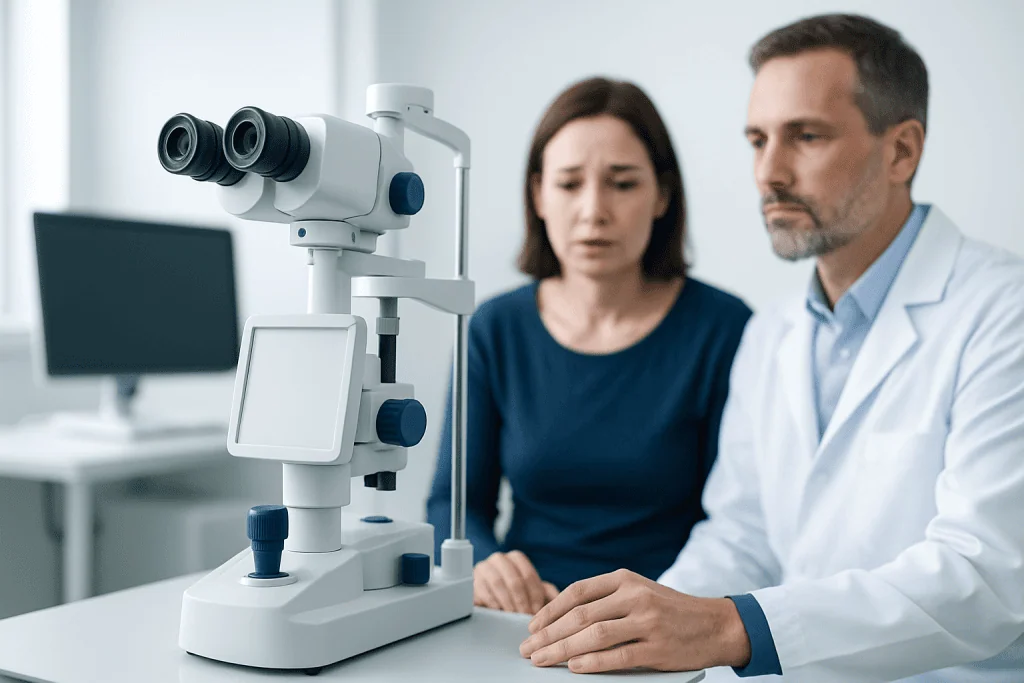
Symptoms of demodectic mange can vary from mild irritation to more persistent inflammation. Some people notice diffuse redness, rough or dry patches, scaling around hair follicles, or clusters of small bumps and pustules. Others mainly experience itching, burning, stinging, or a crawling sensation on the skin, especially at night or after using irritating products.
The condition often affects facial skin, where it may be confused with acne, dermatitis, or folliculitis. The skin can become sensitive and reactive, making normal cleansing products or cosmetics sting more than usual. In some cases, recurrent flare-ups seem to come and go rather than staying constant.
Demodex mites can also affect the eyelids and lashes. This may cause eyelid irritation, crusting at the lash line, a gritty feeling in the eyes, or recurrent inflammation such as blepharitis. Symptoms that involve the eyes deserve special attention because the treatment approach may be different from treatment used on the rest of the face.
- Facial redness or flushing
- Dryness, roughness, or scaling
- Itching, burning, or stinging
- Small bumps, pustules, or follicle-centered rash
- Eyelid irritation or crusting around eyelashes
Causes and Risk Factors

Demodectic mange develops when Demodex mites multiply beyond what the skin can comfortably tolerate or when the skin reacts strongly to them. Researchers believe this can happen because of changes in the skin barrier, immune response, oil production, or local inflammation. The mites may also interact with bacteria and other microbes on the skin, which can add to irritation.
Several factors may increase the chance of symptomatic demodicosis. These include oily skin, chronic inflammatory skin disease, increasing age, and a weakened immune system. Long-term use of topical steroids on the face may also alter the skin environment and make mite overgrowth more likely in some people.
Demodectic mange is not generally thought of as a sign of poor hygiene. Vigorous scrubbing usually does not solve the problem and may actually worsen inflammation by damaging the skin barrier. It is also important to remember that other conditions can overlap with Demodex-related skin disease, including acneiform eruptions, seborrheic dermatitis, and eczema.
How Doctors Diagnose Demodectic Mange
Diagnosis begins with a careful medical history and skin examination. A doctor will usually ask about when the symptoms started, what parts of the body are affected, whether any products or medications make the rash better or worse, and whether there are eye symptoms. Because many common skin conditions can mimic demodectic mange, the overall pattern of the rash is important.
In some cases, the diagnosis can be supported by microscopic examination of skin scrapings, follicle contents, or material taken from the eyelashes. This may help show whether there are unusually high numbers of Demodex mites. A dermatologist may also use dermoscopy or other office-based tools to look more closely at the skin and hair follicles.
Testing is not always needed for every patient. Sometimes treatment is started based on clinical suspicion, especially when the rash has a typical appearance or has not responded to standard care. If the presentation is unusual, severe, or persistent, a specialist may look for other skin disorders at the same time to make sure treatment is well targeted.
Treatment Options
Treatment for demodectic mange aims to reduce mite overgrowth, calm inflammation, and restore the skin barrier. Doctors often recommend simplifying skin care first: using a mild cleanser, avoiding harsh exfoliants, and pausing products that sting or overly dry the skin. This can make prescription treatment easier to tolerate and help the skin recover.
Medical treatment may include topical anti-mite medicines, anti-inflammatory creams, or treatments used for related conditions such as rosacea or folliculitis. In selected cases, oral medication may be considered, particularly if symptoms are widespread, recurrent, or not improving with topical therapy. If there is associated redness and facial sensitivity, care may overlap with rosacea treatment approaches as well.
When the eyelids are involved, treatment may include careful lid hygiene and, if needed, medication recommended by an eye specialist or dermatologist. Patients should avoid putting non-prescribed creams near the eyes unless instructed by a clinician. For more persistent facial inflammation, specialist assessment in dermatology care can help clarify whether Demodex is the main problem or part of a broader skin condition.
Treatment usually takes time. Symptoms often improve gradually over days to weeks rather than immediately, and the skin may need ongoing gentle care to reduce recurrence. Near the end of the care journey, some patients benefit from multidisciplinary follow-up; Acibadem International’s specialists in JCI-accredited hospitals diagnose and treat skin conditions for international patients when further evaluation is needed.
Self-care and Prevention
Good self-care can support medical treatment and reduce irritation. The skin should be cleansed gently, not scrubbed, and moisturized with fragrance-free products if dryness is present. Heavy or occlusive products may not suit everyone, particularly if the skin is oily or prone to breakouts, so a clinician can help guide product selection.
People with demodectic mange often do better when they avoid triggers that inflame facial skin. These may include very hot water, excessive heat exposure, irritating cosmetics, strong peels, or unnecessary steroid creams on the face. If shaving worsens symptoms, using a gentler technique or an electric razor may help reduce skin trauma.
For eyelid symptoms, careful lid hygiene may be recommended by a clinician. Pillowcases, towels, and makeup tools should be kept clean, but extreme cleaning routines are not usually necessary. The goal is not to sterilize the skin, which is impossible, but to support a healthy skin barrier and reduce the factors that allow inflammation to persist.
When to Seek Medical Care
Medical care is advisable if a facial rash is persistent, getting worse, or not responding to gentle over-the-counter skin care. A doctor should also assess symptoms that spread, become painful, or repeatedly return after temporary improvement. Because demodectic mange can resemble several other disorders, professional diagnosis helps avoid inappropriate treatment.
Prompt review is especially important if the eyes are involved. Red, irritated eyelids, crusting around the lashes, recurrent styes, blurred vision, eye pain, or a gritty sensation may need evaluation by an ophthalmologist as well as a skin specialist. Eye symptoms should not be ignored or self-treated with random creams.
People who have a weakened immune system, are using long-term facial steroids, or have severe skin sensitivity may need earlier evaluation. If there is uncertainty about the diagnosis, a specialist in dermatology can help distinguish Demodex-related disease from bacterial infection, fungal rash, contact dermatitis, or other conditions that require different care.
Frequently asked questions
Is demodectic mange contagious?
Demodex mites are commonly present on human skin, so their presence alone is not considered a typical contagious illness in the usual sense. What matters more is whether the skin becomes inflamed or reactive to the mites. Close contact is not usually the main reason symptoms develop.
Is demodectic mange the same as rosacea?
No. Demodectic mange and rosacea are not exactly the same, but they can overlap and look very similar. In some people, Demodex overgrowth may contribute to rosacea-like symptoms, which is why medical assessment can be useful when redness and bumps persist.
Can demodectic mange go away on its own?
Mild cases may improve if skin irritation is reduced and the skin barrier recovers. However, persistent or recurrent symptoms often need medical treatment to reduce inflammation and control mite overgrowth. If symptoms continue, a doctor should evaluate other possible causes as well.
What type of doctor treats demodectic mange?
A dermatologist is usually the main specialist for diagnosing and treating demodectic mange. If the eyelids or eyes are affected, an ophthalmologist may also be involved. Primary care doctors can often start the evaluation and refer if needed.
Can over-the-counter products treat demodectic mange?
Gentle cleansers and moisturizers may help support the skin, but over-the-counter products do not always address the underlying problem. Some medicated or harsh products can even worsen redness and irritation. If symptoms are ongoing, it is best to seek professional guidance before trying multiple treatments.
Does poor hygiene cause demodectic mange?
No, demodectic mange is not generally a sign of poor hygiene. Demodex mites are a normal part of the skin environment in many people. Over-cleansing or scrubbing can irritate the skin further and may make symptoms worse rather than better.
References
- American Academy of Dermatology
- National Institute of Arthritis and Musculoskeletal and Skin Diseases
- Merck Manual
- Mayo Clinic
- DermNet
This article is for general information only and is not a substitute for professional medical advice. Please consult a qualified doctor about your individual situation.
Hair transplant in Turkey — costs, graft counts & a free assessment
JCI-accredited · board-certified surgeons · reply within 24h
Add us as a Preferred Source to see more of our trusted health content across Google Search, AI Overviews and Discover.

More from the Health Library



Related Specialists

Asst. Prof. Dr. Yiğit Umur Cirdi
Orthopedic Surgery & Traumatology
Assoc. Prof. Dr. Özge Vural Topuz
Nuclear Medicine
Dr. Mustafa Demir
Ophthalmology
Assoc. Prof. Dr. Yunus Dönder
General Surgery