Palumboism: What Patients Need to Know

Palumboism is an informal term, not an official medical diagnosis. A distended abdomen in a lean person can have several possible causes, including muscle changes, digestive issues, organ enlargement, or effects of performance-enhancing substances.
Key Takeaways
- Palumboism is an informal term, not an official medical diagnosis.
- A distended abdomen in a lean person can have several possible causes, including muscle changes, digestive issues, organ enlargement, or effects of performance-enhancing substances.
- Self-diagnosis is not reliable; medical evaluation is important to rule out serious underlying problems.
- Treatment depends on the cause and may involve stopping harmful substances, addressing digestive or hormonal issues, and monitoring organ health.
- New, persistent, painful, or rapidly worsening abdominal enlargement needs prompt medical attention.
Palumboism is a non-medical term used to describe a rounded, protruding abdomen seen in some bodybuilders despite otherwise very low body fat. It is not a formal diagnosis, but it can reflect changes in the abdominal wall, internal organs, digestive system, or hormone-related effects and should be assessed by a qualified doctor.
Overview: What palumboism means
Palumboism is a popular, non-medical term used to describe a visibly enlarged or protruding abdomen in a person who is otherwise very muscular and relatively lean, most often in the context of competitive bodybuilding. The term is commonly discussed online, but it is important to understand that it is not a recognized disease name in standard medical classification.
From a patient perspective, the key point is that a distended abdomen is a physical sign, not a diagnosis by itself. Several different factors may contribute, including enlargement of abdominal organs, changes in the abdominal wall and core muscles, digestive bloating, altered posture, or the effects of anabolic steroids, growth hormone, insulin, and other performance-enhancing substances. In some people, more than one factor may be present at the same time.
Because the appearance can have multiple explanations, a proper medical assessment matters. A doctor may need to distinguish palumboism-like abdominal protrusion from common bloating, weight gain, hernia, liver disease, hormonal problems, or other causes of abdominal swelling. In some cases, evaluation may also overlap with conditions involving the digestive tract such as Crohn's disease if symptoms suggest ongoing intestinal inflammation, although many people with this appearance do not have inflammatory bowel disease.
How it may look and feel
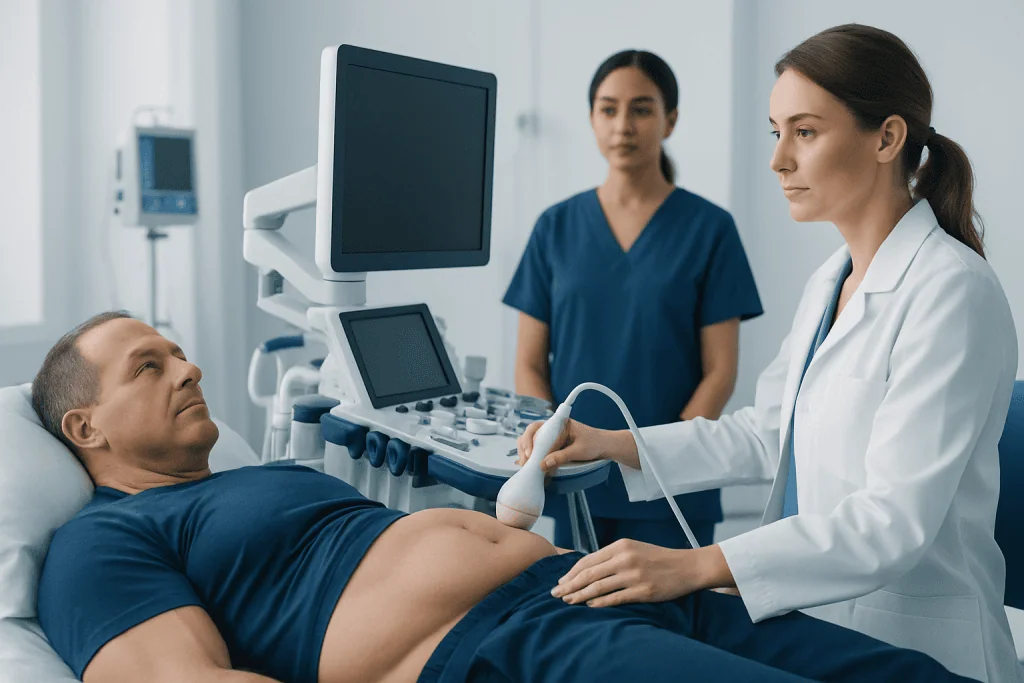
The most noticeable feature is a firm-looking, rounded abdomen that appears out of proportion to the rest of the body. People often describe it as a belly that remains prominent even when body fat is very low and the chest, arms, and legs are highly defined. In some cases, the abdomen may seem more obvious when standing relaxed than when the core muscles are intentionally tightened.
Palumboism itself is not defined by a single set of symptoms, so experiences vary. Some people have no discomfort and are concerned mainly about appearance. Others may report bloating, a sense of pressure, early fullness after meals, constipation, reflux, or reduced core comfort during exercise.
Warning signs suggest that something more than a cosmetic change may be involved. These include abdominal pain, nausea, vomiting, unexplained weight loss, yellowing of the skin or eyes, shortness of breath, swelling in the legs, or a rapidly increasing abdominal size. Symptoms such as these deserve medical attention because they can point to liver, heart, digestive, or hormonal problems rather than a simple body-composition issue.
Possible causes and contributing factors

There is no single proven cause of palumboism, and doctors usually think in terms of contributing factors rather than one explanation. In bodybuilding settings, concern often centers on repeated or prolonged use of anabolic-androgenic steroids, growth hormone, insulin, and related substances. These may affect soft tissues, fluid balance, organ size, metabolism, and fat distribution. However, not every person with abdominal protrusion has used these substances, and not every user develops this appearance.
Another possibility is adaptation of the abdominal wall and deep core structures over time. Heavy lifting, bracing mechanics, and repeated increases in intra-abdominal pressure may influence posture and the way the abdomen projects outward. Digestive factors can also add to the appearance. Chronic constipation, gas, food intolerance, or disorders causing ongoing bloating may make the abdomen look more distended.
Doctors also consider enlargement of internal organs, especially the liver or intestines, when the abdomen appears firm or progressive. This is why a clinician may investigate endocrine problems, liver disease, and gastrointestinal disorders. If symptoms suggest a hormonal issue, evaluation may involve endocrinology and, in selected cases, imaging or specialist review. When abdominal enlargement appears linked to tissue growth, surgeons may use advanced imaging and, rarely, procedures such as biopsy if another diagnosis needs to be confirmed.
Importantly, abdominal protrusion in athletes is not always related to performance-enhancing drugs. More common explanations such as poor breathing mechanics, pelvic tilt, overeating before training, food sensitivities, or an undiagnosed medical condition can also play a role. This is one reason why neutral, individualized medical assessment is more helpful than assumptions.
How doctors evaluate palumboism
Assessment starts with a detailed history. A doctor will usually ask when the abdominal change began, whether it is constant or fluctuates, whether there is pain or bloating, bowel habit changes, shortness of breath, and whether there has been use of supplements, anabolic agents, growth hormone, insulin, or other substances. Honest disclosure is important because it helps guide safe testing and treatment.
The physical examination often includes checking the abdominal shape while standing and lying down, looking for tenderness, hernia, fluid retention, organ enlargement, and signs of liver or hormone-related disease. Posture, core muscle function, and breathing pattern may also be reviewed. Because the appearance can be misleading, the clinician may need to separate true internal enlargement from muscular or postural projection.
Depending on findings, tests may include blood work to assess liver function, kidney function, blood sugar, thyroid status, and general inflammation. Imaging may be used if organ enlargement, a mass, or another structural problem is suspected. In this setting, MRI or other imaging studies can help evaluate abdominal tissues and organs without relying on appearance alone.
If digestive symptoms are prominent, further workup may look for bowel disease, reflux, food intolerance, or complications such as severe constipation. Some patients need coordinated care among internal medicine, gastroenterology, endocrinology, sports medicine, and surgery. The goal is not simply to label the appearance, but to identify the real reason behind it.
Treatment and management options
There is no single treatment called a “palumboism cure” because management depends on the underlying cause. If the protrusion is related to performance-enhancing substances, the safest step is medical supervision and discontinuation planning rather than abrupt self-management. Doctors may also monitor hormone levels, liver health, blood pressure, heart strain, and blood sugar, especially if anabolic steroids, growth hormone, or insulin have been used.
When digestive issues are contributing, treatment may focus on constipation, reflux, food intolerance, or bowel inflammation. Dietary adjustment, hydration, bowel habit support, and treatment of an identified gastrointestinal disorder can improve symptoms and abdominal comfort. In some cases, specialist evaluation with endoscopy is helpful when upper digestive symptoms, persistent reflux, or unexplained discomfort are present.
If imaging or examination suggests a structural or organ-related problem, management is directed at that condition. This may include treatment for liver disease, repair of a hernia, or assessment of abdominal masses. If a clinician suspects another abdominal disorder, evaluation may overlap with conditions such as abdominal hernia, which can also cause visible bulging, especially with straining.
Supportive care may include breathing retraining, core rehabilitation, posture work, and exercise modification under professional guidance. These measures are most useful when muscular imbalance or chronic bracing contributes to the shape of the abdomen. Near the end of the care pathway, some patients benefit from multidisciplinary review; Acibadem International’s specialists in JCI-accredited hospitals evaluate and treat complex abdominal, hormonal, and digestive concerns for international patients when appropriate.
Self-care, prevention, and safer training habits
Prevention centers on protecting overall health rather than chasing appearance changes. The most important step is avoiding non-prescribed anabolic steroids, growth hormone, insulin, and similar substances. These products can affect multiple organs and body systems, and they should never be considered harmless performance aids.
Good digestive habits may also reduce abdominal distension. Many people benefit from regular meals, adequate fiber if appropriate, enough fluids, and attention to foods that repeatedly trigger bloating. Eating very large meals close to training, chronic constipation, and poorly tolerated supplements may all make abdominal projection more noticeable.
Training technique matters as well. Proper breathing, balanced core strengthening, and avoiding constant over-bracing can support healthier abdominal mechanics. Recovery, sleep, and medical follow-up are also part of prevention, especially for athletes who train intensely or use many supplements.
Anyone worried about a changing abdominal shape should resist online self-diagnosis. A visible belly in a lean, muscular person may seem straightforward, but many different problems can look similar. Getting an evidence-based assessment early may prevent complications and unnecessary anxiety.
When to seek medical care
Medical advice should be sought if abdominal enlargement is new, persistent, or getting worse. This is especially important when the abdomen feels firm, remains enlarged even when fasting, or is associated with digestive symptoms that do not settle. A doctor can assess whether the problem is cosmetic, functional, or a sign of an underlying disease.
Prompt care is needed if there is significant pain, vomiting, fever, inability to pass stool or gas, fainting, shortness of breath, chest discomfort, jaundice, blood in the stool, or sudden rapid swelling of the abdomen. These features are not typical of a simple physique change and may signal a more urgent condition.
People who have used anabolic steroids, growth hormone, insulin, or other performance-enhancing substances should also consider routine medical review even if they feel well. Complications can affect the liver, heart, hormones, and metabolism before symptoms become obvious. A clinician can recommend the right tests and refer to specialists when necessary.
Frequently asked questions
Is palumboism a real medical diagnosis?
Palumboism is not an official medical diagnosis or scientific disease name. It is an informal term used to describe abdominal protrusion, usually discussed in bodybuilding settings. Doctors focus on finding the underlying cause rather than using the label alone.
What causes palumboism?
There is no single confirmed cause. Possible contributors include performance-enhancing substances, changes in abdominal wall mechanics, digestive bloating, posture, and enlargement of internal organs. A medical assessment is needed because the cause can differ from person to person.
Can palumboism happen without steroid or growth hormone use?
Yes. Although the term is often associated with bodybuilding drug use, abdominal distension can also happen because of constipation, food intolerance, hernia, liver problems, posture changes, or other medical conditions. This is why it should not be assumed to have one explanation.
Can palumboism be reversed?
Sometimes the abdominal appearance improves, but the outlook depends on the reason for it. If the problem is related to bloating, bowel habits, posture, or substance use, treatment and lifestyle changes may help. If organ enlargement or another disease is involved, recovery depends on how that condition responds to care.
Which doctor should a person see for palumboism?
A good starting point is a primary care doctor or internal medicine specialist. Depending on symptoms, referral may be made to gastroenterology, endocrinology, sports medicine, or surgery. The best specialist is determined by the likely cause found during the first evaluation.
How is palumboism different from ordinary bloating?
Ordinary bloating usually fluctuates and often relates to meals, gas, constipation, or menstrual cycles. Palumboism is used more specifically for a persistent, protruding abdominal shape in a lean, muscular person. Even so, digestive bloating can still be part of the picture, so the distinction is not always obvious without examination.
References
- World Health Organization
- National Institute on Drug Abuse
- U.S. National Library of Medicine
- American College of Gastroenterology
- Endocrine Society
This article is for general information only and is not a substitute for professional medical advice. Please consult a qualified doctor about your individual situation.
Medical weight-loss options in Turkey — costs & eligibility
JCI-accredited · board-certified surgeons · reply within 24h
Add us as a Preferred Source to see more of our trusted health content across Google Search, AI Overviews and Discover.
Check your numbers in seconds
BMI, calories, due date, blood pressure and 30+ more clinical calculators — free, instant, doctor-reviewed ranges.