Is Enema Uncomfortable? Causes, Explanations, and Next Steps

Mild cramping, pressure, and urgency during an enema are common and usually temporary. Severe pain is not expected and may point to irritation, injury, blockage, or another bowel problem.
Key Takeaways
- Mild cramping, pressure, and urgency during an enema are common and usually temporary.
- Severe pain is not expected and may point to irritation, injury, blockage, or another bowel problem.
- Red flags include rectal bleeding, fever, vomiting, marked abdominal swelling, fainting, or inability to pass stool or gas.
- Doctors assess symptoms with a history, examination, and sometimes blood tests or imaging.
- Using the right technique, fluid temperature, and product type can reduce discomfort.
Yes, an enema can feel uncomfortable, but mild pressure, fullness, and brief cramping are often harmless and short-lived. Severe pain, bleeding, dizziness, fever, or symptoms that do not settle should be assessed by a doctor.
Overview: Is an enema supposed to feel uncomfortable?
For many people, the honest answer to the question “is enema uncomfortable” is yes, but usually only mildly. A feeling of pressure in the rectum, temporary fullness in the lower abdomen, a brief urge to empty the bowels, and some cramping can happen because fluid stretches the rectum and stimulates the bowel to move.
In most cases, this discomfort is short-lived and settles once the bowel is emptied. The experience may feel awkward or unpleasant, but it should not be intensely painful. Pain that is sharp, severe, or worsening is not typical and deserves medical attention, especially if it comes with bleeding, vomiting, fever, or significant bloating.
The cause of discomfort can be simple, such as cold fluid, fast infusion, anxiety, or straining. Sometimes, however, ongoing pain after an enema may relate to constipation, hemorrhoids, an anal fissure, dehydration, inflammation, or a problem higher in the bowel. Understanding what is common and what is not can help a person decide whether home measures are enough or whether professional care is the safer next step.
What an enema may feel like during and after
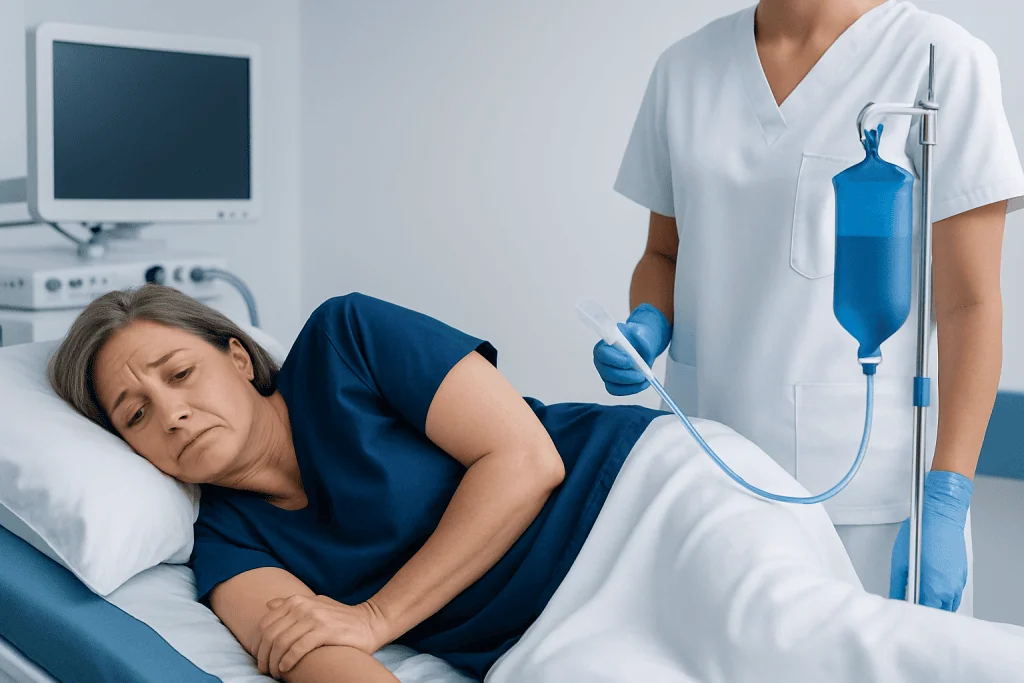
An enema works by placing fluid into the rectum to soften stool, stimulate bowel movements, or prepare the bowel for an examination or procedure. As the fluid enters, a person may notice coolness, fullness, or pressure. Cramping can occur because the bowel contracts in response to the fluid.
During the next few minutes, there is often a strong urge to use the toilet. After the bowel empties, many people feel relief, though mild cramping or irritation may linger briefly. Some may also notice tiredness or slight lightheadedness if they have been straining, have not had enough fluids, or feel anxious about the process.
Symptoms that are more likely to be within the usual range include:
- Temporary rectal pressure
- Mild abdominal cramping
- A strong urge to have a bowel movement
- Minor soreness around the anus
- Passing loose stool for a short time afterward
Symptoms that are less typical include severe abdominal pain, persistent rectal pain, bleeding, new inability to pass gas, or pain that continues long after the enema. These symptoms raise concern for irritation, a tear, bowel obstruction, or another digestive condition that needs assessment.
Why an enema can be uncomfortable

Discomfort does not always mean something is wrong. The bowel is sensitive to stretching, and even a correctly used enema can trigger cramping. If the fluid is inserted too quickly, is too cold, or is larger in volume than the body tolerates comfortably, the sensation can be more intense.
Technique also matters. The tip can irritate delicate tissue if it is inserted roughly, without enough lubrication, or against resistance. People with hemorrhoids, anal fissures, rectal inflammation, or recent anorectal procedures may feel more pain than others. Anxiety can add to this as well, because pelvic floor muscles may tighten and make insertion and evacuation harder.
In some cases, discomfort relates to the underlying reason the enema was used in the first place. Hard stool, severe constipation, fecal impaction, or a narrowed area in the bowel can make evacuation painful. Conditions such as constipation or inflammation in the colon may also increase sensitivity and cramping.
Less commonly, serious problems can be involved. These include bowel obstruction, significant dehydration, electrolyte imbalance, infection, or injury to the rectum. This is why intense pain should not be dismissed, particularly if it appears suddenly or is accompanied by other warning signs.
Red flags that need medical review
Most mild discomfort after an enema settles without lasting problems, but some symptoms should prompt a call to a doctor or urgent evaluation. The main concern is whether pain signals something more than normal bowel stimulation.
Medical review is important if a person has severe or worsening abdominal pain, marked abdominal swelling, repeated vomiting, fever, chills, rectal bleeding more than a small streak, fainting, chest symptoms, or signs of dehydration such as extreme thirst, weakness, or reduced urination. It is also important to seek help if stool or gas cannot be passed, since this can suggest a blockage.
People should also be cautious if they have chronic bowel disease, a history of bowel surgery, severe hemorrhoids, kidney disease, heart failure, or are using enemas repeatedly. Frequent use can sometimes irritate the rectum and may contribute to dependence for bowel movements rather than solving the underlying cause.
Children, older adults, pregnant individuals, and people who are medically frail may need earlier medical advice. Even when symptoms seem minor, personalized guidance is safer if the person has complex health needs or is unsure whether the enema was used correctly.
How doctors evaluate pain or problems after an enema
When symptoms go beyond mild cramping, doctors usually start with a careful history. They ask what type of enema was used, how much fluid was used, how it was administered, how long symptoms have lasted, and whether there was blood, vomiting, constipation, diarrhea, fever, or trouble passing gas. This timeline helps distinguish expected irritation from a possible complication.
A physical examination often follows, including checking the abdomen for tenderness, bloating, and bowel sounds. Depending on symptoms, the doctor may also examine the anal and rectal area to look for hemorrhoids, fissures, inflammation, or signs of injury. If constipation is severe, they may consider fecal impaction or another bowel problem.
Some people need tests. These may include blood tests to look at dehydration or electrolyte changes, stool testing if infection is suspected, or imaging such as an abdominal X-ray or CT scan if there is concern for obstruction, perforation, or another structural problem. When symptoms point to a digestive disorder, specialist evaluation in gastroenterology care may be helpful.
The goal is not only to ease the immediate discomfort but also to identify why the enema was needed. If bowel habits have changed, a doctor may assess for diet-related constipation, medication effects, pelvic floor issues, irritable bowel symptoms, or less common conditions such as colon cancer in the right clinical context.
Treatment and relief for enema discomfort
Treatment depends on the cause. If discomfort is mild and expected, simple measures are often enough: rest, hydration, a gentle toilet routine, and avoiding further enemas unless advised by a clinician. Some people feel better after walking lightly or using a warm compress on the lower abdomen. If anal irritation is present, gentle cleansing and avoiding harsh wiping can help.
If the problem is constipation, long-term relief usually comes from addressing the cause rather than repeating enemas. A doctor may suggest dietary changes, more fluid, medication review, or a bowel regimen suited to the individual. For persistent or complex cases, care plans may include evaluation in colonoscopy services or general surgery if a structural issue is suspected.
When there is hemorrhoid irritation, an anal tear, or inflamed tissue, the bowel may need to be managed more gently. Treatment may focus on softening stools, minimizing straining, and treating the affected tissue. Pain linked to severe constipation, repeated impaction, or anorectal disease should be handled by a qualified doctor rather than repeated self-treatment at home.
Near the end of the diagnostic process, some patients may benefit from multidisciplinary assessment. Acibadem International’s multidisciplinary specialists in JCI-accredited hospitals diagnose and treat digestive symptoms for international patients when further evaluation is needed.
Prevention and safer self-care
The best way to reduce discomfort is to use an enema only when it is clearly needed and according to medical instructions or package directions. For many people, the safer long-term strategy is preventing constipation with regular fluids, enough dietary fiber when appropriate, physical activity, and not delaying the urge to have a bowel movement.
If a clinician has recommended an enema, comfort may improve by using adequate lubrication, going slowly, and stopping if there is strong resistance or sharp pain. The fluid should be the type intended for rectal use and used exactly as directed. Mixing homemade solutions or using products too often can increase the risk of irritation or electrolyte problems.
People with ongoing bowel symptoms should avoid relying on enemas as a routine fix. Chronic use may mask an underlying problem and can make bowel habits harder to regulate. A better next step is medical advice if constipation is frequent, if there is recurrent pain, or if bowel habits have changed noticeably.
It is also wise to review medicines that may contribute to constipation, such as some pain medicines, iron supplements, or other prescription drugs. If constipation keeps returning, a clinician may suggest a broader plan that can include lifestyle support, medication adjustment, or further digestive testing.
When to seek medical care
A person should seek medical care promptly if an enema causes severe pain, persistent rectal pain, significant bleeding, fever, vomiting, fainting, confusion, or a swollen abdomen. Medical review is also important if the enema does not lead to stool passage and the person cannot pass gas, because this may point to blockage or impaction rather than simple constipation.
Non-urgent medical advice is appropriate when discomfort keeps returning, bowel habits have changed for weeks, there is recurring dependence on enemas, or symptoms such as weight loss, fatigue, or unexplained anemia are present. These patterns may need evaluation beyond home care.
Doctors can usually clarify whether symptoms are due to temporary bowel irritation or a more important digestive issue. Reassuringly, mild enema discomfort is common and often harmless, but it is always reasonable to ask for professional guidance if symptoms are intense, unusual, or simply not improving.
Frequently asked questions
Is it normal for an enema to hurt a little?
Mild discomfort, pressure, and brief cramping can be normal during an enema. It should not cause severe or sharp pain. If pain is intense, worsening, or followed by bleeding or fever, medical advice is important.
How long should discomfort last after an enema?
Many people feel better soon after passing stool, though mild cramping or rectal soreness can last a short time. Symptoms that continue, worsen, or interfere with normal activity should be checked by a doctor. Ongoing pain is not something to ignore.
Can an enema cause damage?
Most properly used enemas do not cause lasting harm, but irritation can happen. Rarely, injury to the rectum, dehydration, or electrolyte imbalance may occur, especially with frequent use, incorrect technique, or certain medical conditions. That is why repeated or painful use should be discussed with a clinician.
Why do I feel cramps during an enema?
Cramps happen because the fluid stretches the rectum and stimulates the bowel to contract. This is part of how an enema helps move stool. Cramping is often brief, but severe pain may suggest another issue such as impaction or irritation.
Should I use another enema if the first one did not work?
It is usually best not to keep repeating enemas without guidance, especially if there is pain, bloating, or no stool passes. Repeated use can irritate the rectum and may delay proper treatment of fecal impaction or bowel obstruction. A doctor can advise the safest next step.
Who should be especially careful with enemas?
Older adults, children, pregnant individuals, and people with kidney disease, heart failure, bowel disease, or prior bowel surgery should be especially cautious. These groups may be more vulnerable to dehydration, electrolyte problems, or complications. Medical advice is wise before using enemas regularly.
References
- National Institute of Diabetes and Digestive and Kidney Diseases
- American Society of Colon and Rectal Surgeons
- National Health Service
- Mayo Clinic
- American College of Gastroenterology
This article is for general information only and is not a substitute for professional medical advice. Please consult a qualified doctor about your individual situation.
Persistent digestive symptoms? Get evaluated in Turkey
JCI-accredited · board-certified surgeons · reply within 24h
Add us as a Preferred Source to see more of our trusted health content across Google Search, AI Overviews and Discover.