Visually Impaired — Explained by Medical Evidence, Not Myths
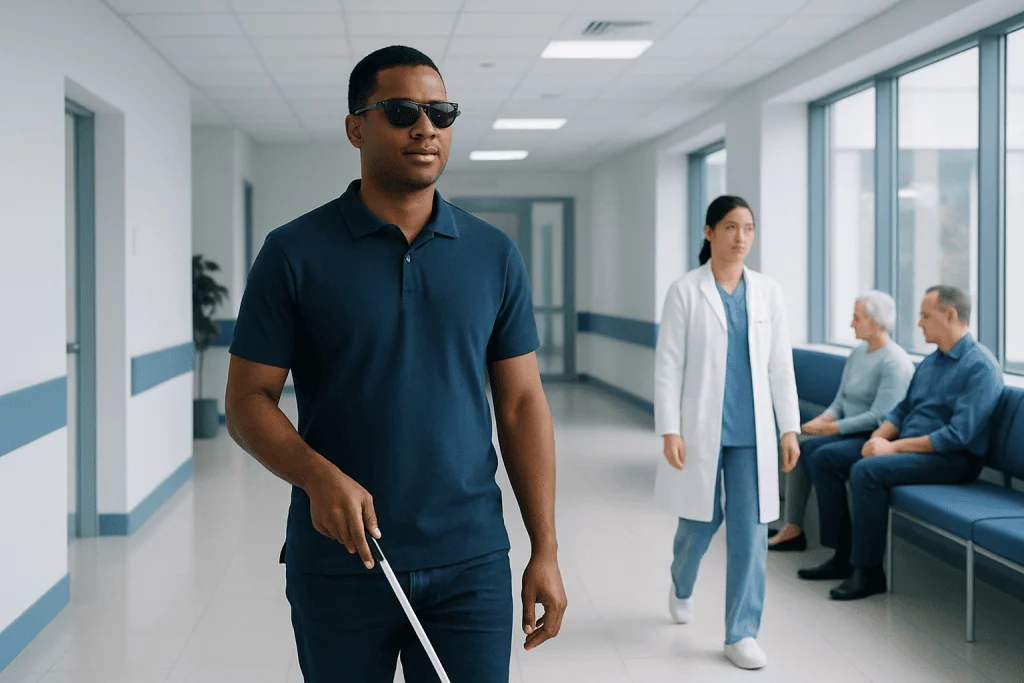
Visually impaired describes a level of vision loss that affects daily life and is not fully corrected by standard measures. Visual impairment is not always total blindness; many people have some remaining usable vision.
Key Takeaways
- Visually impaired describes a level of vision loss that affects daily life and is not fully corrected by standard measures.
- Visual impairment is not always total blindness; many people have some remaining usable vision.
- Common causes include eye diseases, neurological conditions, injury, and age-related changes.
- Early evaluation can help identify treatable causes and improve safety, function, and quality of life.
- Support may include medical treatment, low-vision rehabilitation, assistive devices, and environmental adaptations.
Visually impaired is a broad term for reduced vision that cannot be fully corrected with standard glasses, contact lenses, medication, or routine treatment alone. It can range from mild but meaningful difficulty with daily tasks to severe vision loss or blindness, and the cause may be present at birth or develop later in life.
Overview: what “visually impaired” means
Visually impaired means a person has reduced vision that interferes with everyday activities and is not fully corrected with ordinary glasses, contact lenses, or routine treatment. The term includes a wide range of vision loss, from low vision that makes reading or recognizing faces difficult to severe visual loss and blindness. In medical care, clinicians usually define the level of impairment by measuring visual acuity, visual field, and how vision affects daily functioning.
This term is often misunderstood. Being visually impaired does not automatically mean a person sees nothing at all. Many people who are visually impaired retain some useful vision, such as side vision, central vision, light perception, or the ability to distinguish shapes and contrast. The way vision is affected depends on the underlying cause.
Visual impairment can result from disorders of the eye itself, the optic nerve, or the brain areas that process visual information. It may occur gradually, as with age-related eye disease, or suddenly, as in an eye injury or vascular event. Some causes are treatable or partially reversible, while others are chronic and require long-term support.
How visual impairment affects daily life
The effects of visual impairment vary widely. Some people mainly struggle with reading small print, using screens, seeing at night, or navigating unfamiliar spaces. Others have trouble with facial recognition, depth perception, driving, cooking, taking medication safely, or moving around outdoors. Even a mild reduction in contrast sensitivity or peripheral vision can significantly affect independence.
The emotional and social impact can also be important. Vision loss may lead to frustration, fatigue, reduced confidence, and social withdrawal, especially if the change is sudden. Children with visual impairment may need support with learning and mobility, while older adults may face a higher risk of falls and medication errors.
Helpful support often combines medical care with practical strategies. Brighter lighting, larger print, high-contrast markings, screen readers, magnifiers, orientation training, and rehabilitation services can all improve function. Rather than focusing only on what vision has been lost, care aims to make the best use of the vision that remains and to support safety and quality of life.
Common symptoms and signs
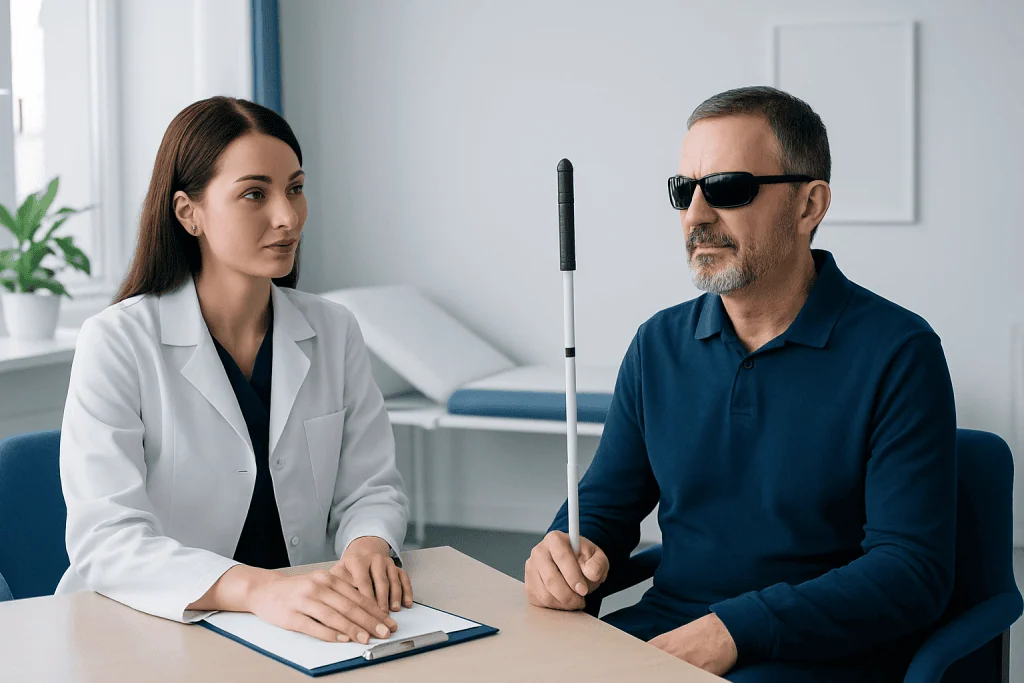
Visual impairment may appear in different ways depending on the cause. Symptoms can include blurred vision, difficulty reading even with current glasses, reduced side vision, poor night vision, glare sensitivity, trouble seeing steps or curbs, washed-out colors, or a central blind spot. Some people notice that they need much brighter light, while others find bright light uncomfortable.
Children may not describe visual problems clearly. Instead, they may sit very close to screens, bump into objects, hold books unusually close, squint, tilt the head, or have learning difficulties that are related to reduced vision. In adults, a progressive decline may be mistaken for normal aging, which can delay diagnosis.
Visual symptoms should not be self-diagnosed, because similar complaints can come from very different conditions. For example, gradual central blurring may occur with macular degeneration, while severe eye pressure from glaucoma can quietly damage side vision over time. A formal eye examination is the safest way to identify the pattern of vision loss and its cause.
Causes and risk factors
There is no single cause of being visually impaired. Common eye-related causes include cataracts, glaucoma, diabetic eye disease, macular degeneration, inherited retinal disorders, corneal disease, severe refractive error, and retinal detachment. Neurological causes can include stroke, optic nerve disorders, brain injury, and diseases that affect visual processing.
Risk factors depend on the condition. Aging is a major factor for cataracts, glaucoma, and macular degeneration. Diabetes can damage small blood vessels in the retina, and high blood pressure may contribute to vascular eye problems. Smoking, long-term sun exposure, some medications, family history, premature birth, and past eye trauma can also increase risk.
Infections, autoimmune disease, and nutritional deficiencies may contribute in some cases, particularly where access to regular health care is limited. Some vision loss is present from birth due to genetic conditions or developmental issues. Because the causes are so varied, visual impairment should be approached as a clinical finding that needs explanation, rather than as a diagnosis by itself.
It is also important to separate myth from evidence. Visual impairment is not always preventable, and it is not caused by ordinary eye use such as reading, studying, or screen time alone. Screens may worsen eye strain or dry eye symptoms, but they do not directly explain most forms of lasting visual impairment.
How doctors diagnose visual impairment
Diagnosis starts with a careful history. The doctor will ask when the vision change began, whether it is getting worse, whether one or both eyes are affected, and whether symptoms include pain, flashes, floaters, headaches, or neurological changes. Medical conditions such as diabetes, vascular disease, autoimmune illness, or previous eye surgery are also relevant.
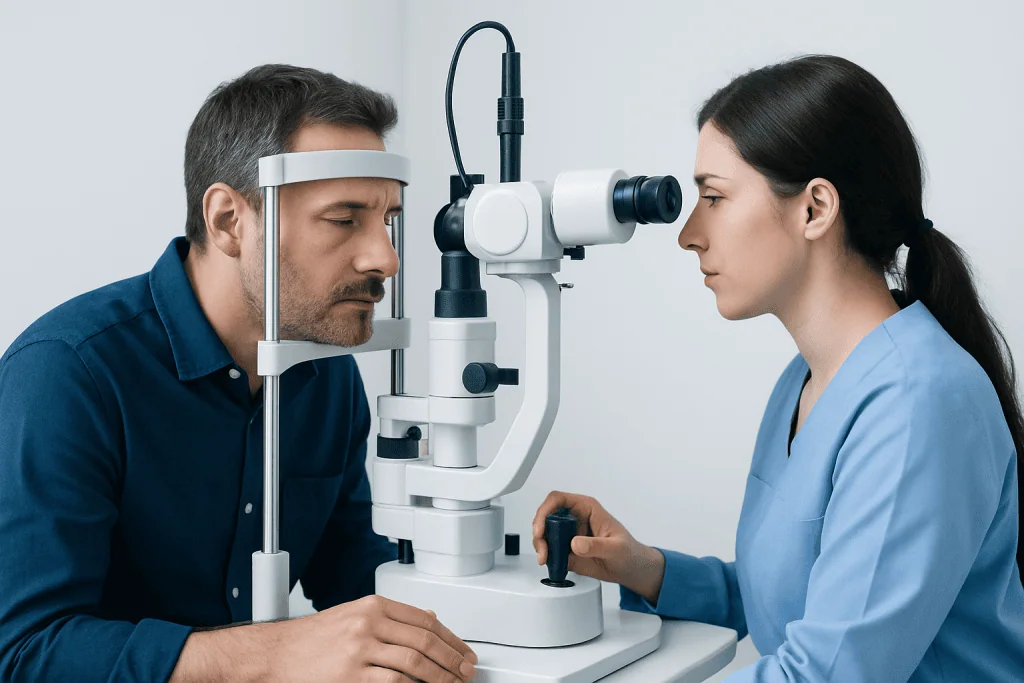
An eye examination usually includes visual acuity testing, refraction, pupil assessment, slit-lamp examination, eye pressure measurement, and a dilated retinal examination. Visual field testing can help show whether side vision is reduced. Imaging tests such as optical coherence tomography or retinal photography may be used to examine the retina and optic nerve in more detail.
Some patients need additional testing if the problem may involve the optic nerve or brain. In those situations, specialists may use blood tests, electrophysiological studies, or MRI to look for neurological causes. The goal is not just to confirm that a person is visually impaired, but to identify whether the cause is treatable, urgent, or likely to progress.
Treatment, rehabilitation, and support
Treatment depends entirely on the underlying cause. In some cases, vision improves when the disease is treated, such as after cataract surgery or with treatment for retinal disease, inflammation, or uncontrolled blood sugar. In other cases, the main goal is to slow further loss, preserve remaining vision, and improve function.
Low-vision rehabilitation is an important part of evidence-based care. This may include magnifying devices, special lenses, task lighting, tinted filters, large-print materials, screen magnification software, text-to-speech tools, and training in daily living skills. Mobility training can help people move safely indoors and outdoors, and occupational therapy may support home and workplace adaptations.
For some conditions, doctors may recommend medical procedures to reduce the risk of progression. Examples include treatments used in retinal disease or glaucoma treatment to lower pressure and protect the optic nerve. Many people benefit from a team approach involving ophthalmologists, optometrists, rehabilitation specialists, neurologists, diabetes specialists, and mental health professionals when needed.
Near the end of the care pathway, practical planning matters as much as medical treatment. Adjusting lighting, reducing fall hazards, labeling medications clearly, and reviewing driving safety can make daily life safer. Acibadem International’s multidisciplinary specialists and JCI-accredited hospitals also diagnose and treat visual impairment and its underlying causes for international patients.
Prevention and self-care
Not all visual impairment can be prevented, but some steps can lower risk or support earlier diagnosis. Regular eye exams are especially important for children, older adults, people with diabetes, and anyone with a family history of serious eye disease. Eye checks may detect changes before a person notices symptoms, particularly in conditions that progress quietly.
Good general health habits help protect the eyes as well as the rest of the body. Managing diabetes and blood pressure, not smoking, eating a balanced diet, protecting the eyes from injury, and wearing sunglasses with UV protection are sensible measures. People who use screens for long periods may also benefit from breaks, blinking more often, and treating dry eye symptoms when present.
Self-care after vision loss focuses on maintaining independence and safety. Helpful steps can include increasing home lighting, using contrast tape on stairs, organizing belongings consistently, enlarging text on devices, and asking about low-vision aids. Families can support visually impaired people best by offering practical help while also respecting autonomy and preferred ways of doing tasks.
When to seek medical care
Medical care is appropriate whenever vision becomes noticeably worse, daily tasks become harder because of sight, or a child seems not to see normally. Progressive changes may not be emergencies, but they still deserve timely evaluation because some causes can be treated more effectively when found early.
Urgent assessment is needed for sudden vision loss, new flashes or many floaters, eye injury, severe eye pain, a curtain-like shadow over part of vision, or vision changes linked with weakness, speech difficulty, or severe headache. These symptoms can signal conditions that need immediate treatment to protect vision or overall health.
If a person has already been told they are visually impaired, regular follow-up remains important. Changes in function, falls, medication problems, or worsening mood can all be signs that support needs to be updated. A qualified eye specialist or doctor can guide both medical treatment and practical rehabilitation options.
Frequently asked questions
Does visually impaired mean completely blind?
No. Visually impaired is a broad term that includes many degrees of vision loss, including low vision and blindness. Many visually impaired people still have some usable sight, such as light perception, central vision, or side vision.
Can visual impairment be cured?
Some causes can be treated successfully, while others cannot be fully reversed. For example, vision may improve after treating cataracts or certain retinal problems, but some eye or nerve damage is permanent. Even when a cure is not possible, rehabilitation and assistive tools can greatly improve daily life.
What is the difference between low vision and visual impairment?
Visual impairment is the broader category. Low vision usually refers to a level of sight loss that remains after treatment or standard correction but still leaves some useful vision. Not everyone with visual impairment is blind, and low vision is one part of that spectrum.
Are glasses enough if someone is visually impaired?
Not always. The term usually implies that ordinary glasses or contact lenses do not fully solve the problem. Some people still benefit from updated prescriptions, but many also need medical treatment, low-vision aids, or rehabilitation services.
What conditions commonly cause someone to become visually impaired?
Common causes include cataracts, glaucoma, diabetic retinopathy, macular degeneration, retinal disease, optic nerve damage, stroke, and eye injuries. In children, genetic or developmental conditions may also play a role. A full eye exam is needed to identify the exact cause.
When should a child be assessed for possible visual impairment?
A child should be assessed if they squint, sit very close to screens, bump into objects, avoid visual tasks, or seem delayed with reading or coordination. Children may not realize their vision is unusual, so adults often notice the signs first. Early evaluation can support development and learning.
References
- World Health Organization
- American Academy of Ophthalmology
- National Eye Institute
- Centers for Disease Control and Prevention
- International Agency for the Prevention of Blindness
This article is for general information only and is not a substitute for professional medical advice. Please consult a qualified doctor about your individual situation.
Explore treatments in Turkey — costs, top hospitals & a free quote
JCI-accredited · board-certified surgeons · reply within 24h
Add us as a Preferred Source to see more of our trusted health content across Google Search, AI Overviews and Discover.
Check your numbers in seconds
BMI, calories, due date, blood pressure and 30+ more clinical calculators — free, instant, doctor-reviewed ranges.

More from the Health Library


Related Specialists

Prof. Dr. Mustafa Seyhan
Orthopedic Surgery & Traumatology
Dr. Mehmet Murat Çuhadaroğlu
Nuclear Medicine
Assoc. Prof. Dr. Bertan Cengiz
Orthopedic Surgery & Traumatology
Dr. Serap Gülşeni
Check Up & Wellness Center