How I Knew I Was Pregnant with IUD? A Doctor-Reviewed Answer

IUDs are among the most effective contraceptive methods, but no method prevents pregnancy in every case. Late or absent periods can be expected with hormonal IUDs, so a pregnancy test is more reliable than symptoms alone.
Key Takeaways
- IUDs are among the most effective contraceptive methods, but no method prevents pregnancy in every case.
- Late or absent periods can be expected with hormonal IUDs, so a pregnancy test is more reliable than symptoms alone.
- If pregnancy occurs with an IUD in place, a clinician should promptly confirm whether it is inside the uterus.
- One-sided pelvic pain, shoulder-tip pain, dizziness, fainting, or heavy bleeding require urgent medical care.
- Do not attempt to remove an IUD at home if a pregnancy test is positive.
People asking “how I knew I was pregnant with IUD” usually notice a positive pregnancy test, breast tenderness, nausea, fatigue, or a change in bleeding. Pregnancy with an IUD is uncommon, and many symptoms can have other explanations, but a positive test needs prompt medical assessment because the location of the pregnancy should be confirmed.
How can someone know they are pregnant with an IUD?
For many people, the answer to “how I knew I was pregnant with IUD” is that they took a home pregnancy test after noticing a new symptom, such as nausea, breast tenderness, unusual tiredness, or a change in their usual bleeding pattern. A positive test, rather than symptoms alone, is the most useful early clue. Home urine tests are generally reliable when used correctly, especially from the day a period is expected or later.
Pregnancy while using an intrauterine device (IUD) is uncommon. IUDs are highly effective forms of contraception, including both copper IUDs and hormone-releasing IUDs. However, no contraceptive method is completely effective. Importantly, many changes that can feel like pregnancy, including spotting, cramping, missed periods, and breast tenderness, may also occur for non-pregnancy reasons.
A positive pregnancy test with an IUD should be discussed with a doctor or sexual and reproductive health clinician as soon as possible. This is not intended to cause alarm: many people with early symptoms are not pregnant, and not every positive test indicates an emergency. The priority is to determine the pregnancy’s location and to discuss safe next steps.
Symptoms that may prompt a pregnancy test
Early pregnancy symptoms can be subtle and vary greatly from person to person. Some people have no noticeable symptoms at first. Others may experience nausea, heightened sensitivity to smells, fatigue, breast changes, more frequent urination, bloating, mild pelvic cramping, or light spotting. These symptoms do not confirm pregnancy because they overlap with premenstrual symptoms, stress, infections, medication effects, and normal hormonal changes.
Bleeding patterns depend on the IUD type. Hormonal IUDs commonly make periods lighter, irregular, or absent over time. Therefore, a missed period is less helpful as a pregnancy signal for someone with a hormonal IUD than it may be for someone who usually has regular cycles. Copper IUDs do not usually stop periods, so a late period may be more noticeable, although cycle timing can still vary.
It can be reasonable to take a home pregnancy test if there has been a change from the person’s usual pattern, pregnancy symptoms, concern that the IUD has moved, or unprotected intercourse after an IUD may have been expelled. If the first test is negative but symptoms continue or a period does not arrive as expected, repeating the test after a few days or seeking clinical advice can help clarify the situation.
- New nausea, fatigue, or breast tenderness
- A late period with a copper IUD, or unexpected symptoms with a hormonal IUD
- Unexpected pelvic discomfort or light bleeding
- Inability to feel IUD strings after previously feeling them, or feeling the hard plastic part of the IUD
Why pregnancy can occur with an IUD

Pregnancy with an IUD is rare, but it can occur if the device was not inserted correctly, shifted position, or was partly or completely expelled from the uterus. Expulsion is more likely to happen in the first months after insertion, but it may occur later as well. Some people notice longer, shorter, or missing strings, while others do not notice any change.
An IUD may also be less effective if pregnancy had already started before insertion, although clinicians check for pregnancy before placing an IUD. Timing around insertion, including having intercourse shortly before an IUD is placed, may occasionally be relevant depending on the situation and IUD type.
Changes in strings do not always mean that the IUD has moved. Strings can curl upward into the cervix or uterus and become difficult to feel. Conversely, feeling strings does not confirm that the IUD is in exactly the right position. An examination and, when needed, an ultrasound are the reliable ways to assess IUD placement.
Why a positive test needs prompt review
When an IUD user becomes pregnant, the overall chance of pregnancy is still low. But among the relatively small number of pregnancies that do occur with an IUD in place, there is a greater likelihood that the pregnancy may be ectopic compared with pregnancies in the general population. An ectopic pregnancy develops outside the main cavity of the uterus, most often in a fallopian tube, and needs medical evaluation.
This does not mean that every positive test with an IUD is an ectopic pregnancy. Many pregnancies are located in the uterus. Still, confirming the location early is important because symptoms of ectopic pregnancy may initially be mild or absent. A clinician may arrange blood tests measuring human chorionic gonadotropin (hCG) and a transvaginal ultrasound, sometimes repeated over time if the pregnancy is very early.
Pregnancy with an IUD in place can also carry a higher risk of complications if the pregnancy continues, including infection, miscarriage, and preterm birth. A specialist can explain the options based on the pregnancy location, gestational age, the IUD position, and the individual’s wishes. The IUD should never be pulled out at home.
How doctors confirm pregnancy and IUD position
A clinician will usually begin by asking about the date of the last normal period, bleeding, pain, pregnancy symptoms, IUD type, insertion date, and any concern that the IUD may have come out. They may perform a urine or blood pregnancy test if this has not already been done. A pelvic examination may be offered to assess the cervix and see whether the IUD strings are visible.
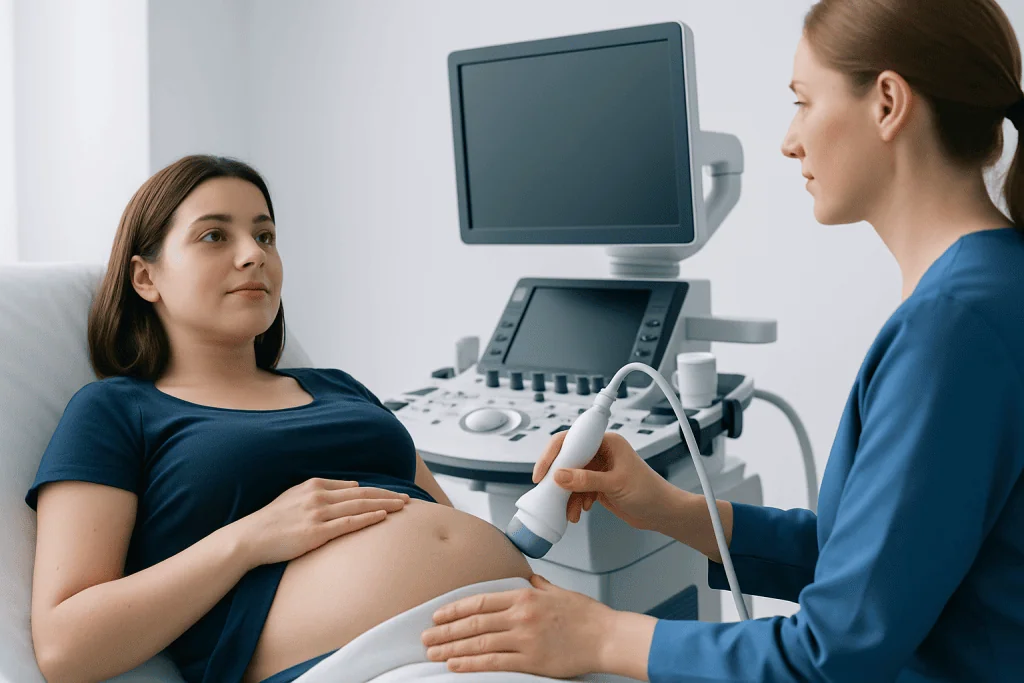
Ultrasound is often the key next step after a positive test. It can help identify whether a pregnancy is within the uterus, whether the IUD remains in place, and whether there are findings that need urgent attention. If an ultrasound is performed very early, it may not yet show the pregnancy clearly. In that circumstance, repeat hCG testing and another ultrasound may be advised.
If an intrauterine pregnancy is confirmed and the strings are visible or the device can be safely reached, a clinician may recommend removing the IUD. Removing it can reduce, though not eliminate, certain risks associated with continuing a pregnancy with an IUD in place. The appropriate plan is individual and should be made with a qualified clinician after discussion of all available options.
When to seek medical care
Anyone with a positive pregnancy test while using an IUD should contact a doctor, gynecologist, or reproductive health clinic promptly, ideally the same day or within the next few days. Early assessment is particularly important before taking medicines or making changes to contraception. Until reviewed, it is safest not to try to adjust or remove the IUD.
Urgent medical care is needed for severe or worsening lower abdominal or pelvic pain, pain mainly on one side, shoulder-tip pain, heavy vaginal bleeding, marked dizziness, weakness, fainting, fever, or feeling very unwell. These symptoms can have several causes, but they may indicate an ectopic pregnancy or another condition that requires prompt treatment.
If a pregnancy test is negative but there is severe pain, heavy bleeding, fever, unusual discharge, or concern about IUD expulsion, medical review is still appropriate. These symptoms may be related to other gynecological conditions and should not be ignored simply because a test is negative.
Practical self-care and future contraception planning
While awaiting an appointment, noting the date and result of pregnancy tests, bleeding pattern, pain location, and any changes in IUD strings can help the clinical assessment. It is also useful to bring information about the IUD type and insertion date if available. However, repeated checking of strings is not necessary if it causes discomfort or anxiety.
For people who are not pregnant but are concerned about their IUD, a clinician can check its position and discuss whether backup contraception is needed until this is confirmed. Condoms can provide temporary protection if there is concern that the IUD has been expelled or is not in the correct position. They also help reduce the risk of sexually transmitted infections, which IUDs do not prevent.
After assessment, many people can continue using an IUD or choose another contraceptive method that suits their health needs and preferences. Acibadem International’s multidisciplinary specialists and JCI-accredited hospitals can assess IUD-related concerns and provide gynecological care for international patients. Individual advice is especially important after a pregnancy with an IUD, because the best future contraceptive choice depends on the cause of the event and personal circumstances.
Frequently asked questions
Can I be pregnant if I have an IUD and no period?
Yes, although pregnancy is uncommon with an IUD. Hormonal IUDs often make periods very light or stop them altogether, so the absence of bleeding does not by itself indicate pregnancy. A home pregnancy test is the best first step if there are new symptoms or concerns.
What are the first signs of pregnancy with an IUD?
Possible signs include a positive pregnancy test, nausea, fatigue, breast tenderness, light bleeding, or pelvic cramping. These symptoms are not specific to pregnancy and can occur for many other reasons. Testing and medical review are needed to confirm what is happening.
What should I do if my pregnancy test is positive with an IUD?
Contact a doctor or reproductive health clinic promptly for assessment. They will usually confirm the pregnancy and determine its location with ultrasound and, if needed, blood tests. Do not try to remove the IUD yourself.
Does a positive pregnancy test with an IUD always mean ectopic pregnancy?
No. Many pregnancies that occur with an IUD are located inside the uterus. However, because an ectopic pregnancy is relatively more likely in this situation, clinicians need to confirm the pregnancy location as early as possible.
Can an IUD move without causing symptoms?
Yes. An IUD can sometimes shift or be expelled with little or no noticeable change. Missing strings may suggest movement, but strings can also simply be difficult to feel. A clinician can assess placement through examination and ultrasound when appropriate.
Can I take a home pregnancy test while using an IUD?
Yes. An IUD does not interfere with a urine pregnancy test. Follow the test instructions carefully, and consider repeating the test after a few days if it is negative but pregnancy symptoms or concerns persist.
References
- American College of Obstetricians and Gynecologists
- Centers for Disease Control and Prevention
- World Health Organization
- Faculty of Sexual and Reproductive Healthcare
- Mayo Clinic
This article is for general information only and is not a substitute for professional medical advice. Please consult a qualified doctor about your individual situation.
Persistent digestive symptoms? Get evaluated in Turkey
JCI-accredited · board-certified surgeons · reply within 24h
Add us as a Preferred Source to see more of our trusted health content across Google Search, AI Overviews and Discover.