Watershed Area Infarct: What Patients Need to Know

A watershed area infarct is a stroke affecting vulnerable border zones between major brain arteries. Sudden weakness, speech difficulty, vision changes, confusion, or loss of coordination require emergency assessment.
Key Takeaways
- A watershed area infarct is a stroke affecting vulnerable border zones between major brain arteries.
- Sudden weakness, speech difficulty, vision changes, confusion, or loss of coordination require emergency assessment.
- Low blood pressure, severe blood loss, dehydration, heart problems, and narrowing of the carotid arteries can reduce brain blood flow.
- Brain imaging and blood-vessel tests help confirm the diagnosis and identify the underlying cause.
- Treatment focuses on urgent stroke care, restoring or protecting blood flow when appropriate, and preventing another stroke.
A watershed area infarct is a type of ischemic stroke that affects areas of the brain supplied by the most distant branches of two major arteries. It commonly develops when blood flow to the brain falls significantly, although small clots and narrowed arteries may also contribute.
What Is a Watershed Area Infarct?
A watershed area infarct is an ischemic stroke that occurs in a “border zone” of the brain. These border zones lie between territories supplied by major arteries, such as the anterior, middle, and posterior cerebral arteries. Because they are at the far ends of arterial blood supply, these areas may be especially sensitive when the brain does not receive enough blood.
The word infarct means an area of tissue injury caused by a loss of blood flow and oxygen. In the brain, this injury can affect movement, sensation, speech, thinking, vision, or other functions, depending on the location and size of the affected area. A watershed infarct may involve the outer surface of the brain, called a cortical watershed infarct, or deeper structures, called an internal watershed infarct.
Watershed strokes can occur after a major drop in blood pressure or circulation, but they do not always have a single obvious trigger. Some develop when an artery supplying the brain is narrowed and the circulation cannot compensate for a further fall in blood flow. Prompt medical assessment is important because stroke treatment and prevention depend on finding the specific cause.
Symptoms and Possible Effects
Symptoms of a watershed area infarct can begin suddenly, as with other types of stroke. They vary according to the part of the brain affected and may be mild, severe, temporary, or persistent. Some people notice symptoms during or after an illness, surgery, severe dehydration, fainting episode, heart problem, or another event that affects circulation.
Possible symptoms include weakness or numbness on one side of the body, facial drooping, trouble speaking or understanding words, new confusion, vision loss or double vision, dizziness, poor balance, or difficulty walking. A person may also have clumsiness of a hand or arm, difficulty carrying out familiar tasks, or changes in attention and memory.
Some watershed infarcts have a characteristic pattern of weakness that is more pronounced in the shoulders and upper arms than in the hands or lower limbs. However, symptoms are not always distinctive, and it is not possible to identify the stroke type from symptoms alone. Any suspected stroke should be treated as an emergency, even if symptoms improve after a few minutes.
- Face: Ask the person to smile and look for facial drooping.
- Arm: Ask them to raise both arms and look for one arm drifting down.
- Speech: Listen for slurred, confused, or unusual speech.
- Time: Call emergency services immediately if any sign is present.
Why Watershed Strokes Happen

Watershed areas depend on steady blood flow. A substantial decrease in blood pressure or overall circulation can leave these regions without enough oxygen. This is sometimes called hypoperfusion. It may occur during severe dehydration, major bleeding, shock, serious infection, a severe heart rhythm problem, heart failure, or a heart attack. It can also happen around major surgery or after an episode of prolonged low blood pressure.
Narrowing of the carotid arteries in the neck is another important contributor. The carotid arteries carry blood to much of the brain. When one is significantly narrowed, blood flow may already be reduced, making the brain more vulnerable during a blood pressure drop. Small clots or debris traveling from the heart or an artery may also lodge in these lower-flow border zones.
Risk factors overlap with those for other ischemic strokes. They include high blood pressure, diabetes, high cholesterol, smoking, atrial fibrillation and other heart conditions, vascular disease, obesity, physical inactivity, and older age. Having risk factors does not mean a watershed infarct will occur, but managing them can substantially support long-term vascular health.
In some cases, more than one factor is present. For example, a person with carotid artery narrowing may develop a watershed infarct after dehydration or a temporary fall in blood pressure. Identifying this combination helps the clinical team choose the safest prevention plan.
How a Watershed Area Infarct Is Diagnosed
Doctors diagnose a suspected watershed area infarct urgently because early stroke assessment can affect treatment options. The clinical team will ask when symptoms started, whether they came and went, what medications the person uses, and whether there was recent illness, bleeding, dehydration, chest symptoms, fainting, or surgery. A neurological examination checks strength, sensation, speech, vision, coordination, and alertness.
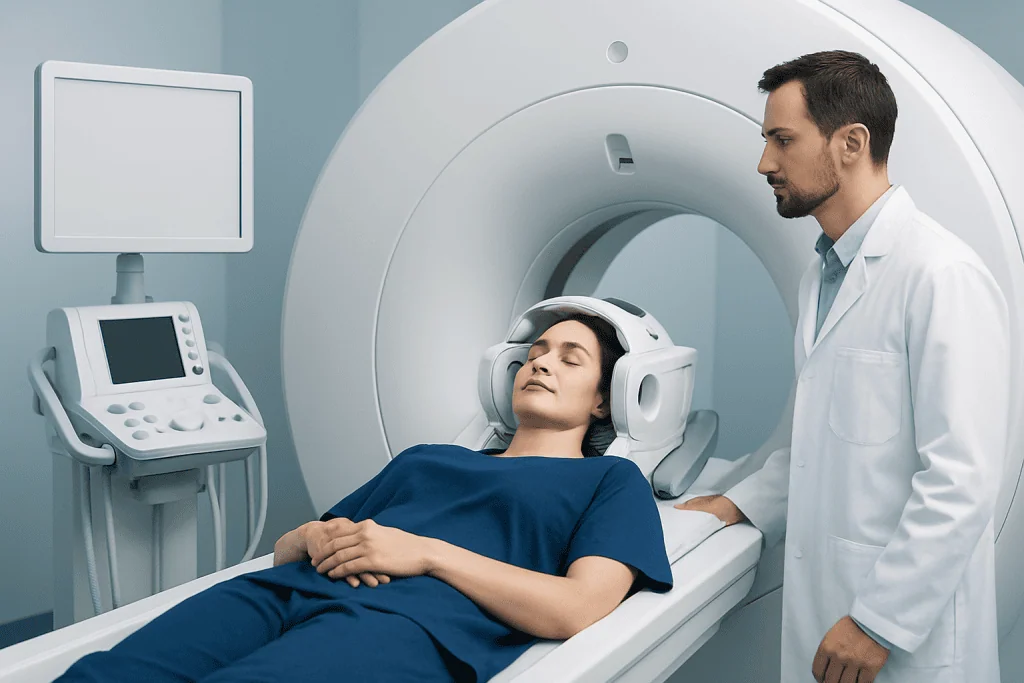
A non-contrast CT scan of the brain is often performed first to look for bleeding and other causes of symptoms. MRI, particularly diffusion-weighted MRI, can show small or early areas of ischemic injury more clearly. The pattern of injury on imaging may suggest a watershed distribution, but results are interpreted together with the person’s symptoms and medical history.
Tests of the brain’s blood vessels may include CT angiography, MR angiography, carotid ultrasound, or catheter angiography in selected circumstances. Doctors may also assess the heart with an electrocardiogram, heart rhythm monitoring, and echocardiography when a cardiac source of clots is possible. Blood tests can help identify anemia, dehydration, infection, diabetes, cholesterol concerns, and other relevant conditions.
The assessment also aims to exclude conditions that can resemble stroke, such as seizures, migraine, low blood sugar, infection, or medication effects. Even when symptoms resolve, a transient episode may signal a high risk of a future stroke and should be evaluated promptly.
Treatment Options and Recovery
A watershed area infarct requires hospital-based stroke care. The immediate priorities are to confirm the diagnosis, determine when symptoms began, protect breathing and circulation, and address factors affecting blood flow. Treatment is individualized because the best approach depends on brain imaging, the type and location of any vessel blockage, bleeding risk, blood pressure, heart function, and other medical conditions.
For some people with acute ischemic stroke, clot-dissolving medicine may be appropriate if they arrive within an eligible treatment window and meet safety criteria. Mechanical thrombectomy, a procedure that removes a clot from a large blocked brain artery, may be considered for selected patients with a large-vessel occlusion. These treatments are time-sensitive and are not appropriate for every watershed infarct.
Clinicians will carefully manage fluid status, oxygen levels, blood pressure, blood glucose, temperature, and any underlying illness. If severe carotid artery narrowing is found, a vascular or stroke specialist may discuss whether medical treatment alone or a procedure such as carotid endarterectomy or stenting is suitable. The choice depends on the anatomy, symptoms, overall health, and expected benefit.
Recovery can include physiotherapy, occupational therapy, speech and language therapy, cognitive rehabilitation, and psychological support. Rehabilitation begins as soon as it is medically safe and is tailored to the person’s goals and daily needs. Improvement may continue over weeks, months, or longer, although recovery differs from person to person.
Reducing the Risk of Another Stroke
After a watershed infarct, prevention focuses on the cause that led to reduced blood flow or clot formation. A stroke specialist may recommend medicines to reduce clotting risk, control cholesterol, manage blood pressure, or treat a heart rhythm disorder. Medicines should be taken exactly as prescribed, and they should not be stopped or adjusted without discussing this with the prescribing clinician.
Blood pressure management deserves particular care after a watershed stroke. Long-term control of high blood pressure is important for stroke prevention, but some people with major artery narrowing may need an individualized plan to avoid excessive drops in pressure. This is why medication changes, fasting, dehydration, and illness should be discussed with a healthcare professional rather than managed independently.
Supportive daily measures include not smoking, limiting alcohol where appropriate, eating a balanced pattern rich in vegetables, fruit, fiber, and healthy protein sources, staying physically active within medical guidance, and maintaining a healthy weight. People with diabetes should work with their care team to manage blood glucose. Regular follow-up can monitor vascular risks and review any new symptoms.
It can also help to prepare a practical recovery plan. Family members or caregivers may need information about mobility, communication changes, driving, return to work, medication organization, and stroke warning signs. Emotional changes, fatigue, anxiety, and depression can occur after stroke and deserve the same attention as physical symptoms.
When to Seek Medical Care
Emergency medical care is needed immediately for sudden facial drooping, arm or leg weakness, numbness, difficulty speaking, confusion, severe balance problems, sudden vision loss, or a new severe headache. Do not wait to see whether symptoms disappear, and do not drive the person to hospital if emergency services are available. Emergency teams can begin assessment while transporting the patient to an appropriate stroke center.
Urgent medical advice is also appropriate after a brief episode of stroke-like symptoms that has fully resolved. These episodes may be transient ischemic attacks, sometimes called TIAs, and can be a warning that a stroke may follow. Prompt evaluation can help identify treatable causes, including narrowed arteries or heart rhythm disorders.
People recovering from a watershed area infarct should contact their healthcare team about worsening weakness, repeated fainting, new speech or vision changes, chest pain, marked shortness of breath, black or bloody stools, or signs of dehydration. They should also seek advice before making major changes to blood pressure medicines or starting new over-the-counter medicines and supplements.
Acibadem International’s multidisciplinary specialists and JCI-accredited hospitals provide diagnostic assessment, stroke care, and rehabilitation planning for international patients with suspected or confirmed cerebrovascular conditions.
Frequently asked questions
Is a watershed area infarct the same as a stroke?
Yes. A watershed area infarct is a type of ischemic stroke caused by reduced blood flow to vulnerable border zones of the brain. It differs from some other ischemic strokes because low circulation, artery narrowing, or a combination of low flow and small clots may play a central role.
Can dehydration cause a watershed stroke?
Severe dehydration can contribute to low blood pressure and reduced circulation, which may increase vulnerability in watershed brain areas. However, dehydration is usually considered alongside other factors, such as carotid artery narrowing, heart disease, infection, bleeding, or medications.
What does a watershed infarct look like on MRI?
MRI can show small areas of restricted blood flow in the border zones between major cerebral arteries. The exact appearance depends on whether the infarct is cortical or deeper within the brain, and a radiologist interprets the scan together with clinical findings and vessel imaging.
Can someone recover from a watershed area infarct?
Many people improve with timely treatment, rehabilitation, and prevention of further strokes. Recovery depends on the size and location of the injury, how quickly treatment begins, the underlying cause, and the person’s general health. Rehabilitation can help restore function and independence.
Why is blood pressure important after a watershed infarct?
Blood pressure affects the amount of blood reaching the brain. Both untreated high blood pressure and an excessive fall in blood pressure may be harmful in certain circumstances, particularly when major arteries are narrowed. A clinician should create an individualized blood pressure plan after stroke.
Can a watershed stroke happen without warning?
Yes, symptoms can begin suddenly, and some people do not recognize a clear preceding trigger. Others may have warning symptoms or a temporary episode of weakness, speech difficulty, or vision change. Any new stroke-like symptom requires emergency assessment.
References
- American Stroke Association
- National Institute of Neurological Disorders and Stroke
- World Stroke Organization
- National Health Service
- Mayo Clinic
This article is for general information only and is not a substitute for professional medical advice. Please consult a qualified doctor about your individual situation.
Explore treatments in Turkey — costs, top hospitals & a free quote
JCI-accredited · board-certified surgeons · reply within 24h
Add us as a Preferred Source to see more of our trusted health content across Google Search, AI Overviews and Discover.
Check your numbers in seconds
BMI, calories, due date, blood pressure and 30+ more clinical calculators — free, instant, doctor-reviewed ranges.