Anti Itch Cream for Rash: Common Causes, Related Conditions, and When to See a Doctor

The best anti itch cream for rash depends on whether the skin problem is caused by irritation, eczema, allergy, infection, bites, or another condition. Fragrance-free moisturizers and cool compresses are often useful first steps for dry, mildly irritated skin.
Key Takeaways
- The best anti itch cream for rash depends on whether the skin problem is caused by irritation, eczema, allergy, infection, bites, or another condition.
- Fragrance-free moisturizers and cool compresses are often useful first steps for dry, mildly irritated skin.
- Low-strength hydrocortisone may help some inflammatory rashes, but it should not be used without medical advice on suspected infections, open skin, or sensitive areas.
- Antifungal creams help fungal rashes but do not treat eczema, contact dermatitis, or most allergic rashes.
- A rapidly spreading rash, fever, facial swelling, breathing difficulty, blisters, or painful skin requires prompt medical assessment.
Anti itch cream for rash can provide short-term relief for many mild, localized rashes, but it does not treat every underlying cause. Choosing the right product and knowing when to seek medical advice can help prevent irritation, delayed diagnosis, or inappropriate treatment.
Overview: choosing an anti itch cream for rash
An anti itch cream for rash may relieve itching, redness, and discomfort when a rash is mild and caused by skin irritation, dryness, eczema, an allergic reaction, or an insect bite. However, no single cream is right for every rash. The safest choice depends on the rash’s appearance, location, symptoms, possible trigger, and whether there are signs of infection or illness.
Some products soothe the skin barrier, while others reduce inflammation, numb itch temporarily, or treat a specific infection. For example, a plain fragrance-free moisturizer can help dry, irritated skin, whereas an antifungal cream is designed for a fungal infection. Using the wrong product may not improve the rash and can occasionally make it harder to identify the cause.
A new rash that is mild, small, and not associated with other symptoms can often be observed briefly with gentle skin care. If it persists, returns frequently, spreads, becomes painful, or has an uncertain cause, a clinician or dermatologist can examine the skin and recommend appropriate treatment.
What different anti-itch products do

Moisturizers, also called emollients, are often a helpful starting point for itchy, dry, or sensitive skin. Thick, fragrance-free creams or ointments support the skin barrier and can reduce itch related to dryness, mild eczema, and irritant exposure. They are generally best applied after a short lukewarm bath or shower, while the skin is still slightly damp.
Low-strength topical corticosteroid creams, such as hydrocortisone, can reduce inflammation and itching from some conditions, including mild eczema, contact dermatitis, and insect bites. They are usually intended for short-term use on small areas. A pharmacist or doctor should advise before using them on the face, eyelids, genitals, skin folds, large areas, broken skin, or a child’s skin, and before using them for more than a short period.
Other nonprescription ingredients may include calamine, pramoxine, menthol, or colloidal oatmeal. These can soothe or temporarily reduce the sensation of itch for selected rashes. Topical antihistamines and topical anesthetics can themselves cause skin sensitization in some people, so they should be used cautiously and stopped if burning, worsening redness, or a new rash develops.
Antifungal creams are different: they target fungal organisms and may be recommended for a clinically suspected fungal rash. They do not treat most inflammatory rashes. Combining a steroid with an antifungal without clinical guidance may mask a fungal infection and allow it to spread.
Common rash patterns and related conditions
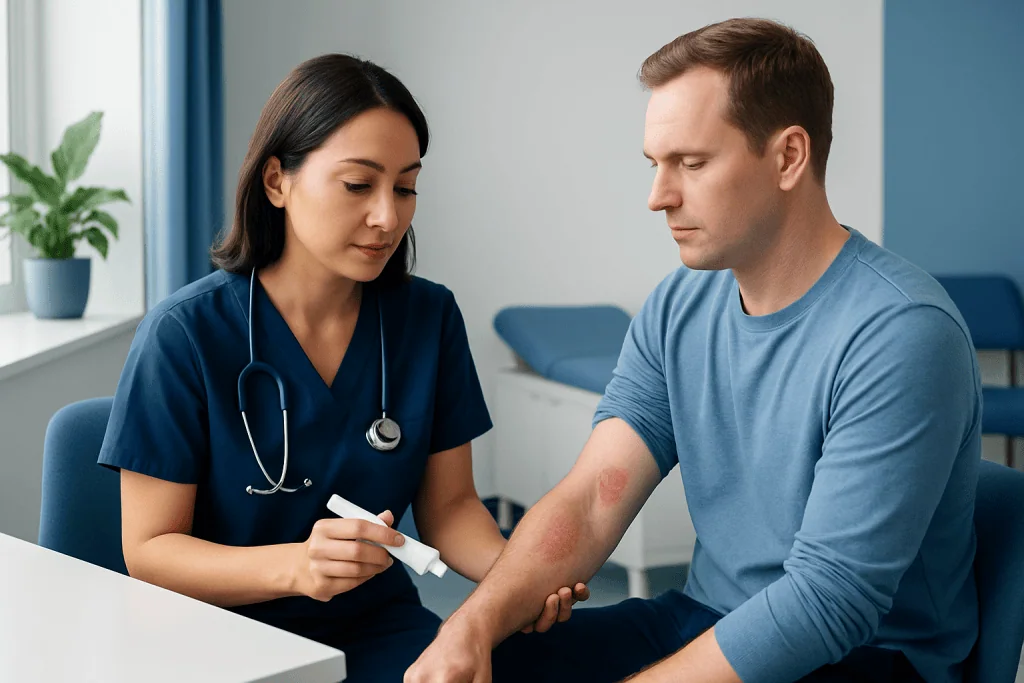
Rashes have many possible causes. Contact dermatitis occurs when the skin reacts to an irritant or allergen, such as soaps, fragrances, cosmetics, detergents, metals, plants, or rubber. It often causes itching, redness, dryness, swelling, or small blisters in the area that touched the trigger. Avoiding the trigger and restoring the skin barrier are important parts of care.
Eczema, also called atopic dermatitis, can cause recurrent dry, itchy, inflamed patches and may affect people of all ages. Symptoms can flare with dry weather, sweating, stress, allergens, rough fabrics, or irritating skin products. Regular moisturization and a treatment plan tailored by a clinician can help manage this long-term condition.
Fungal rashes may occur in warm, moist areas such as the feet, groin, skin folds, or under the breasts. They can be itchy and scaly and may have a defined or expanding edge, although appearances vary. Ring-shaped rashes are sometimes associated with fungal infection, but not every ring-shaped rash is fungal. A clinician can distinguish fungal infections from conditions that look similar.
Other causes include heat rash, hives, insect bites, viral illnesses, psoriasis, medication reactions, and bacterial skin infections. Eczema and psoriasis may both cause scaly, itchy skin but need different approaches, which is one reason a persistent rash should not be self-treated indefinitely.
Using rash creams safely at home
Before applying a new anti itch cream for rash, gently wash the area with lukewarm water and pat it dry. Avoid scrubbing, exfoliating, or using perfumed products on irritated skin. Apply a small amount as directed on the product label or by a healthcare professional. Testing a new product on a small area first may be sensible for people with very sensitive skin or a history of contact allergy.
Simple measures can reduce itching without medication. Cool compresses, loose cotton clothing, short lukewarm showers, and keeping fingernails short may limit skin damage from scratching. Fragrance-free laundry products and avoiding recently introduced soaps, cosmetics, or lotions may be helpful when contact dermatitis is suspected.
It is important not to share creams between family members or use old prescriptions for a new rash. Avoid applying medicated creams to the eyes, inside the mouth, or other mucous membranes unless specifically instructed. Occlusive coverings, such as tight bandages or plastic wrap, can increase medication absorption and should not be used over topical steroids unless a clinician recommends it.
People who are pregnant, breastfeeding, immunocompromised, managing chronic skin disease, or treating an infant or young child should seek individualized advice from a healthcare professional. A clinician may recommend dermatology assessment when symptoms are recurrent, treatment has not worked, or the diagnosis is uncertain.
When an anti-itch cream may not be appropriate
Itching is a symptom rather than a diagnosis. A cream that reduces itch may not address the cause, especially when a rash is infectious, medication-related, widespread, or linked with a systemic illness. For example, bacterial skin infections may need medical treatment, while shingles and certain viral rashes require timely assessment rather than routine anti-itch treatment alone.
Topical steroids should generally not be used on a rash thought to be fungal, unless a doctor has specifically included one in the treatment plan. Steroids can reduce redness temporarily while allowing some infections to progress. They should also be avoided on untreated cold sores, chickenpox lesions, or other potentially infectious skin lesions without professional advice.
Stop a product and seek advice if the rash becomes more painful, develops pus, crusting, warmth, swelling, or rapidly increasing redness. Burning or stinging can occur briefly with some products on inflamed skin, but persistent discomfort or visible worsening may indicate irritation or an allergic reaction to an ingredient.
When to seek medical care
Urgent medical care is needed for a rash with difficulty breathing, wheezing, swelling of the lips, tongue, or face, faintness, or widespread hives, as these can be signs of a serious allergic reaction. Emergency assessment is also important for a rash with severe pain, extensive blistering or peeling, sores in the mouth or eyes, purple or non-blanching spots, or a high fever.
A doctor should assess a rash that spreads quickly, affects a large area, occurs after starting a new medicine, or is accompanied by fever, feeling unwell, swollen glands, or joint pain. Medical review is also advisable for rashes in infants, people with weakened immune systems, or people with diabetes when the skin is broken or appears infected.
For less urgent concerns, arrange an appointment if the rash lasts longer than expected, recurs often, interferes with sleep or daily life, or does not improve with careful self-care. Acibadem International’s multidisciplinary specialists and JCI-accredited hospitals can assess and treat skin conditions for international patients when specialist evaluation is needed.
Preventing recurrent itchy rashes
Prevention begins with identifying patterns. Keeping a brief record of when the rash starts, where it appears, recent products used, foods or medicines started, activities, and environmental exposures can help a clinician recognize triggers. Bringing photographs of the rash at its worst can also be useful, especially if it comes and goes before an appointment.
For sensitive or eczema-prone skin, regular use of a bland, fragrance-free moisturizer may lower dryness and reduce flare-ups. Gentle cleansers, avoiding long hot showers, and choosing breathable fabrics can reduce irritation. Gloves may be useful for wet work or cleaning tasks, but individuals with latex sensitivity should choose appropriate alternatives.
To reduce fungal skin infections, keep commonly affected areas clean and dry, change out of damp clothing promptly, and avoid sharing towels, socks, footwear, or personal grooming items. If a fungal rash is suspected or keeps returning, professional assessment can help confirm the diagnosis and identify contributing factors.
Frequently asked questions
What is the best anti itch cream for rash?
The best anti itch cream for rash depends on its cause. Fragrance-free moisturizers may help dry or mildly irritated skin, while low-strength hydrocortisone can help certain inflammatory rashes. A fungal rash needs an antifungal treatment rather than a standard anti-itch or steroid cream.
Can hydrocortisone cream make a rash worse?
Hydrocortisone can worsen or mask some skin infections, particularly fungal infections, when used without appropriate treatment. It may also irritate sensitive skin if used too often or in unsuitable areas. A clinician should advise if the rash is ring-shaped, oozing, painful, spreading, or not improving.
How long should an itchy rash take to improve?
A mild rash caused by temporary irritation may begin to settle within a few days after the trigger is avoided and gentle skin care is used. The timeframe varies according to the cause and treatment. Medical advice is appropriate if it persists, worsens, spreads, or repeatedly returns.
Should an antifungal cream be used for every itchy rash?
No. Antifungal creams only treat rashes caused by fungi and are not useful for many common causes of itch, such as eczema, hives, contact dermatitis, or insect bites. If the diagnosis is unclear, it is safer to ask a pharmacist or doctor rather than treating repeatedly with different products.
Can adults use anti-itch creams on children?
Children’s skin can absorb topical medicines differently and may be more sensitive to ingredients. Products and treatment duration should be chosen according to the child’s age, the rash location, and the suspected cause. Parents and caregivers should seek medical or pharmacy advice before using medicated creams on infants or persistent childhood rashes.
What rash symptoms need urgent medical attention?
Urgent care is needed if a rash occurs with breathing problems, facial or tongue swelling, faintness, high fever, severe pain, blistering, peeling skin, or sores affecting the eyes or mouth. A rapidly spreading rash, purple spots that do not fade with pressure, or a rash after a new medication also needs prompt assessment.
References
- American Academy of Dermatology Association
- National Eczema Association
- Centers for Disease Control and Prevention
- National Health Service
- Mayo Clinic
This article is for general information only and is not a substitute for professional medical advice. Please consult a qualified doctor about your individual situation.
Explore treatments in Turkey — costs, top hospitals & a free quote
JCI-accredited · board-certified surgeons · reply within 24h
Add us as a Preferred Source to see more of our trusted health content across Google Search, AI Overviews and Discover.