Hypertropia: What Patients Need to Know
Hypertropia is a form of strabismus in which one eye turns upward relative to the other eye. Symptoms may include double vision, head tilting, eye strain, reduced depth perception or an apparent eye misalignment.
Key Takeaways
- Hypertropia is a form of strabismus in which one eye turns upward relative to the other eye.
- Symptoms may include double vision, head tilting, eye strain, reduced depth perception or an apparent eye misalignment.
- A new or sudden hypertropia, especially with double vision or neurological symptoms, requires prompt medical assessment.
- Eye examinations can identify the type of misalignment and check for underlying eye, nerve, muscle or neurological causes.
- Treatment may include glasses, prisms, patching in selected children, botulinum toxin injections or eye muscle surgery.
Hypertropia is a vertical eye misalignment where one eye sits higher than the other. It may be present from childhood or develop later in life, and treatment depends on its cause, symptoms and impact on vision.
Hypertropia at a glance
Hypertropia is a type of strabismus, or eye misalignment, in which one eye is positioned higher than the other. The upward-turning eye may be consistently higher, or the difference may appear only when a person looks in certain directions, focuses on a near object, or becomes tired. The condition can affect either eye and may be present all the time or intermittently.
In children, hypertropia may interfere with the way the brain learns to use both eyes together. In adults, it often causes double vision because the brain is less able to ignore the different images from each eye. Although some cases are longstanding and stable, a newly noticed vertical eye deviation should be evaluated by an ophthalmologist, particularly when it begins suddenly.
Hypertropia is not the same as a naturally uneven eyelid position or facial asymmetry. The key feature is a difference in the direction the eyes point. A comprehensive eye examination can distinguish true eye misalignment from eyelid or facial features that only make the eyes appear uneven.
How hypertropia can affect vision and daily life
The effects of hypertropia vary widely. Some people have a visible eye turn but few visual symptoms, while others experience bothersome double vision, especially when reading, driving, using screens or looking in a particular direction. Double vision occurs when the eyes do not aim at the same object, so the brain receives two images that it cannot comfortably combine.
Children may not report double vision because their visual system can sometimes suppress, or ignore, the image from one eye. This adaptation may reduce double vision but can contribute to amblyopia, often called lazy eye, if one eye is not used normally during visual development. For this reason, regular vision screening and timely specialist assessment are important when an eye turn is suspected in a child.
People with hypertropia may also adopt a compensatory head position, such as tilting the head to one side or lifting the chin. This position can help align images more effectively and reduce double vision. Persistent head tilting may lead to neck discomfort, and it is useful information for the eye specialist assessing the pattern of eye movement.
Causes and risk factors

Hypertropia can result from differences in how the eye muscles, the nerves that control them, and the brain’s visual coordination system work together. Some people are born with a tendency toward vertical eye misalignment. Others develop it in childhood because of problems affecting eye muscle control, refractive errors, reduced vision in one eye, or conditions that limit binocular vision.
One common cause of acquired hypertropia is weakness of the fourth cranial nerve, also called the trochlear nerve, which helps control the superior oblique eye muscle. This may be congenital and become noticeable later, or it may occur after head injury, vascular disease, inflammation, or other neurological conditions. Thyroid eye disease, eye muscle restriction, orbital injury and prior eye surgery can also affect eye alignment.
In adults, sudden vertical double vision and hypertropia can occasionally be associated with a condition involving the brain, nerves or blood vessels. Diabetes and high blood pressure may increase the likelihood of some nerve-related eye movement problems. However, many causes are treatable or manageable once identified, and an examination helps determine whether testing beyond the eyes is needed.
How hypertropia is diagnosed
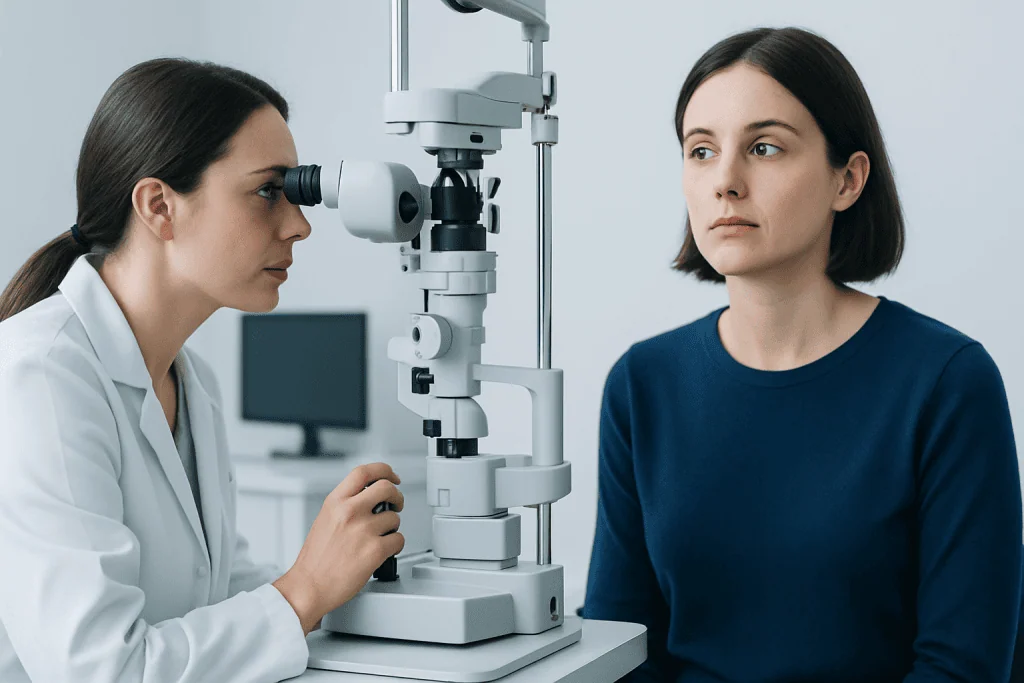
An ophthalmologist, often a pediatric ophthalmologist or strabismus specialist, diagnoses hypertropia through a detailed eye and vision assessment. The examination usually includes checking visual acuity in each eye, assessing eye movements, measuring alignment at distance and near, and evaluating whether the deviation changes with gaze direction or head position.
Tests such as the cover test and prism measurements help determine which eye is higher and how large the deviation is. The clinician may also examine the eyelids, pupils, optic nerves and the front and back of the eyes. Refraction testing identifies whether glasses may improve vision or contribute to improved eye control.
Further tests are not needed for every person. If hypertropia is new, rapidly changing, associated with pain, or accompanied by neurological symptoms, the clinician may recommend blood tests, imaging, or assessment by another specialist. The choice of tests is guided by the person’s age, medical history, examination findings and the pattern of double vision.
Treatment options and visual support
Treatment for hypertropia is individualized. The goals are to address the underlying cause where possible, improve comfortable single vision, support normal visual development in children, and reduce the functional or cosmetic effects of eye misalignment. A small, stable hypertropia without symptoms may sometimes be monitored with regular follow-up.
Glasses can correct refractive errors and may improve eye alignment in selected cases. Prism lenses can shift the image entering one eye and may reduce double vision for some people, particularly when the deviation is small and stable. In children with amblyopia, treatment may include glasses and a supervised plan to encourage use of the weaker eye, such as patching or penalization with eye drops when appropriate.
When hypertropia is persistent, larger, or not adequately controlled with nonsurgical measures, eye muscle surgery may be considered. The procedure adjusts the pull of one or more eye muscles to improve alignment. Botulinum toxin injection may be an option in certain situations. The specialist will discuss expected benefits, limitations, possible need for further treatment and recovery considerations before any procedure.
Acibadem International’s multidisciplinary specialists and JCI-accredited hospitals assess and treat strabismus and related eye movement conditions for international patients. A treatment plan should always be based on a full ophthalmic assessment and the individual’s visual needs.
Living with hypertropia and supporting eye health
People who experience intermittent double vision may find it helpful to note when symptoms occur, such as during fatigue, reading, driving, or looking up or down. Keeping this information, along with a record of any head tilt, headaches, recent injury or change in vision, can help the eye specialist understand the pattern. Until the cause is assessed, a person with significant double vision should avoid driving or operating machinery if vision is not reliably clear.
There is no proven home exercise program that corrects every form of hypertropia. Exercises may be recommended for specific binocular vision problems, but they should be prescribed by an appropriately qualified eye care professional. Trying to force the eyes into alignment without understanding the cause is unlikely to treat muscle weakness, nerve palsy or restrictive eye disease.
General health measures remain valuable, especially for adults with vascular risk factors. Managing blood pressure, diabetes and cholesterol with a clinician’s guidance, avoiding smoking, attending routine eye examinations and using prescribed glasses can support overall eye and vascular health. Parents and caregivers should seek assessment if they notice a persistent eye turn, squinting, head tilt, or changes in how a child uses their eyes.
When to seek medical care
A child with a suspected eye misalignment should be assessed by an eye care professional, even if the eye turn seems occasional or the child does not complain of vision problems. Early assessment is particularly important during infancy and childhood, when visual development is still taking place. Prompt care may help identify amblyopia or other conditions that need treatment.
Adults should arrange an ophthalmology appointment for new or worsening eye misalignment, recurrent double vision, a new compensatory head tilt, or difficulty judging distances. Medical attention should be sought urgently for sudden double vision or eye movement changes, especially if these occur with severe headache, facial weakness, trouble speaking, weakness or numbness on one side of the body, loss of balance, drooping eyelid, eye pain, vision loss, or after a head injury.
These symptoms do not always indicate a serious cause, but they require timely evaluation because disorders affecting the nerves, brain, blood vessels or eye socket may need prompt treatment. Seeking assessment early can also provide reassurance and help direct care appropriately.
Frequently asked questions
Is hypertropia the same as a lazy eye?
No. Hypertropia is an eye alignment problem in which one eye turns upward. Amblyopia, often called lazy eye, is reduced vision in one eye because the brain has not learned to use that eye normally. Hypertropia can contribute to amblyopia in children, but the two conditions are different.
Can hypertropia cause headaches?
Hypertropia may contribute to eye strain, fatigue and headaches in some people, particularly when the eyes are working hard to maintain single vision. Headaches have many possible causes, so they should not automatically be attributed to an eye alignment problem. An eye examination can help determine whether hypertropia is likely to be contributing.
Does hypertropia go away on its own?
This depends on the cause. Some small or intermittent deviations may remain stable and require observation, while others improve when the underlying condition is treated. Persistent hypertropia, especially when it affects vision or causes double vision, should be assessed rather than expected to resolve without medical guidance.
Can glasses correct hypertropia?
Glasses can help when refractive error is affecting visual control, and prism lenses may reduce double vision in selected people. However, glasses do not correct every type of hypertropia. Eye muscle weakness, nerve problems and restrictive conditions may require other approaches.
Is hypertropia surgery safe?
Eye muscle surgery is a commonly performed treatment for certain forms of strabismus, but every procedure has potential risks and benefits. The specialist considers the cause and size of the deviation, vision in each eye, general health and treatment goals. Some people may need glasses, prisms or additional treatment after surgery.
Why is my hypertropia worse when I am tired?
Fatigue can make it harder for the brain and eye muscles to compensate for a small alignment difference. As a result, an intermittent hypertropia or double vision may become more noticeable late in the day or during prolonged visual tasks. This pattern is useful to report during an eye assessment.
References
- American Academy of Ophthalmology
- American Association for Pediatric Ophthalmology and Strabismus
- National Eye Institute
- Mayo Clinic
- NHS
This article is for general information only and is not a substitute for professional medical advice. Please consult a qualified doctor about your individual situation.
Explore treatments in Turkey — costs, top hospitals & a free quote
JCI-accredited · board-certified surgeons · reply within 24h
Add us as a Preferred Source to see more of our trusted health content across Google Search, AI Overviews and Discover.
Check your numbers in seconds
BMI, calories, due date, blood pressure and 30+ more clinical calculators — free, instant, doctor-reviewed ranges.