Is Upper Back Pain a Sign of Cancer? Causes, Explanations, and Next Steps

Most upper back pain is not caused by cancer and improves with appropriate self-care or treatment of a musculoskeletal cause. Cancer-related back pain is uncommon, but it may occur when a tumor affects the spine, nearby tissues, or spreads to bone.
Key Takeaways
- Most upper back pain is not caused by cancer and improves with appropriate self-care or treatment of a musculoskeletal cause.
- Cancer-related back pain is uncommon, but it may occur when a tumor affects the spine, nearby tissues, or spreads to bone.
- Pain that is constant, progressive, worse at night, or associated with unexplained weight loss, fever, weakness, or numbness needs prompt medical assessment.
- Doctors use a medical history, physical examination, and selected imaging or blood tests to identify the cause of persistent upper back pain.
- Urgent care is important for new weakness, loss of bladder or bowel control, severe numbness, or back pain after significant trauma.
Is upper back pain a sign of cancer? In most cases, no: upper back pain is commonly related to muscles, posture, joints, or everyday strain. However, pain that is persistent, worsening, unexplained, or accompanied by certain warning symptoms should be assessed by a qualified doctor.
Overview: Is Upper Back Pain a Sign of Cancer?
Upper back pain is very common and is usually not a sign of cancer. The upper back, also called the thoracic spine region, contains muscles, ribs, joints, nerves, and part of the spine. Strain from sitting, repetitive movement, exercise, lifting, stress-related muscle tension, and poor workstation ergonomics are much more frequent explanations than cancer.
In uncommon situations, upper back pain can be related to cancer. This may happen if cancer starts in or near the spine, affects a nearby organ, or has spread to bones in the spine. Cancer-related pain is more likely to have a persistent and progressive pattern or to occur with other concerning symptoms. Pain alone cannot diagnose cancer, so a clinician considers the full picture rather than relying on one symptom.
It is understandable for persistent pain to raise concern. A careful medical review can often identify a treatable non-cancer cause and help determine whether tests are necessary. Seeking advice is particularly sensible when pain does not improve, disrupts sleep, or occurs alongside neurological or general health changes.
Common Non-Cancer Causes of Upper Back Pain
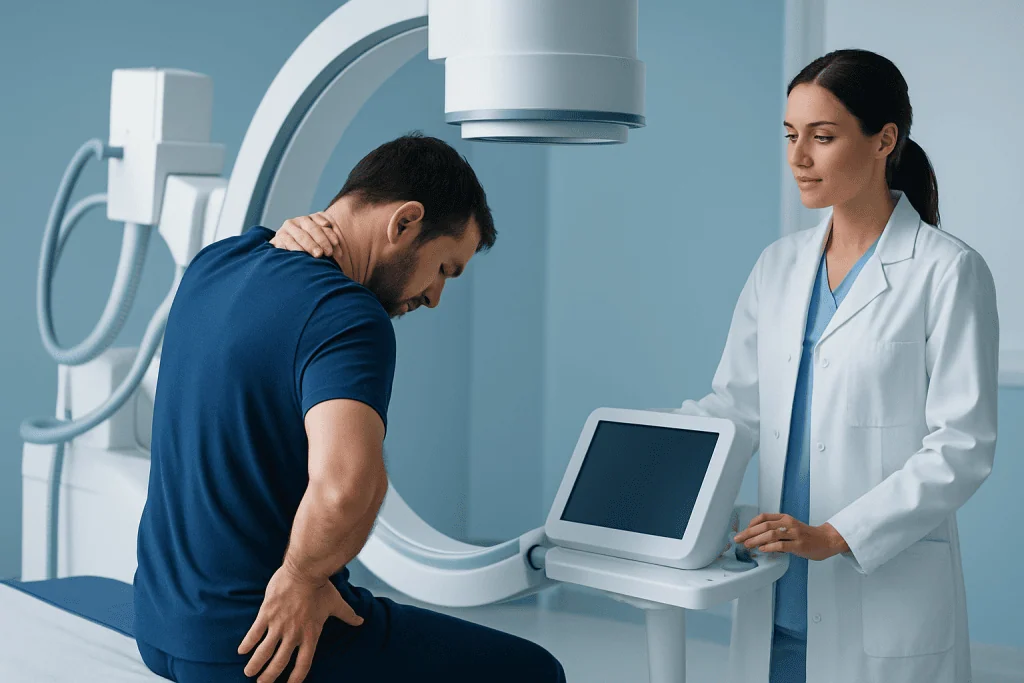
Muscle and soft-tissue problems are among the leading causes of upper back discomfort. A muscle strain can follow lifting, reaching, a new workout, prolonged driving, or working for long periods with the head and shoulders held forward. Pain may feel aching, tight, tender, or worse with certain movements, deep breaths, or pressure on the affected area.
Posture and workstation setup can also contribute. Looking down at a phone, leaning toward a screen, using an unsupportive chair, or carrying a heavy bag on one shoulder may overload muscles between the shoulder blades and around the neck. Stress can add to this by causing people to tense their shoulders and breathe more shallowly.
Other possible causes include arthritis affecting spinal or rib joints, degenerative disc changes, scoliosis, a compression fracture in people with fragile bones, and nerve irritation. Pain may also be felt in the upper back when the source is elsewhere, such as the neck, shoulder, lungs, gallbladder, heart, or digestive system. The location of pain therefore does not always reveal its cause.
- Muscle strain or overuse
- Postural stress and prolonged sitting
- Joint, disc, or rib-related conditions
- Neck or shoulder conditions with referred pain
- Injury, including minor sports or lifting injuries
How Cancer-Related Upper Back Pain May Differ

When cancer causes upper back pain, the pain may result from pressure on bones, nerves, or tissues surrounding the spine. Some cancers can begin in bone or soft tissue, while others may spread to the spine from another part of the body. This is not the usual explanation for back pain, but doctors remain alert to warning patterns, particularly in people with a personal history of cancer.
Cancer-related pain is often described as persistent and progressively worsening rather than improving with rest, position changes, or usual conservative measures. It may be present at night or wake a person from sleep. However, night pain and persistent pain can also occur in many non-cancer conditions, so these features are reasons for assessment rather than proof of cancer.
Other symptoms can add useful context. These include unexplained weight loss, ongoing fatigue, reduced appetite, fever without a clear infection, or a new lump. If the spine or spinal nerves are affected, symptoms may include tingling, numbness, weakness, difficulty walking, or changes in bladder or bowel function. These neurological symptoms need prompt medical evaluation.
Red Flags That Need Medical Review
Most people with upper back pain do not have a serious underlying illness. Still, certain features make it important to arrange medical care rather than continuing to manage symptoms alone. A doctor can assess whether the pain is likely mechanical, inflammatory, nerve-related, or connected to another medical condition.
Medical review is particularly important if pain persists beyond a few weeks, becomes steadily worse, is severe without a clear injury, or does not respond to reasonable activity adjustment and simple measures. People who have had cancer before, have a weakened immune system, use long-term steroid medication, or have known osteoporosis may also need earlier assessment.
- Unexplained weight loss, persistent fever, or drenching night sweats
- Constant pain that is worsening or regularly wakes a person from sleep
- A history of cancer or a new unexplained lump
- New numbness, tingling, weakness, poor balance, or trouble walking
- Loss of bladder or bowel control, or numbness around the groin or buttocks
- Pain after a major fall, collision, or other significant injury
- Chest pain, shortness of breath, fainting, or sudden severe illness
Bladder or bowel changes, new leg weakness, severe numbness, chest symptoms, or rapidly worsening pain should be treated as urgent concerns. Emergency services or urgent medical care may be appropriate, depending on the symptoms and local healthcare guidance.
What Happens During Diagnosis?
A clinician begins by asking about the pain’s location, onset, severity, timing, and triggers. They may ask whether it changes with movement, breathing, rest, or meals, and whether there has been injury, illness, weight change, or previous cancer. Information about work, exercise, medicines, medical conditions, and family history can also help guide the assessment.
The physical examination may include checking posture, spinal movement, muscle tenderness, shoulder and neck function, reflexes, strength, sensation, and walking. Depending on the symptoms, the clinician may also examine the chest, abdomen, or other relevant areas. This assessment helps determine whether imaging is needed immediately or whether an initial period of conservative care is reasonable.
Tests are selected based on the clinical findings, not simply because pain is present. X-rays can help identify fractures or some bone changes. Magnetic resonance imaging may be useful when there are neurological symptoms or concerns involving discs, nerves, bone marrow, or the spinal cord. Computed tomography, blood tests, or other investigations may be considered when a doctor suspects infection, inflammatory disease, cancer, or a problem outside the spine.
If testing identifies a suspicious finding, a specialist may recommend further imaging or, in some cases, a biopsy to establish a diagnosis. A diagnosis of cancer cannot be made from back pain symptoms or imaging alone in every situation; laboratory and tissue testing may be needed to clarify the cause.
Treatment and Everyday Self-Care
Treatment depends on the cause of upper back pain. For uncomplicated muscle strain or postural discomfort, clinicians commonly recommend staying gently active, avoiding activities that clearly worsen symptoms, and gradually returning to normal movement. Extended bed rest is generally not helpful for most mechanical back pain because it can increase stiffness and weaken supporting muscles.
Heat or cold packs may provide short-term comfort for some people. Gentle stretching, mobility exercises, and strengthening guided by a physiotherapist can improve movement and reduce recurrence. Adjusting desk height, screen position, chair support, and phone use may also reduce strain on the upper back and neck. Pain-relieving medicines may be appropriate for some people, but should be chosen with a pharmacist or clinician, especially for those with kidney disease, stomach ulcers, heart conditions, pregnancy, or medication interactions.
If a specific condition is found, care may involve physiotherapy, medication, injections, treatment for bone health, or referral to an orthopedic, neurology, pain, or other specialist. If cancer is diagnosed, treatment is individualized and may include systemic medicines, radiotherapy, surgery, or supportive pain and rehabilitation care. The goals are to treat the underlying condition, preserve function, and manage symptoms as safely as possible.
Acibadem International’s multidisciplinary specialists and JCI-accredited hospitals assess and treat complex causes of back pain, including conditions requiring cancer and spine care, for international patients.
When to Seek Medical Care
A person should arrange a non-urgent medical appointment when upper back pain lasts longer than a few weeks, keeps returning, interferes with daily activity, or causes worry. An earlier appointment is appropriate when the pain is unexplained, progressively worse, or associated with fatigue, fever, appetite changes, or unintended weight loss.
Prompt or urgent assessment is needed if pain occurs with weakness, numbness, balance problems, loss of bladder or bowel control, or numbness in the groin area. These symptoms can indicate pressure on nerves or the spinal cord and should not be ignored. Sudden upper back pain accompanied by chest pressure, breathing difficulty, sweating, nausea, or faintness also needs urgent medical attention because it may be unrelated to the spine.
For many people, upper back pain improves with time and practical changes in activity, posture, and movement. Nevertheless, persistent symptoms deserve a clear explanation. A qualified doctor can help distinguish common musculoskeletal pain from conditions that need more specific investigation or treatment.
Frequently asked questions
Is upper back pain usually a sign of cancer?
No. Most upper back pain is linked to muscle tension, strain, posture, joint irritation, or other non-cancer causes. Cancer is an uncommon cause, but persistent or worsening pain with warning symptoms should be medically assessed.
What does cancer-related upper back pain feel like?
There is no single pain pattern that confirms cancer. Pain may be persistent, progressively worse, present at night, or less affected by rest and position changes, but these features can occur with non-cancer conditions too. A clinician assesses the pain together with medical history, examination findings, and any other symptoms.
Can lung cancer cause pain in the upper back?
In some cases, conditions affecting the lungs or tissues around the chest can cause pain felt in the upper back or shoulder area. However, upper back pain alone is not a reliable indicator of lung cancer. A persistent cough, coughing blood, unexplained breathlessness, chest symptoms, or unexplained weight loss should be discussed with a doctor.
Should upper back pain that wakes someone at night be checked?
Pain that regularly wakes a person from sleep should be discussed with a healthcare professional, especially if it is new, worsening, or accompanied by weight loss, fever, weakness, or numbness. Night pain is not automatically a sign of cancer, but it can be a useful clue for deciding whether further assessment is needed.
What tests can show why upper back pain is happening?
The first step is usually a medical history and physical examination. Depending on the findings, a doctor may request an X-ray, MRI, CT scan, blood tests, or other tests. Not everyone with back pain needs imaging, and the most suitable test depends on the suspected cause.
When is upper back pain an emergency?
Urgent care is needed for upper back pain with new weakness, difficulty walking, loss of bladder or bowel control, numbness around the groin, or symptoms after major trauma. Emergency evaluation is also important if pain occurs with chest pain, shortness of breath, fainting, or other signs of a possible heart or lung emergency.
References
- American Cancer Society
- National Cancer Institute
- National Institute of Neurological Disorders and Stroke
- NHS
- American College of Radiology
This article is for general information only and is not a substitute for professional medical advice. Please consult a qualified doctor about your individual situation.
Joint and spine care in Turkey — expert assessment & treatment
JCI-accredited · board-certified surgeons · reply within 24h
Add us as a Preferred Source to see more of our trusted health content across Google Search, AI Overviews and Discover.

More from the Health Library



Related Specialists

Assoc. Prof. Dr. Akif İşlek
Ear Nose & Throat
Assoc. Prof. Dr. Emel Ur Özçelik
Neurology
Prof. Dr. Emine Nur Tozan
Treatment of Pain Algology
Dr. İskender Dik
Internal Medicine