Hemorrhagic Ovarian Cyst — Explained by Medical Evidence, Not Myths

Hemorrhagic ovarian cysts commonly develop from normal ovulation-related cysts. They may cause one-sided pelvic pain, bloating, spotting, or no symptoms at all.
Key Takeaways
- Hemorrhagic ovarian cysts commonly develop from normal ovulation-related cysts.
- They may cause one-sided pelvic pain, bloating, spotting, or no symptoms at all.
- Pelvic ultrasound is the main test used to identify the cyst and monitor its resolution.
- Many small, uncomplicated cysts are managed with observation and symptom relief.
- Sudden intense pain, fainting, shoulder pain, fever, or heavy bleeding requires urgent medical care.
A hemorrhagic ovarian cyst is an ovarian cyst that has bled into itself, usually during the normal menstrual cycle. Most are non-cancerous and resolve without treatment, but severe or sudden pelvic pain should be assessed promptly because a cyst can rupture or, less commonly, be associated with ovarian torsion.
What Is a Hemorrhagic Ovarian Cyst?
A hemorrhagic ovarian cyst is a fluid-filled sac in or on an ovary that contains blood. It usually develops when a normal functional ovarian cyst, often a follicular cyst or corpus luteum cyst, bleeds into its own cavity. Functional cysts are linked to ovulation and are common during the reproductive years.
Despite the name, a hemorrhagic ovarian cyst does not necessarily mean there is dangerous bleeding. In many cases, the blood remains contained within the cyst and is gradually reabsorbed by the body. These cysts are usually benign, meaning non-cancerous, and many disappear over one or two menstrual cycles.
The appearance of blood products inside a cyst can look distinctive on ultrasound. However, imaging findings are interpreted alongside a person’s age, symptoms, menstrual history, pregnancy status, and any previous ovarian conditions. This careful assessment helps clinicians distinguish a typical hemorrhagic cyst from other causes of pelvic pain or an ovarian mass.
Symptoms and What They May Feel Like
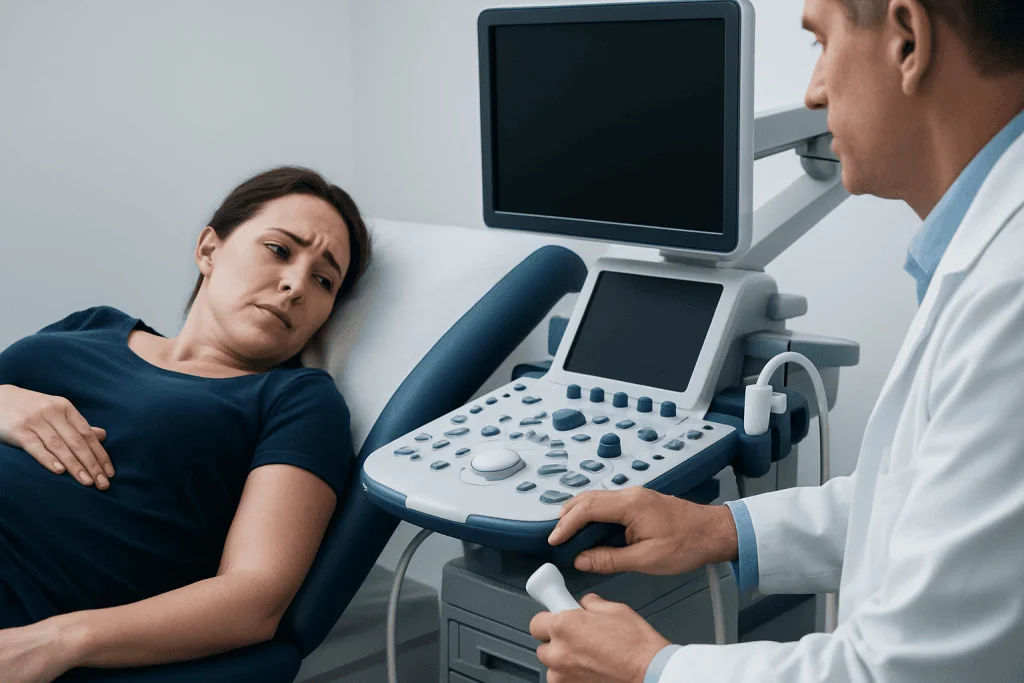
Some people with a hemorrhagic ovarian cyst have no noticeable symptoms. The cyst may be found incidentally during a pelvic ultrasound performed for another reason. When symptoms occur, they may be mild and can vary depending on the cyst’s size, location, and whether blood has leaked outside the cyst.
A common symptom is aching, pressure, or sharp pain low in the abdomen or pelvis, often more noticeable on one side. Pain may begin around ovulation, worsen with movement or sexual activity, or occur shortly before or during a period. Some people also notice bloating, a feeling of fullness, nausea, or changes in their usual menstrual bleeding, such as light spotting.
If a cyst ruptures, the pain may become sudden and more intense. A small rupture can sometimes settle with rest and medical observation, while more significant internal bleeding can cause dizziness, weakness, fainting, rapid heartbeat, or shoulder-tip pain. These symptoms need prompt medical evaluation because they can also occur with other urgent conditions.
Pelvic pain is not always caused by an ovarian cyst. Appendicitis, urinary tract problems, bowel conditions, pelvic inflammatory disease, ectopic pregnancy, endometriosis, and ovarian torsion can produce similar symptoms. For this reason, new or severe pelvic pain should not be self-diagnosed.
Why Hemorrhagic Cysts Develop
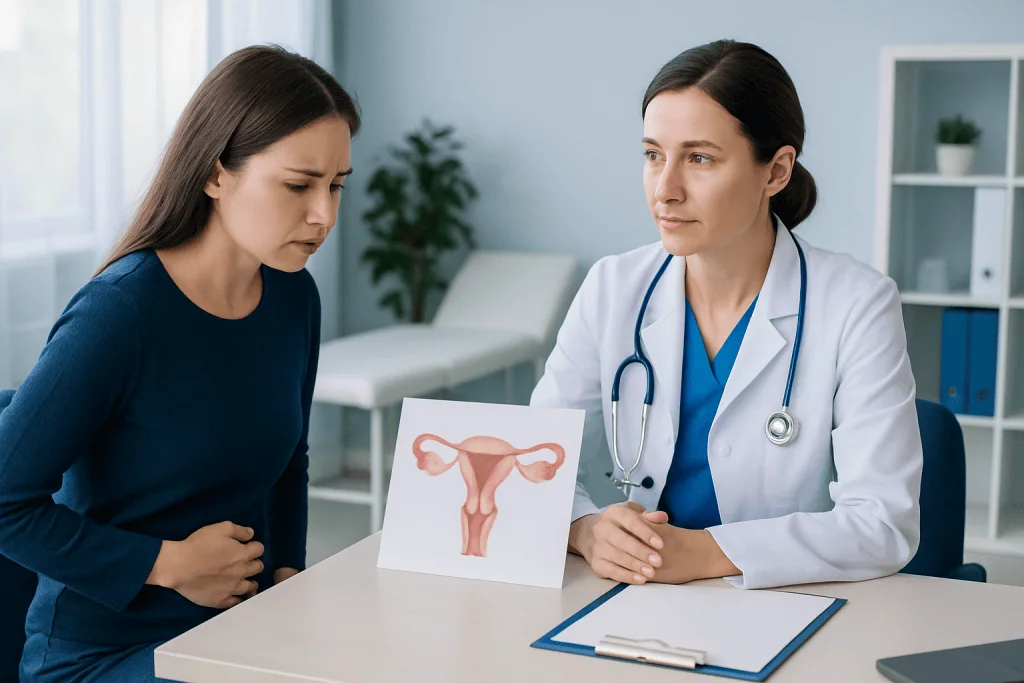
Most hemorrhagic ovarian cysts are related to the ordinary hormonal changes of the menstrual cycle. Each month, a follicle grows in the ovary to release an egg. After ovulation, the emptied follicle becomes the corpus luteum, which produces hormones that support the early part of a possible pregnancy. Either of these structures can occasionally bleed and form a hemorrhagic cyst.
They are most often seen in people who are menstruating because ovulation is occurring. They may be more likely around times when ovarian activity is stimulated, including some fertility treatments. Pregnancy can also be associated with a corpus luteum cyst, particularly early in pregnancy, although any pain or bleeding during pregnancy should always be assessed carefully.
Medicines that affect blood clotting may increase the likelihood or severity of bleeding from an ovarian cyst. A personal history of bleeding disorders can also be relevant. These factors do not mean a cyst will definitely develop, but they are important for a clinician to know when evaluating pelvic pain.
Hemorrhagic cysts are not caused by stress, exercise, sexual activity, or eating particular foods. Exercise or intercourse may make symptoms more noticeable if a cyst is already present, but they do not usually create the underlying cyst. A clinician can provide individualized guidance if symptoms repeatedly occur with activity.
How Doctors Diagnose a Hemorrhagic Ovarian Cyst
Diagnosis starts with a medical history and physical examination. A clinician may ask about the timing of pain in relation to periods, the possibility of pregnancy, past cysts, medicines, contraception, and symptoms such as bleeding, nausea, fever, or urinary changes. A pelvic examination may be appropriate, although it cannot by itself confirm the type of cyst.
Pelvic ultrasound, often using a transvaginal approach, is the main imaging test. It can show the ovary, the cyst’s size, and internal patterns that may be consistent with a hemorrhagic cyst. Ultrasound also helps identify fluid in the pelvis, which may suggest a cyst has leaked or ruptured. It is a useful test because it does not use ionizing radiation.
A pregnancy test is commonly performed in anyone of reproductive age with pelvic pain or abnormal bleeding. This is important because ectopic pregnancy can be life-threatening and may cause symptoms similar to a ruptured ovarian cyst. Blood tests may also be used to assess anemia, inflammation, or the degree of blood loss when clinically indicated.
When the ultrasound appearance is typical and symptoms are mild, a repeat ultrasound after a suitable interval may be recommended to confirm that the cyst has resolved. If a cyst persists, grows, has unusual features, or occurs after menopause, further assessment may be needed. This does not automatically mean cancer, but it helps ensure that other ovarian conditions are not overlooked.
Treatment Options and Recovery
Treatment depends on symptoms, the ultrasound findings, cyst size, pregnancy status, and whether there is evidence of rupture or significant bleeding. For many uncomplicated hemorrhagic ovarian cysts, watchful waiting is appropriate. The body often reabsorbs the blood and the cyst resolves naturally over the following weeks or menstrual cycles.
A clinician may recommend rest, temporary modification of strenuous activity if it aggravates pain, and suitable pain relief. The safest medicine depends on an individual’s health history, pregnancy possibility, kidney or stomach conditions, allergies, and use of blood-thinning medicines. It is best to ask a doctor or pharmacist before taking pain medication, particularly if symptoms are severe or worsening.
Follow-up imaging may be advised to document resolution. Hormonal contraception may be considered for some people who have recurrent ovulation-related cysts because it can reduce ovulation; however, it does not make an existing hemorrhagic cyst disappear immediately. The choice should be individualized with a gynecology professional.
Surgery is not needed for most cases. It may be considered if there is ongoing internal bleeding, unstable vital signs, concern for ovarian torsion, severe persistent symptoms, a large or complex cyst, or uncertainty about the diagnosis. When surgery is necessary, clinicians generally aim to preserve ovarian tissue whenever safely possible, especially for people who may wish to become pregnant in the future.
Prevention and Self-Care
Because hemorrhagic ovarian cysts are often part of normal ovulation, they cannot always be prevented. There is no proven diet, supplement, detox, or home remedy that can dissolve a cyst or stop it from bleeding. Relying on unproven treatments may delay assessment when important symptoms are present.
Keeping a record of menstrual dates, pain episodes, bleeding changes, and triggers can be helpful. This information may allow a clinician to identify patterns and decide whether further testing or follow-up is needed. People taking anticoagulants or other medicines that affect bleeding should inform their prescribing clinician if they develop pelvic pain or are diagnosed with an ovarian cyst.
For mild symptoms already evaluated by a clinician, gentle rest, hydration, and use of recommended pain relief may support comfort. Heat may ease cramping for some people, provided it does not delay medical care for worsening pain. A person should avoid pushing through severe pain or assuming it is simply a period symptom.
Regular gynecologic care can support reproductive health, but routine screening does not prevent functional cysts. People with recurrent painful cysts, endometriosis, fertility concerns, or a known bleeding condition may benefit from discussing a personalized plan with a gynecologist.
When to Seek Medical Care
Medical advice is appropriate for new pelvic pain, persistent one-sided pain, pain that interferes with normal activities, unexplained bloating, or unusual bleeding between periods. A timely appointment is also sensible if symptoms recur over several cycles or if a previous cyst has not had recommended follow-up imaging.
Urgent assessment is needed for sudden severe pelvic or abdominal pain, pain with fainting or marked dizziness, weakness, shortness of breath, shoulder-tip pain, fever, repeated vomiting, or heavy vaginal bleeding. These symptoms can indicate significant bleeding, ovarian torsion, infection, ectopic pregnancy, or another condition requiring prompt treatment.
Anyone who is pregnant or could be pregnant and develops pelvic pain or vaginal bleeding should seek urgent medical guidance. A pregnancy test may be needed even when contraception has been used, because no method is completely effective.
Acibadem International’s multidisciplinary specialists and JCI-accredited hospitals assess and treat gynecologic conditions, including ovarian cyst-related symptoms, for international patients. A qualified clinician can explain the imaging findings, discuss appropriate follow-up, and advise when emergency care is needed.
Frequently asked questions
Is a hemorrhagic ovarian cyst dangerous?
Most hemorrhagic ovarian cysts are benign and resolve without causing serious problems. However, a cyst can occasionally rupture with significant bleeding or contribute to ovarian torsion, which requires urgent assessment. Sudden severe pain, dizziness, fainting, or heavy bleeding should be treated as urgent symptoms.
How long does a hemorrhagic ovarian cyst take to go away?
Many uncomplicated hemorrhagic cysts resolve over several weeks, often within one or two menstrual cycles. The timeline varies depending on the cyst’s size and the amount of bleeding inside it. A follow-up ultrasound may be recommended to confirm that it has disappeared.
Can a hemorrhagic ovarian cyst affect fertility?
A single functional hemorrhagic cyst usually does not harm fertility or mean that a person will have difficulty becoming pregnant. The ovary commonly continues to function normally after the cyst resolves. Fertility may be affected by an underlying condition, such as endometriosis, rather than by a typical isolated hemorrhagic cyst.
Can a hemorrhagic ovarian cyst rupture?
Yes. A hemorrhagic cyst can rupture, allowing fluid or blood to enter the pelvis. Some ruptures cause temporary pain only, but heavier bleeding can be serious and needs urgent medical evaluation.
Does a hemorrhagic ovarian cyst mean cancer?
No. Hemorrhagic ovarian cysts are usually functional cysts related to ovulation and are not cancerous. Still, clinicians may arrange follow-up when a cyst does not have typical features, does not resolve, enlarges, or occurs after menopause.
Can exercise make a hemorrhagic ovarian cyst worse?
Exercise does not usually cause the cyst itself, but vigorous movement may increase discomfort when a cyst is present. A clinician may advise reducing high-impact activity temporarily if pain is significant. Sudden pain during or after activity should be assessed, especially if it is severe or accompanied by dizziness.
References
- American College of Obstetricians and Gynecologists
- Royal College of Obstetricians and Gynaecologists
- National Health Service
- Mayo Clinic
- Society of Radiologists in Ultrasound
This article is for general information only and is not a substitute for professional medical advice. Please consult a qualified doctor about your individual situation.
Ovarian Cyst in Turkey — costs, top hospitals & a free quote
JCI-accredited · board-certified surgeons · reply within 24h
Add us as a Preferred Source to see more of our trusted health content across Google Search, AI Overviews and Discover.
Check your numbers in seconds
BMI, calories, due date, blood pressure and 30+ more clinical calculators — free, instant, doctor-reviewed ranges.

Gynecology & Obstetrics
Women’s health across pregnancy, gynecologic surgery and high-risk pregnancy care.
187 specialists in this unit