

Loop Earplugs Review — Explained by Medical Evidence, Not Myths

Reusable earplugs can lower the amount of sound reaching the ear, but they do not eliminate all noise. The best earplug is one that fits securely, is comfortable enough to wear consistently, and is suitable for the environment.
Key Takeaways
- Reusable earplugs can lower the amount of sound reaching the ear, but they do not eliminate all noise.
- The best earplug is one that fits securely, is comfortable enough to wear consistently, and is suitable for the environment.
- Noise-reduction labels are measured in controlled settings; real-world protection may be lower when earplugs are not fitted correctly.
- Earplugs may help during concerts, travel, busy workplaces, and sleep, but should not be relied on where communication or safety alarms must be heard.
- Persistent ringing, ear pain, hearing changes, dizziness, or marked sound sensitivity should be assessed by a qualified clinician.
A medical evidence-based Loop earplugs review finds that reusable filtered earplugs may be helpful for reducing sound exposure and making loud environments more comfortable. They are not a cure for sound sensitivity, tinnitus, or hearing loss, and their benefit depends largely on fit, consistent use, and choosing appropriate protection for the noise level.
Overview: What Does a Medical Loop Earplugs Review Conclude?
Loop earplugs are reusable earplugs designed to reduce sound while aiming to preserve a more natural listening experience than simple foam plugs. A medical review does not endorse one consumer product over another, but the underlying principle is well established: reducing excessive sound exposure can help protect hearing and may make noisy settings more tolerable.
Whether these earplugs are useful depends on the individual’s goal. Someone attending occasional music events may want moderate sound reduction with speech still relatively audible. A person sleeping beside environmental noise may prefer greater sound reduction. People working around hazardous occupational noise may need certified hearing protection selected according to workplace rules rather than a lifestyle-oriented earplug alone.
It is also important to separate comfort from treatment. Earplugs can reduce external sound, but they do not treat hearing loss, tinnitus, ear infections, migraine, anxiety, or auditory processing conditions. For people with ongoing symptoms, reducing sound may be one practical measure, but medical evaluation can identify the cause and guide care.
How Reusable Filtered Earplugs Work
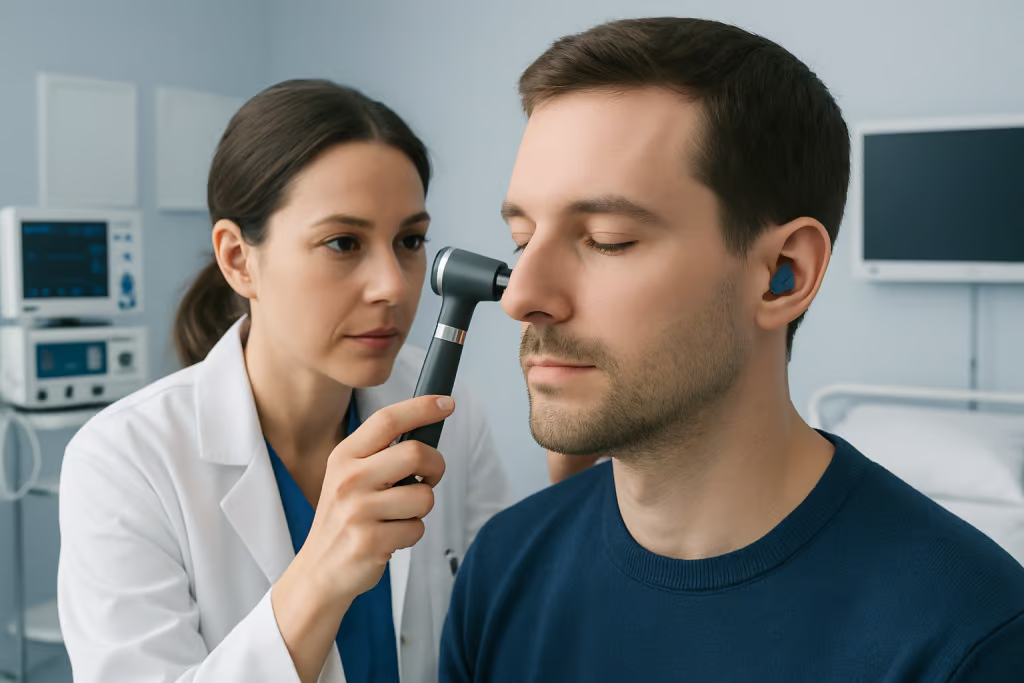
All earplugs work by creating a physical barrier in the ear canal that reduces the energy of sound reaching the eardrum. Traditional foam earplugs expand within the canal and can provide substantial attenuation when inserted correctly. Reusable silicone earplugs generally use a shaped tip that seals the canal, while filtered designs may include an acoustic channel or filter intended to reduce sound more evenly across different frequencies.
In practical terms, “more even” sound reduction may mean music and conversation seem less muffled than they would with some foam earplugs. This can be useful in social venues, on public transport, or in other environments where a person wants to reduce intensity without fully disconnecting from surroundings. However, the listening experience is subjective and varies with ear anatomy, seal quality, and the type of sound present.
Earplugs do not block noise completely. Very low-frequency sound, vibrations, sudden loud impulses, and sound transmitted through bone conduction can still be perceived. A person may also hear their own voice, breathing, chewing, or footsteps more prominently while wearing earplugs; this is called the occlusion effect and is common with any device that seals the ear canal.
Understanding Noise Ratings and Real-World Protection

Consumer earplugs may display a Noise Reduction Rating, or NRR, particularly in the United States. This rating is obtained through standardized laboratory testing and is expressed in decibels. It is useful for comparing products tested under similar standards, but it should not be interpreted as a guarantee that every wearer will receive the full listed reduction in everyday conditions.
Real-world attenuation is often lower because small gaps around the earplug can allow sound to enter the canal. Fit is especially important: an earplug that feels loose, shifts while talking, or causes discomfort may not seal consistently. Ear canal size and shape differ considerably, so interchangeable tip sizes can be useful. A person should select the smallest size that creates a stable, comfortable seal rather than forcing an overly large tip into the ear.
Different labels may use different testing systems, including NRR and the European Single Number Rating, or SNR. These figures should not be directly compared without understanding the testing method. Rather than focusing only on the highest number, people should consider the expected noise level, duration of exposure, ability to communicate safely, and whether the product is designed for the intended use.
- Moderate sound reduction may suit travel, social events, and general urban noise.
- Higher protection may be needed for loud tools, motorsports, shooting sports, or industrial work.
- For occupational settings, employers should provide appropriate hearing protection and training.
Potential Benefits and Appropriate Uses
For many adults, reusable earplugs can be a sensible option for occasional loud leisure activities. Concerts, clubs, sporting events, festivals, travel, and noisy commutes can expose the ears to sound levels that become harmful when they are intense or prolonged. Wearing well-fitted earplugs may reduce overall exposure and can support safer listening habits.
Some people use earplugs for sleep when disturbed by traffic, snoring, shift-work schedules, or unfamiliar accommodation. They may reduce the perception of environmental noise, although they cannot prevent all sound from reaching the ear. In this setting, comfort matters because pressure from an earplug can cause soreness if it is too large, deeply inserted, or worn for prolonged periods.
People who experience sound sensitivity may find limited, situational use helpful, especially during unavoidable noisy occasions. Yet wearing strong ear protection continuously in ordinary, safe environments is not usually advised without professional guidance. For some individuals with hyperacusis or anxiety-related sound intolerance, constant avoidance of everyday sound can increase awareness of noise over time. An ear, nose, and throat specialist or audiologist can help create an individualized plan.
Earplugs may also be considered alongside broader hearing-health habits, such as moving away from loudspeakers, taking quiet breaks, limiting time in noisy venues, and keeping personal audio at a comfortable volume. These measures reduce risk without requiring a person to avoid valued social, work, or leisure activities.
Limitations, Safety Considerations, and Proper Use
Reusable earplugs are not appropriate for every situation. They can reduce awareness of speech, warning signals, approaching vehicles, and alarms. They should therefore be used cautiously when driving, cycling in traffic, supervising children, working near moving equipment, or performing duties that rely on hearing instructions or alerts. Local workplace requirements should always take priority.
Before insertion, hands and the earplugs should be clean and dry. The earplug should sit securely at the canal entrance or according to the manufacturer’s instructions, without being pushed forcefully or painfully deep. If there is sharp pain, a blocked sensation that does not settle after removal, bleeding, or difficulty removing the earplug, the person should stop using it and seek medical advice.
Regular cleaning is important because reusable devices can collect wax, moisture, and skin debris. They should be cleaned only as directed by the manufacturer and allowed to dry fully before storage. Earplugs should not be shared. Someone with ear drainage, an active ear infection, recent ear surgery, ear tubes, or a known eardrum perforation should ask a clinician before placing any earplug in the canal.
Wax buildup can also affect comfort and hearing. Inserting earplugs may push wax deeper in some people, especially if they already have narrow canals or recurrent wax blockage. Cotton swabs should not be used to remove wax from inside the ear canal, as they can push it further inward or injure the ear.
Earplugs, Tinnitus, and Hearing Loss: What They Can and Cannot Do
Tinnitus is the perception of ringing, buzzing, hissing, or another sound without an external source. Loud noise exposure can contribute to tinnitus and noise-induced hearing loss, so protecting the ears in loud environments is sensible. However, earplugs do not directly cure tinnitus. In some people, very quiet conditions can make tinnitus more noticeable because there is less external sound to mask it.
Similarly, earplugs cannot restore hearing that has already been lost. A person who struggles to understand conversations, frequently asks others to repeat themselves, or notices a persistent change after loud noise should arrange a hearing assessment. Early evaluation can distinguish wax blockage, middle-ear concerns, medication effects, age-related hearing changes, and noise-related damage.
People with diagnosed hearing loss may benefit from an audiology assessment and discussion of communication strategies or hearing devices when appropriate. Hearing protection remains useful because existing hearing loss does not make the ear immune to further noise-related injury. The aim is balanced protection: reducing harmful exposure while remaining connected to important sounds and communication.
When to Seek Medical Care
Medical care is advisable for sudden hearing loss in one or both ears, particularly if it develops over hours or a few days. Sudden hearing loss can be time-sensitive and should not be managed by simply using earplugs or waiting for symptoms to pass. Urgent assessment is also needed for severe dizziness, facial weakness, head injury, bleeding from the ear, or a foreign object that cannot be removed safely.
A non-urgent appointment with a doctor, ENT specialist, or audiologist is appropriate for persistent tinnitus, repeated ear infections, ear pain, discharge, a feeling of blockage lasting more than a few days, or progressive difficulty hearing speech. Assessment may include examination of the ear canal and eardrum, hearing testing, and discussion of noise exposure and other health factors.
Acibadem International’s multidisciplinary specialists and JCI-accredited hospitals support international patients who need assessment and treatment for ear and hearing concerns. The right care plan depends on the underlying problem, rather than on a particular type of earplug.
Frequently asked questions
Are Loop earplugs good for hearing protection?
Reusable filtered earplugs can reduce sound exposure when they fit well and are worn correctly. Their suitability depends on the noise level and activity; environments with hazardous occupational or impulse noise may require specialized certified protection. No earplug provides complete protection from all sound.
Can reusable earplugs prevent tinnitus?
Reducing exposure to loud noise may lower the risk of noise-related hearing damage, which can be associated with tinnitus. However, tinnitus has several possible causes, and earplugs cannot guarantee prevention or cure existing ringing. Persistent or bothersome tinnitus should be discussed with a clinician.
Do earplugs make hearing worse?
Appropriately used earplugs do not damage hearing. Problems can occur if they are inserted forcefully, used with an ear infection or significant wax blockage, or worn in circumstances where hearing safety alerts is essential. They should not cause ongoing pain or marked pressure.
Should earplugs be worn all day for sound sensitivity?
Continuous use in ordinary, safe environments is not usually recommended without advice from an audiologist or ENT specialist. While short-term protection may help during genuinely loud events, constant avoidance of normal sound can be unhelpful for some people with sound sensitivity. A clinician can recommend an approach based on the cause and severity of symptoms.
How can a person tell whether earplugs fit correctly?
A correctly fitted earplug should feel secure and comfortable, reduce surrounding noise noticeably, and remain in place with ordinary jaw movement. It should not cause sharp pain, itching, or a strong feeling of pressure. Trying different tip sizes may improve the seal and comfort.
Can earplugs be used for sleeping every night?
Many people can use comfortable, clean earplugs for sleep, but regular use requires good hygiene and attention to ear comfort. They should be stopped if ear pain, drainage, worsening itch, repeated wax blockage, or infection symptoms occur. Sleep-related snoring, breathing pauses, or severe daytime sleepiness should be medically assessed rather than managed with earplugs alone.
References
- Centers for Disease Control and Prevention
- National Institute on Deafness and Other Communication Disorders
- Occupational Safety and Health Administration
- American Academy of Otolaryngology–Head and Neck Surgery
- World Health Organization
This article is for general information only and is not a substitute for professional medical advice. Please consult a qualified doctor about your individual situation.
Explore treatments in Turkey — costs, top hospitals & a free quote
JCI-accredited · board-certified surgeons · reply within 24h
Add us as a Preferred Source to see more of our trusted health content across Google Search, AI Overviews and Discover.

More from the Health Library



Related Specialists

Assoc. Prof. Dr. Kayahan Karaytuğ
Orthopedic Surgery & Traumatology
Dr. İletişim | 444 55 44
Pediatrics
Dr. Hikmet Toy
Otorhinolaryngology
Prof. Dr. Dilaver Özturan
Otorhinolaryngology