Types of Psoriasis Pictures: An Evidence-Based Guide for Patients

Plaque psoriasis is the most common type and usually causes well-defined, raised areas with scale. Psoriasis can look red, pink, purple, gray, or dark brown depending on a person's natural skin tone.
Key Takeaways
- Plaque psoriasis is the most common type and usually causes well-defined, raised areas with scale.
- Psoriasis can look red, pink, purple, gray, or dark brown depending on a person's natural skin tone.
- Different psoriasis types may occur together, change over time, or affect the nails, scalp, joints, and skin folds.
- Pictures cannot reliably distinguish psoriasis from eczema, fungal infection, contact dermatitis, or other rashes.
- Prompt medical care is important for widespread redness, painful pustules, fever, or new joint pain and swelling.
Types of psoriasis pictures typically show distinct skin patterns, such as thick scaly plaques, small drop-like spots, smooth red folds, or pustules. Images can be useful for learning what psoriasis may look like, but appearance varies across skin tones and can overlap with other skin conditions, so professional assessment remains important.
Understanding Types of Psoriasis Pictures
Types of psoriasis pictures can help patients recognize the broad patterns of this long-term inflammatory skin condition. The most familiar images show sharply outlined, raised patches covered by dry scale, but psoriasis does not have one identical appearance. It can affect small areas or large parts of the body, and its color, thickness, and scale vary with skin tone, location, disease activity, and treatment.
Psoriasis occurs when immune-system activity speeds up the growth cycle of skin cells. This leads to visible buildup at the skin surface and inflammation underneath. It is not contagious, and it is not caused by poor hygiene. Some people have only occasional mild flares, while others have persistent symptoms that require ongoing care.
Online images should be treated as visual education rather than a diagnosis. Eczema, seborrheic dermatitis, ringworm, pityriasis rosea, drug reactions, and other conditions can resemble psoriasis. A dermatologist or other qualified clinician can examine the skin, ask about symptoms and family history, and recommend appropriate treatment.
How Psoriasis May Look on Different Skin Tones
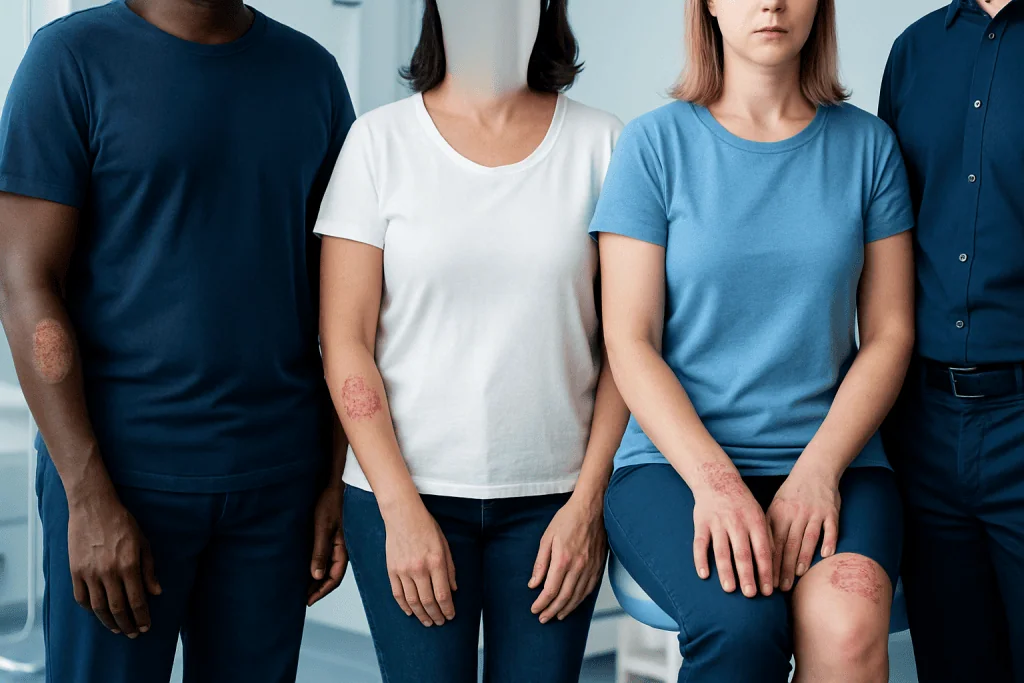
Many traditional medical images have emphasized psoriasis on lighter skin, where inflammation often appears pink or bright red with silvery-white scale. On medium, brown, or deep skin tones, the same inflammation may look violet, purplish, deep red, gray, or dark brown. The scale may appear white, gray, or more subtle than expected in photographs.
After a flare improves, temporary color changes may remain. On darker skin, areas may become darker or lighter than surrounding skin; on lighter skin, they may remain pink or brown for a time. These changes are related to inflammation and healing and do not necessarily mean that active psoriasis is still present.
When reviewing pictures, it is helpful to look beyond color alone. Features that may be more informative include a clearly defined border, recurrent scaling, itching or soreness, typical locations, nail changes, and a personal or family history of psoriasis. Photographs showing psoriasis across diverse skin tones can improve recognition, but an in-person examination is still the most reliable approach.
Common Psoriasis Types and Their Typical Visual Patterns
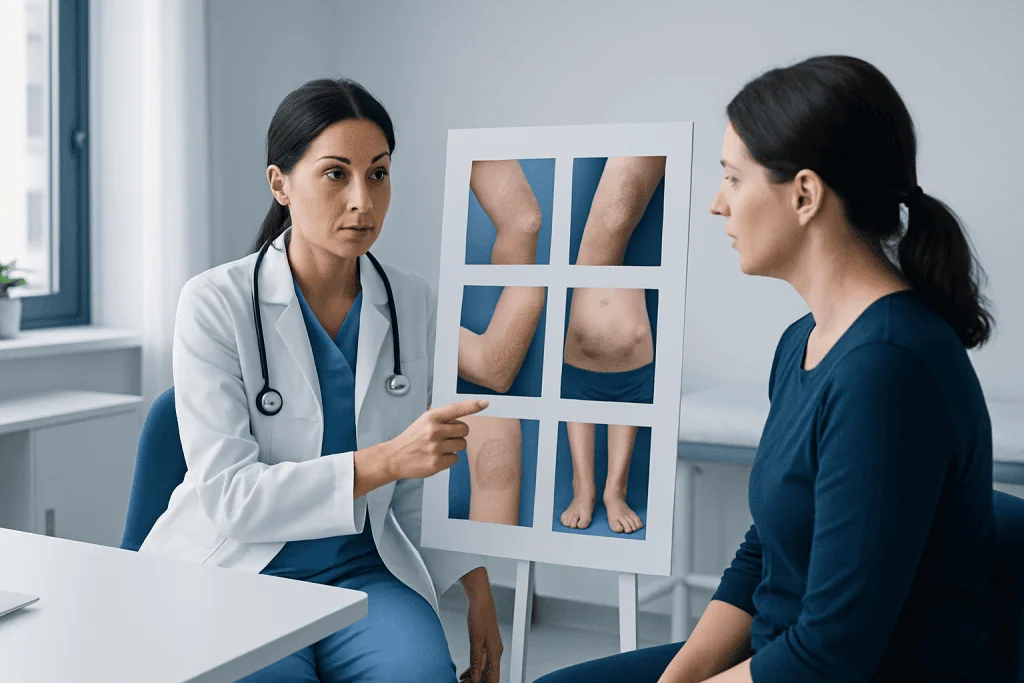
Plaque psoriasis is the most common form. Pictures often show raised, well-demarcated patches called plaques, with dry white or silvery scale. Plaques frequently develop on the elbows, knees, lower back, scalp, and around the belly button, although they can occur almost anywhere. They may itch, sting, crack, or bleed if the skin becomes very dry or is scratched.
Guttate psoriasis usually appears as many small, round or teardrop-shaped scaly spots. The spots are often spread across the trunk, upper arms, legs, or scalp. This pattern can begin relatively suddenly, sometimes after a throat infection caused by streptococcal bacteria, particularly in children and young adults. Not every new spotted rash is guttate psoriasis, so assessment is important.
Inverse psoriasis develops in skin folds, including the armpits, groin, genital area, under the breasts, or between the buttocks. Unlike classic plaque psoriasis, it often looks smooth, shiny, and inflamed with little visible scale because moisture and friction prevent scale from building up. It can be uncomfortable and may be confused with yeast infection, intertrigo, or irritant dermatitis.
Scalp psoriasis may look like thick, adherent scaling on the scalp, hairline, forehead, neck, or behind the ears. Flakes can resemble dandruff, but the scale is often thicker and the affected skin may extend beyond the hairline. Hair loss is not usually permanent, though scratching or severe inflammation can lead to temporary shedding.
Less Common Patterns: Pustular and Erythrodermic Psoriasis
Pustular psoriasis causes visible white or yellowish pus-filled bumps on inflamed skin. These pustules are usually sterile, meaning they are not necessarily caused by an infection. A localized form may affect the palms and soles, while more widespread forms can affect larger areas of the body and cause significant illness.
Erythrodermic psoriasis is rare but serious. Instead of separate plaques, pictures may show widespread redness or dark inflammation over much of the body, often with extensive peeling or shedding. The skin may feel hot, painful, itchy, or tight. Because extensive skin inflammation can affect temperature regulation and fluid balance, it requires urgent medical assessment.
Neither pustules nor widespread redness should be self-diagnosed from photographs. Similar appearances can occur with infection, severe drug reactions, burns, and other urgent conditions. A person who develops widespread painful redness, rapidly spreading pustules, fever, chills, weakness, or swelling should seek prompt medical care.
Nail, Joint, and Body-Site Clues That Pictures May Miss
Psoriasis can affect more than the visible skin. Nail psoriasis may cause tiny dents or pits, white or yellow-brown discoloration, thickening, crumbling, or separation of the nail from the nail bed. These changes can resemble fungal nail infection, and both conditions may occasionally be present together.
Some people with psoriasis develop psoriatic arthritis, an inflammatory condition that can cause joint pain, stiffness, swelling, reduced movement, or warmth. Fingers or toes may swell along their entire length, and heel pain or lower-back stiffness can also occur. Skin symptoms may begin before joint symptoms, but joint problems can sometimes appear first.
The location of a rash may offer useful context. Psoriasis often appears symmetrically on both sides of the body and favors extensor surfaces, such as elbows and knees. However, psoriasis in the genital area, face, hands, feet, or folds can look different from classic plaques. Pictures alone may miss pain, stiffness, changes in function, and the emotional impact of visible skin disease.
Diagnosis and Treatment Options
A clinician can often diagnose psoriasis by examining the skin, scalp, and nails and discussing the history of symptoms. They may ask about recent infections, medications, family history, joint symptoms, and possible triggers. If the diagnosis is uncertain, a small skin sample may be examined under a microscope. Tests may also be considered when a fungal infection or another condition is suspected.
Treatment is individualized according to the psoriasis type, body areas involved, symptom severity, effect on daily life, and other health conditions. Mild or localized psoriasis may be managed with moisturizers and prescription topical treatments that reduce inflammation or slow excess skin-cell growth. Medicated scalp products can be useful when the scalp is involved, but treatment should be chosen carefully for sensitive areas such as the face, genitals, and skin folds.
For more extensive or difficult-to-control psoriasis, clinicians may discuss light therapy, oral medicines, or injectable biologic medicines that target specific immune pathways. These therapies require medical supervision because the right option depends on a person’s medical history, infection risk, pregnancy plans, and other medicines. Treatment can improve symptoms and quality of life, but psoriasis often follows a relapsing pattern and may need long-term management.
Acibadem International’s multidisciplinary specialists and JCI-accredited hospitals support diagnosis and treatment planning for international patients with psoriasis, including assessment of possible joint involvement.
Self-Care, Trigger Awareness, and When to Seek Medical Care
Regular skin care can support medical treatment. Fragrance-free moisturizers may reduce dryness, scale, and cracking, especially when applied after bathing. Gentle cleansing, avoiding very hot water, and not picking or scratching plaques can help protect the skin. A clinician or pharmacist can advise on suitable products for the scalp, face, folds, or other sensitive areas.
Triggers differ from person to person. Commonly reported contributors include skin injury, stress, smoking, heavy alcohol use, some infections, and certain medicines. Keeping a simple record of flares, illnesses, new products, and treatments may help identify patterns. Patients should not stop prescribed medicine without discussing it with the prescribing clinician, as sudden changes can sometimes worsen psoriasis.
Medical advice should be sought for a new unexplained rash, symptoms that interfere with sleep or daily activities, spreading plaques, nail changes, or signs of infection such as increasing pain, warmth, pus, or fever. A person should arrange timely assessment for persistent joint pain, morning stiffness, swollen fingers or toes, or heel pain. Urgent care is appropriate for widespread redness, extensive peeling, widespread pustules, fever, chills, or feeling generally unwell.
Frequently asked questions
What is the most common type shown in psoriasis pictures?
Plaque psoriasis is the most common type. It usually appears as raised, clearly bordered patches with dry scale, often on the elbows, knees, scalp, or lower back. The redness or darkness of plaques can look different across skin tones.
Can psoriasis look like a fungal infection?
Yes. Ringworm and some other fungal infections can produce scaly, itchy patches that may resemble psoriasis. A fungal rash often has a more active, ring-shaped edge, but appearance alone is not always enough to tell the difference. A clinician can confirm the cause and recommend the correct treatment.
Are psoriasis pictures accurate for dark skin?
They can be helpful when they include a range of skin tones, but many image collections do not fully represent darker skin. On brown and deep skin, psoriasis may appear purple, gray, dark brown, or deep red rather than bright red. Scale, thickness, distribution, and symptoms are important clues in addition to color.
Can a person have more than one type of psoriasis?
Yes. A person may have plaque psoriasis on the body and scalp involvement at the same time, for example. The pattern can also change during different flares or over the course of life. A clinician can identify the involved sites and tailor treatment accordingly.
Does psoriasis always itch?
No. Some plaques itch significantly, while others may feel sore, tight, burning, or have few symptoms. The amount of discomfort does not always reflect how much skin is involved. Cracking, bleeding, or pain can occur when skin is dry or plaques are located on hands, feet, or joints.
When is psoriasis an emergency?
Urgent medical evaluation is needed for widespread red or dark inflamed skin, extensive peeling, widespread pustules, fever, chills, dehydration, or feeling severely unwell. These symptoms may indicate a serious psoriasis flare or another condition requiring prompt treatment. New severe joint swelling or inability to use a joint also warrants prompt assessment.
This article is for general information only and is not a substitute for professional medical advice. Please consult a qualified doctor about your individual situation.
Explore treatments in Turkey — costs, top hospitals & a free quote
JCI-accredited · board-certified surgeons · reply within 24h
Add us as a Preferred Source to see more of our trusted health content across Google Search, AI Overviews and Discover.

More from the Health Library

Kale Plant Types: An Evidence-Based Guide for Patients

Circuit Training: What Patients Need to Know

Gum Abscess: A Complete Medical Overview

Structured Water: A Complete Medical Overview

Oc D — Explained by Medical Evidence, Not Myths