Walking Backwards on Treadmill — Explained by Medical Evidence, Not Myths
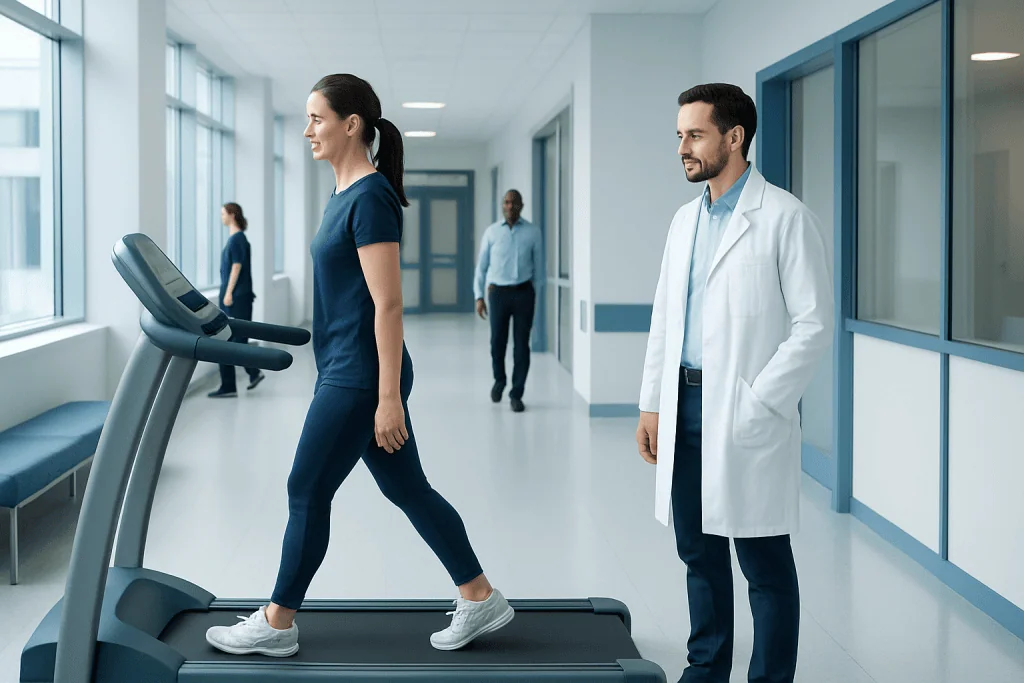
Backward treadmill walking places different demands on the muscles around the knees, hips, ankles and trunk than forward walking. Small clinical studies suggest backward walking may help some people improve balance, walking ability, knee function or lower-limb strength as part of a supervised program.
Key Takeaways
- Backward treadmill walking places different demands on the muscles around the knees, hips, ankles and trunk than forward walking.
- Small clinical studies suggest backward walking may help some people improve balance, walking ability, knee function or lower-limb strength as part of a supervised program.
- The treadmill should be set at a very slow speed, without an incline, and the person should remain close enough to hold the handrails if needed.
- It may not be appropriate for people with poor balance, dizziness, significant joint pain, recent injury or certain neurologic or heart conditions without medical guidance.
- Backward walking is an optional training method, not a replacement for regular forward walking, strength exercise or individualized rehabilitation.
Walking backwards on treadmill, also called backward or reverse walking, is a form of exercise that changes how the legs, joints and balance systems are challenged. Research suggests it may be useful for selected fitness and rehabilitation goals when introduced gradually, but safety, supervision and individual health needs are important.
What does walking backwards on a treadmill do?
Walking backwards on treadmill can be a useful variation of ordinary walking because it challenges movement, coordination and balance in a different way. It may strengthen parts of the lower body differently, increase attention to foot placement and, in supervised rehabilitation, help selected people work toward walking and knee-function goals. However, it is not automatically better than forward walking, and its main limitation is a higher risk of losing balance if it is performed too quickly or without adequate support.
During reverse walking, the body must control the leg as it reaches behind rather than in front. This changes the work performed by muscles around the hips, thighs, shins and ankles. The movement also requires more concentration because the person cannot naturally see the direction of travel. On a treadmill, the moving belt adds another coordination demand, so a slow, carefully controlled approach is essential.
For a healthy person, backward walking can be one modest component of a varied activity routine. For someone recovering from pain, injury, surgery or a neurologic condition, it should be viewed as a rehabilitation exercise that may need assessment and supervision from a qualified clinician or physiotherapist.
What medical evidence suggests about reverse walking
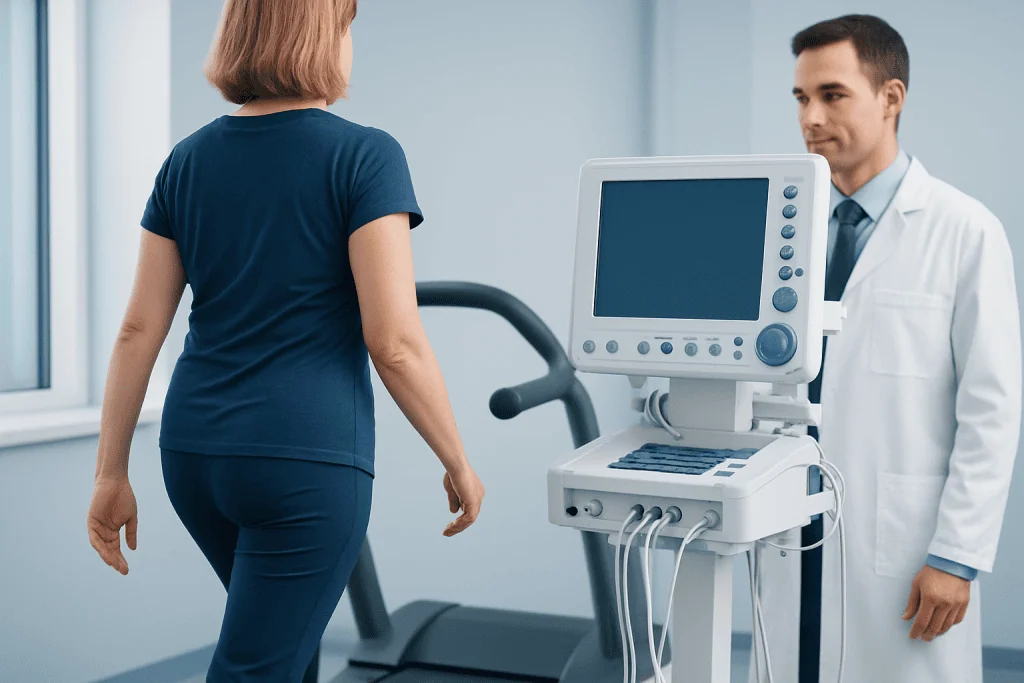
Research on backward walking is promising but still relatively limited. Many studies have been small, short-term or conducted in specific rehabilitation groups rather than in the general population. Results suggest that backward walking training may improve balance, walking speed, lower-limb function or confidence with movement for some individuals, particularly when it is included within a broader exercise or rehabilitation plan.
Some studies involving people with <a href="https://acibademinternational.com/diseases/knee-osteoarthritis/”>knee osteoarthritis have found that backward walking may improve knee-related pain and function. A possible explanation is that reverse walking changes the forces and movement patterns at the knee while strengthening muscles that help support the joint. These findings do not mean that it is suitable for every painful knee. The cause, severity and stability of knee symptoms should guide exercise choices.
Backward walking has also been studied in neurologic rehabilitation, including after stroke and in some movement disorders. It may challenge gait control and balance in ways that complement conventional therapy. Yet it is not a standalone treatment, and study results cannot predict an individual outcome. A rehabilitation professional can decide whether backward walking fits safely into a personalized program.
Claims that reverse walking dramatically burns more calories, reverses aging or cures joint disease are not supported by strong medical evidence. Exercise benefits are most reliable when a person chooses activities they can perform safely and consistently, alongside appropriate strength, mobility and cardiovascular training.
How the body moves differently when walking backward
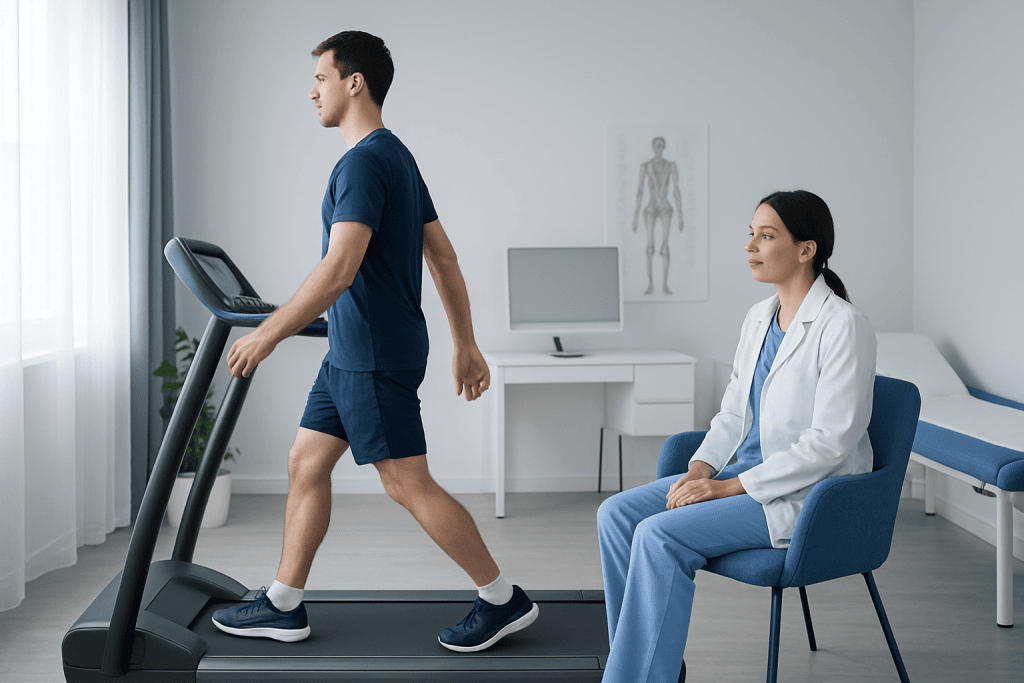
Forward and backward walking use the same major joints but in a different sequence. When walking forward, the heel commonly contacts the ground first and the body progresses over the foot. During backward walking, many people contact the ground first with the front of the foot, then control the heel lowering. This can increase the work of the muscles on the front of the lower leg, including the tibialis anterior.
The quadriceps, hamstrings, gluteal muscles and calf muscles also work differently to control the leg and stabilize the pelvis. Because the person must continually judge position without looking ahead in the usual way, reverse walking can demand greater attention and may provide a balance challenge. This is one reason it can be useful in carefully chosen training programs, but also why it carries a greater fall risk.
People sometimes notice that backward walking feels more demanding than expected even at a slow speed. This does not necessarily mean it is more effective for every goal. A sensation of effort can reflect unfamiliarity and the need for motor control. New exercisers should allow time for the nervous system and muscles to adapt rather than increasing speed quickly.
Who may benefit, and who should be cautious
Healthy adults who already walk comfortably and have good balance may use brief backward-walking intervals to add variety to a routine. It may be particularly appealing for people seeking a low-impact way to challenge coordination and leg muscles. It can also be considered in supervised sports conditioning or physiotherapy when it matches the person’s goals and functional ability.
People with mild, stable knee symptoms may be interested in reverse walking because of its potential role in knee-focused exercise. Still, persistent pain, swelling, locking, giving way or a recent injury should be assessed before trying it. The most helpful exercise plan for joint problems may include strengthening, flexibility work, activity modification and, where needed, professional rehabilitation.
Extra caution is needed for anyone with a history of falls, impaired vision, dizziness, vertigo, numbness in the feet, poorly controlled diabetes, significant arthritis, osteoporosis, recent surgery, neurologic disease or heart and lung conditions that limit exercise. People who use a walking aid should not attempt backward treadmill walking unless a clinician specifically recommends and supervises it.
Pregnancy, older age or reduced fitness do not automatically rule out reverse walking, but they can change the level of supervision and progression needed. A clinician can help identify safer alternatives, such as forward treadmill walking, stationary cycling, water exercise or a tailored balance program.
How to try backward treadmill walking more safely
Safety should take priority over speed, distance or calorie goals. The treadmill should be on a stable, level surface, with the emergency stop clip attached if available. Before stepping onto the belt, the person should know where the stop control is and should avoid distractions such as a phone, television or conversation that takes attention away from balance.
Start with the treadmill at its lowest practical speed and with no incline. Step onto the side rails first, turn to face the rear of the treadmill, hold the handrails, and then step onto the moving belt only when stable. The person should use short, controlled steps and keep the head upright rather than continuously twisting to look behind. A mirror in front of the treadmill may help orientation, but it does not replace attention and handrail access.
Early sessions should be brief, such as a few carefully controlled intervals within a usual workout, rather than a prolonged continuous session. Progression should be gradual and based on confidence, stable technique and absence of pain or dizziness. It is sensible to have another person nearby when learning, especially for older adults or anyone with a medical condition affecting balance.
- Wear supportive footwear with secure soles and laces.
- Do not use an incline until a qualified professional advises that it is appropriate.
- Do not carry weights, multitask or turn around suddenly while the belt is moving.
- Stop immediately for pain, instability, chest discomfort, unusual breathlessness, palpitations, dizziness or blurred vision.
Fitting reverse walking into a balanced exercise plan
Backward walking works best as an optional addition, not as the foundation of physical activity. Current public-health guidance continues to support regular aerobic activity, muscle-strengthening exercise and reduced time spent sitting. Forward walking remains a practical, effective and generally safer way for many people to build daily activity.
A balanced program may include forward walking or another aerobic activity, lower-body and upper-body strengthening, mobility work and exercises that match a person’s needs. For example, people working on knee function may benefit from a physiotherapist-guided combination of hip and thigh strengthening, movement retraining and gradual return to valued activities rather than relying on one exercise alone.
Recovery matters as well. New muscle soreness can occur after an unfamiliar activity, especially in the shins, calves or thighs. Mild soreness that improves over a few days may be expected, but sharp pain, increasing swelling or symptoms that alter normal walking are signals to pause and seek advice. Alternating training days can help the body adapt.
For international patients who need an assessment for persistent joint, balance or mobility concerns, Acibadem International’s multidisciplinary specialists and JCI-accredited hospitals can evaluate symptoms and plan appropriate treatment or rehabilitation.
When to seek medical care
Medical advice is appropriate before beginning backward treadmill walking if the person has a recent injury, joint replacement, uncontrolled medical condition, known balance disorder or previous falls. A doctor or physiotherapist can assess walking pattern, strength, range of motion and cardiovascular readiness, then recommend the safest type of activity.
Prompt assessment is advisable for knee pain that is severe, follows a fall or twisting injury, causes swelling, prevents weight-bearing, or is associated with locking or a feeling that the knee is giving way. These symptoms may indicate a problem that needs evaluation rather than continued exercise.
Urgent medical care is needed for chest pain or pressure, fainting, severe shortness of breath, sudden weakness, new difficulty speaking, or sudden loss of coordination during exercise. These symptoms should not be attributed to normal exertion. If dizziness or near-fainting occurs, the person should stop the treadmill, sit or lie down safely and seek medical advice.
Frequently asked questions
Is walking backwards on a treadmill good exercise?
It can be a useful exercise variation for people who can do it safely. It challenges coordination and lower-limb muscles differently from forward walking, but it does not need to replace regular forward walking or other forms of exercise. Benefits are most likely when it is introduced gradually as part of a balanced routine.
Does walking backwards on a treadmill help knee pain?
Some small studies suggest backward walking may improve knee function and symptoms in certain people, including some with knee osteoarthritis. However, knee pain has many possible causes, and reverse walking may aggravate symptoms in others. A doctor or physiotherapist should assess persistent, swollen, unstable or painful knees before this exercise is attempted.
How fast should someone walk backwards on a treadmill?
A person should begin at the lowest comfortable speed available on the treadmill and use the handrails as needed. There is no single correct speed, because balance, fitness, treadmill design and health conditions vary. Speed should only increase when movement remains controlled and symptom-free.
Is it safe to walk backwards on a treadmill every day?
Daily practice may be reasonable for some experienced, healthy individuals if sessions are brief and there is no pain or excessive fatigue. People new to the activity should allow time for the body to adapt and should not train through soreness that affects normal movement. Alternating with forward walking and strength work is often more balanced.
Can older adults walk backwards on a treadmill?
Some older adults may be able to do so, but the risk of a fall must be considered carefully. Poor balance, vision changes, neuropathy, dizziness and certain medicines can increase risk. Professional guidance, close supervision or a safer balance exercise may be more appropriate.
Should a person hold the handrails when walking backwards on a treadmill?
Using handrails is appropriate when learning the movement or whenever balance is uncertain. They provide an important safety measure, particularly at the start and stop of the exercise. As confidence improves, a qualified professional can advise whether reducing hand support is safe and useful.
References
- World Health Organization
- American College of Sports Medicine
- American Physical Therapy Association
- National Institute on Aging
- Arthritis Foundation
This article is for general information only and is not a substitute for professional medical advice. Please consult a qualified doctor about your individual situation.
Joint and spine care in Turkey — expert assessment & treatment
JCI-accredited · board-certified surgeons · reply within 24h
Add us as a Preferred Source to see more of our trusted health content across Google Search, AI Overviews and Discover.