Location of Gallbladder — Explained by Medical Evidence, Not Myths

The gallbladder sits under the liver in the right upper abdomen, below the right rib cage. It stores and concentrates bile, a fluid made by the liver that supports fat digestion.
Key Takeaways
- The gallbladder sits under the liver in the right upper abdomen, below the right rib cage.
- It stores and concentrates bile, a fluid made by the liver that supports fat digestion.
- Gallbladder-related pain is commonly felt in the upper right or upper middle abdomen and may spread to the right shoulder or back.
- The gallbladder is not always in exactly the same position; normal anatomical variation can occur.
- Persistent, severe, or fever-associated abdominal pain needs timely medical assessment.
The gallbladder is a small, pear-shaped organ located beneath the liver in the upper right side of the abdomen. Knowing its usual position can help people understand possible symptoms, although pain in this area can also come from several other organs and should be assessed appropriately.
Where Is the Gallbladder Located?
The location of gallbladder is beneath the liver, in the upper right portion of the abdomen. It rests in a shallow area on the liver’s underside and is usually positioned behind the lower edge of the right rib cage. From the outside, it lies roughly in the area between the center of the upper abdomen and the right side of the body.
The gallbladder is a small pear-shaped sac, typically only several centimeters long when empty. It is part of the biliary system, a network that includes the liver, bile ducts, and the upper part of the small intestine. Although it is close to the surface of the abdomen, it cannot normally be felt by hand because it is protected by the liver, ribs, abdominal muscles, and other tissues.
Anatomy differs slightly from person to person. The gallbladder may sit somewhat higher or lower depending on body shape, posture, breathing, age, pregnancy, and the size of the liver. Rarely, it may be in an unusual position. These differences are generally identified on imaging rather than through symptoms alone.
How the Gallbladder Fits Into Digestion
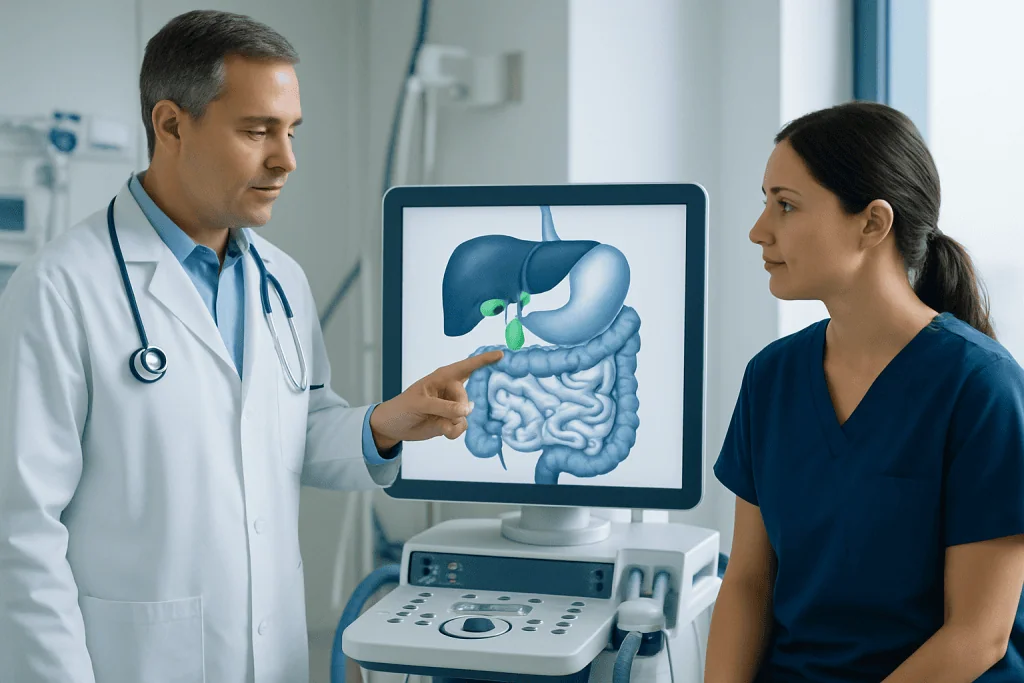
The liver produces bile continuously. Bile is a digestive fluid containing water, bile salts, cholesterol, bilirubin, and other substances. It helps the body digest and absorb dietary fats and fat-soluble vitamins. Between meals, much of the bile flows into the gallbladder, where it becomes more concentrated.
After a meal, especially one containing fat, the small intestine releases hormonal signals that cause the gallbladder to contract. Concentrated bile then travels through the cystic duct and common bile duct into the first part of the small intestine, called the duodenum. This coordinated process supports digestion but usually produces no noticeable sensation.
A person can live without a gallbladder. If it is removed, the liver continues making bile, which flows more directly into the intestine. Some people notice temporary changes in bowel habits after surgery, particularly with very fatty meals, but many adapt well over time.
What Does Gallbladder Pain Feel Like and Where Is It Felt?

When the gallbladder causes symptoms, discomfort is often felt in the upper right abdomen, just below the ribs. It may also be felt in the upper middle abdomen, known as the epigastric area. The pain can be steady and intense rather than sharp, and it may last from minutes to several hours.
Gallbladder pain may spread, or be referred, to the right shoulder, right shoulder blade, or upper back. This happens because the nervous system can interpret signals from internal organs as coming from nearby body areas. Symptoms may occur after a rich or fatty meal, but timing alone cannot confirm that the gallbladder is the source.
Other possible symptoms include nausea, vomiting, bloating, indigestion, or a feeling of fullness. However, these symptoms are common and may be related to the stomach, pancreas, liver, intestines, muscles, lungs, or heart. Pain location is useful information, but it is not enough to diagnose a gallbladder condition.
- Typical area: upper right abdomen under the ribs
- Another possible area: upper central abdomen
- Possible radiation: right shoulder, shoulder blade, or upper back
- Possible accompanying symptoms: nausea, vomiting, or discomfort after meals
Conditions That Can Affect the Gallbladder
Gallstones are hardened deposits that can form in the gallbladder. Many gallstones do not cause symptoms and are found incidentally during imaging for another reason. Problems can occur when a stone temporarily blocks the cystic duct, causing a painful episode often called biliary colic.
If blockage and inflammation develop, the condition is called cholecystitis. It may cause more persistent pain in the right upper abdomen, tenderness, fever, nausea, or vomiting. Stones can also move into the common bile duct and interfere with bile drainage. This may lead to jaundice, which is yellowing of the skin or whites of the eyes, and requires prompt medical evaluation.
Less commonly, gallbladder symptoms may be related to reduced emptying of the gallbladder without stones, inflammation without stones, polyps, or other biliary disorders. Cancer of the gallbladder is uncommon, but any unexplained or persistent symptoms should be assessed by a qualified clinician rather than attributed to digestion alone.
Factors associated with gallstones include increasing age, family history, obesity, rapid weight loss, pregnancy, certain blood disorders, diabetes, and some medicines. Having one or more risk factors does not mean a person will develop gallstones, and healthy individuals can also be affected.
How Doctors Assess Gallbladder Symptoms
A clinician begins by asking about the location, timing, severity, and pattern of pain, as well as nausea, vomiting, fever, bowel changes, and any yellowing of the skin or eyes. They may examine the abdomen for tenderness, guarding, or signs of irritation. Medical history, medications, previous surgery, and family history can also be relevant.
Ultrasound is commonly the first imaging test used to examine the gallbladder. It can often identify gallstones, thickening of the gallbladder wall, fluid around the gallbladder, and widening of bile ducts. It does not involve radiation and is widely used for evaluating right upper abdominal symptoms.
Blood tests may check for signs of inflammation, infection, changes in liver function, or effects on the pancreas. If ultrasound does not explain symptoms but concern remains, clinicians may consider additional tests such as magnetic resonance imaging of the bile ducts, a CT scan, endoscopic procedures, or a nuclear medicine scan that evaluates gallbladder emptying.
Accurate diagnosis is important because several conditions can resemble gallbladder disease. Acid reflux, peptic ulcers, liver conditions, pancreatitis, kidney stones, pneumonia, muscle strain, and cardiac conditions can all cause upper abdominal or chest-adjacent discomfort in some people.
Treatment, Prevention, and Everyday Self-Care
Treatment depends on the cause and the severity of symptoms. Silent gallstones that do not cause problems may not need treatment. For recurrent symptoms from gallstones or complications such as cholecystitis, clinicians may recommend removal of the gallbladder, usually through minimally invasive surgery. Urgent treatment may be needed when there is infection or a blocked bile duct.
Until a person has been assessed, it may help to note when symptoms occur, how long they last, what foods were eaten, and whether there were associated symptoms such as fever or vomiting. Choosing smaller meals and limiting foods that reliably trigger discomfort, particularly very high-fat meals, may reduce symptoms for some people. These measures do not remove gallstones or replace medical care.
There is no guaranteed way to prevent gallstones. Maintaining a weight that is appropriate for the individual, eating a balanced diet with fiber-rich foods, staying physically active, and avoiding rapid crash-style weight loss may support overall digestive health. People considering major dietary changes or weight-loss plans should discuss them with a healthcare professional when appropriate.
Acibadem International’s multidisciplinary specialists and JCI-accredited hospitals evaluate and treat gallbladder and biliary conditions for international patients. Decisions about tests, medicines, and surgery should always be individualized after clinical assessment.
When to Seek Medical Care
Medical advice is appropriate for recurrent upper right abdominal pain, pain after meals that keeps returning, unexplained nausea, or digestive symptoms that persist despite simple dietary adjustments. A clinician can determine whether the gallbladder is involved and rule out other possible causes. It is especially important not to self-diagnose based only on the location of discomfort.
Urgent medical assessment is needed for severe or worsening abdominal pain, pain lasting several hours, fever or chills, repeated vomiting, fainting, confusion, yellow skin or eyes, dark urine, pale stools, or inability to keep fluids down. These symptoms can indicate a complication involving the gallbladder, bile ducts, liver, pancreas, or another abdominal organ.
Emergency care is also important if upper abdominal discomfort occurs with chest pressure, shortness of breath, sweating, or pain spreading to the arm, jaw, or back. Heart-related conditions can sometimes be mistaken for indigestion or gallbladder pain, so prompt evaluation is the safest approach.
Frequently asked questions
Is the gallbladder on the right or left side?
The gallbladder is normally on the right side of the upper abdomen, beneath the liver. It is usually located under the right rib cage, although discomfort from the gallbladder can also be felt in the upper middle abdomen or referred to the right shoulder or back.
Can a person feel their gallbladder from the outside?
A healthy gallbladder cannot normally be felt through the abdominal wall. It is small and sits beneath the liver and ribs. A clinician may detect tenderness in the area during an examination, but this does not by itself establish a diagnosis.
Does pain under the right rib always mean gallbladder disease?
No. Pain below the right ribs can arise from the gallbladder, liver, stomach, intestine, muscles, lung, kidney, or other structures. The pattern of pain, accompanying symptoms, physical examination, and tests such as ultrasound help identify the cause.
Why can gallbladder pain spread to the shoulder?
Pain signals from the gallbladder can be interpreted by the nervous system as coming from the right shoulder or shoulder blade. This is called referred pain. It can occur with gallbladder inflammation or irritation, but shoulder pain also has many non-gallbladder causes.
Can gallstones cause symptoms every day?
Gallstones may cause no symptoms at all, occasional episodes, or recurrent symptoms. The pattern varies depending on whether stones block bile flow and for how long. Frequent or persistent pain should be discussed with a doctor because it may need further evaluation.
Can the gallbladder be removed safely?
Gallbladder removal is a commonly performed operation when it is medically indicated, particularly for symptomatic gallstones or complications. The liver continues to produce bile after surgery. A surgeon can explain the expected benefits, possible risks, and recovery considerations for the individual.
References
- National Institute of Diabetes and Digestive and Kidney Diseases
- National Health Service
- Mayo Clinic
- Merck Manual Consumer Version
- American College of Gastroenterology
This article is for general information only and is not a substitute for professional medical advice. Please consult a qualified doctor about your individual situation.
Explore treatments in Turkey — costs, top hospitals & a free quote
JCI-accredited · board-certified surgeons · reply within 24h
Add us as a Preferred Source to see more of our trusted health content across Google Search, AI Overviews and Discover.
Check your numbers in seconds
BMI, calories, due date, blood pressure and 30+ more clinical calculators — free, instant, doctor-reviewed ranges.