

Scalp Yeast Infection: Diagnosis, Outlook, and Modern Treatment Approaches

Scalp yeast overgrowth is commonly linked with dandruff and seborrheic dermatitis rather than a contagious infection. Flaking and itching can resemble psoriasis, contact dermatitis, eczema, or dermatophyte infection, so self-diagnosis is not always reliable.
Key Takeaways
- Scalp yeast overgrowth is commonly linked with dandruff and seborrheic dermatitis rather than a contagious infection.
- Flaking and itching can resemble psoriasis, contact dermatitis, eczema, or dermatophyte infection, so self-diagnosis is not always reliable.
- Medicated antifungal shampoos are often first-line treatment, while more extensive conditions may need prescription treatment.
- Hair loss, painful swelling, pus, fever, or spreading rash should be assessed promptly by a doctor.
- Most yeast-related scalp conditions can be managed effectively, although symptoms may return and need maintenance care.
A scalp yeast infection usually refers to an overgrowth of naturally occurring Malassezia yeast, which can contribute to dandruff and seborrheic dermatitis. Because itching, flakes, redness, and hair shedding can also result from other scalp conditions, an accurate diagnosis is important before treatment begins.
Overview: What Is a Scalp Yeast Infection?
A scalp yeast infection is a commonly used term for symptoms caused by an overgrowth of Malassezia, a type of yeast that normally lives on healthy human skin. In some people, the scalp reacts to this yeast and to its breakdown products, leading to inflammation, itching, and visible flakes. This process is strongly associated with dandruff and seborrheic dermatitis.
Although the term “infection” is widely used, Malassezia-related scalp disease is not usually caught from another person and does not mean that the scalp is unclean. It is better understood as an imbalance between the skin, its natural microorganisms, and the immune or inflammatory response. It can occur at any age, often follows a waxing-and-waning pattern, and may become more noticeable during periods of stress, illness, or seasonal change.
Not every flaky or irritated scalp is due to yeast. For example, tinea capitis is a contagious fungal infection caused by dermatophytes rather than yeast, while psoriasis, eczema, and reactions to hair products may look similar. These distinctions matter because the most effective treatment differs between conditions.
Symptoms and How the Scalp May Look
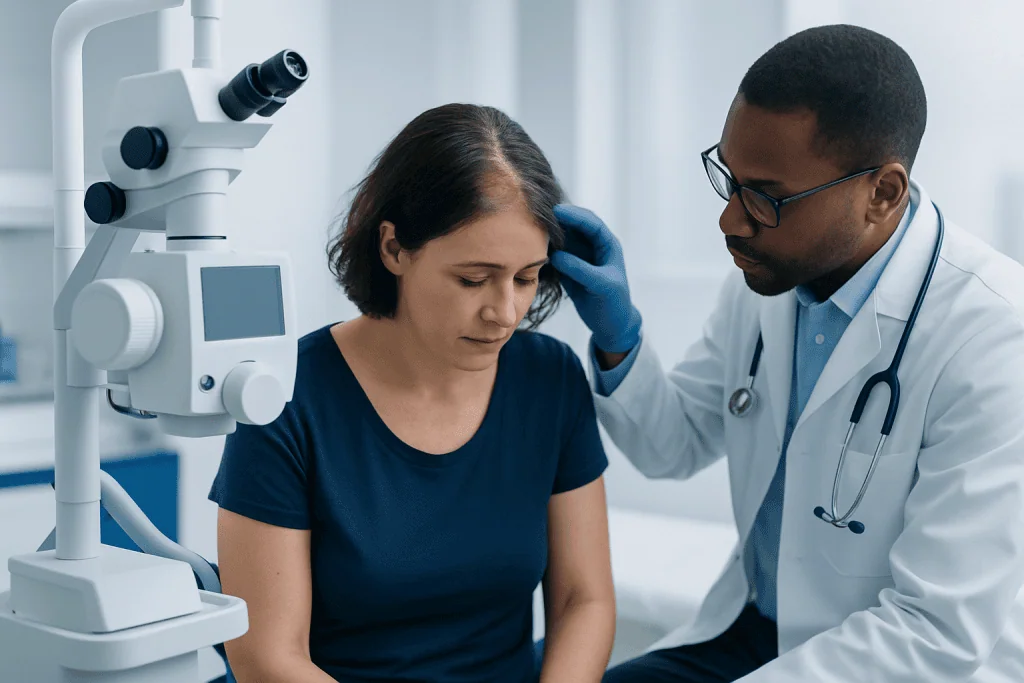
Symptoms vary from mild, occasional flaking to persistent irritation. Dandruff often produces fine white or gray flakes, whereas seborrheic dermatitis may cause thicker, greasy, yellowish scale along with pink or red patches. The scalp can feel itchy, tight, sensitive, or mildly sore, especially after scratching.
Changes may also appear in areas with many oil-producing glands. These can include the hairline, eyebrows, sides of the nose, ears, beard area, upper chest, or upper back. In people with darker skin tones, inflammation may look purple, gray, dark brown, or as a change in skin tone rather than obvious redness.
Temporary increased shedding can occur when inflammation and scratching disrupt the hair-growth cycle, but yeast-related dandruff itself does not typically cause permanent hair loss. Patchy hair loss, broken hairs, tender swollen areas, crusting, or pus are not typical of simple dandruff and need medical assessment. Such signs may point to tinea capitis, bacterial infection, scarring inflammation, or another condition.
Why Yeast Overgrowth Happens and Who May Be Affected

Malassezia thrives in oily areas of the skin because it uses substances in sebum, the scalp’s natural oil. The yeast is part of the normal skin microbiome, but some people are more prone to inflammation when its numbers increase or when the skin barrier becomes irritated. This is why symptoms may persist despite regular washing and why excessive scrubbing is not a reliable solution.
Factors that can contribute include naturally oily skin, hormonal changes, humid or cold weather, sweating under hats or helmets, stress, fatigue, and infrequent shampooing for an individual’s scalp type. Certain neurological conditions and medical situations that affect immunity can also be associated with more severe or recurrent seborrheic dermatitis. These associations do not mean that everyone with dandruff has an underlying medical problem.
Hair and scalp products can complicate the picture. Heavy oils, fragranced styling products, dyes, or leave-on products may worsen buildup or trigger contact dermatitis in susceptible people. A clinician may ask about new products, hair-care routines, medicines, skin conditions, and family history to identify contributing factors without assuming a single cause.
How Doctors Diagnose a Scalp Yeast Problem
Diagnosis is usually based on a careful review of symptoms and an examination of the scalp and nearby skin. A doctor looks at the distribution, type of scale, degree of inflammation, hair shafts, and whether there are signs of infection. They may also examine the eyebrows, ears, face, nails, and other body sites because these findings can help distinguish seborrheic dermatitis from psoriasis or eczema.
Testing is not always needed for typical dandruff or seborrheic dermatitis. However, if there are broken hairs, patches of hair loss, swollen lymph nodes, a painful scalp, or treatment has not helped, a clinician may take skin scrapings or pluck hairs for microscopy and fungal culture. These tests can identify dermatophyte infection, which requires a different approach from Malassezia overgrowth.
A patch test may be considered when allergic contact dermatitis from hair dye, fragrance, preservatives, or other products is suspected. In selected cases, a dermatologist may recommend a small skin biopsy to clarify an unusual, persistent, or potentially scarring condition. This stepwise evaluation helps avoid prolonged use of products that do not address the actual cause.
Modern Treatment Approaches
For dandruff and mild seborrheic dermatitis, medicated shampoos are usually the starting point. Products containing antifungal ingredients such as ketoconazole, selenium sulfide, ciclopirox, or zinc pyrithione may reduce yeast levels and calm flaking. The best option depends on the individual, local product availability, skin sensitivity, and medical advice. Shampoos generally need contact time on the scalp before rinsing, according to the product instructions or a clinician’s guidance.
When inflammation is more noticeable, a doctor may prescribe a short course of anti-inflammatory scalp treatment, such as a corticosteroid solution, foam, lotion, or shampoo. Nonsteroidal anti-inflammatory medicines may be suitable in some situations, particularly for facial or sensitive areas. Prescription antifungal creams, foams, or shampoos can also be used when over-the-counter products are insufficient.
Oral antifungal medication is not routinely needed for ordinary dandruff. It may be considered for selected severe or resistant cases after a clinician reviews the diagnosis, other medicines, medical history, and potential side effects. If testing shows tinea capitis rather than yeast-related dermatitis, oral antifungal treatment is generally necessary because shampoos alone do not adequately reach the infected hair follicles.
Symptoms often improve within several weeks, but maintenance treatment may help prevent recurrence. This may involve using a medicated shampoo periodically after the active flare settles. The aim is long-term control with the least intensive routine that keeps the scalp comfortable and clear.
Scalp Care, Prevention, and Everyday Self-Care
Gentle, consistent scalp care can support medical treatment. Washing frequency should suit the person’s hair texture, oil production, activity level, and cultural hair-care practices. For someone with an oily or flaky scalp, regular cleansing may reduce scale buildup; however, harsh scratching, very hot water, or aggressive scrubbing can damage the skin barrier and increase irritation.
When trying a medicated shampoo, it can be helpful to apply it directly to the scalp rather than only to the hair length. Conditioner may still be used on the mid-lengths and ends if needed, but applying heavy products to the scalp can sometimes worsen buildup. Introducing one new product at a time makes it easier to identify any product-related irritation.
People should avoid sharing combs, brushes, hats, or hair accessories if a contagious fungal infection such as tinea capitis is suspected. It is also sensible to avoid picking at scale or using unproven home remedies, including undiluted essential oils, which can cause burns or allergic reactions. A balanced diet, adequate sleep, and stress-management strategies support general skin health, but they do not replace appropriate diagnosis and treatment.
When to Seek Medical Care
Medical advice is appropriate when scalp symptoms are persistent, severe, recurrent despite using a medicated shampoo as directed, or causing significant discomfort. A doctor or dermatologist can confirm whether yeast-related seborrheic dermatitis is the likely cause and recommend a tailored treatment plan. Earlier assessment can also reduce unnecessary trial-and-error with multiple products.
Prompt assessment is especially important for patchy hair loss, broken hairs, painful lumps, rapidly spreading redness, oozing or pus, thick crusts, fever, or swollen glands in the neck. These may indicate tinea capitis or a bacterial infection and may require prescription treatment. Infants, children, pregnant people, and individuals with a weakened immune system should seek professional advice before using prescription or strong medicated products.
Acibadem International’s multidisciplinary specialists and JCI-accredited hospitals can assess scalp disorders and provide dermatology care for international patients. A consultation can help distinguish common dandruff from other scalp conditions and establish a practical plan for symptom control and follow-up.
Frequently asked questions
Is a scalp yeast infection contagious?
Yeast-related dandruff and seborrheic dermatitis are not generally contagious. They are linked to an inflammatory response to Malassezia yeast that normally lives on the skin. However, another condition called tinea capitis can spread between people or from animals, so a clinician should assess suspicious symptoms.
Can a scalp yeast infection cause hair loss?
Simple dandruff or seborrheic dermatitis does not usually cause permanent hair loss. Intense inflammation or frequent scratching may contribute to temporary shedding. Patchy hair loss, broken hairs, or scarring should be evaluated promptly because they may have a different cause.
How long does scalp yeast treatment take to work?
Many people notice less itching and flaking after several weeks of regular use of an appropriate medicated shampoo. More inflamed cases may need prescription treatment and follow-up. Because symptoms can return, maintenance treatment is often useful.
Can hair oils make scalp yeast symptoms worse?
Heavy oils and oily leave-on products can increase buildup and may aggravate symptoms in some people. They do not affect everyone in the same way, but it is reasonable to pause a suspected product and discuss alternatives with a dermatologist. Fragranced products may also trigger irritation or allergy.
Is dandruff the same as a scalp yeast infection?
Dandruff is a common mild form of scalp flaking often associated with Malassezia yeast and skin-cell turnover. The phrase scalp yeast infection is often used for this process, although it is not usually an invasive infection. Seborrheic dermatitis is a more inflamed form that can cause redness and greasy scale.
Should a person use antibiotics for a scalp yeast infection?
Antibiotics do not treat yeast and are not used for ordinary dandruff or seborrheic dermatitis. They may be prescribed only if a doctor identifies a separate bacterial infection. Antifungal and anti-inflammatory treatments are more commonly used for yeast-related scalp symptoms.
References
- American Academy of Dermatology Association
- National Institutes of Health
- Mayo Clinic
- DermNet New Zealand
- National Health Service
This article is for general information only and is not a substitute for professional medical advice. Please consult a qualified doctor about your individual situation.
Hair transplant in Turkey — costs, graft counts & a free assessment
JCI-accredited · board-certified surgeons · reply within 24h
Add us as a Preferred Source to see more of our trusted health content across Google Search, AI Overviews and Discover.

More from the Health Library



Related Specialists
Prof. Dr. Şenol Polat
Otorhinolaryngology
Prof. Dr. Yüksel Ersoy
Physical Medicine & Rehabilitation
Assoc. Prof. Dr. Musa Öztürk
Neurology
Prof. Dr. Serdar Özgen
Neurosurgery