Penile Torsion: An Evidence-Based Guide for Patients

Penile torsion is usually present from birth and is caused by uneven development or attachment of tissues in the penis. A mild degree of rotation often does not affect urination, erections, fertility, or overall health.
Key Takeaways
- Penile torsion is usually present from birth and is caused by uneven development or attachment of tissues in the penis.
- A mild degree of rotation often does not affect urination, erections, fertility, or overall health.
- More noticeable torsion may occur alongside conditions such as hypospadias or penile curvature and should be evaluated by a specialist.
- Diagnosis is generally made through a physical examination; scans are rarely needed for uncomplicated congenital torsion.
- Surgery is not necessary for every person, but it may be considered when torsion is marked, affects urinary direction, or causes functional or personal concerns.
- Sudden twisting, swelling, bruising, or severe pain after an injury is not typical congenital torsion and needs urgent medical assessment.
Penile torsion is a condition in which the penis is rotated, most often to the left, around its lengthwise axis. Mild torsion commonly causes no health problems, while more pronounced rotation or associated penile differences may be assessed by a pediatric urologist or urologist.
What Is Penile Torsion?
Penile torsion is a rotation of the penis around its long axis. Rather than pointing straight forward, the shaft and especially the head of the penis may appear turned to one side. It is usually a congenital difference, meaning it developed before birth and may be noticed in a newborn, during childhood, or later in life.
In most cases, the rotation is toward the left. Healthcare professionals may describe the amount of torsion in degrees, although the appearance can vary depending on the position of the penis and whether it is flaccid or erect. Mild torsion is relatively common and often has no medical consequences. More substantial rotation may be more visible and can sometimes change the direction of the urine stream.
Penile torsion is not an infection, cancer, or a sexually transmitted condition. It is also not caused by masturbation, sexual activity, or routine infant care. Many people with mild torsion do not need treatment, but an examination can clarify the degree of rotation and check for other anatomical differences.
How Penile Torsion May Look or Feel
The most noticeable sign is that the penis appears rotated when viewed from the front. The opening at the tip of the penis may not face directly upward or forward, and the line running along the underside of the shaft may appear spiraled. In infants, this may first be observed during a diaper change or before circumcision.
Mild penile torsion generally does not cause pain. Children and adults may have normal urination, erections, sexual sensation, and reproductive potential. A person may simply notice an unusual appearance, particularly during an erection. The amount of concern a person feels about the appearance is valid and can be discussed openly with a qualified clinician.
With more pronounced rotation, urine may spray, split, or travel to one side, making it harder to aim while standing. Penile torsion can occasionally be identified with other congenital conditions, including hypospadias, in which the urinary opening is located on the underside of the penis rather than at its tip, or chordee, a downward curvature of the penis.
- Rotation of the head or shaft to one side
- A urinary stream that angles, sprays, or splits
- A twisted appearance of the penile skin seam
- Concern about appearance during childhood, puberty, or adulthood
- Possible coexisting curvature or an unusually placed urinary opening
Why Penile Torsion Happens
The exact cause of congenital penile torsion is not fully understood. It is thought to result from uneven development or attachment of the skin, connective tissue, and deeper supporting tissues of the penis during fetal development. The skin seam, called the median raphe, may follow a spiral path, but the visible skin pattern does not always show the full extent of deeper rotation.
Penile torsion may occur on its own, and there is usually no identifiable action, illness, or exposure during pregnancy that explains it. Parents should not blame themselves for a child being born with this difference. It is also not generally considered something that can be prevented through diet, supplements, exercise, or changes in routine care.
Some people have torsion in combination with hypospadias, chordee, or less commonly other differences in penile development. For this reason, a clinician will examine the position of the urinary opening, the shape of the penis, and the testes as part of the assessment. Having penile torsion does not automatically mean that another condition is present.
A penis can also appear newly crooked or twisted after an injury, inflammation, surgery, or an erection-related problem. This is different from congenital penile torsion. A sudden change, particularly one involving pain, bruising, swelling, or loss of an erection after trauma, requires prompt medical evaluation.
How Doctors Diagnose Penile Torsion
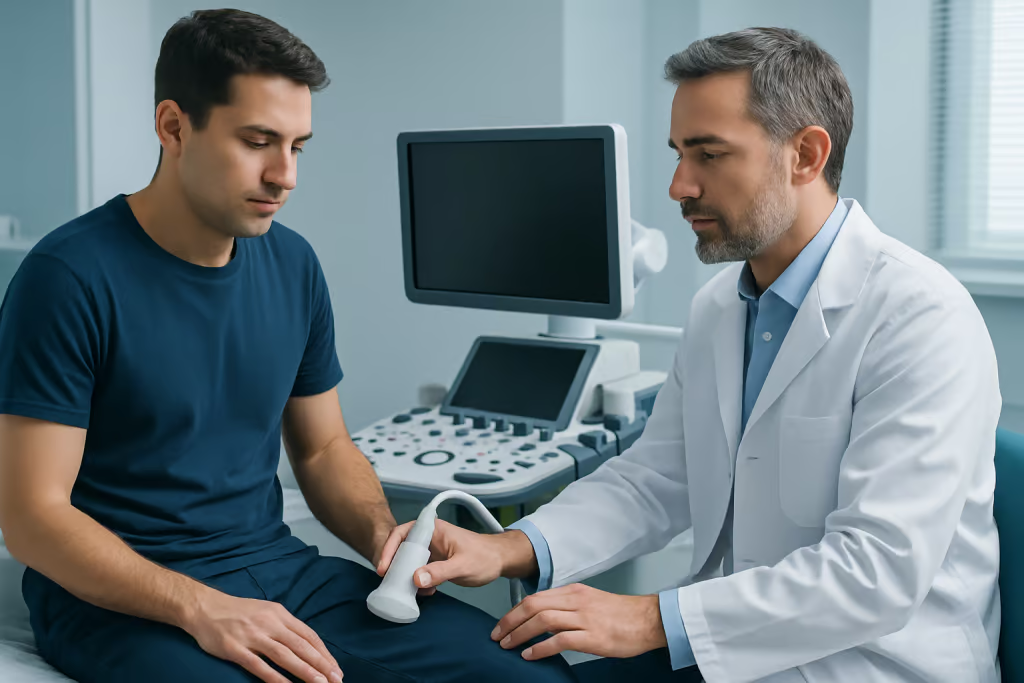
Congenital penile torsion is usually diagnosed through a physical examination. In babies and young children, a pediatrician or pediatric urologist can inspect the penis and assess the direction of the head, urinary opening, skin seam, and shaft. The clinician may estimate the degree of rotation and determine whether it is mild or more pronounced.
For adolescents and adults, a urologist will ask about urinary symptoms, erections, pain, prior injuries, previous surgery, and any concerns about sexual function or appearance. The examination is typically sufficient. Ultrasound, blood tests, or other imaging are not routinely necessary when the findings are consistent with uncomplicated congenital torsion.
Photographs taken during an erection may sometimes help a urologist understand a concern that is not clear during a clinic visit. A clinician should give specific guidance if these are appropriate. Patients should not feel pressured to provide images unless requested through a secure, professional medical process.
If hypospadias or significant curvature is suspected in a child, specialist assessment is particularly important before circumcision. The foreskin can occasionally be useful for reconstructive surgery when another penile condition is present. A healthcare team can advise families on the safest timing and approach for any procedure.
Treatment Options and Decision-Making
Observation is appropriate for many people with mild penile torsion and no urinary, sexual, or emotional difficulties. Congenital torsion does not usually worsen because of normal growth, erections, exercise, or sexual activity. Regular medical treatment, medication, or home stretching is not needed for a mild, stable rotation.
Surgical correction may be considered when torsion is substantial, when the urine stream is difficult to direct, when another congenital penile condition needs repair, or when the appearance causes significant concern. The decision is individualized. It should take into account the degree of torsion, age, urinary function, associated anatomy, and the patient’s or family’s preferences.
In children, repair is commonly performed by a pediatric urologist under general anesthesia. Depending on the anatomy, the surgeon may release and reposition skin and underlying tissues, sometimes using a technique that rotates a layer of tissue to counter the twist. If hypospadias or curvature is also present, repair may be planned as part of the same operation. The precise technique depends on the individual findings.
Adults can also seek assessment if torsion becomes a source of functional or psychological concern. Surgery has potential benefits and risks, including bleeding, infection, scarring, changes in skin appearance, residual rotation, and anesthesia-related risks. A urologist can explain realistic goals, recovery expectations, and whether surgery is likely to be helpful in a specific case.
Everyday Care, Body Confidence, and Follow-Up
There is no proven exercise, massage, device, cream, or supplement that safely corrects congenital penile torsion. Attempting to force the penis into a different position can cause pain or injury. For infants and children, normal gentle hygiene is sufficient; the foreskin should not be forcibly retracted.
For people whose urine stream is affected, practical adjustments such as sitting to urinate or taking extra time to aim may be helpful while awaiting assessment or deciding whether treatment is needed. These measures do not correct torsion, but they can reduce inconvenience. New urinary burning, fever, blood in the urine, or repeated urinary infections should be evaluated because they are not explained by mild torsion alone.
Feeling concerned about genital appearance is common, particularly during puberty and adulthood. A urologist can provide factual reassurance about function and discuss treatment options without judgment. Supportive conversations with a trusted healthcare professional may also help a young person or adult distinguish normal anatomical variation from a problem requiring treatment.
Acibadem International’s multidisciplinary specialists and JCI-accredited hospitals can assess congenital penile conditions and discuss suitable care options for international patients. Evaluation should always be individualized and led by an appropriately qualified urology team.
When to Seek Medical Care
A routine appointment with a pediatrician, pediatric urologist, or urologist is appropriate when penile torsion is noticed, especially if the rotation seems pronounced, urination is difficult to direct, or there may be an associated difference such as curvature or an unusually placed urinary opening. Families may also wish to seek advice before circumcision if there is any uncertainty about penile anatomy.
Medical review is also reasonable when an adolescent or adult has concerns about erections, sexual comfort, urinary spraying, body image, or whether an operation may be useful. These concerns can be discussed confidentially. In many cases, the consultation provides reassurance even when treatment is not needed.
Urgent care is needed for sudden severe penile pain, swelling, dark bruising, a popping sensation during an erection, rapid loss of an erection after trauma, inability to urinate, or a prolonged painful erection. These symptoms are not typical features of stable congenital penile torsion and may indicate an injury or another condition that requires prompt treatment.
Frequently asked questions
Is penile torsion serious?
Mild penile torsion is usually not serious and often does not affect health, urination, erections, or fertility. More noticeable torsion can sometimes affect the direction of urine flow or occur with other congenital penile differences. A medical examination can determine whether observation or specialist care is appropriate.
Can penile torsion correct itself as a child grows?
Congenital penile torsion generally does not fully straighten on its own with growth. However, mild torsion often remains harmless and does not require correction. A pediatric urologist can advise whether the degree of rotation is likely to need treatment.
Does penile torsion affect fertility?
Penile torsion by itself does not usually affect sperm production or fertility. Most people with mild torsion have normal sexual development and reproductive potential. If torsion occurs with other anatomical conditions, a urologist can assess whether those conditions need attention.
Can circumcision cause penile torsion?
Penile torsion is most often present from birth rather than caused by circumcision. Circumcision may make an existing twist more noticeable because the foreskin no longer covers the head of the penis. If torsion or hypospadias is suspected in a child, specialist advice before circumcision is sensible.
When is surgery for penile torsion considered?
Surgery may be considered for marked rotation, difficulty directing urine, coexisting hypospadias or curvature, or significant concerns about appearance or sexual function. It is not routinely needed for every mild case. A urologist can explain the likely benefits, limitations, and risks based on the individual anatomy.
Can adults have penile torsion surgery?
Yes, adults can be evaluated for surgical correction when torsion causes functional difficulties or substantial personal distress. The assessment includes the degree of torsion, erectile function, urinary symptoms, and any previous injury or surgery. The clinician can discuss whether an operation is suitable and what recovery may involve.
References
- American Urological Association
- European Association of Urology
- American Academy of Pediatrics
- Urology Care Foundation
- National Institute of Diabetes and Digestive and Kidney Diseases
This article is for general information only and is not a substitute for professional medical advice. Please consult a qualified doctor about your individual situation.
Explore treatments in Turkey — costs, top hospitals & a free quote
JCI-accredited · board-certified surgeons · reply within 24h
Add us as a Preferred Source to see more of our trusted health content across Google Search, AI Overviews and Discover.

More from the Health Library



Related Specialists

Asst. Prof. Dr. Gökhan Arslanhan
Cardiovascular Surgery
Assoc. Prof. Dr. Şule Göncü Ayhan
Gynecology & Obstetrics
Dr. Habibe Seyisoğlu
Gynecology & Obstetrics
Asst. Prof. Dr. Müjde Arapoğlu
Pediatrics